

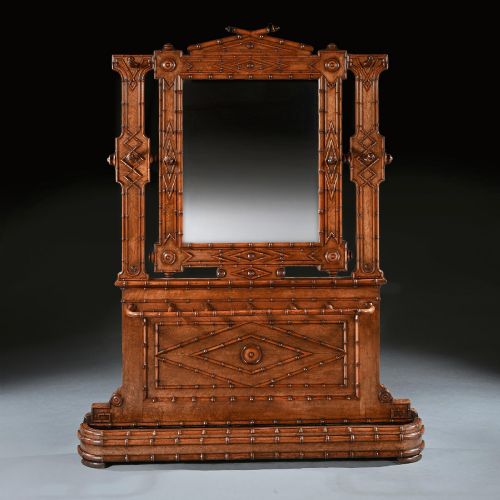
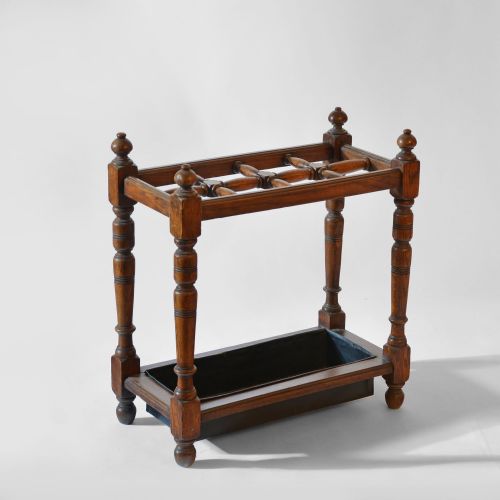
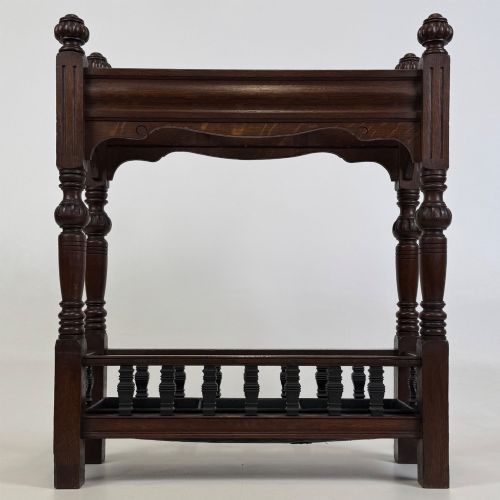
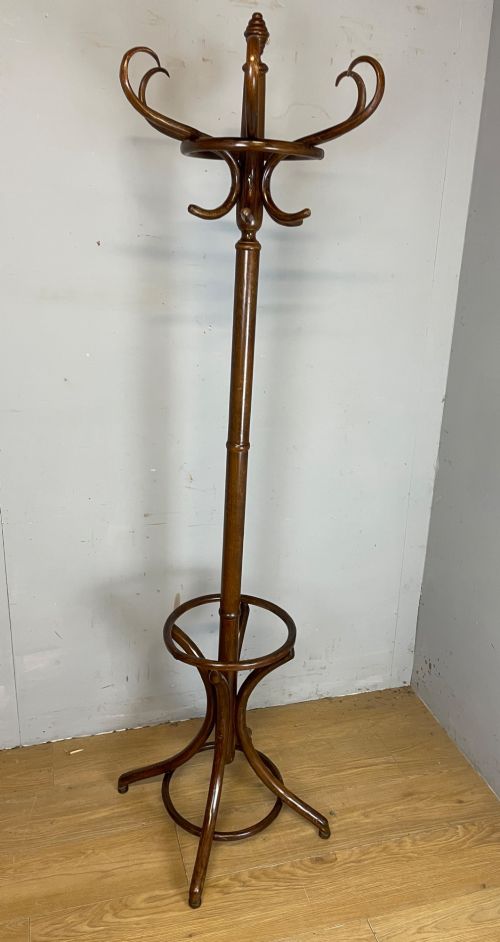

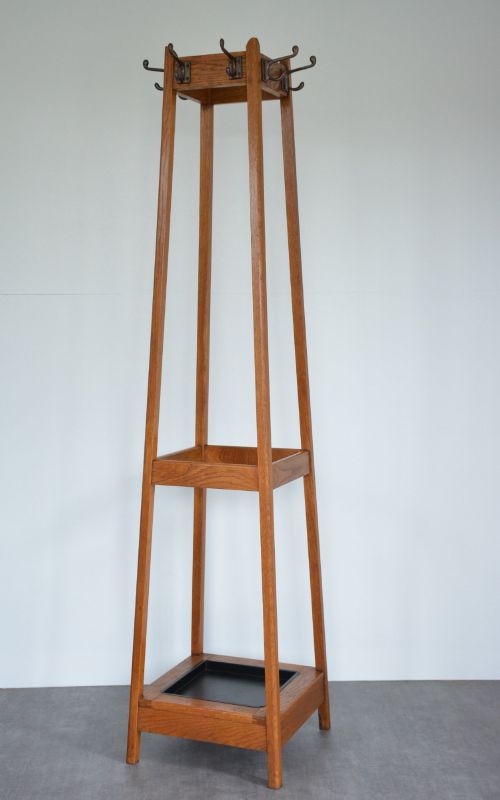
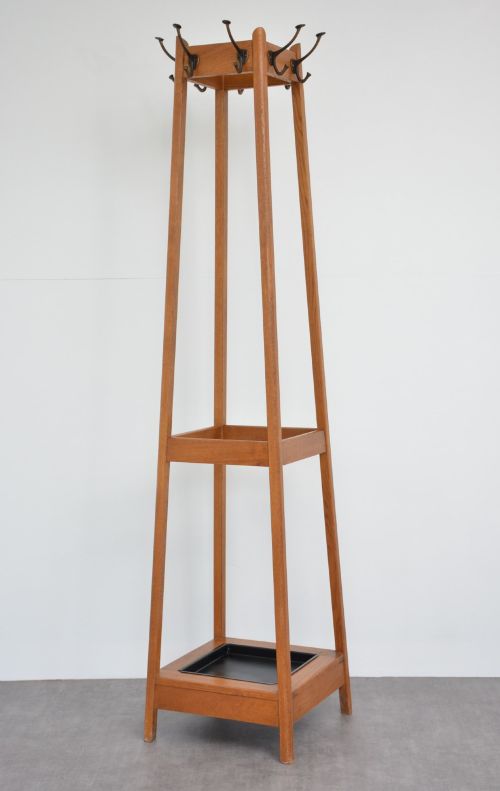

Brown Wooden Stick Stand
These brown wooden stick stand pieces offer practical hallway storage and period character.
Brown Wooden Stick Stand
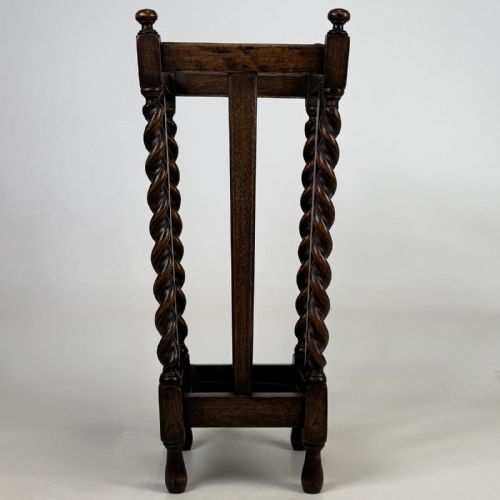
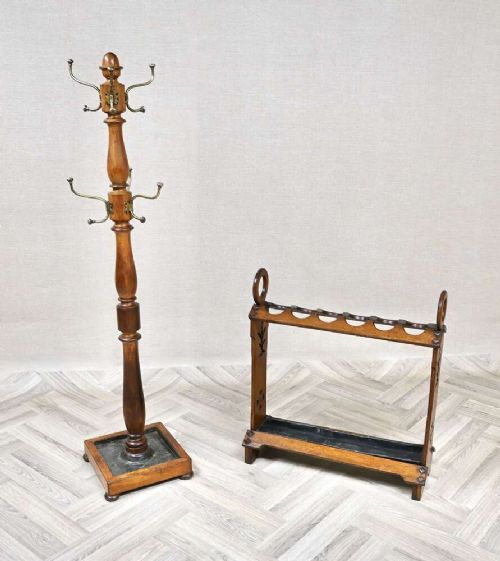
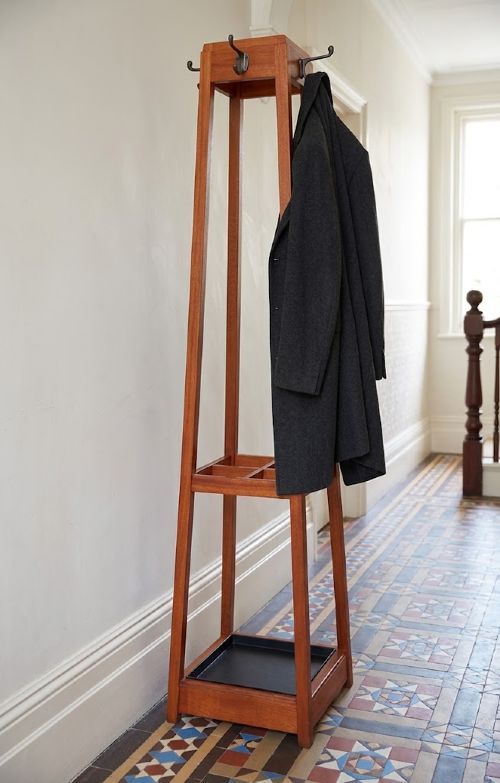
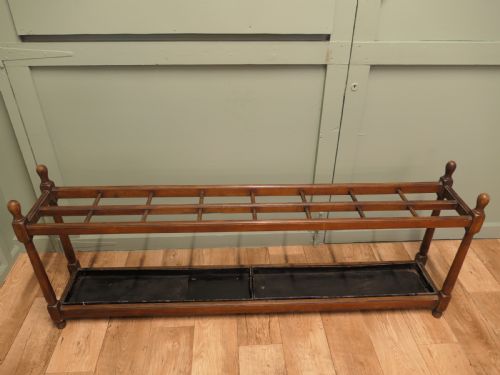
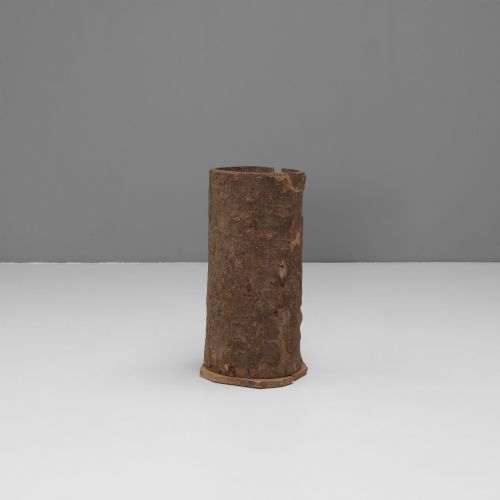
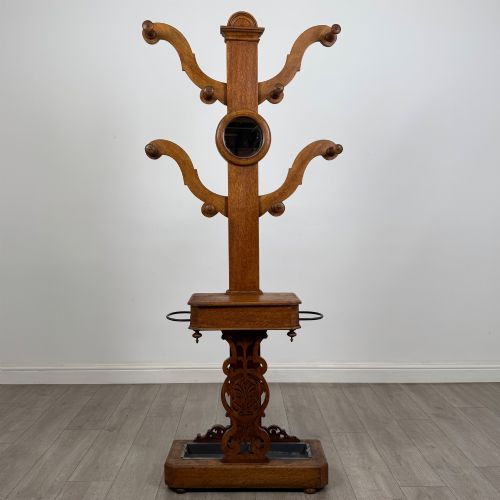
A brown wooden stick stand serves as a dedicated hallway piece for umbrellas, walking sticks, and sometimes coats. The listings on this page span the nineteenth century through the early twentieth century, taking forms such as oak barrels, corner units, and hall stands.
Buyers most frequently encounter oak and mahogany examples from the Victorian and Edwardian eras. These range from simple rustic umbrella stands to elaborate carved Black Forest designs and Arts and Crafts models.
Materials and construction
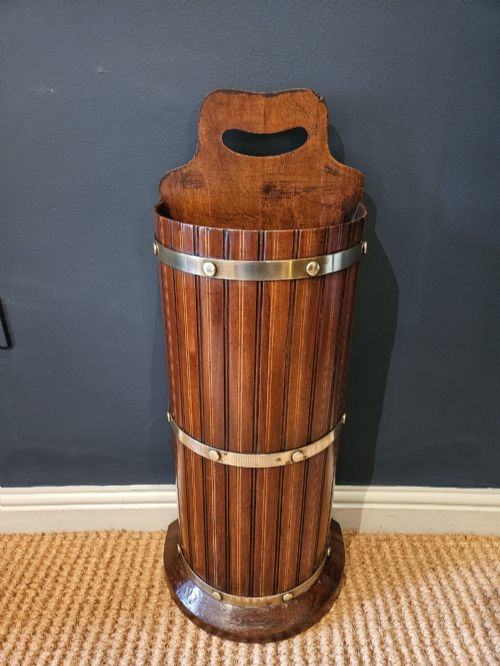
Cabinet makers utilised solid woods like oak, mahogany, walnut, and birdseye maple, often pairing the timber with brass or iron components. Coopered barrel constructions relied on wooden staves secured by metal hoops.
Carved pieces from the Black Forest demonstrate intricate woodworking techniques applied to animal and forest motifs. Bentwood examples utilised steam-bent timber to create lightweight, curved frames.
Brown Wooden Stick Stand Retail Price Guide 2026
Typical asking prices for brown wooden stick stand among the pieces listed under this phrase on Sellingantiques today, from the lower quarter to the upper quarter. They describe what is for sale here now, not the wider market.
Listings feature oak, mahogany, walnut, and maple timbers across Victorian, Edwardian, and Arts and Crafts styles.
Assessing quality
Quality rests in the integrity of the timber, the precision of the cooperage or joinery, and the presence of original metalwork such as drip trays and retaining rings. Superior examples display thoughtful proportions and robust construction.
Artisanal carving depth and crispness differentiate standard utility items from finely detailed Black Forest or Arts and Crafts pieces. Retaining original fittings elevates the piece above later replacements.
GW Evans·James Shoolbred·Thonet
The Brown Wooden Stick Stand Glossary
- Coopered
- Constructed from wooden staves bound together by metal hoops, much like a barrel. This method provided the strength needed for holding wet umbrellas.
- Brass bound
- Fitted with brass bands or hoops for structural reinforcement and visual contrast. These bands typically secure the wooden staves of cylindrical stands.
- Drip tray
- A metal tray placed at the base of the stand to catch water from wet umbrellas. These protected wooden flooring from moisture damage.
- Black Forest
- A style of wood carving originating from the mountain region of Germany, known for realistic animal figures including bears. These stands often incorporate carved umbrella wells.
- Arts and Crafts
- A design movement valuing handcraftsmanship and simple, honest construction using natural materials like oak. Pieces from this tradition often display visible joints and functional honesty.
- Japonisme
- The influence of Japanese art on Western design, seen in certain maple and bamboo hall pieces. This style brought asymmetrical arrangements and refined linear qualities.
Brown Wooden Stick Stand: Frequently Asked Questions
What is a stick stand?
A stick stand is a piece of hallway furniture designed to hold walking sticks, canes, and umbrellas upright. They keep entryways tidy and accessible for daily outdoor wear.
Most examples feature a frame or barrel shape with an internal divider and a base tray to catch water. They sit neatly beside front doors in halls and lobbies.
How do I care for wooden stick stands?
Care involves keeping the wood nourished with appropriate wax and ensuring metal drip trays are emptied and dried regularly. Preventative maintenance stops moisture from damaging the base.
Position the stand away from direct heat sources to avoid timber splitting or warping over time. Periodic dusting preserves the finish of the grain.
Were these stands used in offices?
Yes, larger models served commercial spaces, hotels, and shops alongside domestic residences. Long division stands accommodated numerous visitor items simultaneously.
Institutional pieces often prioritized capacity and sturdy construction over delicate decorative carving. They managed high volumes of outdoor gear in public entryways.
How do I identify Victorian pieces?
Victorian stands typically feature darker timbers like oak and mahogany, often with deep carvings, brass bands, or turned spindles. Construction methods reflect nineteenth-century cabinet making.
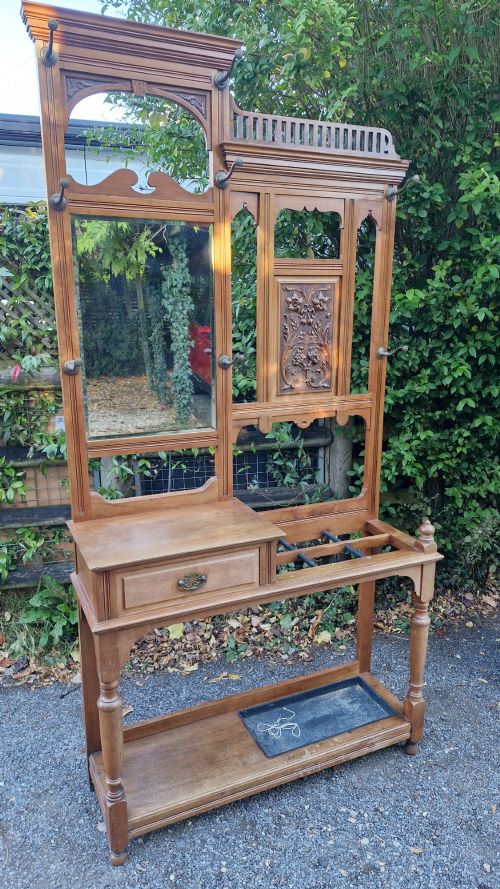
Stylistic cues include Gothic revival influences, robust proportions, and functional additions like integrated coat hooks or mirrors. These details help distinguish them from later Edwardian or twentieth-century variants.