




Brown Wooden Secretary
A brown wooden secretary brings together practical workspace and concealed storage, drawing on centuries of cabinet-making skill.
Brown Wooden Secretary
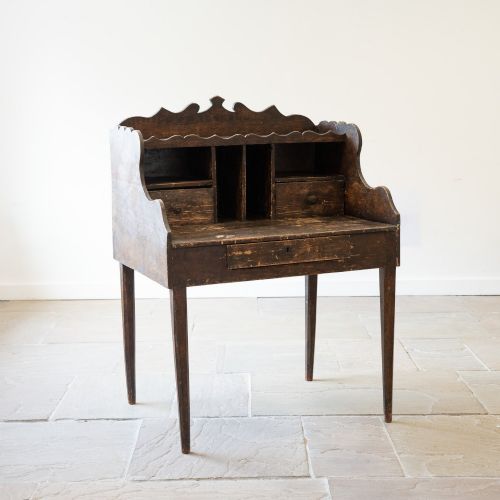
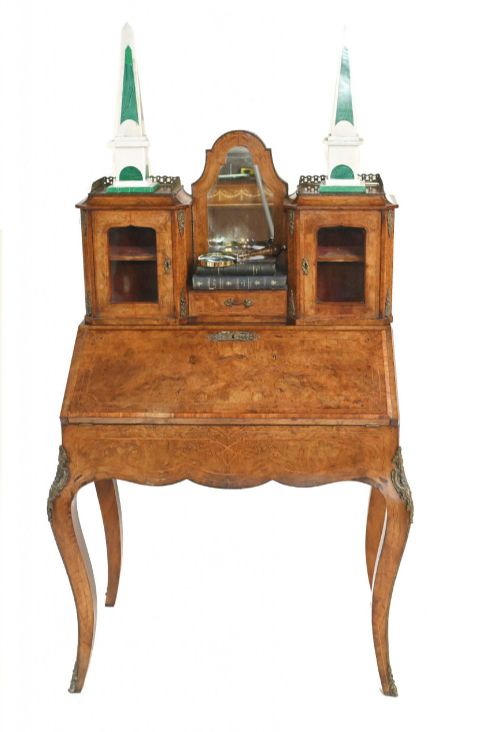
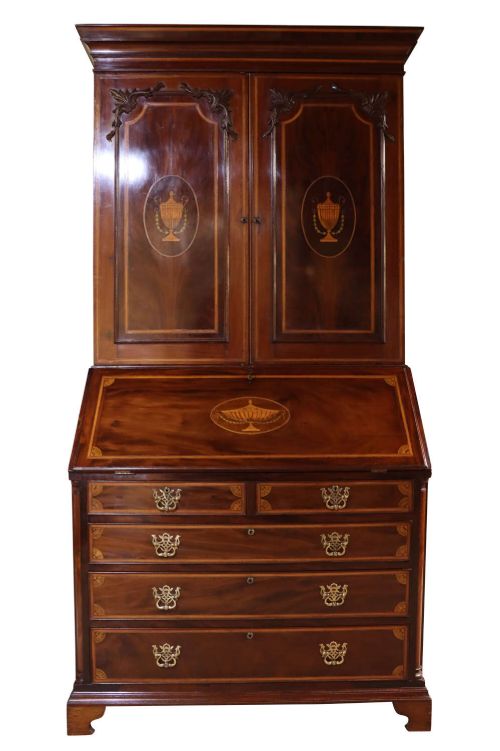
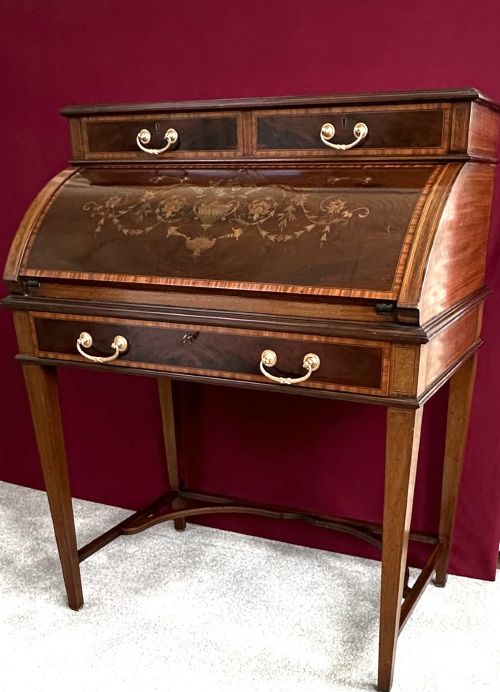
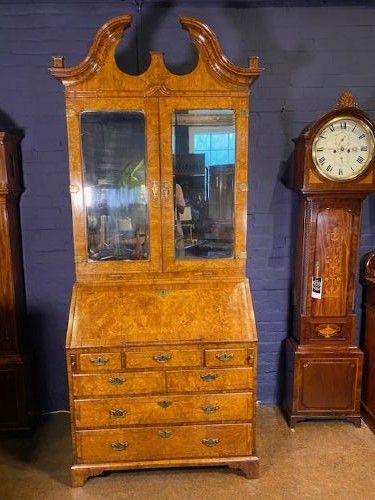
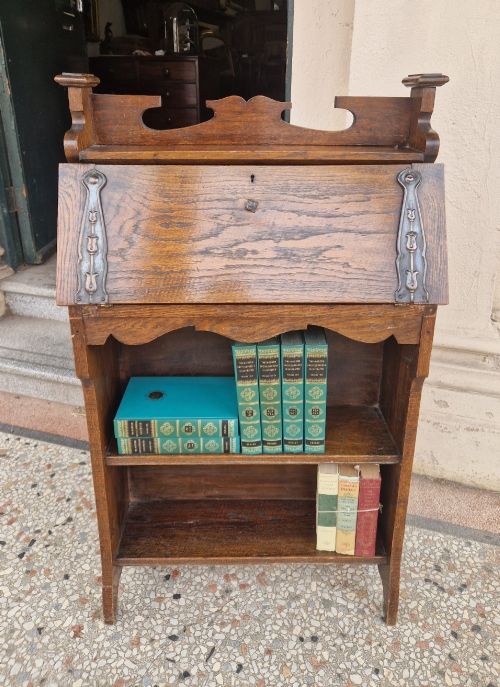
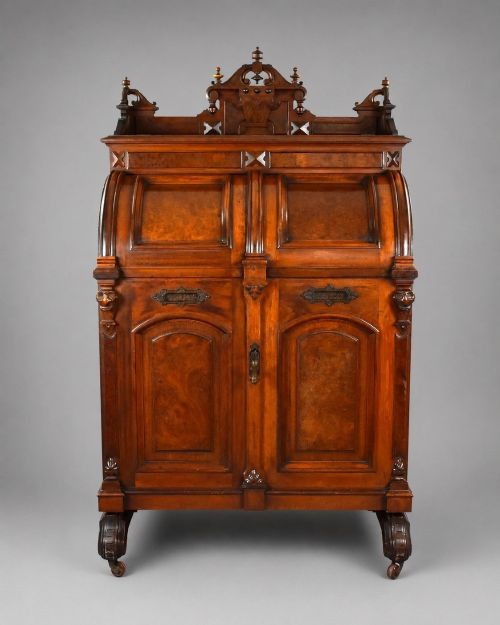
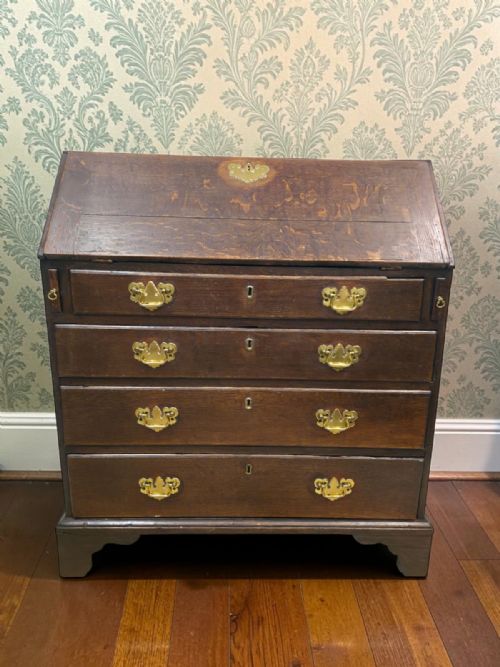
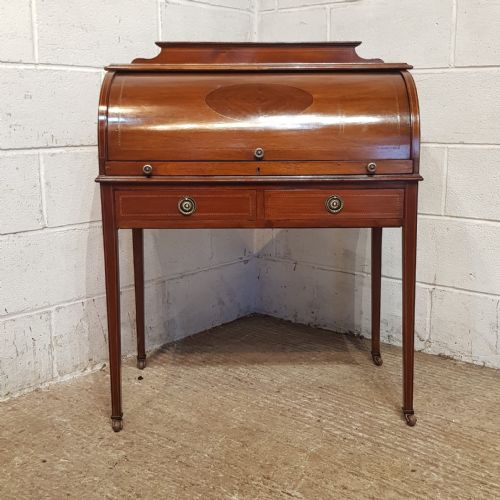
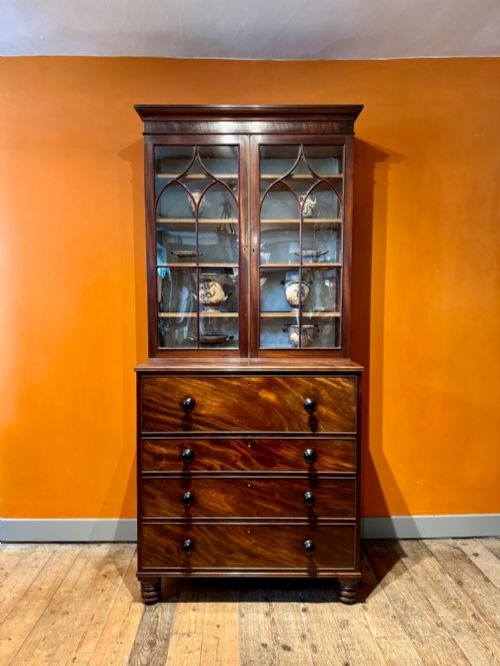
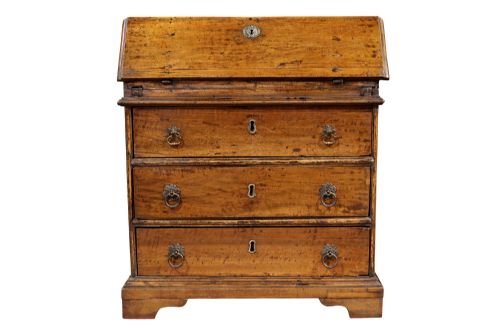
A brown wooden secretary encompasses desks, bureau bookcases, and fall-front writing bureaux designed for domestic administration and correspondence. These pieces bridge the gap between private storage and formal display, often pairing a sloping or drop-front writing surface with internal compartments and drawers.
The versions most commonly found across this page span the Georgian, Victorian, and Edwardian periods, constructed in standard domestic timber forms. Buyers encounter compact writing desks alongside taller secretaire bookcases fitted with glazed upper shelving.
Originating as essential household furniture for managing letters and ledgers, these desks adapt well to modern studies and living rooms. They offer enclosed surfaces that hide paperwork while maintaining a traditional aesthetic.
Materials and construction methods
Cabinet-makers relied on dense hardwoods such as mahogany, oak, and walnut, often selecting figured veneers like flame mahogany or burr walnut for primary surfaces. Secondary timbers like elm and maple provided structural stability for internal drawer linings and hidden compartments.
Brass hardware, including escutcheons, drop handles, and hinges, secured the doors and drawers while adding decorative contrast to the dark wood. Joinery techniques involved precision dovetailing on drawer boxes and frame-and-panel construction for larger bookcase sections.
Brown Wooden Secretary Retail Price Guide 2026
Typical asking prices for brown wooden secretary among the pieces listed under this phrase on Sellingantiques today, from the lower quarter to the upper quarter. They describe what is for sale here now, not the wider market.
Hidden compartments reward curious owners with miniature secret drawers tucked safely behind sliding pigeonhole partitions.
Judging quality and craftsmanship
Superior examples demonstrate crisp execution in secondary details, such as hand-cut dovetails on drawer interiors and finely matched wood grain across the fall front. The choice of timber grain, from burr walnut to figured mahogany, distinguishes higher-grade commissions from standard utility pieces.
Original brasses, intact secondary timbers, and well-fitted internal pigeonholes and secret drawers elevate a piece above later replacements or heavily altered specimens. Proportion and scale also dictate worth, with diminutive or campaign forms commanding specific interest for their restrained dimensions.
Wiggers
The Brown Wooden Secretary Glossary
- Fall front
- A hinged writing flap that pulls down to reveal an inner surface for writing and a series of small drawers and pigeonholes. This panel closes vertically to hide the desk interior when not in use.
- Secretaire bookcase
- A tall cabinet combining a writing drawer or fall-front desk section with enclosed shelving above. The upper doors typically feature glass panels to display books or porcelain.
- Dovetail
- A traditional wood joint formed by interlocking wedge-shaped fingers. It secures drawer corners with high tensile strength.
- Pigeonhole
- A small, open compartment inside a desk used for sorting letters and papers. These compartments are often concealed behind secondary doors or sliding panels.
- Escutcheon
- A protective brass plate surrounding a keyhole. It prevents the wood from splitting around the lock.
Brown Wooden Secretary: Frequently Asked Questions
How do I use a bureau in a modern home?
A bureau serves well as a compact writing desk or laptop station in a study, bedroom, or living area. The drop-front flap provides an immediate writing surface that closes shut to hide paperwork at the end of the day.
Internal pigeonholes and small drawers help organise modern stationery, while the lower drawers offer practical storage for household items.
How can I date an antique wooden desk?
Dating relies on observing construction methods, timber choices, and stylistic details associated with periods like the Georgian, Victorian, or Edwardian eras. Hand-cut dovetails, secondary woods, and original brass hardware offer reliable indicators of age.
Changes in proportion and decorative motifs, such as inlay work or carved bracket feet, further help place a piece within its correct historical decade.
What is the difference between a bureau and a secretary?
In British terminology, a bureau generally refers to a desk with a sloping flap that opens to reveal fitted drawers and compartments. A secretary often incorporates a wider variety of specialised writing mechanisms, including pull-out desk drawers with fitted cabinet tops.
Both terms describe multi-functional furniture designed for writing and document storage across the eighteenth, nineteenth, and early twentieth centuries.