

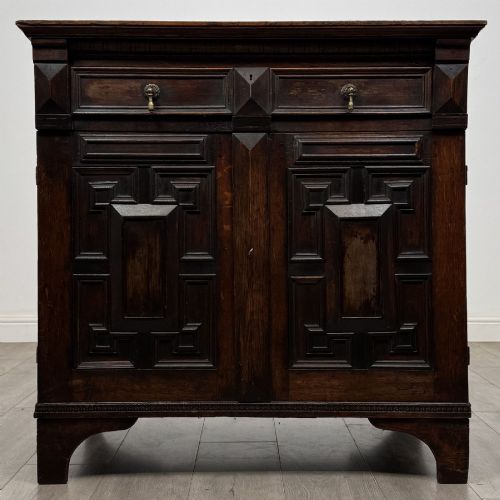
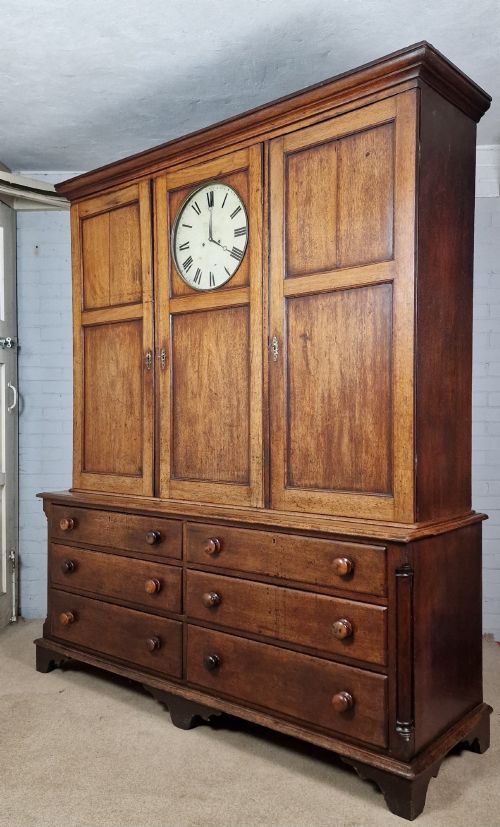
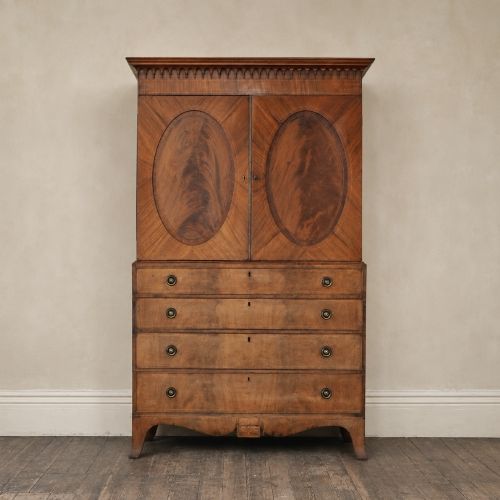
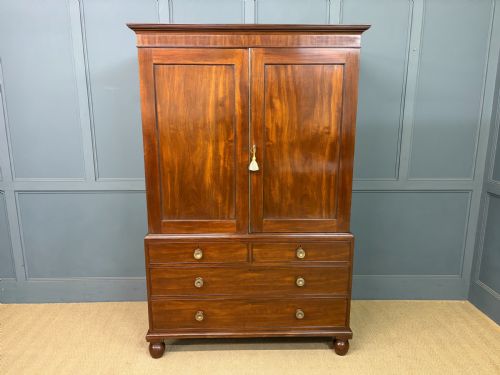
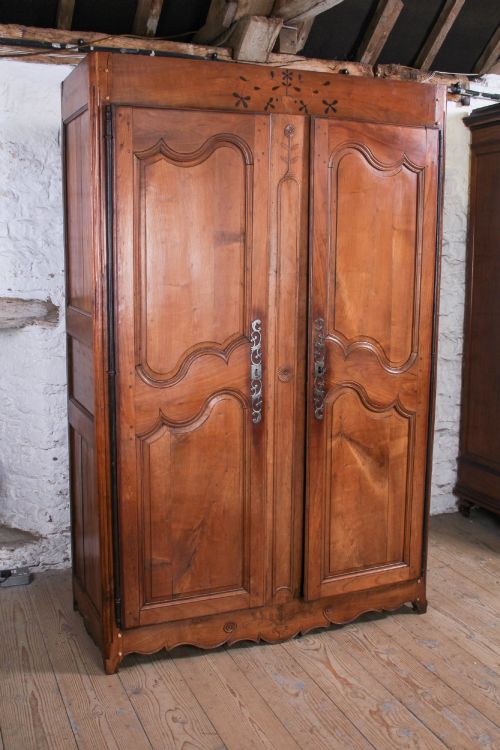
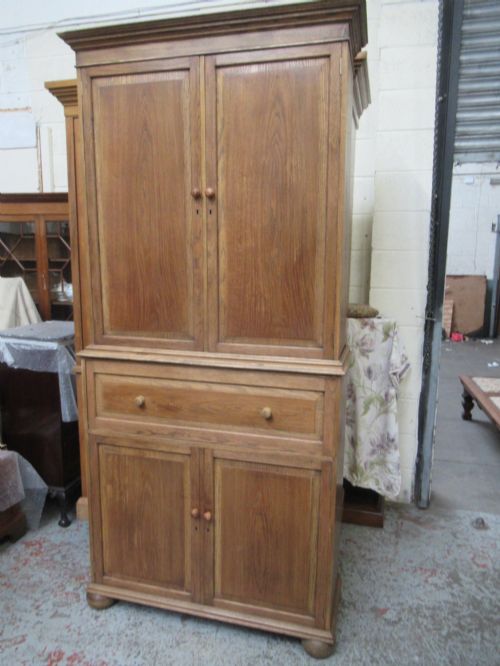
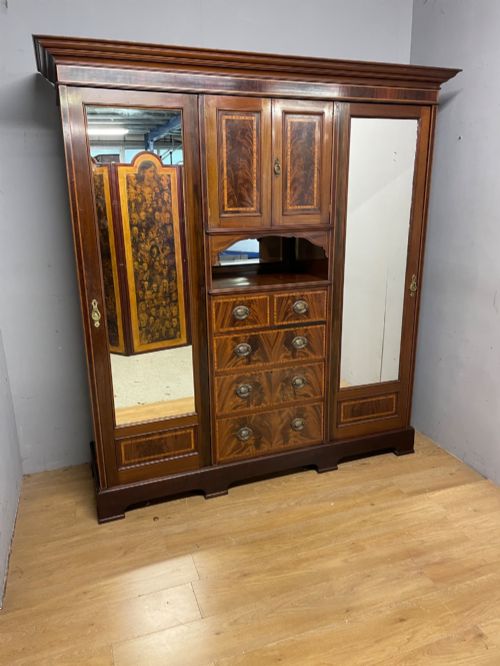
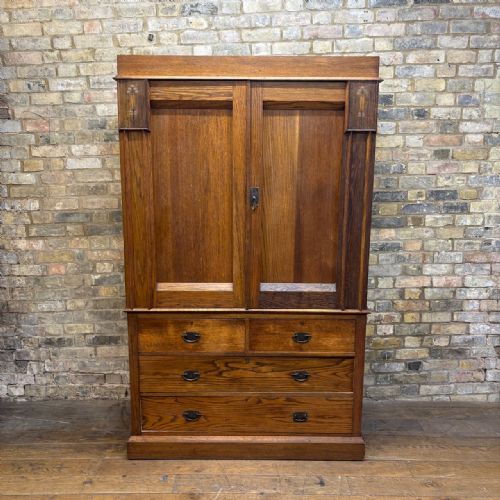
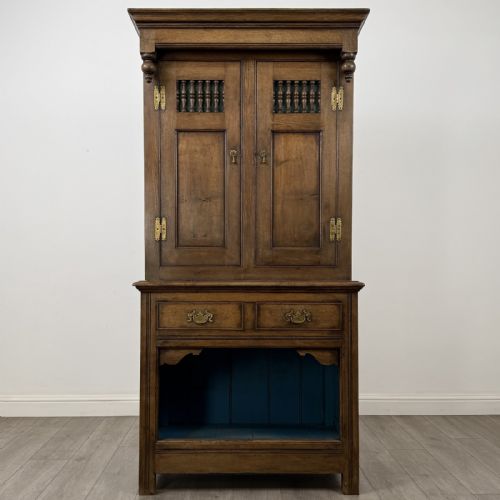
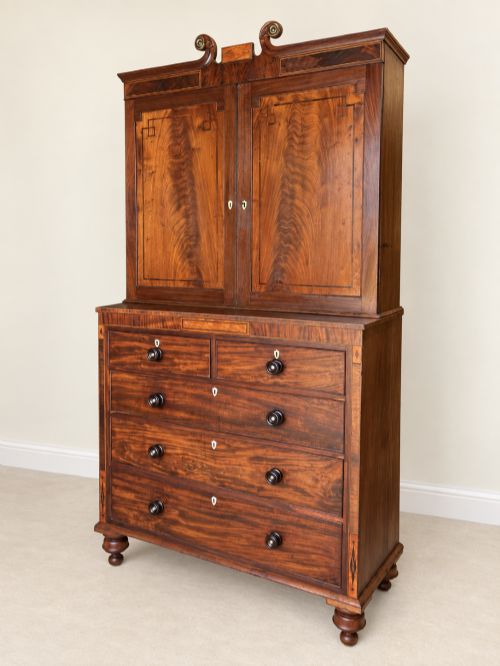
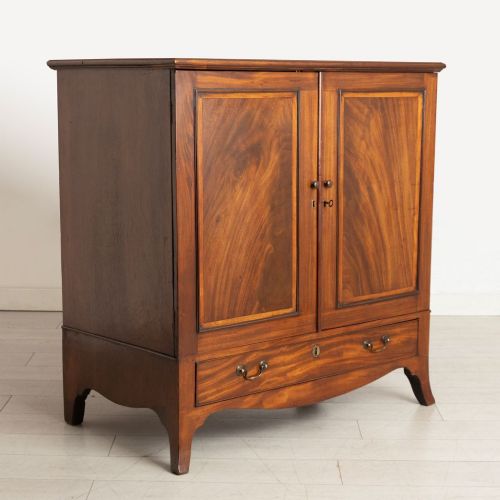
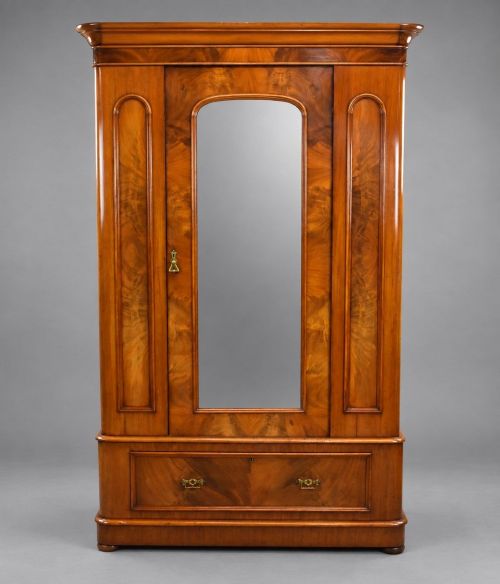
Brown Wooden Press Cupboard
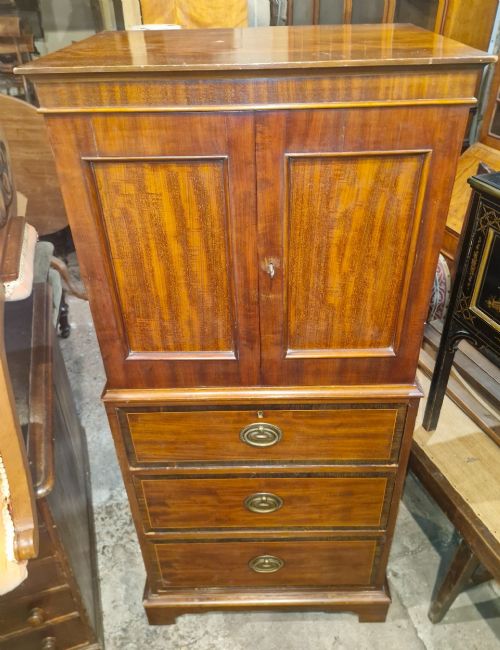
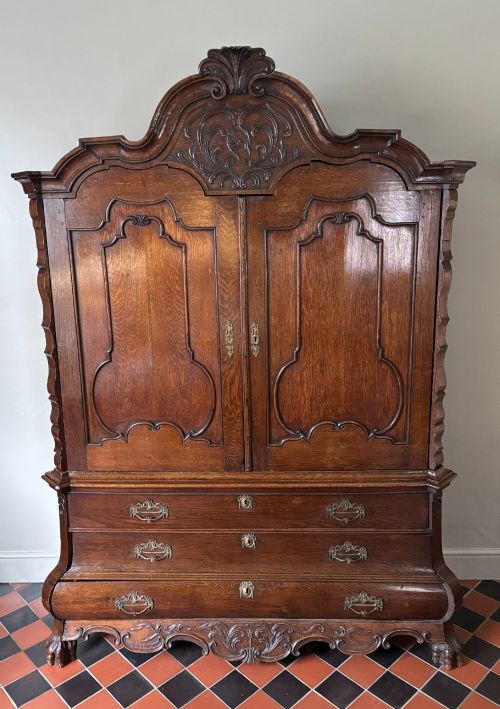
A brown wooden press cupboard provides substantial storage for linens and garments while anchoring a room with period character.
Brown Wooden Press Cupboard
A brown wooden press cupboard encompasses tall storage furniture designed to house clothes, linen, and household stores across centuries of cabinet making. These pieces range from substantial Georgian and 18th century linen presses with sliding trays to Victorian double wardrobes and compactum cabinets.
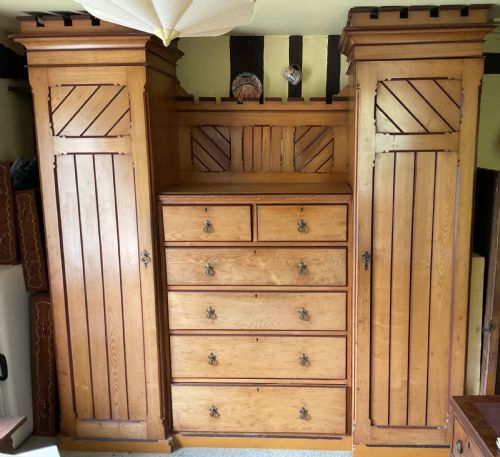
Buyers frequently encounter mahogany and oak examples spanning the Georgian, Victorian, and Edwardian eras, alongside walnut, cherry wood, and ash variants. The forms vary from low cupboards on chests to towering court cupboards and fitted armoires with mirrored doors.
The selection reflects both formal British cabinet making and continental traditions, including French provincial cabinets and Sheraton revival pieces. Each iteration serves the practical demand for partitioned storage while displaying the characteristic timber tones of its period.
Materials and construction
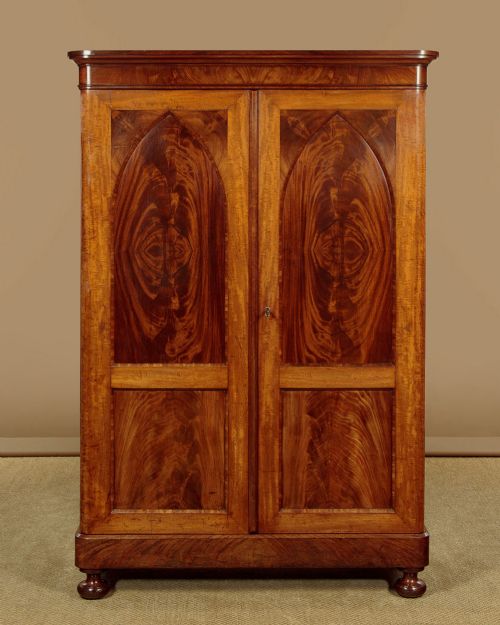
Cabinet makers utilised dense hardwoods such as oak, mahogany, and walnut, often employing flame mahogany veneer or burr walnut for decorative surface grain on primary display sections. Solid secondary timbers provided robust internal framing for sliding trays and hanging spaces.
Construction techniques combined traditional joinery with brass hardware, glass panels, and iron fittings to secure heavy doors and deep drawers. Carved pillar panels, raised galleries, and inlaid details completed the facades of these utilitarian yet polished storage pieces.
Brown Wooden Press Cupboard Retail Price Guide 2026
Typical asking prices for brown wooden press cupboard among the pieces listed under this phrase on Sellingantiques today, from the lower quarter to the upper quarter. They describe what is for sale here now, not the wider market.
Listings feature mahogany, oak, walnut, burr walnut, flame mahogany veneer, ash, cherry wood, brass, glass, and iron across multiple centuries.
Evaluating the craftsmanship
Quality in a brown wooden press cupboard rests upon the selection of timber and the precision of the joinery rather than mere scale. Superior examples display carefully matched grain patterns, particularly on veneered surfaces, and drawers built with fine dovetails that run smoothly within their housings.
The integration of original brass hardware, stable panel construction, and well-fitted internal sliding trays or hanging compartments distinguishes finer workshop production from more utilitarian regional pieces.
Crown Furniture·Heals
The Brown Wooden Press Cupboard Glossary
- Press cupboard
- A large piece of storage furniture traditionally featuring upper doors enclosing shelves or sliding trays above lower drawers. These items served to press and store household linens flat before the widespread use of clothes hangers.
- Compactum wardrobe
- A fitted multi-section wardrobe designed to maximise internal storage by combining hanging space, drawers, and shelving within a single unified cabinet. These pieces often date from the Victorian and Edwardian periods.
- Court cupboard
- An antique enclosed storage cabinet, typically constructed from oak and associated with earlier centuries. They feature recessed upper sections supported by pillars.
- Tallboy chest
- A tall chest of drawers consisting of a chest placed upon a second, larger base chest. This form elevates the upper drawers for easier access.
- Flame mahogany veneer
- A thin slice of mahogany timber cut to reveal a fiery, flickering grain pattern applied over a secondary wood core. Cabinet makers utilised this technique on prominent doors and drawer fronts for decorative effect.
Brown Wooden Press Cupboard: Frequently Asked Questions
What is a press cupboard used for?
A press cupboard provides deep shelving and compartmentalised space designed originally to store and flatten household linens. Modern owners utilise these tall cabinets for wardrobe overflow, bulky bedding, and general storage.
The internal sliding trays and lower drawer configurations accommodate folded garments and textiles securely while concealing them behind substantial timber doors.
How do I date an antique wooden cupboard?
Dating relies on identifying the timber species, construction methods, hardware types, and stylistic indicators such as cornices or bracket feet. Georgian pieces often feature solid mahogany or oak with hand-cut dovetails, while Victorian examples introduce burr walnut veneers and mirrored doors.
Secondary woods inside drawers and the presence of original brass handles or locks provide further chronological clues.
Will a large linen press fit in a modern bedroom?
Antique press cupboards and wardrobes are substantial pieces built to generous proportions, particularly 18th century and Georgian versions. Buyers must measure ceiling height and floor space carefully, noting that many two-part pieces dismantle into sections for easier transport.
Checking clearance for opening doors and internal tray depth ensures the cabinet functions practically within a contemporary room layout.
What is the difference between a wardrobe and a press?
A wardrobe is built primarily for hanging garments vertically on rails, whereas a traditional press incorporates internal sliding trays or shelves designed to store folded textiles flat. Many later Victorian and Edwardian pieces blur this distinction by combining hanging space with internal presses.
Examining the internal configuration reveals whether the cabinet was engineered for hanging coats or stacking linen.