
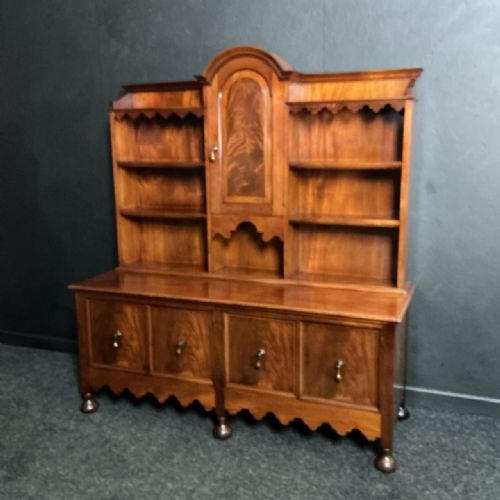
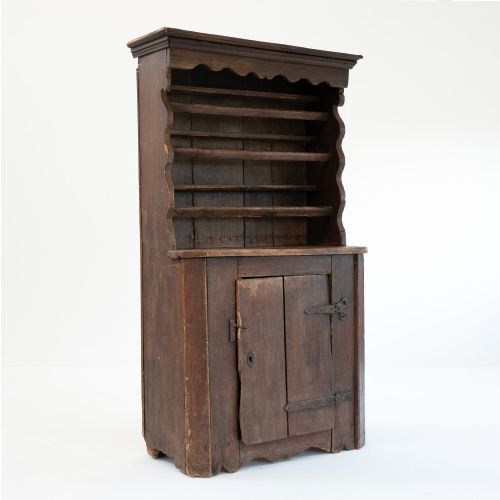
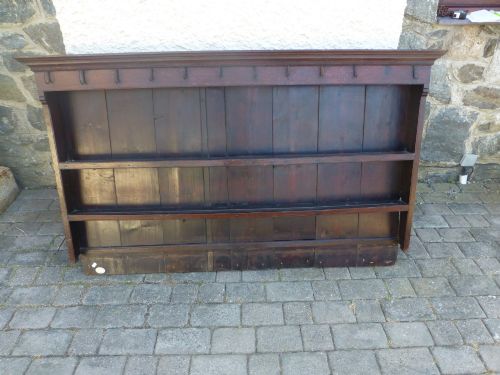
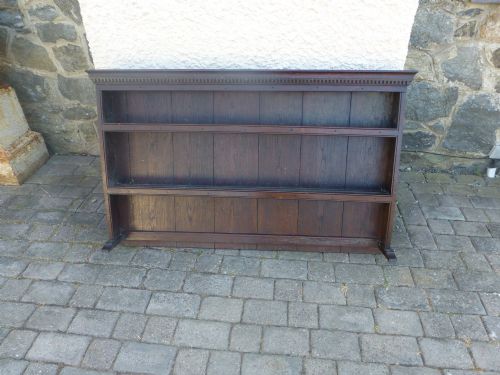
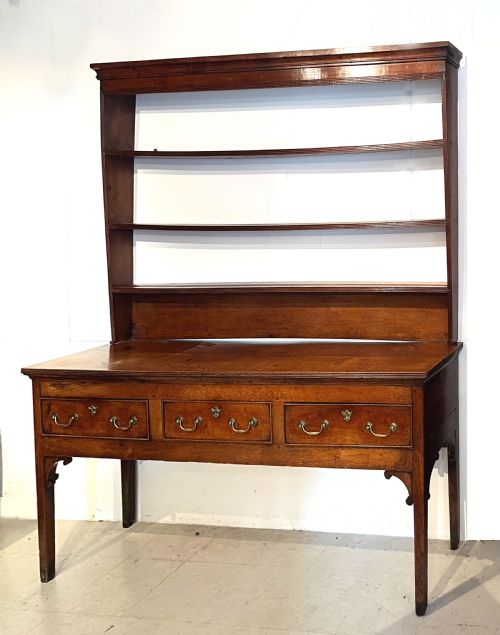
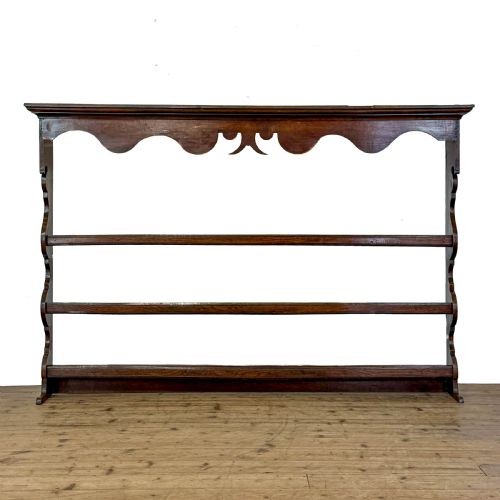
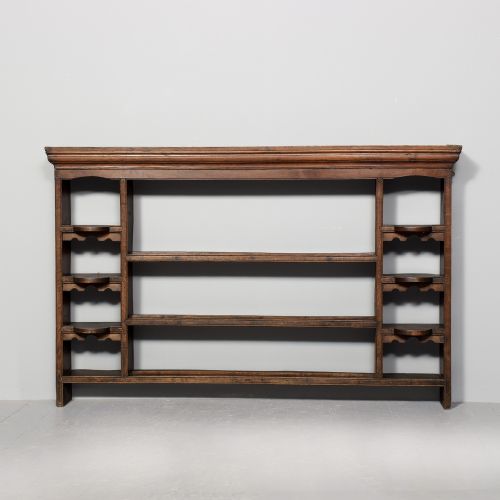


Brown Wooden Plate Rack
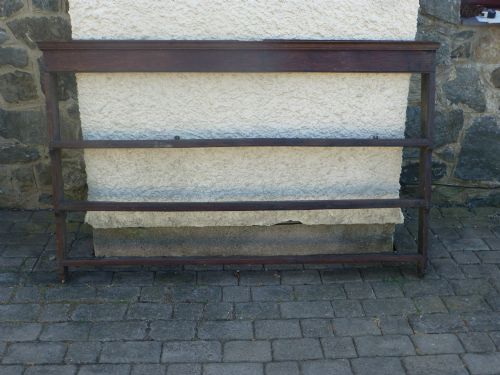
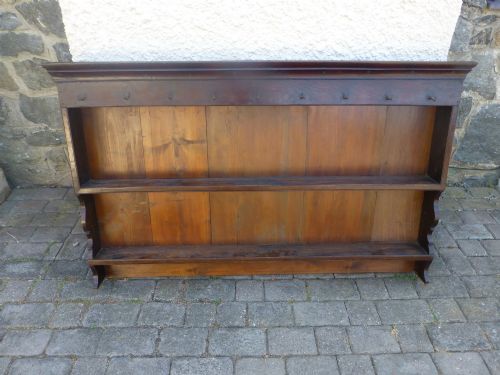
These brown wooden plate rack examples bring practical kitchen storage into period interiors, offering open shelving for display.
Brown Wooden Plate Rack
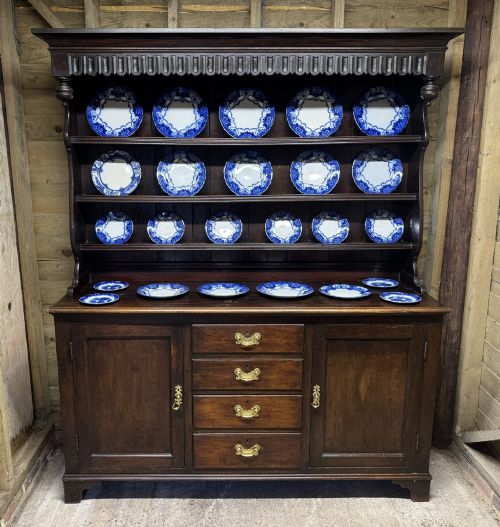
A brown wooden plate rack serves as a wall-hanging shelf or forms the upper tier of a dresser combination. These pieces organise ceramic plates for daily use while displaying them against a timber backdrop.
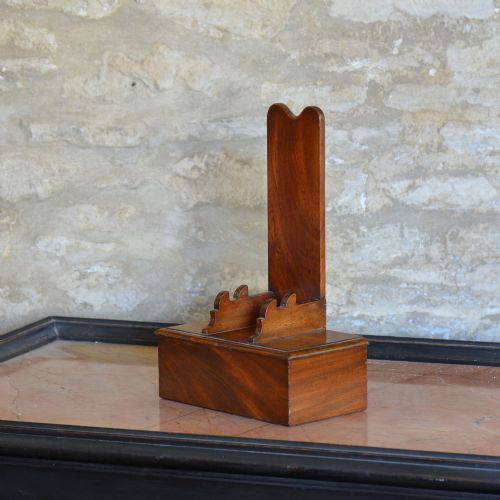
The selections here span centuries of vernacular woodworking, taking the form of wall racks, hanging shelves, and full dressers with integrated plate storage. Oak forms the majority of these pieces, alongside walnut, mahogany, pine, elm, and fruitwood.
Georgian and 18th century examples dominate the offerings, though Edwardian and early 20th century interpretations also appear. Buyers frequently encounter country house iterations designed to hold delftware and kitchen ceramics securely.
How they were made
Cabinetmakers constructed these racks using solid native timbers like oak, elm, and walnut, often joining the boards with traditional mortise and tenon joints. Backboards typically consist of vertical timber planks secured to horizontal ledges.
Shelving boards incorporate grooved plate rails or simple wooden retaining slips to keep ceramic dishes upright. Surface finishing relied on natural waxes and oils that interact with the grain over centuries to develop a deep patina.
Some oak racks shared workshops with barrels intended for whiskey, gin, and brandy.
What varies in quality
The integrity of the timber framing and the retention of original mounting points dictate the structural standard of each rack. Pieces retaining their early backboards and unthinned shelving display greater architectural harmony.
Surface depth and timber figure separate standard utility items from finer examples, particularly where walnut or figured oak reveals natural grain movement. The subtlety of edge moulding and the presence of integrated architectural details such as Corinthian columns elevate specific pieces.
The Brown Wooden Plate Rack Glossary
- Delft rack
- An open wall-mounted shelving unit specifically designed for displaying ceramic plates and platters. These racks utilise grooved bases to keep dishes from slipping forward.
- Pot board
- A lower open shelf built into the base of a dresser, historically utilised for storing heavy metal or earthenware cooking pots. This lower tier grounds the structure of larger country furniture.
- Marquetry
- The art of applying decorative veneer pieces in wood to form geometric patterns or pictorial designs. This technique appears on select cabinet doors and friezes.
- Corinthian columns
- Classical architectural uprights featuring ornate capitals decorated with acanthus leaves. These decorative elements frame the sides of select provincial wall racks.
Brown Wooden Plate Rack: Frequently Asked Questions
Where should a plate rack be hung?
These racks mount securely to dining room or kitchen walls above furniture like sideboards or tables. Ensure the fixings anchor directly into solid masonry or substantial timber studs.
Because loaded shelves hold significant weight from earthenware ceramics, stable wall attachment protects both the timber frame and the displayed pottery.
How do I clean wooden plate racks?
Dust the timber regularly with a dry, soft cloth to prevent grime accumulation in the grain and mouldings. Avoid chemical polishes that can soften historic wax finishes.
Occasional applications of beeswax nourish the wood and maintain the natural lustre built up over centuries of use.
Are these racks suitable for modern plates?
Many historic shelf depths accommodate contemporary dinnerware, though very thick modern plates may sit differently in older grooves. Check the depth of the display ledges before placing heavy ceramic items.
Smaller side plates and shallow bowls fit reliably within standard Georgian and country wall racks.
What timber types are most common?
Oak forms the primary material across eighteenth century and country examples, offering structural strength for open shelving. Walnut, mahogany, pine, and fruitwood also appear in regional variations.
Each timber species ages differently, giving every rack a distinct colour and grain pattern.