

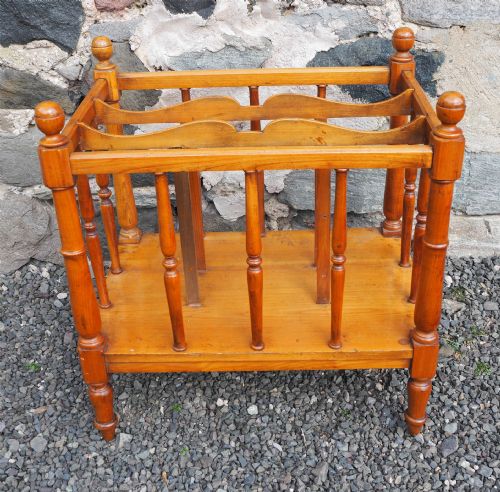


Brown Wooden Newspaper Stand
These brown wooden newspaper stand designs bring timeless organisation to daily papers, combining period craftsmanship with practical daily use.
Brown Wooden Newspaper Stand
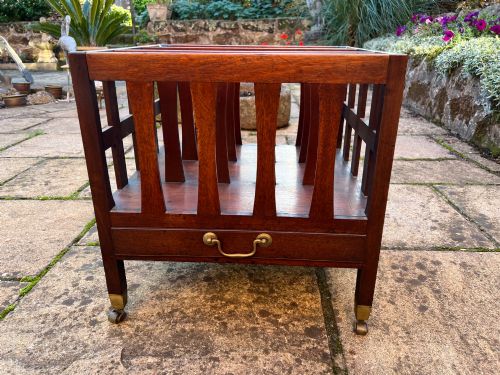
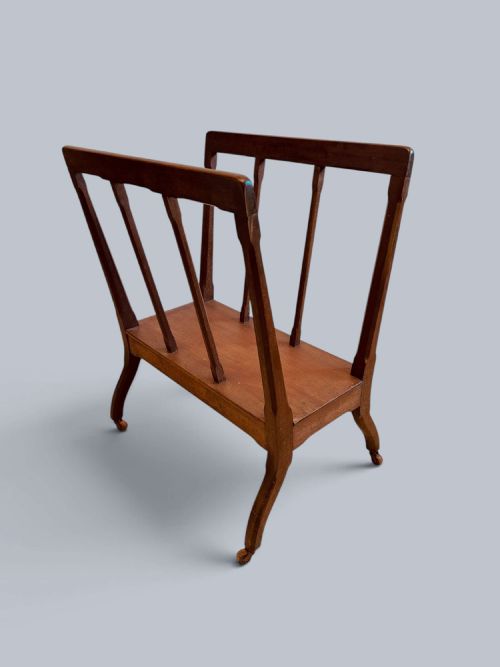
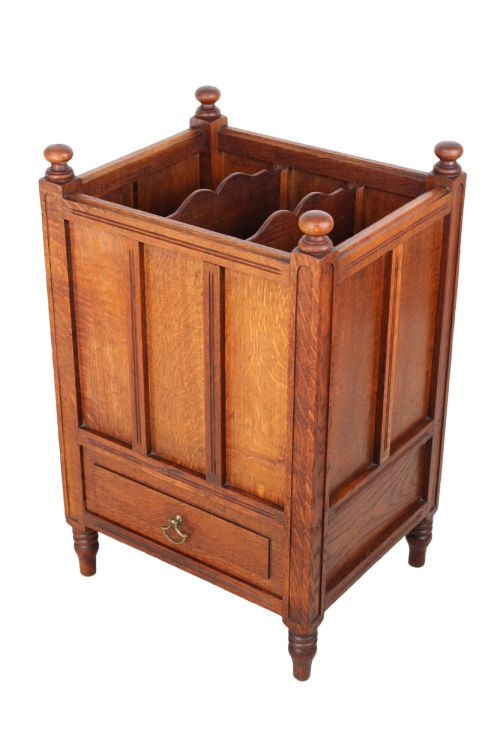
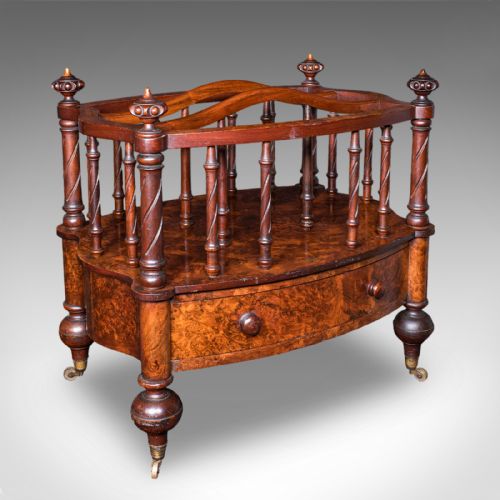
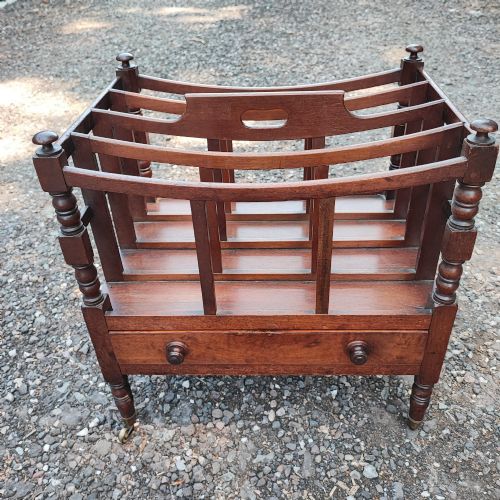
When you search for a brown wooden newspaper stand, you encounter pieces primarily known as canterburys, magazine racks, or folio stands. These items originate across the Georgian, Regency, Victorian, and Edwardian periods, showcasing forms designed to hold periodicals and sheets.
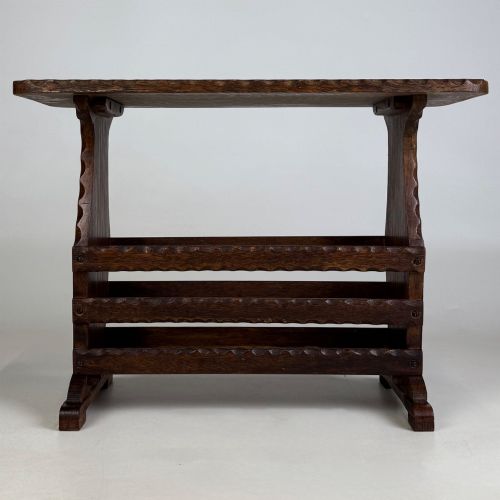
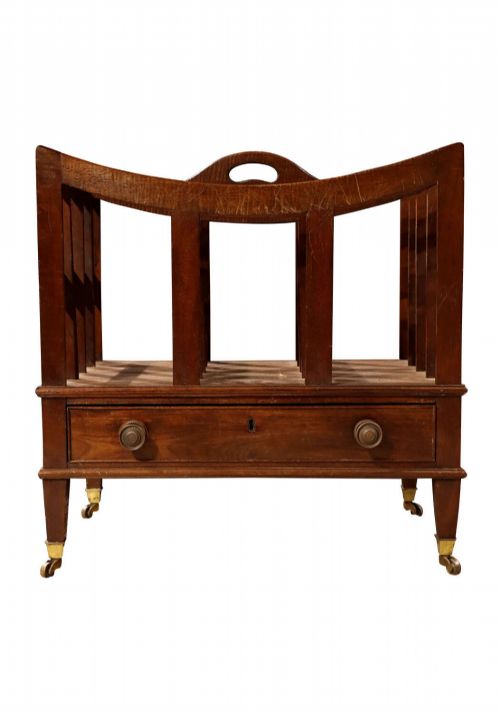
The most common examples on this page are mahogany canterburys featuring vertical slatted partitions and low legs. You also find oak and walnut magazine stands, alongside occasional multi-tiered racks and side tables adapted for paper storage.
How they were made
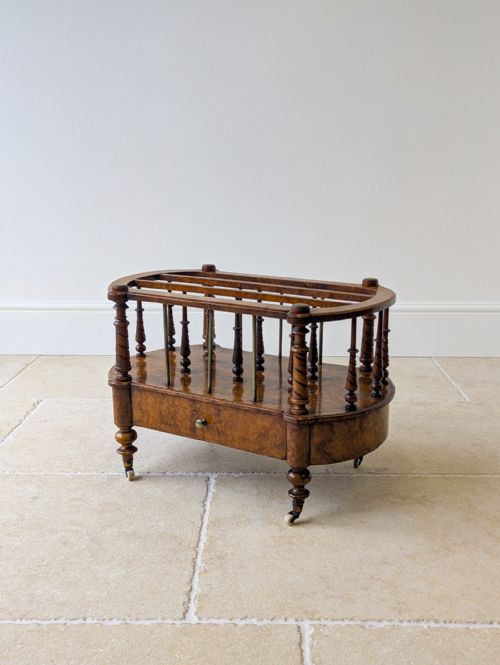
Cabinet makers utilised durable hardwoods such as mahogany, oak, walnut, and burr walnut, often accenting surfaces with boxwood inlay, satinwood, and brass details. Turnings, wreath-carvings, and exposed joinery define the structural framing of these pieces.
Makers constructed the divisions using thin timber slats to separate sections, frequently incorporating a single drawer beneath the main rack for smaller items. Finishes were applied to highlight the natural grain and rich colour of the wood.
Brown Wooden Newspaper Stand Retail Price Guide 2026
Typical asking prices for brown wooden newspaper stand among the pieces listed under this phrase on Sellingantiques today, from the lower quarter to the upper quarter. They describe what is for sale here now, not the wider market.
Early nineteenth-century makers expected you to store your sheet music right alongside your daily news.
What varies in quality
The refinement of the timber and the crispness of the carving distinguish finer examples from simpler workshop output. Pieces utilising burr walnut veneers or detailed inlay demonstrate superior cabinet work compared to plain utility designs.
Proportion and structural integrity dictate the standing of a piece within its period. Examples with well-defined partitions, intact brass castors, and smoothly operating drawers represent the higher tier of craftsmanship.
Howard and Sons of London
The Brown Wooden Newspaper Stand Glossary
- Canterbury
- A low stand with vertical divisions used for holding loose papers, music sheets, or newspapers. This form originated in the eighteenth century and remained popular through the Edwardian era.
- Folio stand
- A piece designed for holding large books, prints, or unbound papers flat or upright. These often feature adjustable frames.
- Burr walnut
- A prized timber veneer showing intricate, swirling grain patterns formed from tree growths. It was favoured by Victorian cabinet makers for decorative surfaces.
- Inlay
- A technique where contrasting woods like boxwood or satinwood are inserted into the primary timber surface to create patterns. It adds visual depth to Edwardian and Georgian furniture.
- Castors
- Small wheel attachments fitted to the feet of stands for ease of movement. Many period pieces utilise brass mounts for these wheels.
Brown Wooden Newspaper Stand: Frequently Asked Questions
What is the difference between a canterbury and a magazine rack?
A canterbury is a traditional piece of furniture featuring divided vertical sections, often sitting on low legs with castors and sometimes including a drawer.
A magazine rack generally refers to later or simpler open structures designed primarily for holding periodicals in domestic settings.
How do I date a wooden newspaper stand?
Dating relies on identifying the prevailing timber choices, construction techniques, and stylistic markers of periods like Regency, Victorian, or Edwardian. Georgian and Regency pieces tend to show rich mahogany solids, while Victorian and Edwardian examples frequently introduce burr walnut and inlaid decoration.
Examining the underside, joinery methods, and hardware provides further clues to the era of manufacture.
Can these stands be used for modern newspapers?
These stands accommodate modern newspapers and broadsheets within their vertical wooden partitions just as they did historical publications. The spaced dividers keep daily reading materials upright and organised.
Larger folios and magazines fit securely into the designated slots without slumping.
Where should I place a newspaper stand in a room?
These stands suit placement beside armchairs, sofas, or within studies where reading materials are frequently accessed. Their compact footprint allows them to sit neatly against walls or beside side tables.
The finished timber surfaces complement existing period or traditional furniture arrangements.