
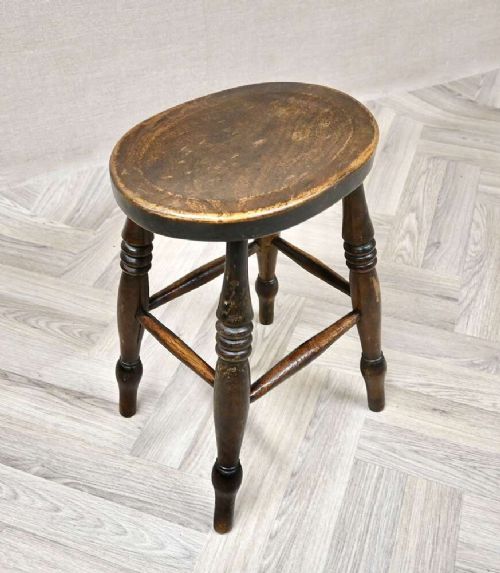
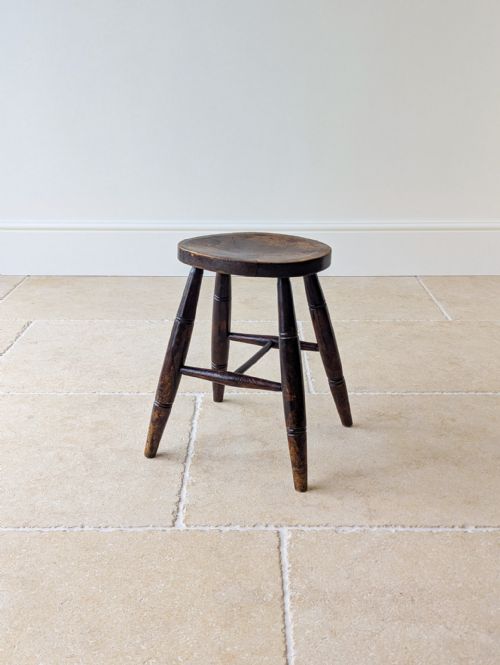
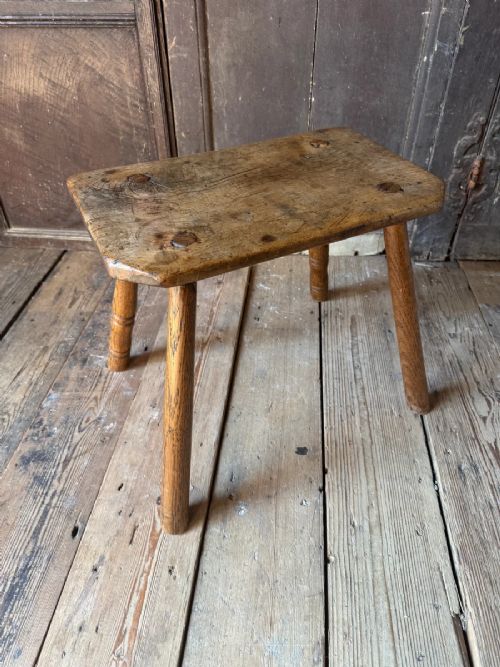
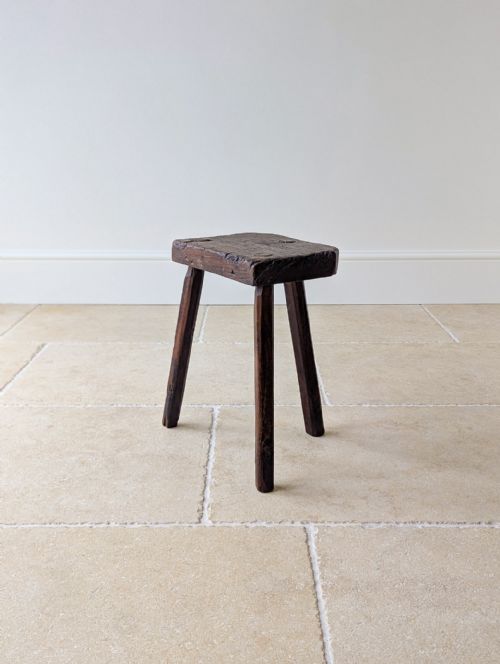



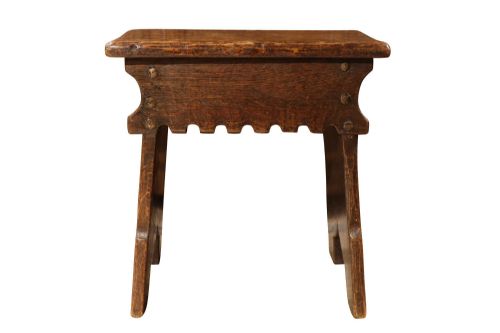
Brown Wooden Milking Stool
A brown wooden milking stool is a compact vernacular seat built for farm labour, prized today for honest timber and simple lines.
Brown Wooden Milking Stool
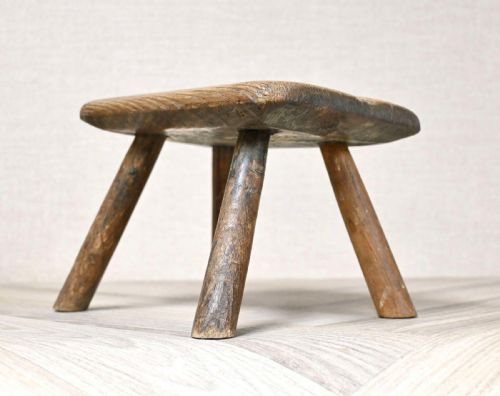
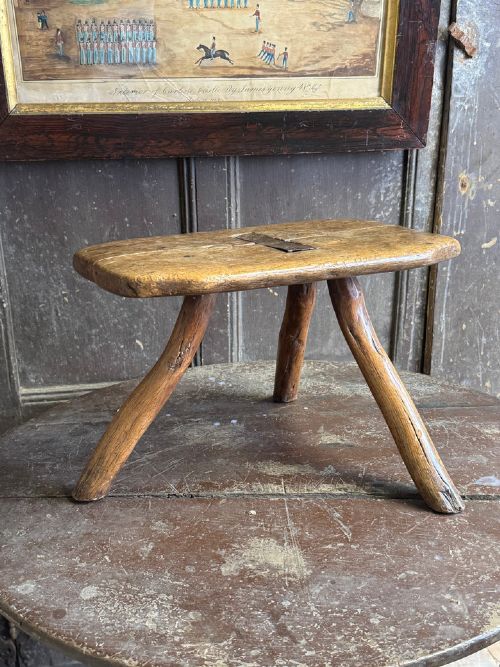
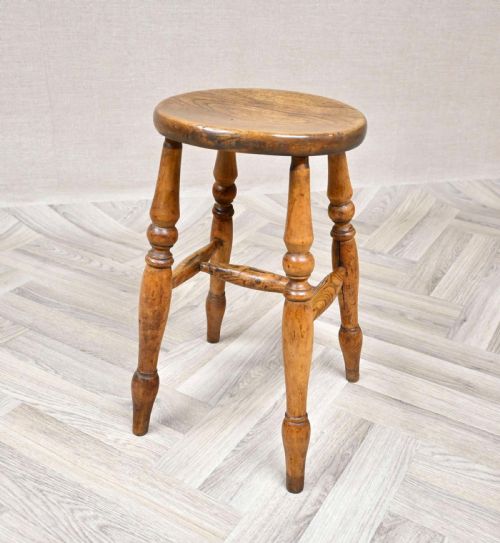
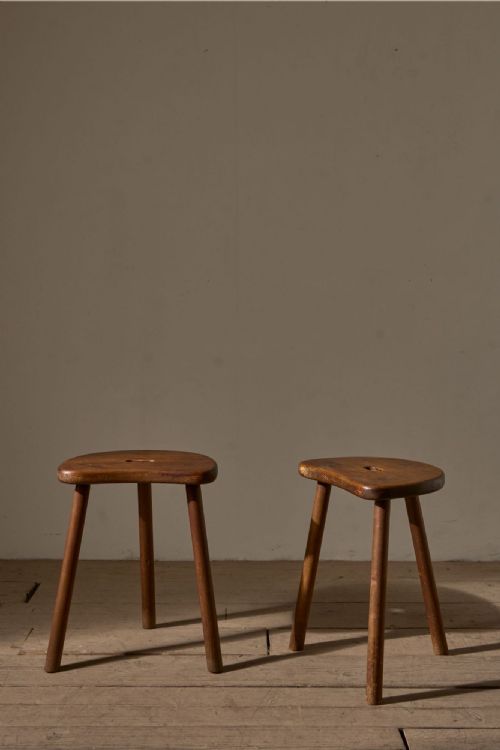
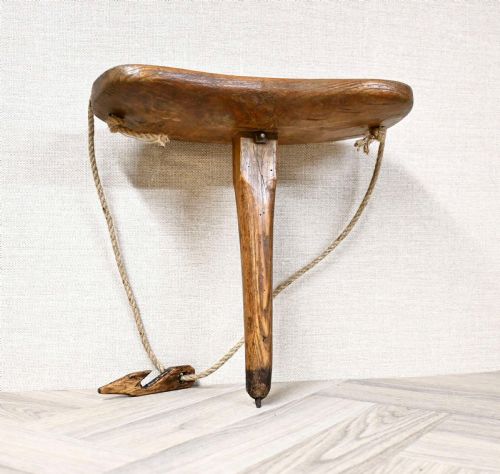
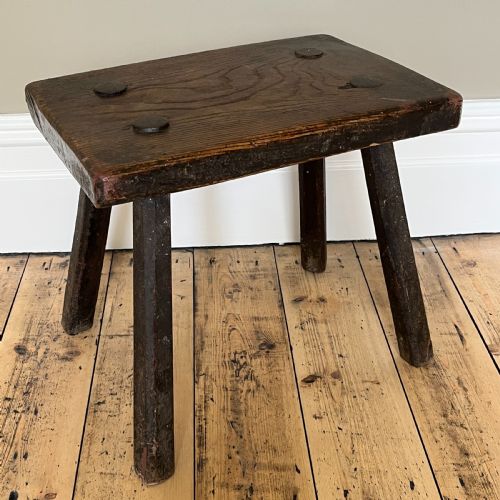
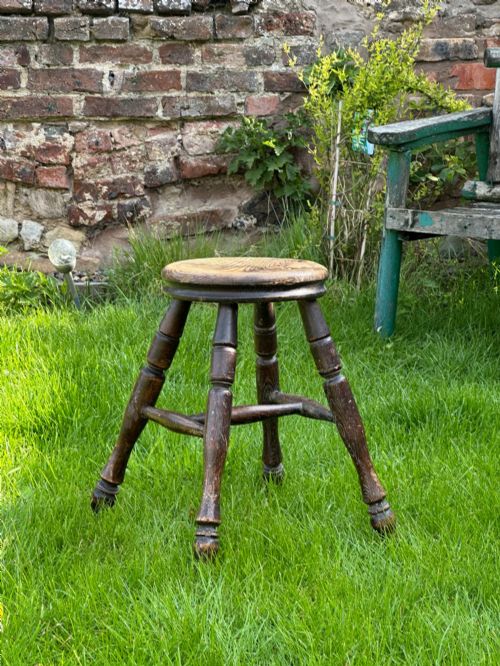
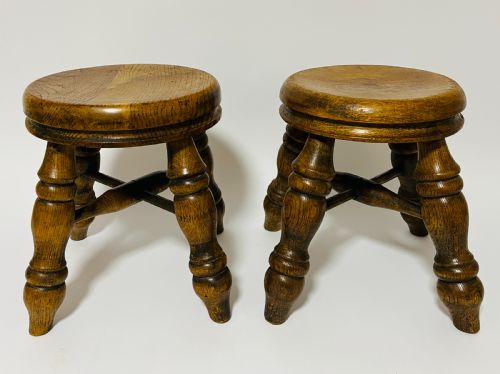
A brown wooden milking stool encompasses utilitarian seats originating from rural and domestic trades across the eighteenth and nineteenth centuries. The selection here spans Georgian, Victorian, and early twentieth-century periods, taking forms such as low country stools, Windsor seats, and specialist workshop variants.
Most examples rely on sturdy three-legged or four-legged designs intended for stable placement on uneven floors. Makers shaped seats from solid timber slabs, often featuring sculpted contours or simple round tops designed for practical daily use.
How they were made
Craftsmen utilised native hardwoods like elm, ash, oak, and sycamore, selecting timbers based on local availability and structural strength. Seats typically consist of a single thick plank or turned slab, joined to splayed legs through pegged or wedged construction.
Blacksmith iron repairs, splayed hedgerow legs, and turned supports appear frequently across the inventory, reflecting utilitarian upkeep rather than factory standardisation. Surfaces display natural grain and age-darkened patination developed through years of handling.
One listed nineteenth-century Scottish stool carries a pokerwork inscription reading touch me wha daur.
What varies in quality
Quality rests upon the integrity of the timber selection, the harmony of proportion, and the honesty of historic repairs. Stools retaining deep natural patination and uncompromised structural joints stand apart from heavily altered or stripped examples.
Consideration also depends on regional vernacular quirks, such as clever splayed leg placement or unusual seat sculpting, which elevate a standard utility item into a piece of distinct character.
J. Shoolbred
The Brown Wooden Milking Stool Glossary
- Vernacular
- An object built by a regional craftsman for local utility rather than following grand academic design. These pieces prioritize function and available materials over high-style ornamentation.
- Splayed legs
- Support posts angled outward from the centre for greater stability on uneven ground. This construction prevents tipping during milking or workshop tasks.
- Pegged construction
- A method of joining wooden elements using wooden pins or trunnels rather than metal nails. It allows timber components to expand and contract naturally with seasonal humidity.
- Elm
- A resilient native hardwood known for interlocking grain that resists splitting. Makers frequently chose it for chair seats and stools subjected to heavy strain.
Brown Wooden Milking Stool: Frequently Asked Questions
How do I care for antique timber?
Keep wooden stools away from direct heat sources and sudden humidity shifts to prevent the timber from splitting. Regular dusting and occasional application of appropriate wax maintain the surface patination.
Avoid harsh chemical cleaners that strip the historic finish and dry out the underlying wood.
Were these stools used indoors?
While initially designed for farmyards and dairies, these compact seats served various domestic roles near hearths and in workshops. Their small footprint made them convenient for secondary seating or low side stands.
Today, they transition easily into modern interiors as plant stands or bedside surfaces.
How do I spot period repairs?
Period repairs often include blacksmith-made iron brackets or replacement pegs that match the age of the primary timber. Such interventions show how working items were maintained for continued use.
Honest historic mending adds to the narrative of the piece rather than diminishing its character.