

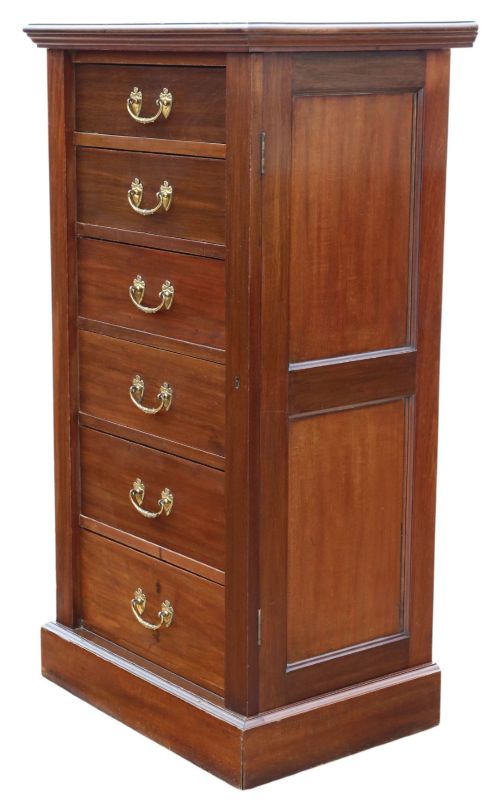
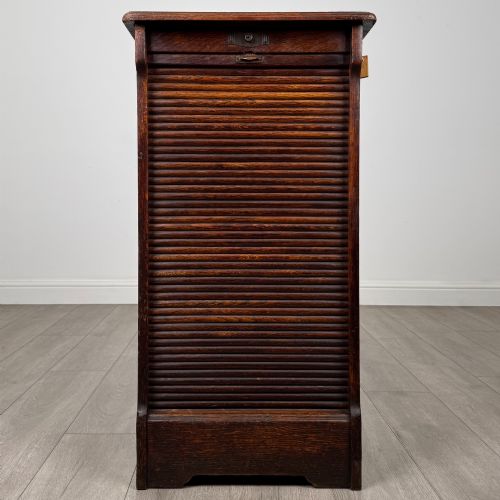
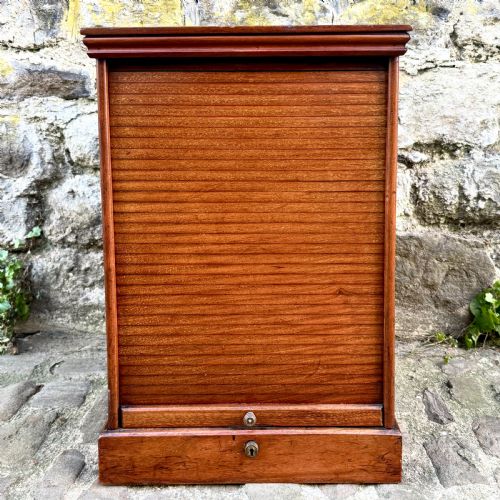
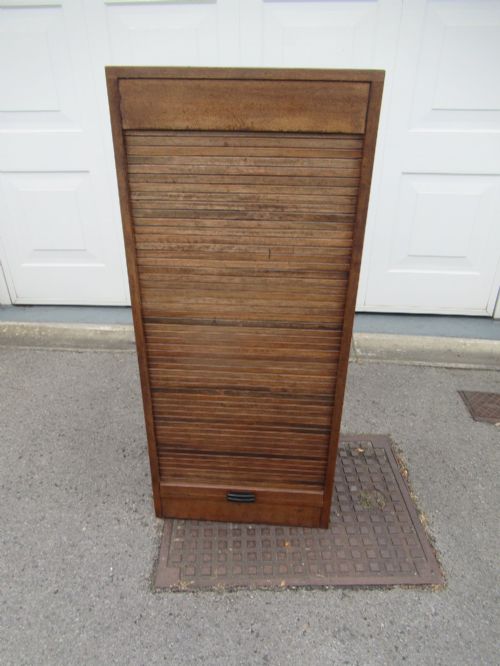
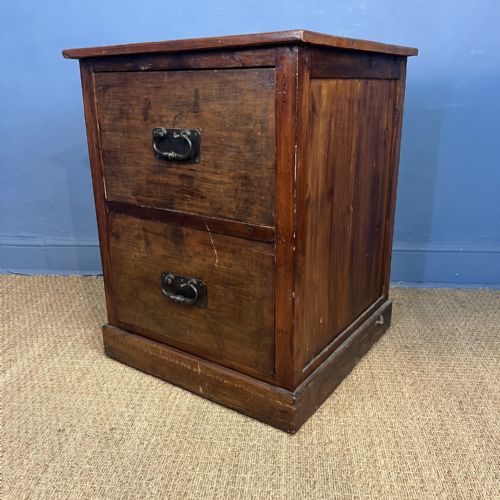


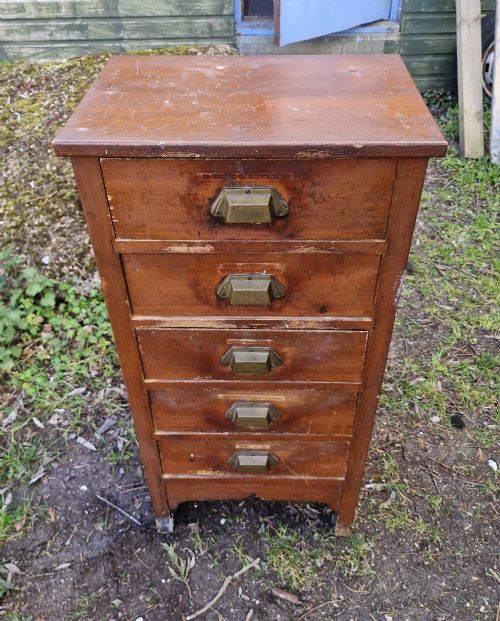
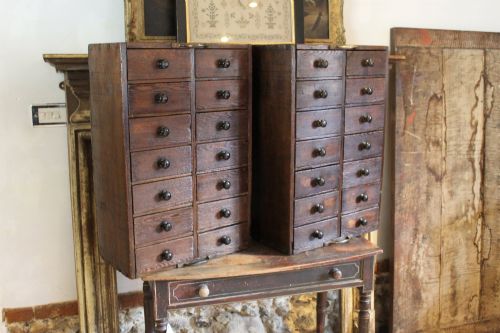


Brown Wooden Filing Chest
A brown wooden filing chest brings orderly storage home, uniting period timbers with practical drawers for daily use.
Brown Wooden Filing Chest
When you search for a brown wooden filing chest, you are looking at practical furniture designed to organise papers, music, or small collections with traditional craftsmanship. These pieces span from the late nineteenth century through to the Edwardian period and the 1930s, reflecting the administrative needs of past offices and homes. The forms range from upright filing cabinets and tambour fronts to banks of drawers and music cabinets.
On this page, you will most frequently meet pieces constructed from oak and mahogany, often dating from the Edwardian era or around nineteen hundred. They appear in styles such as Arts and Crafts, Victorian, and industrial commercial, showing how utilitarian office furniture was built to last using quality timbers. Whether arranged as a desktop unit or a tall bank of drawers, each item serves to contain paperwork while adding warm timber tones to a room.
How they were made
Carpenters built these cabinets using sturdy hardwoods like oak, mahogany, walnut, and pine, selecting them for durability in busy offices and studies. Timber frames were joined with traditional techniques to house multiple drawers securely, ensuring the structure could handle the weight of paper and ledgers.
Metal hardware played a crucial role in daily operation, with brass handles, pulls, and patent locking mechanisms fitted to secure contents. Tambour fronts utilised slatted wooden strips glued to canvas backings to slide smoothly around curved tracks, hiding the interior compartments.
Brown Wooden Filing Chest Retail Price Guide 2026
Typical asking prices for brown wooden filing chest among the pieces listed under this phrase on Sellingantiques today, from the lower quarter to the upper quarter. They describe what is for sale here now, not the wider market.
Listings feature oak, mahogany, walnut, pine, and rosewood across Victorian, Edwardian, and early twentieth-century periods.
What varies in quality
The distinction between standard office furniture and finer examples lies in the selection of timber and the sophistication of the mechanism. Pieces featuring figured mahogany, walnut, or rosewood sit at a different level from utility pine or beech, showing more careful cabinet-making.
D Napier And Sons·Amberg·Shannon
The Brown Wooden Filing Chest Glossary
- Tambour
- A flexible shutter door made of narrow wooden slats attached to canvas, allowing it to slide smoothly around a curved track to enclose cabinet shelves.
- Wellington chest
- A tall, slender chest of drawers secured by a locking side stile that fastens over the drawer edges with a padlock or hinged bar.
- Bank of drawers
- A multi-drawer cabinet, often tall or wide, originally designed for workshops, offices, or shops to sort large quantities of small items.
- Campaign chest
- Portable furniture made in sections with recessed brass handles, designed to be packed easily for travel during the nineteenth century.
- Folio cabinet
- A specialised piece of furniture built to store large sheets of paper, prints, or music scores flat within shallow drawers.
Brown Wooden Filing Chest: Frequently Asked Questions
What were these cabinets used for?
These cabinets were designed to organise letters, documents, music sheets, and office supplies in homes and workplaces.
Their multiple drawers and specialised fronts kept paperwork sorted and secure before modern filing systems took over.
How do I date a wooden filing chest?
Dating relies on observing the timber species, construction methods, and hardware styles characteristic of periods like the Victorian era or Edwardian times.
Patent marks and maker stamps on brass fittings or locks also help narrow down the exact decade of manufacture.
Are these drawers suitable for modern paper?
Many older filing chests accommodate modern paper sizes within their drawers, though some period formats were built for smaller historical documents.
Checking the internal dimensions of the drawers ensures your papers or folders will fit comfortably inside.
How should I care for the timber?
Keep the wood away from direct heat sources and strong sunlight to prevent the timber and internal drawer runners from warping.
Applying a traditional beeswax periodically helps nourish the surface and maintains the natural lustre of the mahogany, oak, or walnut.