





Brown Wooden File Cabinet
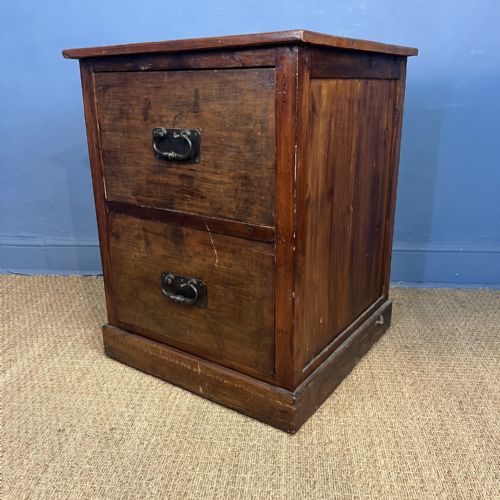
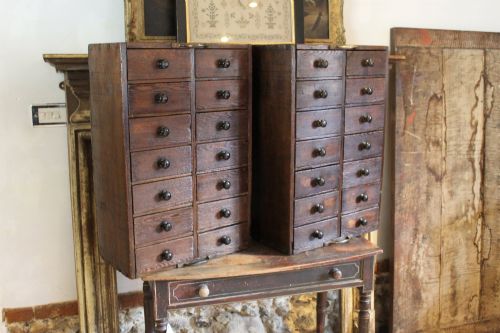
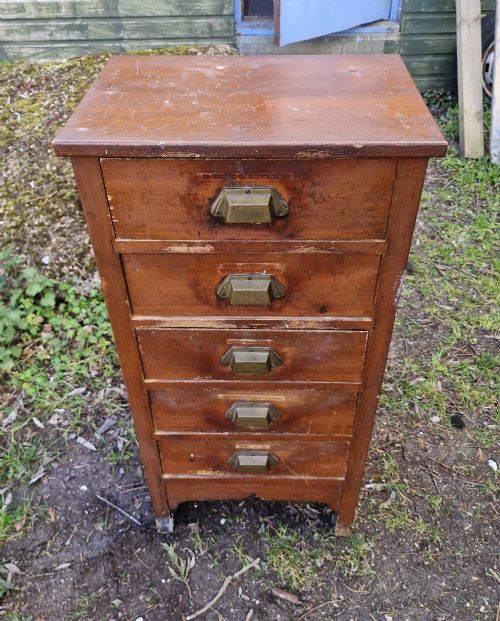
A brown wooden file cabinet brings working history into a room, offering practical storage built from solid mahogany, oak, and walnut.
Brown Wooden File Cabinet
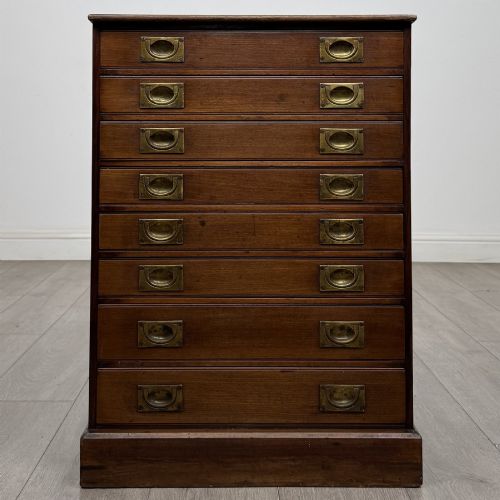
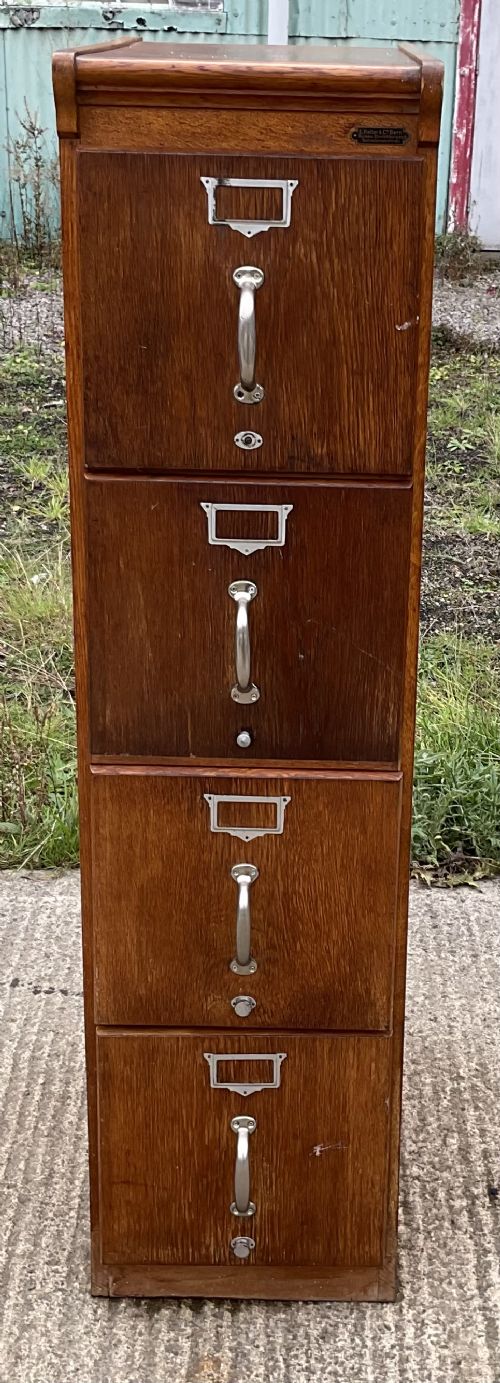
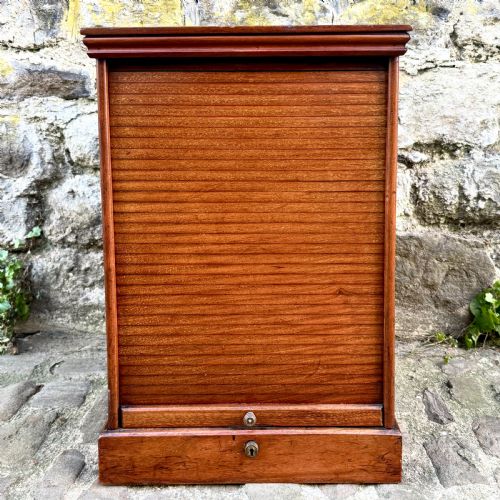
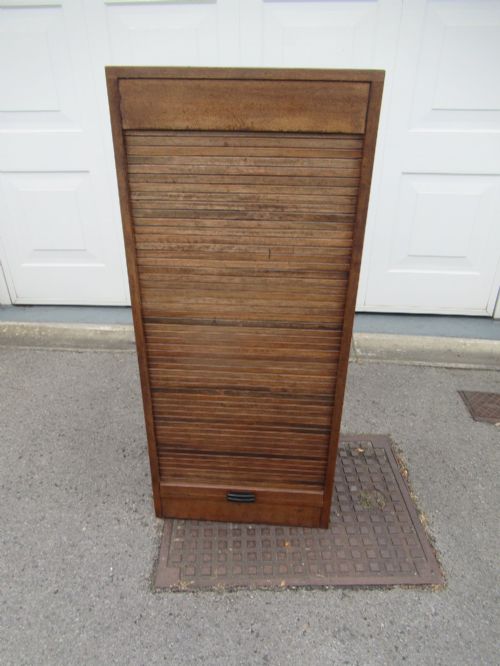
A brown wooden file cabinet serves as heavy-duty workspace storage, spanning forms from single tambour units to banks of six or more drawers. The selection on this page draws heavily from Edwardian and Victorian periods alongside the early twentieth century.
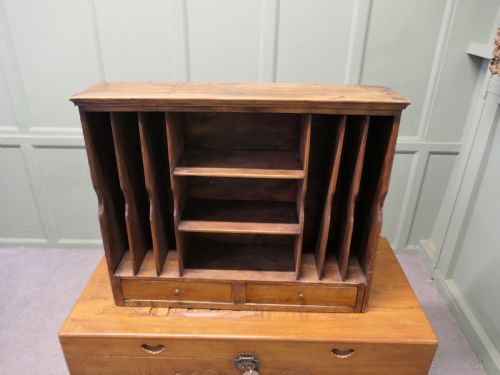
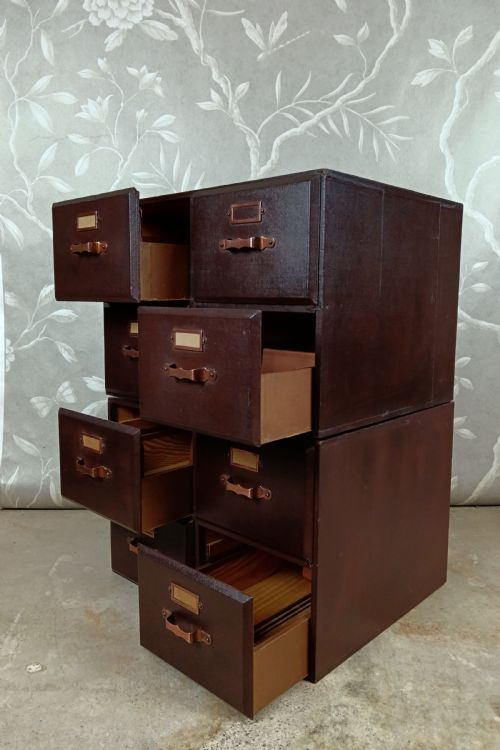
Buyers encounter specialised storage including music cabinets, library card sets, and patent letter files alongside standard filing drawers. Materials range widely across mahogany, oak, walnut, and pine, reflecting institutional and office use.
Makers and styles stretch from Arts and Crafts simplicity to French Country and Anglo-Indian variants. These pieces combine utilitarian function with rich timber grains suited to domestic studies.
What varies in quality
Quality rests in the selection of cabinet timbers, the smoothness of drawer movement, and the integrity of proprietary mechanisms like tambour tracks and patent locking systems. Original brass handles and period label holders elevate the execution.
Simpler pine or beech utility pieces contrast with finely figured mahogany and walnut examples featuring panelled sides and detailed mouldings. The presence of makers' names or patent stamps distinguishes standard office furniture from specialised workshop output.
Brown Wooden File Cabinet Retail Price Guide 2026
Typical asking prices for brown wooden file cabinet among the pieces listed under this phrase on Sellingantiques today, from the lower quarter to the upper quarter. They describe what is for sale here now, not the wider market.
Some nineteenth-century filing units still contain faint ink smudges left by busy clerks sorting through old correspondence.
Amberg·Shannon·D Napier and Sons
The Brown Wooden File Cabinet Glossary
- Tambour
- A flexible shutter door formed of narrow strips of wood glued to canvas, allowing it to slide smoothly around a curved track. This mechanism conceals office shelves or filing slots while saving exterior space.
- Wellington chest
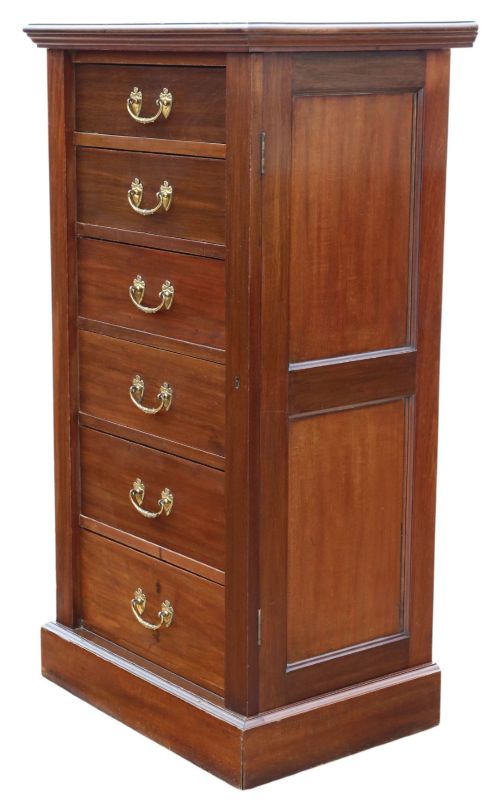
- A tall, narrow chest of drawers secured by a hinged locking side bar that fastens with a padlock. It originated in the nineteenth century for organising papers and documents.
- Bank of drawers
- A multi-drawer storage unit designed for high-density document sorting in commercial or institutional settings. These banks range from compact desktop organizers to tall workshop stacks.
- Patent letter file
- A proprietary filing system utilising mechanical binders or spring clips to hold documents upright. Amberg's system is a notable example seen in period office furniture.
- Folio cabinet
- A specialised storage piece built for large sheets of paper, prints, or maps. These cabinets use wide, shallow drawers to keep flat materials uncreased.
Brown Wooden File Cabinet: Frequently Asked Questions
How do tambour doors operate?
Tambour doors slide along recessed wooden tracks built into the sides of the cabinet. The door panels consist of narrow wooden slats attached to a fabric backing, which lets the entire front curve around the interior framework.
To open or close the cabinet, you guide the slat curtain smoothly within its channel. Proper maintenance involves keeping these tracks clean from dust so the flexible wooden curtain travels without binding.
What is a Wellington chest?
A Wellington chest is a tall, narrow set of drawers distinguished by a locking stile or vertical wooden bar hinged on one side. This bar fastens over the edge of all the drawers and locks with a key to secure sensitive documents.
Originating in the nineteenth century, this design allowed offices and studies to lock away large quantities of paperwork in a compact footprint. They typically feature six or more graduated drawers.
How do I care for polished wood?
Polished mahogany, oak, and walnut surfaces require protection from direct sunlight and extreme temperature shifts to prevent timber warping or fading. Dust the cabinet regularly with a soft, dry cloth rather than using silicone sprays.
Applying a traditional beeswax polish occasionally nourishes the aged wood grain and maintains its sheen. Avoid placing damp items directly on the top surface to protect the historic polish.
Can these fit modern paper sizes?
Many period filing cabinets and card catalogues were designed for historical paper dimensions, index cards, or specific ledger sizes. Collectors cabinets and music drawers may have shallower or narrower compartments than standard modern folders require.
Reviewing the internal drawer dimensions listed for each piece ensures compatibility with your specific storage needs. Some cabinets suit smaller documents, notes, or stationery better than modern hanging files.