

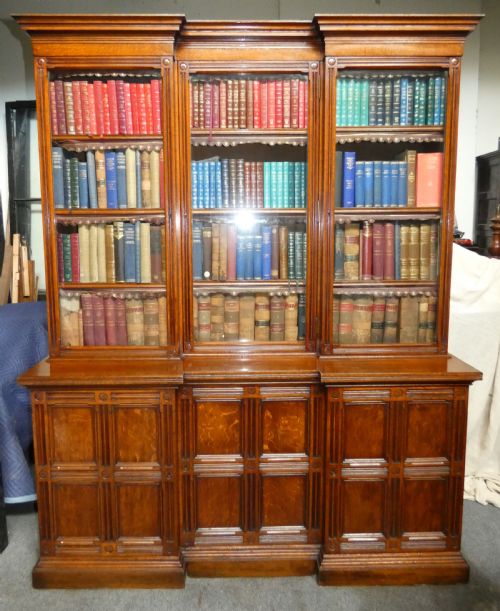
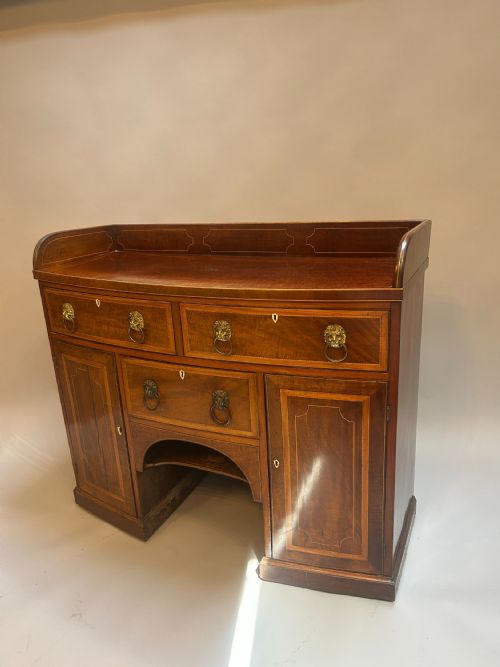
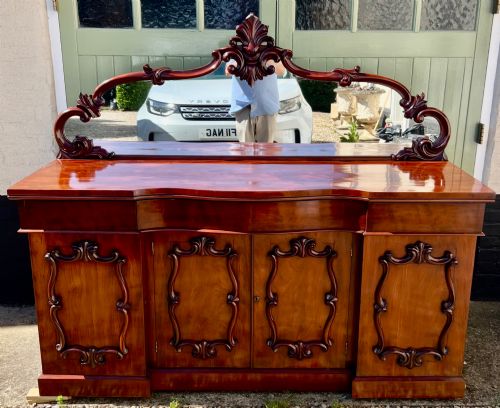
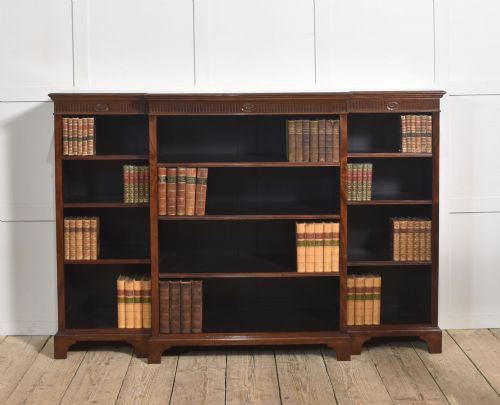
Brown Wooden Breakfront
A brown wooden breakfront offers a commanding presence in a room, combining architectural timber sections with practical storage for books or display.
Brown Wooden Breakfront
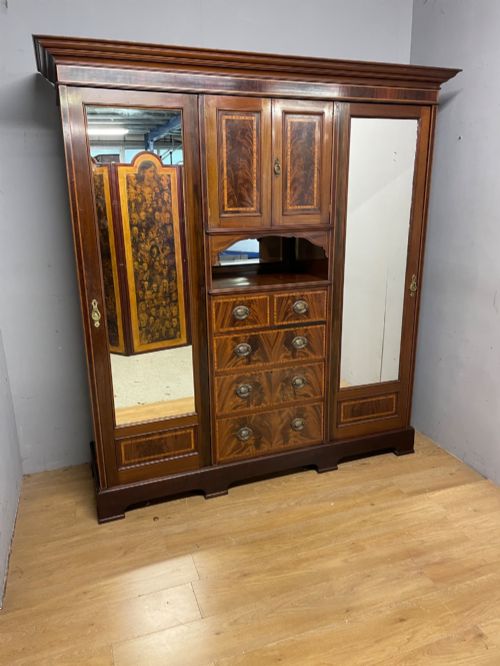
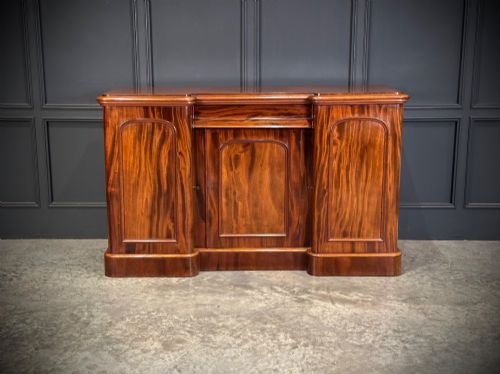
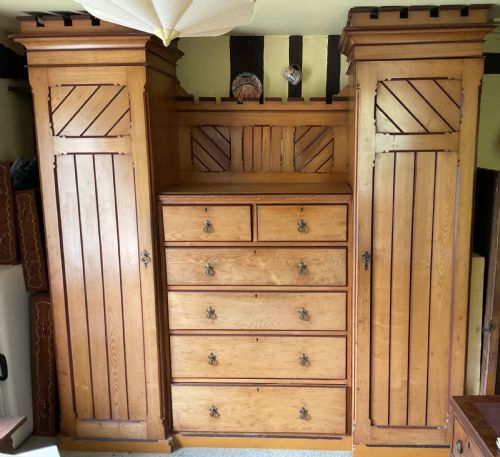
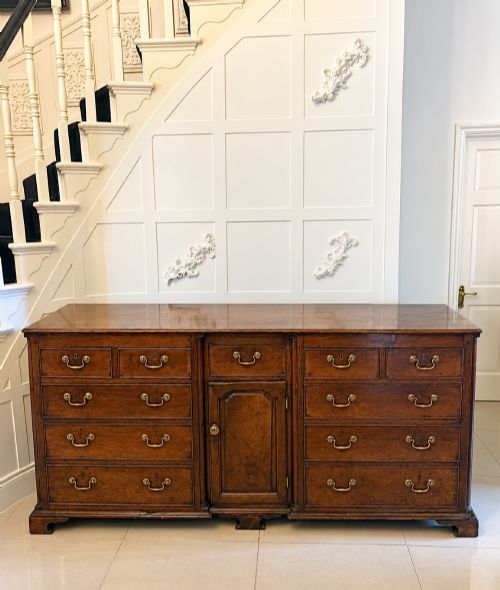
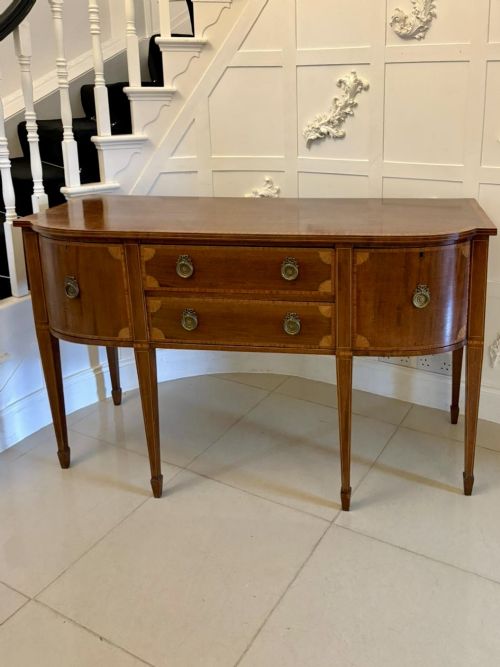
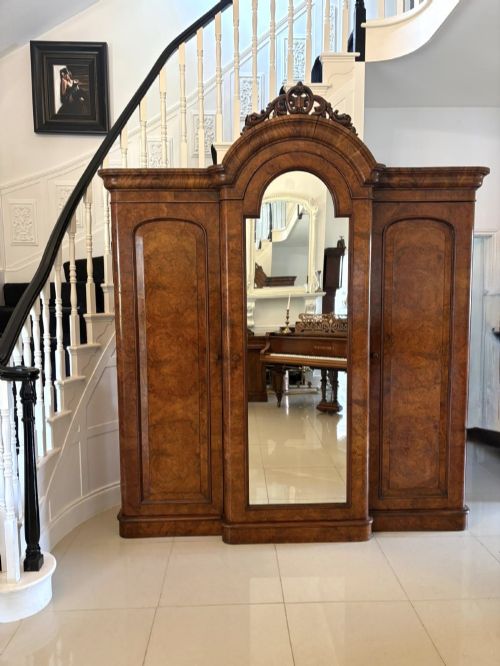
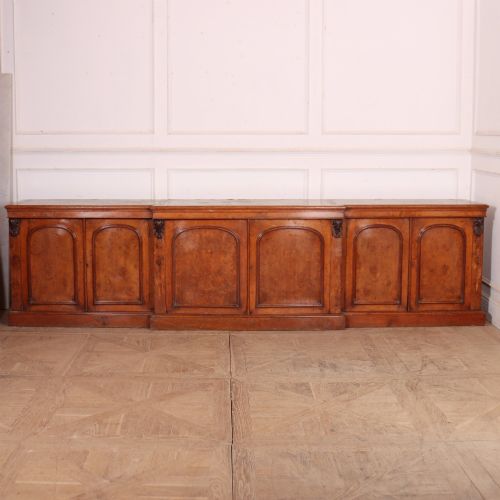
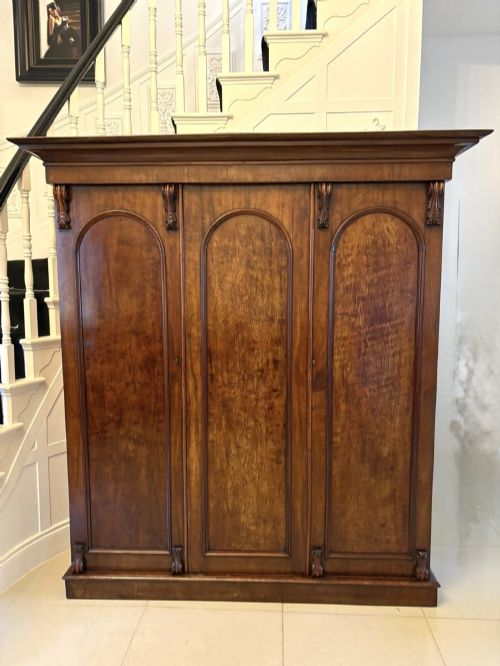
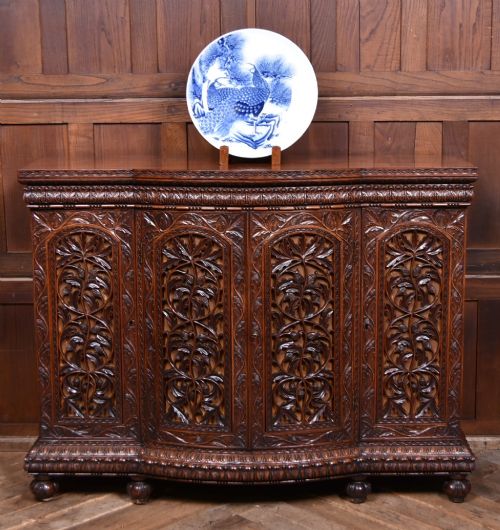
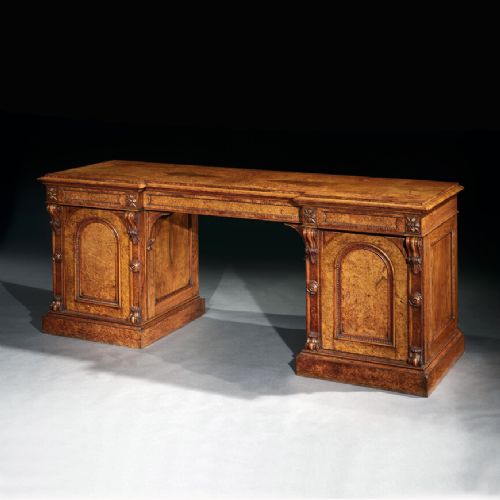
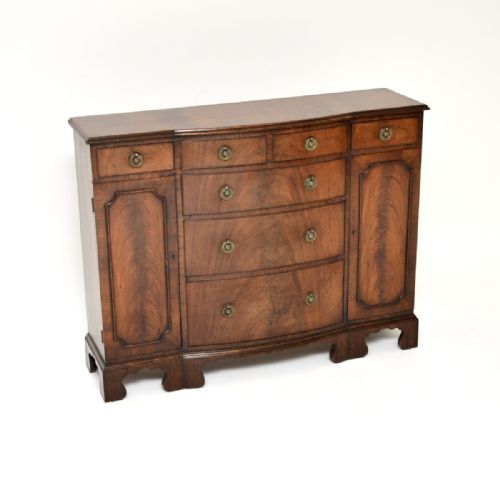
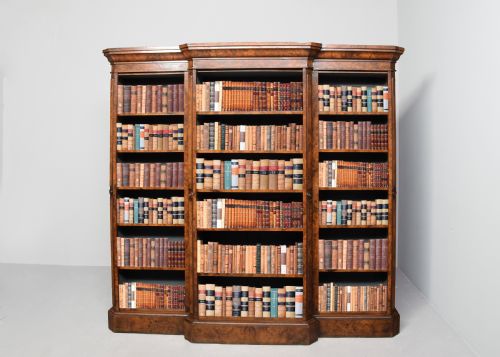
When you search for a brown wooden breakfront, you encounter large furniture forms featuring a central section that projects forward from the flanking wings. These pieces span bookcases, sideboards, wardrobes, and display cabinets across the Georgian, Regency, and Victorian periods.
The layout typically utilises solid timbers and veneers to create a substantial facade with distinct vertical compartments. Bookcases dominate the selection, often fitted with adjustable shelves and glazed or open fronts.
How they were made
Cabinet makers constructed these pieces primarily using mahogany, walnut, and oak timbers, frequently applying flame mahogany veneer, burr walnut, and satinwood crossbanding to the main surfaces. Brass hardware and glass panels complete the construction of the larger cabinets and bookcases.
The joinery relies on traditional framing techniques to support the prominent central projection and heavy doors. Inlaid details and carved elements are integrated into the timber structures to accentuate the architectural breakfront silhouette.
Brown Wooden Breakfront Retail Price Guide 2026
Typical asking prices for brown wooden breakfront among the pieces listed under this phrase on Sellingantiques today, from the lower quarter to the upper quarter. They describe what is for sale here now, not the wider market.
Listings feature mahogany, walnut, and oak timbers, alongside decorative veneers such as flame mahogany and burr walnut across the 19th and early 20th centuries.
What varies in quality
The standard of timber selection largely dictates the quality of a piece, with figured grains, pollard oak, and symmetrical veneer matching marking out superior examples. The crispness of carved mouldings and the precision of inlaid satinwood or brass work also set finer items apart.
Internal execution, such as the provision of adjustable shelving in bookcases and the integration of fitted interior compartments in wardrobes and sideboards, reflects the original maker's investment of labour and materials.
Edwards & Roberts
The Brown Wooden Breakfront Glossary
- Breakfront
- A piece of furniture where the central section projects forward beyond the flanking wings. This architectural arrangement creates depth and breaks up a flat facade.
- Flame mahogany
- A veneer cut from the fork of the mahogany tree that produces a distinctive flickering flame pattern. Cabinet makers used this to create decorative central panels.
- Crossbanding
- A narrow strip of veneer laid across the grain of the primary wood to form a contrasting border. It frames drawer fronts and cabinet doors on higher-quality pieces.
- Burr walnut
- Timber taken from a growth or burl on the walnut tree, yielding a swirling, highly figured grain. It was favoured for luxury Victorian wardrobes and bookcases.
- Chiffonier
- A low cabinet or sideboard fitted with shelves or drawers, developed during the nineteenth century. Versions appear with breakfront configurations for compact storage.
Brown Wooden Breakfront: Frequently Asked Questions
What is a breakfront bookcase?
A breakfront bookcase is a large cabinet featuring a stepped facade where the middle section extends further forward than the left and right sides. This design adds architectural depth and divides the shelving into distinct visual bays.
Such bookcases appear in mahogany and walnut, spanning open shelf formats and glazed display configurations from the nineteenth and early twentieth centuries.
How do I date a wooden breakfront?
Dating relies on observing the prevailing timber choices, hardware, and stylistic traits of the period. Regency and Georgian pieces often display linear mahogany veneers and restrained inlay, while Victorian examples frequently utilise burr walnut and heavier carved mouldings.
Construction methods inside the piece, such as drawer linings and backboards, provide further clues to the decade of manufacture.
Where should I place a breakfront sideboard?
A breakfront sideboard requires a substantial wall space, typically in a dining room or a large living area, to accommodate its protruding central section and extended length. These pieces function well as serving surfaces and enclosed storage for tableware.
Allow sufficient clearance in front of the piece for cabinet doors or drawers to open fully without obstruction.
Are breakfront wardrobes modular?
Antique breakfront wardrobes are typically built in multi-section carcass units to allow for transport and assembly in large bedrooms. They often separate into a central hanging or drawer tower flanked by two narrower wardrobe sections.
Installation requires a level floor and adequate ceiling height to accommodate the heavy timber cornices.