

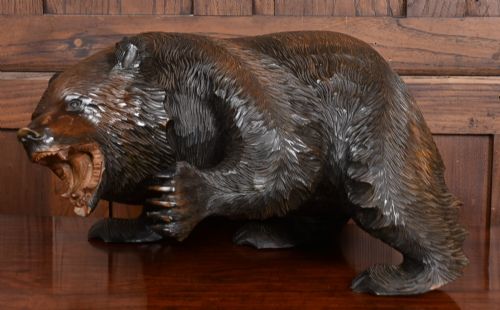
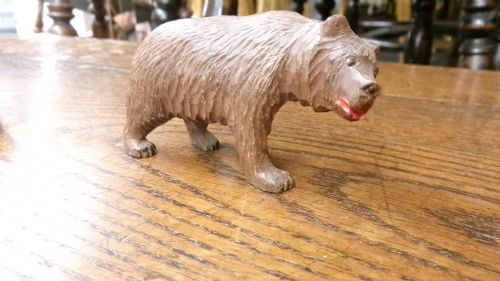


Brown Wooden Bear
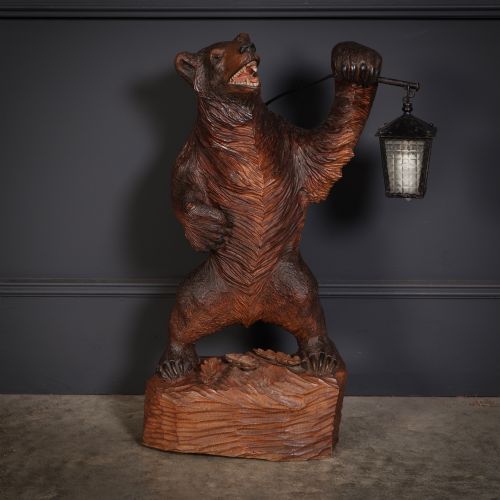
These brown wooden bear carvings bring woodland wildlife indoors, taking forms from functional hall stands and tobacco jars to desk accessories and musical seats.
Brown Wooden Bear
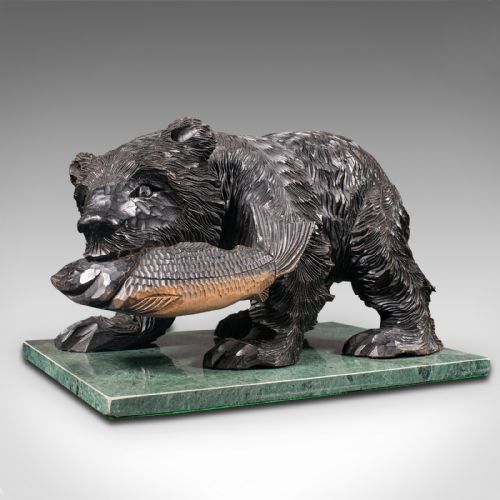
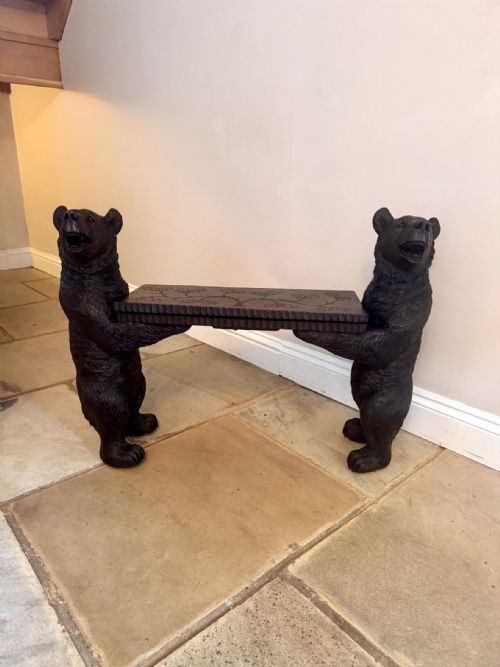
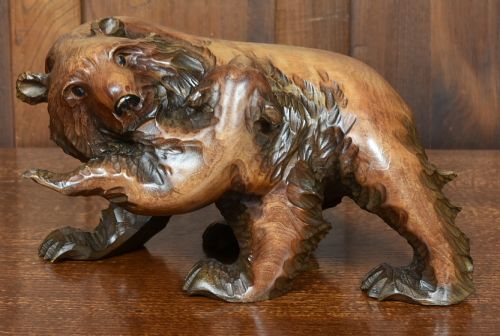
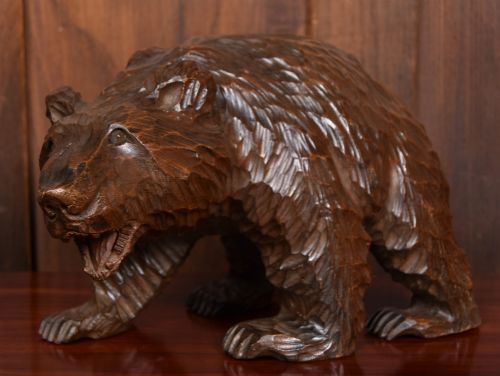
A brown wooden bear encompasses hand-carved sculptural objects and functional items originating predominantly from European Black Forest workshops and Japanese folk art traditions. The most common examples met here take the form of small freestanding figurines, linden wood animal groups, and utilitarian hall furniture such as umbrella stands and benches.
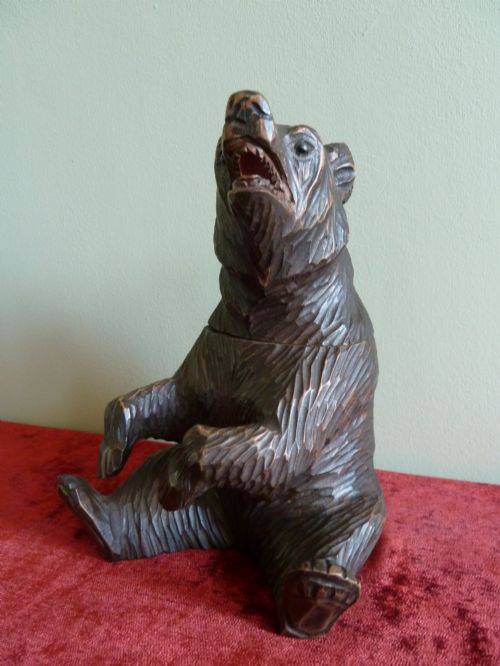
The objects span multiple periods from the nineteenth century through the Edwardian era, capturing domestic animals engaged in human activities or rendered in realistic postures. Makers utilised local timbers to create decorative sculptures, tobacco boxes, and inkwells that reflect regional carving specialisms.
Materials and construction
Carvers shaped these figures primarily from linden wood, walnut, cedar, and assorted hardwoods using traditional hand tools to define fur textures and anatomical details. The timber selection dictated the depth of relief and the smoothness of the finished surface.
Details such as stud eyes, glass elements, and metal fittings were integrated into the wooden bodies to complete functional pieces like inkstands, lamps, and tobacco jars. Artisans relied on careful joinery to construct larger furniture forms including benches and hall stands.
Brown Wooden Bear Retail Price Guide 2026
Typical asking prices for brown wooden bear among the pieces listed under this phrase on Sellingantiques today, from the lower quarter to the upper quarter. They describe what is for sale here now, not the wider market.
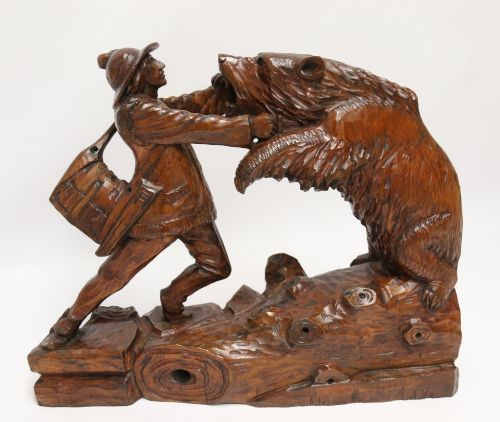
At least one bear holds a log.
Assessing quality
Quality rests upon the naturalism of the carving and the dexterity displayed in rendering musculature, fur, and facial expressions. Master carvers achieved depth and animation that elevate a piece from a simple novelty to a refined sculpture.
The integration of the bear form into functional objects like hall stands or humidor boxes determines the sophistication of the piece. Superior examples maintain balanced proportions whether rendered as miniature figurines or large furniture.
The Brown Wooden Bear Glossary
- Black Forest
- A style of wood carving originating in Central Europe during the nineteenth century, known for realistic depictions of wildlife, particularly bears.
- Kibori Kuma
- A traditional style of Japanese wood-carved bear originating from Hokkaido, often featuring textured fur markings.
- Linden wood
- A pale, fine-grained timber favoured by carvers for its uniform texture and ease of working detailed forms.
- Humidor
- A moisture-controlled box designed for storing cigars, frequently encountered carved in the shape of an animal.
- Hall stand
- A piece of hallway furniture combining hooks, umbrella storage, and occasionally a seat or integrated carving.
Brown Wooden Bear: Frequently Asked Questions
What are brown wooden bear carvings?
These pieces are hand-carved wooden sculptures and functional household objects shaped to resemble bears, originating mainly from European and Japanese traditions.
They range from miniature desk accessories and inkwells to large hallway furniture such as umbrella stands and benches.
Where were these carved bears made?
The majority originate from European Black Forest regions and Japanese folk art communities, particularly Hokkaido.
Local artisans utilised regional timbers like linden and walnut to produce both decorative figures and practical items for the home.
How were these wooden items used?
Many served practical daily functions in domestic interiors, holding tobacco, matches, inkwells, or walking sticks.
Larger versions functioned as hall furniture, providing seating and umbrella storage while displaying detailed animal carvings.
How do I identify the period?
Dating relies on stylistic markers, timber types, and construction methods associated with nineteenth-century and Edwardian workshops.
Details such as glass eyes, metal hardware, and regional carving signatures help distinguish the era of production.