


Brown Wood Wine Cooler
These brown wood wine cooler pieces are traditional serving vessels built to chill bottles in style, offering a practical centrepiece for dining rooms.
Brown Wood Wine Cooler
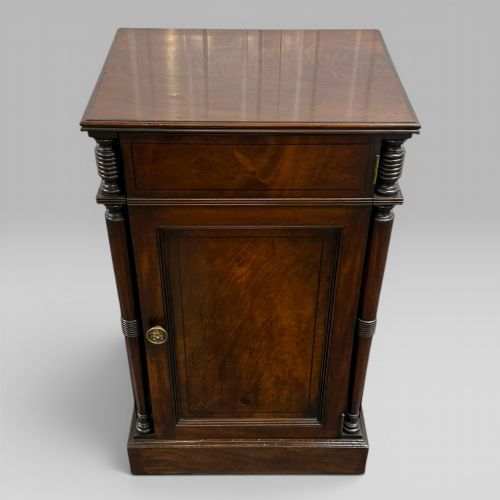
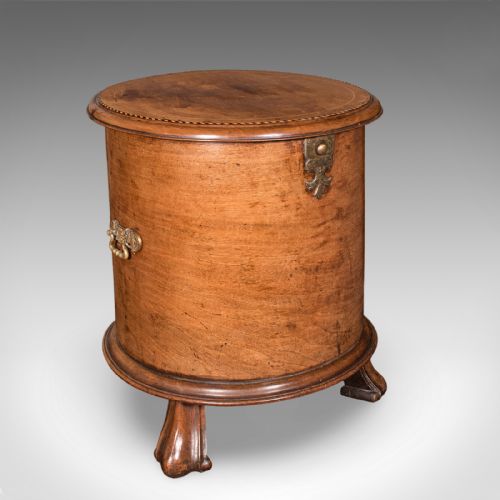
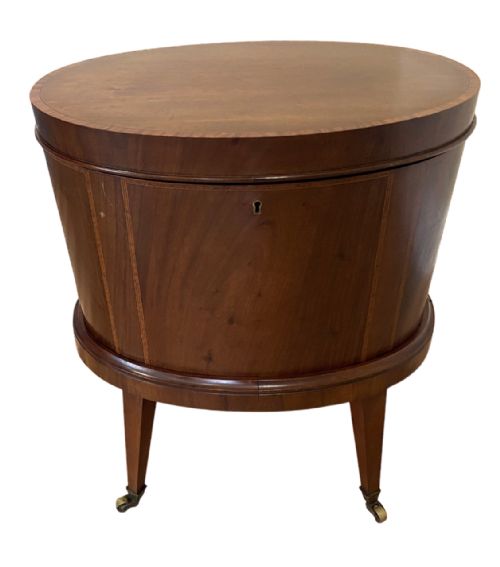
A brown wood wine cooler takes the form of cellarettes, sarcophagus shapes, and oval buckets designed for holding bottles during meals. The examples on this page span the Georgian, Regency, and Victorian periods, reflecting shifting tastes in formal dining furniture over centuries.
Most pieces encountered here utilise rich timbers like mahogany and walnut, frequently accented with brass bands or boxwood stringing. Forms range from boat-shaped jardiniere hybrids to substantial pedestals and low stands.
Makers drew on Regency, Sheraton, and Louis XVI revival styles to create vessels that served both a functional cooling purpose and a decorative function in wealthy households. Buyers will find both compact table models and massive floor-standing receptacles.
How they were made
Cabinetmakers constructed these vessels using dense hardwoods such as mahogany, walnut, and burr elm, often employing substantial timber thicknesses to maintain internal temperatures. Brass banding was frequently added around staves to reinforce the body, mimicking the construction of coopered casks.
Decorative detailing relies on subtle techniques like boxwood stringing, ormolu mounts, and carved paw feet. Surfaces received polished finishes that highlighted the natural grain of the wood without obscuring its depth.
Listings feature mahogany, walnut, and burr elm timbers alongside brass and ormolu metalwork.
What varies in quality
Quality rests in the selection of the timber and the crispness of the cabinetwork, particularly in how staves or panels are joined and fitted. Pieces displaying figured burr elm or finely matched mahogany veneers sit at the upper end of the scale.
Hardware integration also defines the grade of the piece, from plain iron straps to finely cast brass lion paw feet and mounts. The retention of original interior linings or internal divisions marks the difference between a preserved antique and a heavily altered survivor.
Gillows·Maples & Co
The Brown Wood Wine Cooler Glossary
- Cellarette
- A lockable container or cabinet designed for holding wine bottles near the dining table. They frequently appeared in mahogany or walnut during the Georgian and Regency eras.
- Sarcophagus
- A monumental coffin-shaped design popular during the Regency period for large wine coolers. These vessels often feature tapered sides, carved paw feet, and heavy handles.
- Stringing
- A narrow inlay of contrasting wood, such as boxwood, used to outline panels and structural edges. It provides a crisp linear contrast against dark primary timbers like mahogany.
- Ormolu
- Gilt bronze ornamentation applied to furniture and decorative objects. This technique adds metallic warmth and ornamental richness to revival styles.
Brown Wood Wine Cooler: Frequently Asked Questions
How were these coolers used?
These vessels were placed beside the dining table to hold bottles of wine and ice during long meals. Servants would load the interior with ice or cold water to keep the contents chilled.
Over time, many of these pieces lost their original metal linings as they were repurposed for dry storage or decorative planting.
How do I date a cellarette?
Dating relies on identifying the prevailing style and timber choice, such as heavy mahogany sarcophagus forms from the Regency period or elaborate carved walnut from Victorian production. Hardware styles and construction methods also provide clear indicators of age.
Earlier Georgian pieces tend to feature simpler coopered bucket forms with brass bands, whereas later revival items incorporate more eclectic decorative elements.
Where should I place one?
These substantial pieces work well as standalone focal points in a dining room, hallway, or living space. Their generous proportions allow them to function as side tables or display stands.
Some variations, such as the boat-shaped or jardiniere styles, lend themselves naturally to holding large house plants or floral arrangements.
What is the difference between a cellarette and a jardiniere?
A cellarette is specifically built to store and chill wine bottles, often featuring fitted interiors, locking lids, and sturdy timber staves. A jardiniere is designed primarily to hold plants and flowers.
In practice, many antique vessels served multiple functions over their lifespans, leading to hybrid forms that combine cooler proportions with planter inserts.