

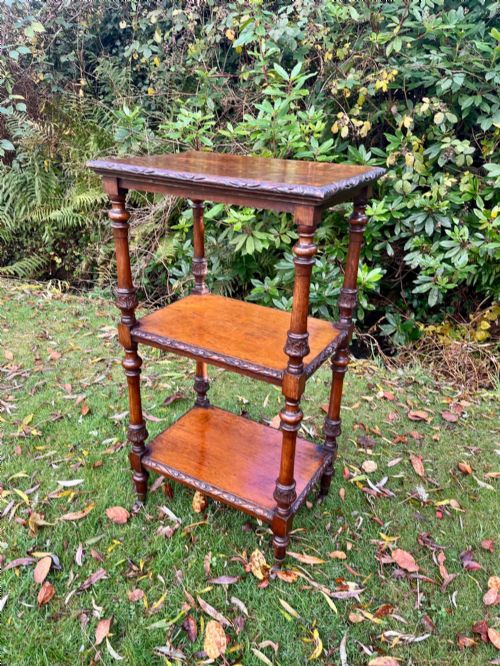
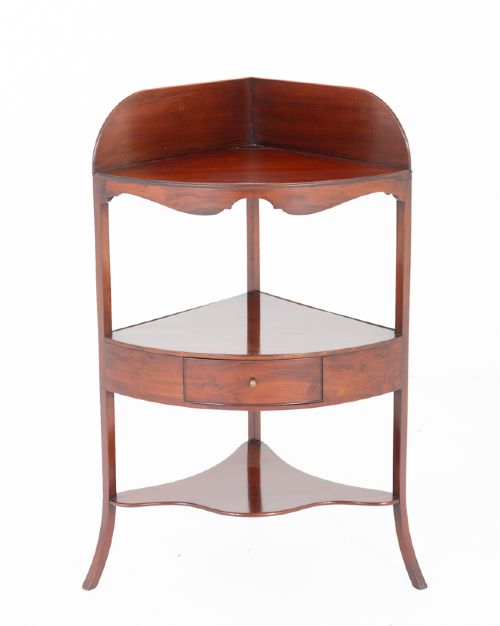
Brown Wood Table Stands
Brown wood table stands encompass utilitarian surfaces and elevated display pieces, offering practical height and period charm for displaying decorative objects or serving drinks.
Brown Wood Table Stands
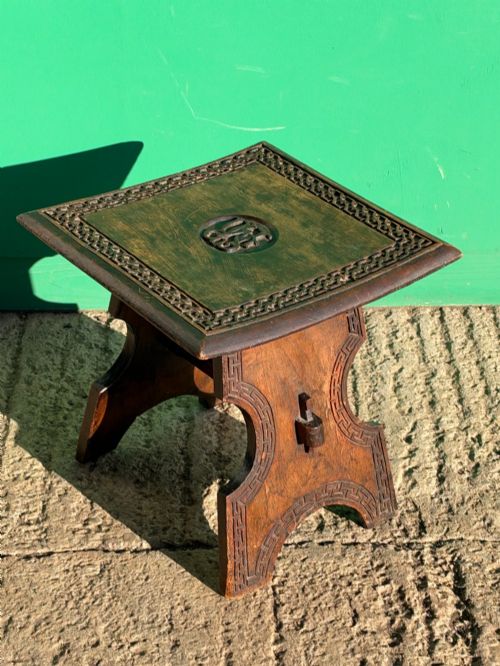
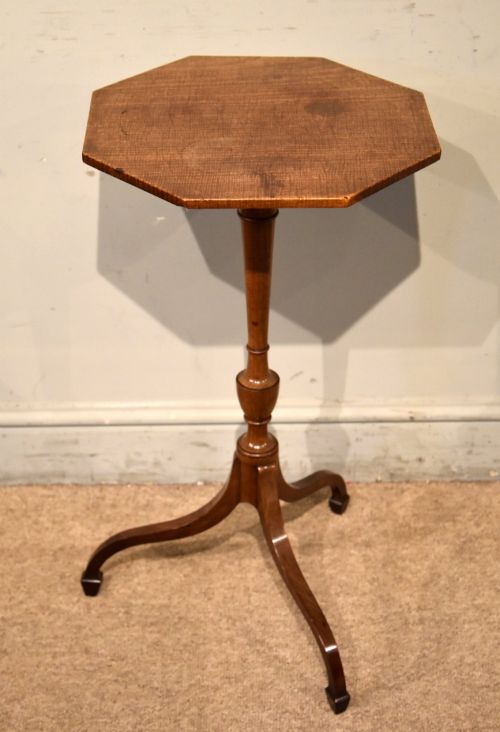
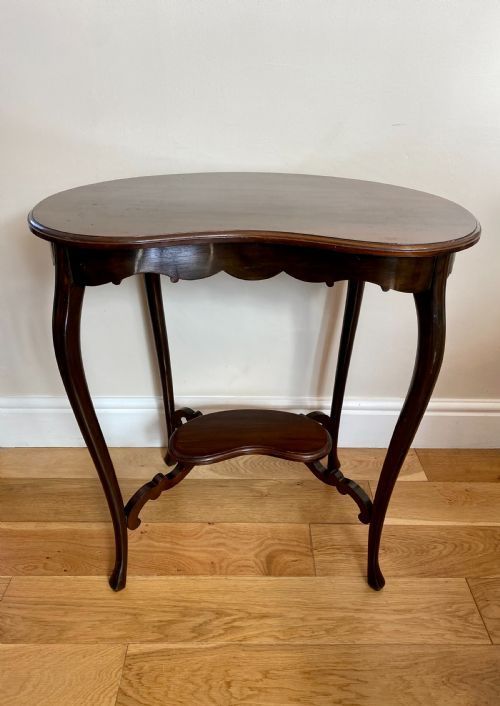
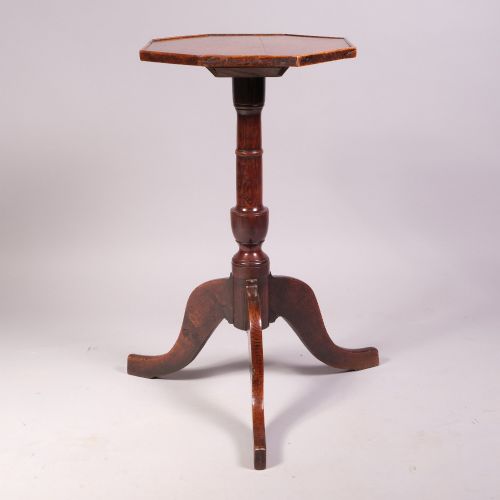
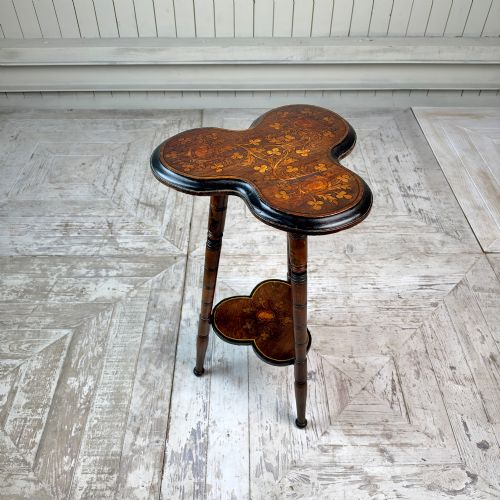
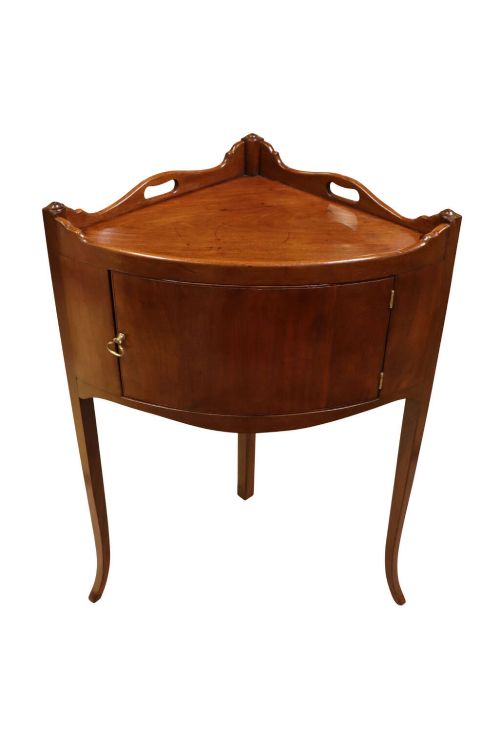
The pieces appearing on this page originate from distinct eras, stretching from Georgian and Victorian periods through Edwardian workshops and into the early twentieth century. Common forms range from small tilt-top tables and urn stands to heavy oak hall stands and marquetry-inlaid lamp tables.
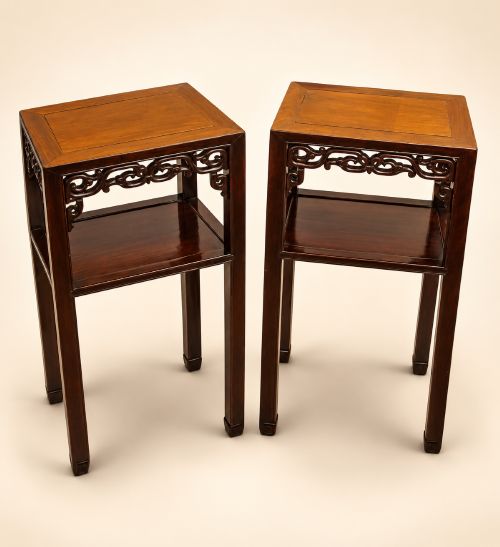
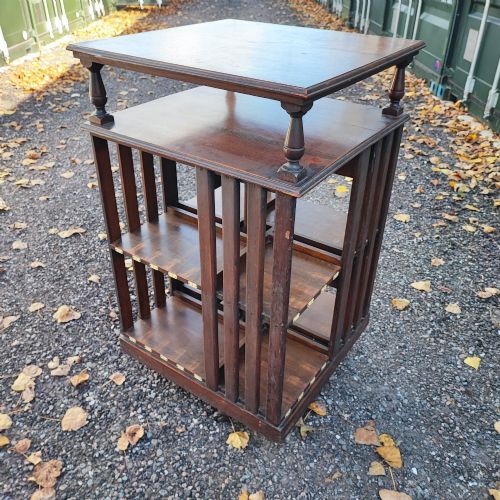
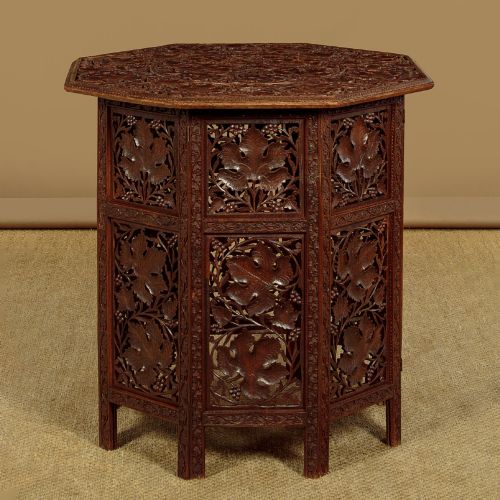
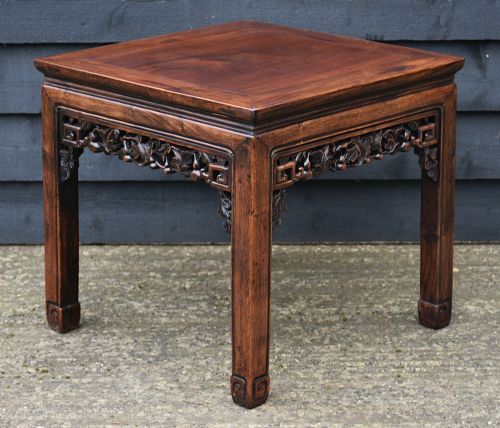
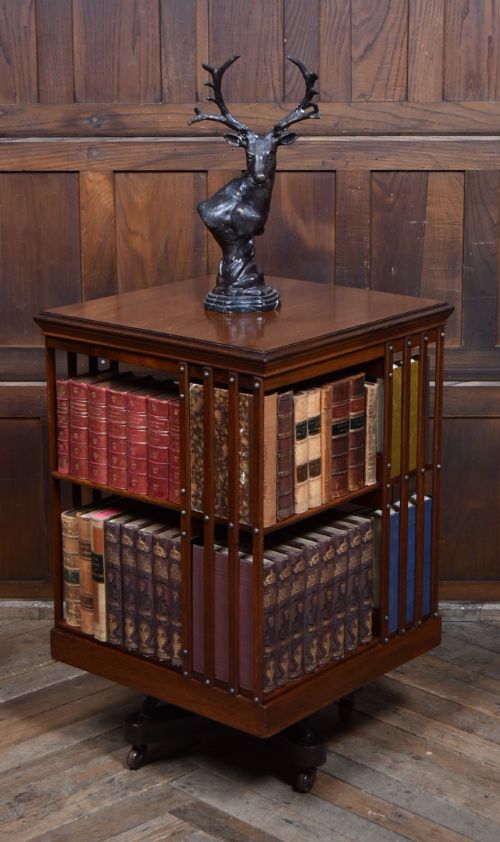
Regional variations and stylistic revivals emerge across the selection, incorporating influences from Dutch marquetry, Chinoiserie, and Arts and Crafts design. Buyers frequently discover specialised forms such as bedside cabinets on stands, dumb waiters, and revolving bookcases alongside standard side tables.
Materials and construction methods
Cabinet makers relied predominantly on dense hardwoods such as mahogany, walnut, oak, and yew, often selecting figured timbers like burr walnut and satinwood for visible surfaces. Secondary woods provided structural stability inside frames, drawers, and lower shelves.
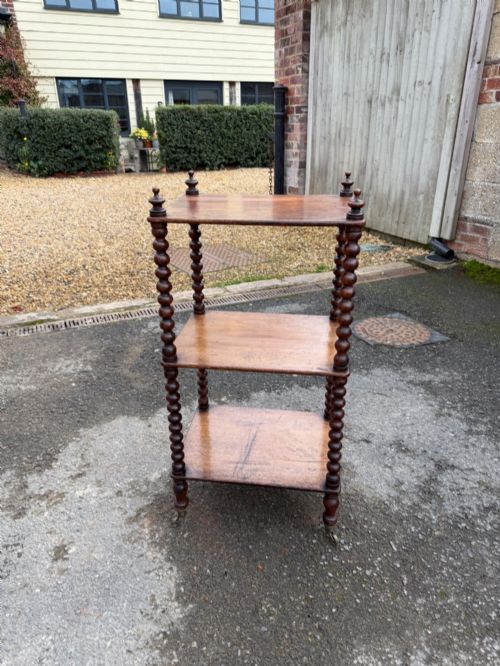
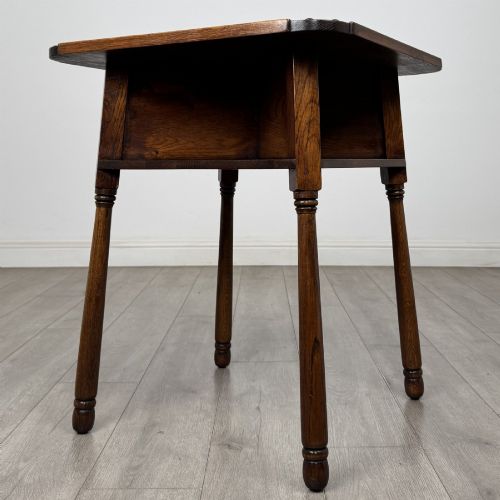
Construction techniques involved traditional joinery, including mortise and tenon joints for sturdy frames and dovetails for drawers. Many examples incorporate decorative elements such as marquetry inlay, brass fittings, turned bobbin legs, and carved details executed by hand.
Brown Wood Table Stands Retail Price Guide 2026
Typical asking prices for brown wood table stands among the pieces listed under this phrase on Sellingantiques today, from the lower quarter to the upper quarter. They describe what is for sale here now, not the wider market.
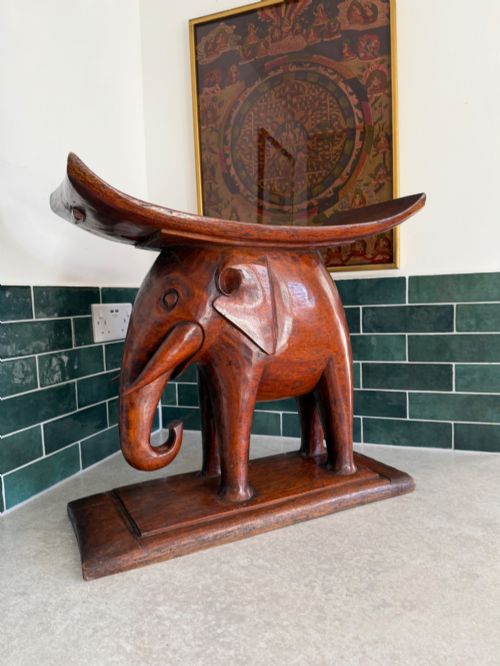
Elephant side tables from British India bring unexpected wildlife architecture directly into Victorian hallways.
Evaluating craftsmanship and integrity
Quality depends on the selection of timber and the precision of the underlying construction, where well-figured veneers and solid structural hardwoods elevate a piece. Superior examples display crisp hand-carving, tightly fitted joints, and original brass or glass components that have survived intact.
The harmony of proportions and the subtlety of decorative details distinguish standard production items from finer workshop creations. Balance in tripod bases and smoothness in tilting mechanisms or drawer actions indicate careful initial execution and considerate preservation over time.
Liberty & Co·Trevor Page & Co
The Brown Wood Table Stands Glossary
- Tripod table
- A small freestanding table supported by a central pillar resting on three spreading legs. This form gained popularity during the Georgian period for tea service or as a moveable lamp surface.
- Tilt-top
- A table mechanism allowing the wooden surface to pivot vertically on its base for convenient storage against a wall when not in use. This clever design dates back to the eighteenth century.
- Marquetry
- The art of applying decorative veneer pieces to a structure to form intricate pictorial or geometric patterns. Makers utilised contrasting woods like satinwood and walnut to achieve striking visual depth.
- Plant stand
- A tall, slender piece designed specifically to elevate botanical specimens for better light and display. Edwardian examples often feature lower shelves for additional stability and storage.
- Urn stand
- A compact, elevated table historically created to hold heavy liquid containers safely away from dining surfaces. George III examples often incorporate raised galleries to prevent sliding.
Brown Wood Table Stands: Frequently Asked Questions
What distinguishes an occasional table from a wine table?
Occasional tables generally provide broader rectangular or multi-sided surfaces intended for general placement beside seating or in hallways.
Wine tables typically feature compact, circular tops supported by a central pillar, designed originally to hold a single glass or bottle.
How do I care for antique wooden stands?
Maintain these wooden surfaces by keeping them away from direct heat sources and sudden humidity changes that cause timber to split.
Apply high-quality beeswax periodically to nourish the grain and gently buff with a soft cloth to preserve the finish.
Were plant stands used for other purposes?
Although constructed with slender profiles to support potted greenery, these stands functioned equally well for displaying bronze figures or porcelain.
Their elevated stature brought small decorative ornaments closer to eye level in Victorian and Edwardian interiors.
How do I identify a Georgian tilt-top table?
Examine the underside of the top for the original birdcage mechanism or wooden catch block that allows the surface to pivot and lock.
Early examples display hand-cut joinery and solid mahogany timbers with deep, patinated surfaces developed over centuries.