

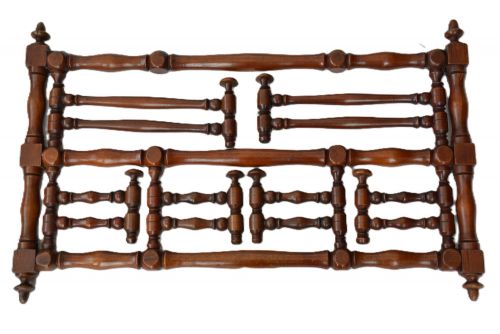
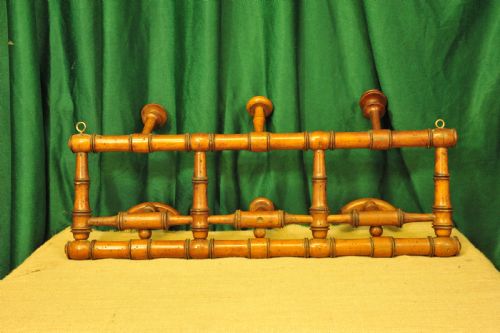
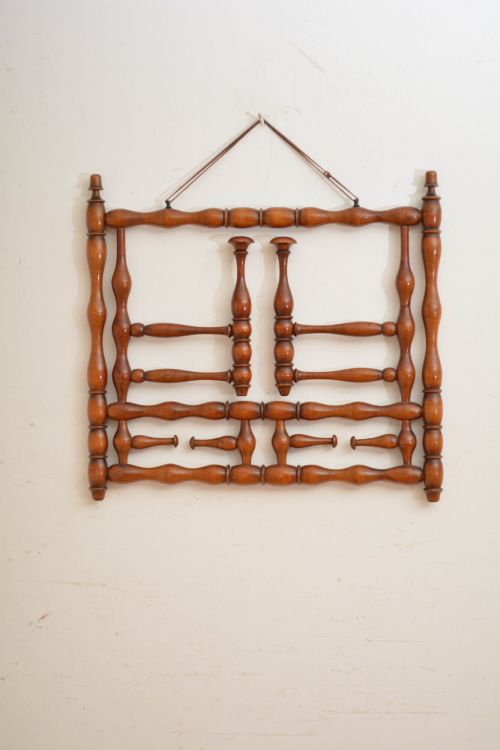
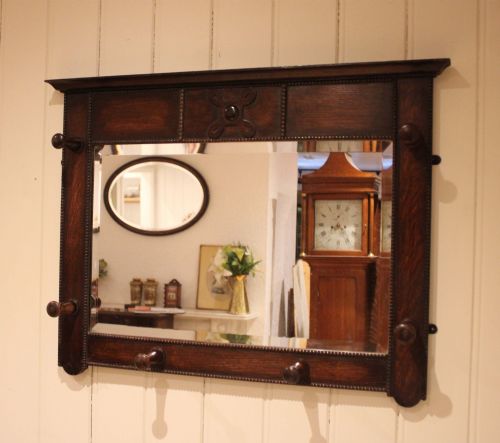


Brown Wood Peg Rack
These brown wood peg racks bring practical utility and rustic character to hallways, combining turned wooden pegs and robust timber frames.
Brown Wood Peg Rack
When you search for a brown wood peg rack, you are looking at wall-mounted and standing timber holders designed for garments, hats, and everyday apparel. The pieces appearing here span the nineteenth century through the Edwardian era and the early decades of the twentieth century, originating from British, French, and continental workshops.
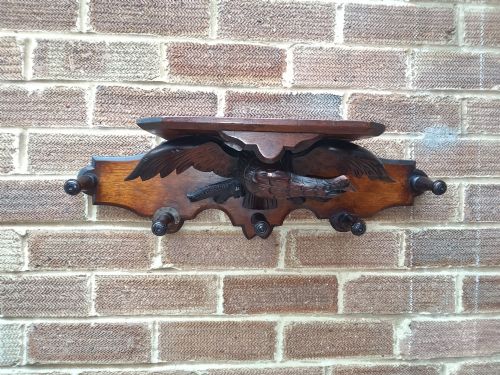
You will most commonly encounter wall-mounted strips featuring turned wooden pegs, alongside more elaborate variations incorporating mirrors, hat shelves, and carved animal forms. These objects served domestic entries, cloakrooms, and country house halls to keep outerwear orderly and accessible.
The selection ranges from utilitarian four-hook cloakroom strips to decorative Black Forest carvings and bentwood stands. Each variation reflects the domestic requirements of its period, prioritising sturdy timber construction to bear the weight of heavy coats and cloaks.
How they were made
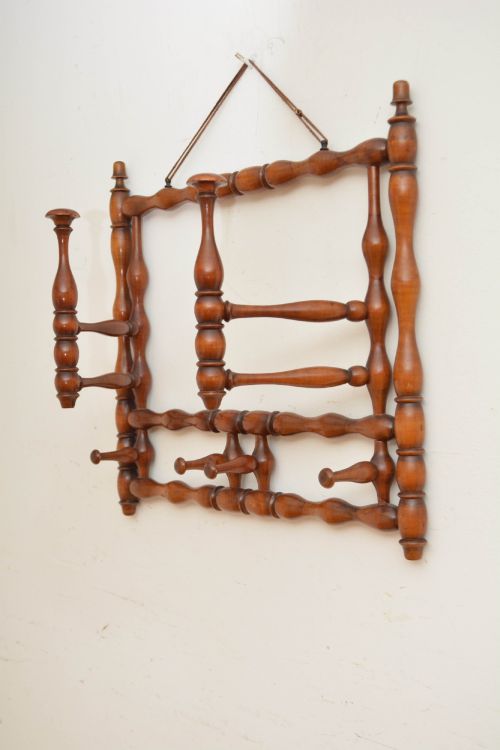
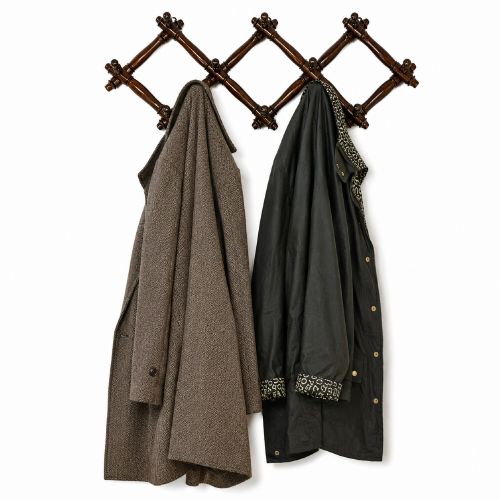
Maker workshops utilised solid timbers including oak, beech, and various hardwoods, frequently shaping them through traditional turning and steam-bending techniques. Bentwood examples rely on heated timber forced into curved profiles, creating resilient frames suitable for hanging garments.
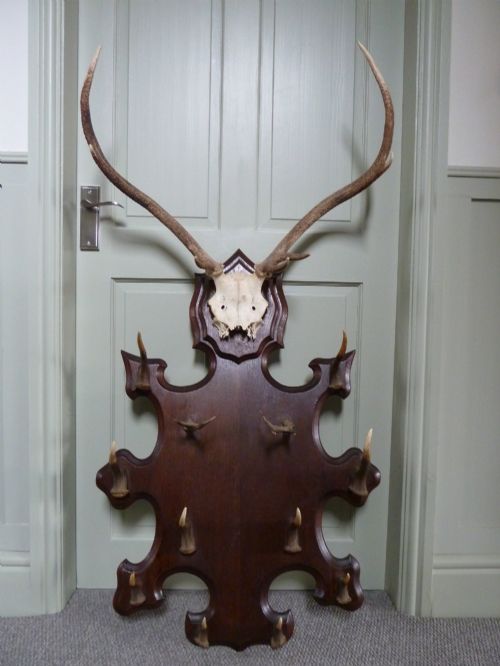
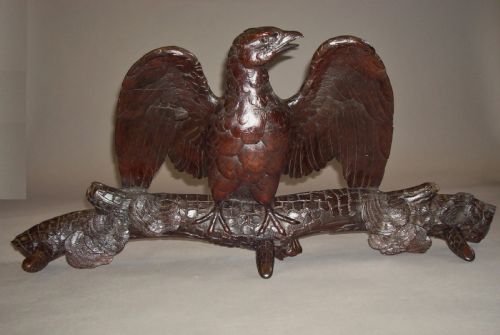
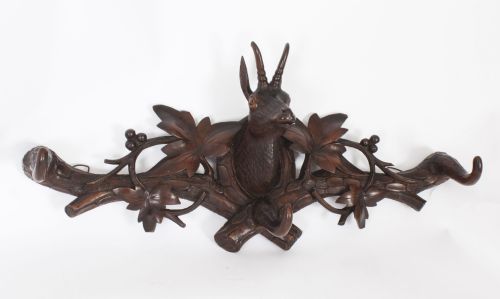
Carved pieces incorporate detailed hand-chiselled motifs such as animal heads and foliage into the wooden backboards. Metal brackets, hooks, and screws provide structural reinforcement, while bone and stag horn occasionally appear as functional elements on specific regional designs.
Brown Wood Peg Rack Retail Price Guide 2026
Typical asking prices for brown wood peg rack among the pieces listed under this phrase on Sellingantiques today, from the lower quarter to the upper quarter. They describe what is for sale here now, not the wider market.
Several racks feature carved chamois goats and eagles keeping a watchful glass eye over your hats.
What varies in quality
The distinction between standard examples and finer pieces lies in the depth of hand-carving and the choice of timber. Sculpted wooden mounts with intricate animal representations or balanced proportions demonstrate superior craftsmanship compared to basic utility strips.
Construction methods also separate the range, with integrated peg joints and selected hardwoods showing greater durability than simple surface-mounted fixtures. Well-preserved patination on the timber surface indicates careful handling over generations.
The Brown Wood Peg Rack Glossary
- Bentwood
- Timber shaped through the application of steam and pressure. This technique allows makers to produce curved structural components without weakening the grain.
- Black Forest
- A regional carving style originating from central Europe during the nineteenth century. These items typically feature naturalistic animal heads and foliage rendered in deep relief.
- Peg rack
- A linear wooden board fitted with projecting cylindrical or turned pins for hanging garments. They are designed for mounting directly onto hallway or cloakroom walls.
- Hallstand
- A substantial freestanding item combining coat hooks, a mirror, and an umbrella base. They served as central furniture pieces in Victorian and Edwardian entrance halls.
Brown Wood Peg Rack: Frequently Asked Questions
What rooms suit a brown wood peg rack?
These wooden fixtures suit entrance halls, boot rooms, and kitchens where hanging storage is practical. Their timber frames integrate easily with both traditional and rustic interior schemes.
Mounting them securely to a wall stud ensures they can bear the weight of heavy winter coats and bags without pulling loose.
How do I distinguish Victorian from Edwardian racks?
Victorian examples often feature darker timber, heavier mouldings, and more ornate carvings or applied decoration. They reflect a taste for substantial construction and dense ornamentation.
Edwardian pieces tend to display lighter oak or beech tones, cleaner lines, and simplified forms that suit more open hallway spaces.
Were these racks always mounted on walls?
While the majority of listings comprise wall-mounted strips, the evidence includes freestanding hat and coat stands as well. Wall-mounted versions saved floor space in narrow Victorian corridors.
Freestanding variations provided a stable place for hats and coats where drilling into hallway walls was impractical.
What materials besides wood appear on these pieces?
Metal hooks and brackets commonly reinforce the timber backboards to handle daily wear. Stag horn and bone also appear on specific country house and Black Forest variations.
Mirrors are integrated into several hall stand designs, adding reflective glass to the wooden frame for checking appearances before leaving.