




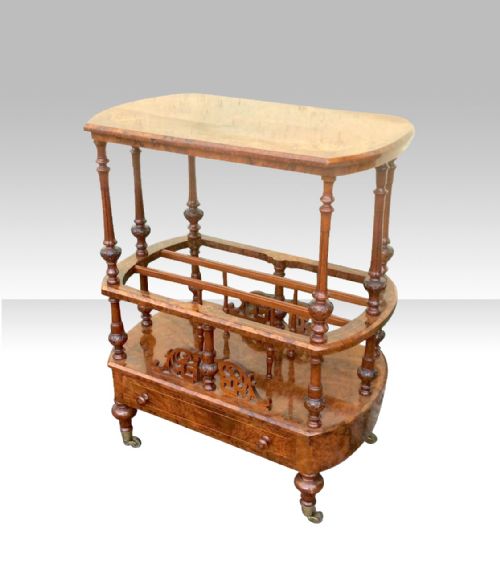


Brown Wood Paper Rack
These brown wood paper rack examples span centuries of cabinet-making, offering practical storage for periodicals and folios.
Brown Wood Paper Rack
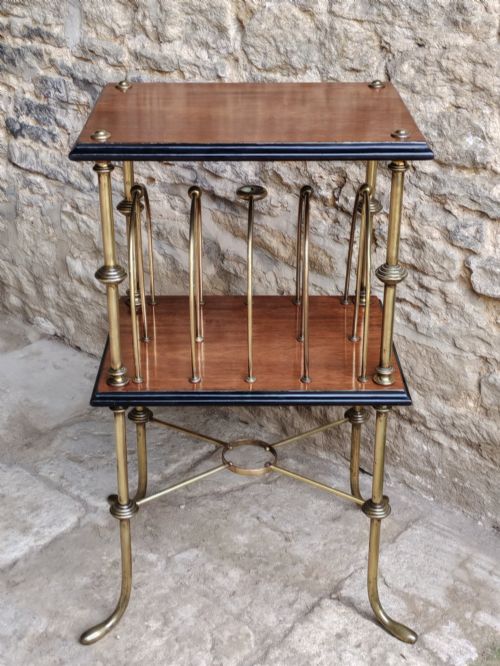
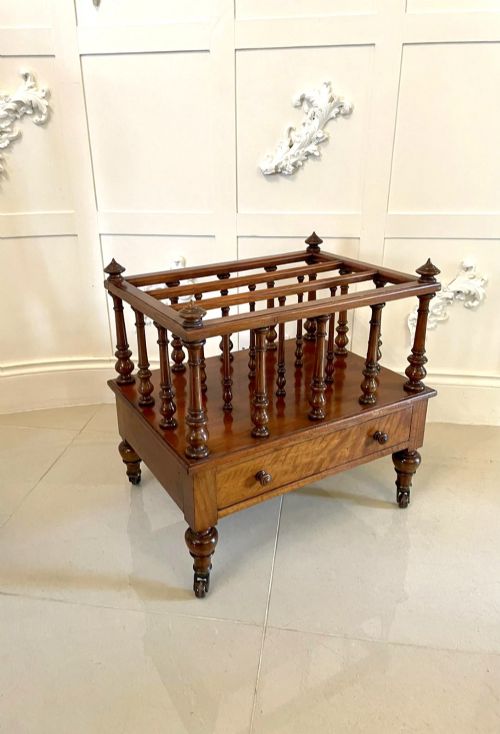
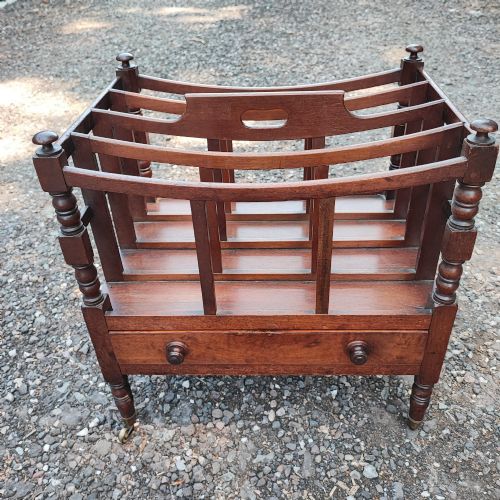
A brown wood paper rack typically takes the form of a Canterbury or magazine stand designed to hold newspapers, folios and periodicals. These pieces serve domestic spaces by keeping reading materials organised within reach of seating areas.
Materials and construction
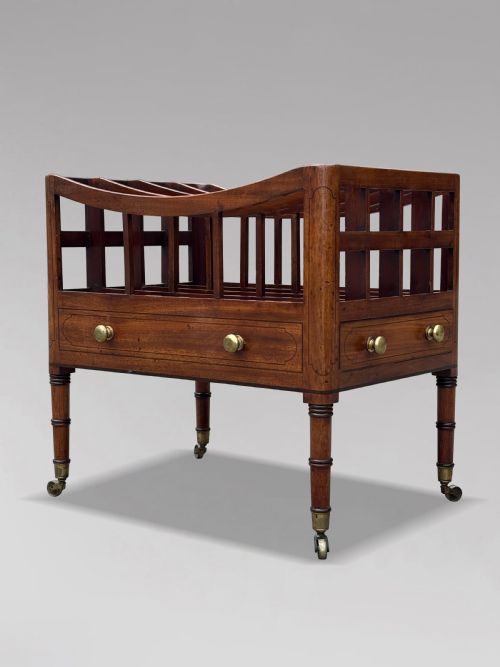
Cabinet-makers relied primarily on mahogany, walnut, and burr walnut timbers, frequently enhancing surfaces with satinwood, boxwood, and ebony banding or inlay. Brass mounts, castors and handles appear regularly to provide structural reinforcement and mobility.
Joinery methods reflect the periods of manufacture, utilising turned uprights, slatted partitions, and fretwork panels. Timber selection dictated the visual weight of each piece, ranging from grand scale folio stands to compact inlaid tables.
Brown Wood Paper Rack Retail Price Guide 2026
Typical asking prices for brown wood paper rack among the pieces listed under this phrase on Sellingantiques today, from the lower quarter to the upper quarter. They describe what is for sale here now, not the wider market.
Early nineteenth-century makers expected readers to have so many papers that they built wheeled wooden furniture just to push them across the carpet.
Distinctions in quality
Quality rests upon the choice of timber figure, such as richly grained burr walnut or figured mahogany, paired with crispness in inlay and brass detailing. Finer examples display meticulous attention to the fretwork and the turning of structural legs.
Proportion and structural integrity distinguish superior pieces from standard domestic items. The inclusion of original castors and cohesive banding elevates the execution of the design.
The Brown Wood Paper Rack Glossary
- Canterbury
- A low stand with partitions for holding sheet music, newspapers, or books, often featuring a small drawer below. This form became a staple of Georgian and Victorian drawing rooms.
- Folio stand
- A piece of furniture designed to hold large sheets of paper, prints, or maps. Grand scale versions provide sturdy vertical storage.
- Inlay
- A technique where pieces of contrasting timber, such as boxwood or ebony, are inserted into the primary wood surface to form decorative patterns. This demands high precision from the maker.
- Fretwork
- Openwork ornamentation carved or pierced through thin wood panels. Victorian makers utilised this technique to add lighter decorative elements to heavy cabinet pieces.
Brown Wood Paper Rack: Frequently Asked Questions
What is a Canterbury used for?
A Canterbury serves as a compartmented stand for holding newspapers, magazines, sheet music, and folios. The divisions keep soft-bound items upright and sorted.
Historically placed beside seating in drawing rooms and libraries, they allowed readers to keep daily periodicals tidy and accessible.
How do I date a brown wood paper rack?
Dating relies on identifying the prevailing style, timber choices, and construction methods associated with specific eras like the Georgian or Victorian periods. Details such as turned feet, brass castors, and inlay types provide clear chronological clues.
Earlier pieces from the eighteenth century often display simpler mahogany frames, while later Victorian examples frequently incorporate burr walnut and elaborate fretwork.
Are these racks suitable for modern magazines?
Most standard partitions accommodate contemporary magazines and periodicals comfortably, though older folios were sized for different publication formats. Measuring the depth and width of the interior compartments ensures a proper fit for modern items.
Their sturdy timber construction easily supports the weight of current print media without sagging.
What timber was used most often?
Mahogany and walnut form the primary woods seen across these listings, prized for their rich grain and durability. Cabinet-makers also utilised burr walnut for highly figured surfaces.
Secondary woods and contrasting veneers like satinwood, ebony, and boxwood frequently appear in decorative banding and inlay work.