
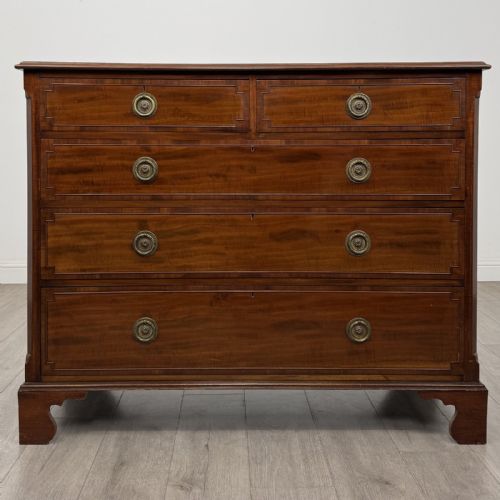
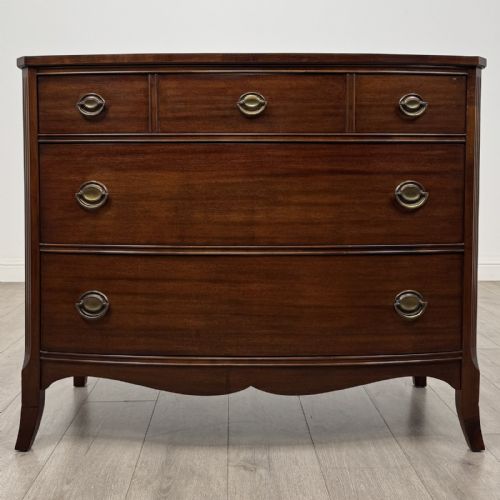
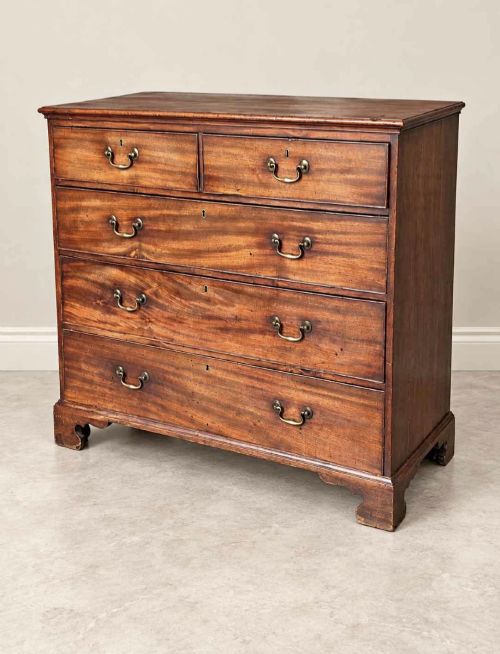
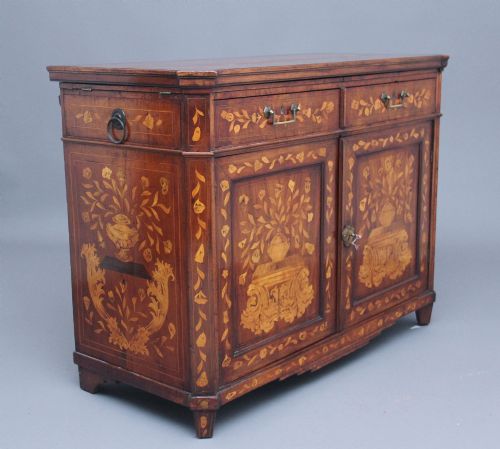
Brown Wood Commode Chest
A brown wood commode chest provides substantial storage with period character, uniting practical craftsmanship with rich timber tones for traditional rooms.
Brown Wood Commode Chest
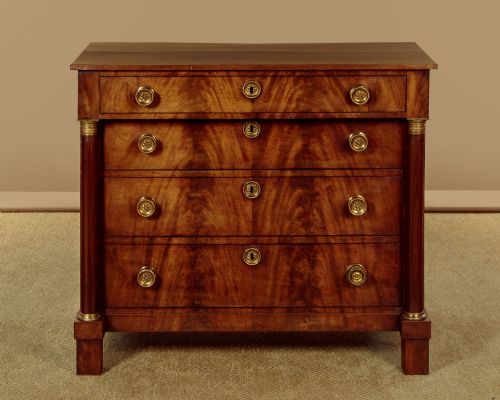
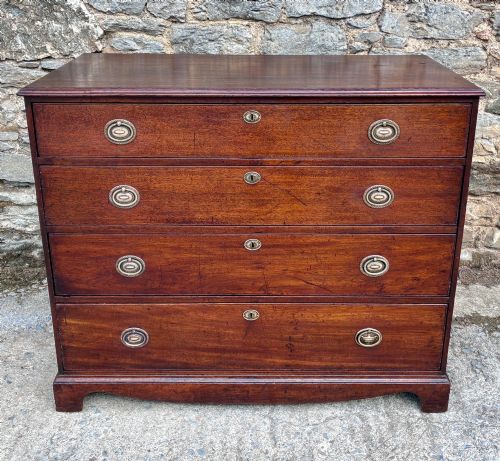
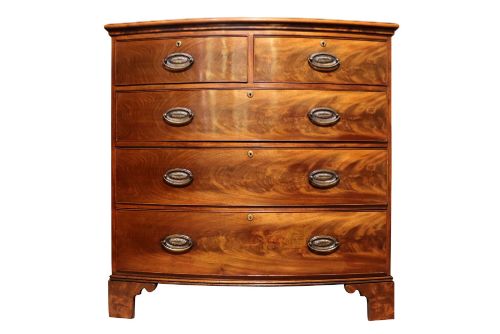
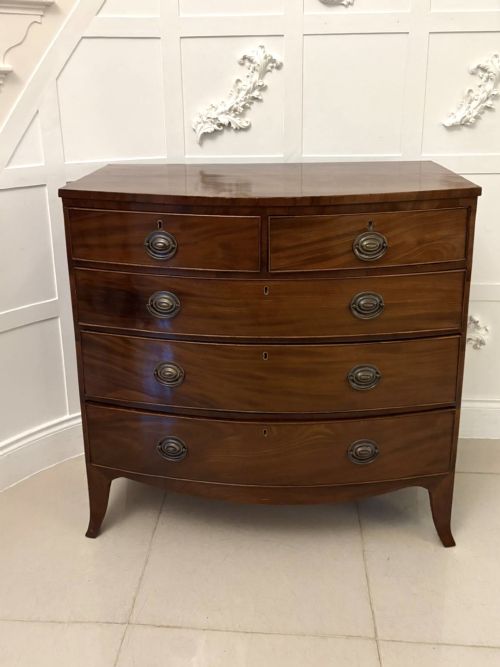
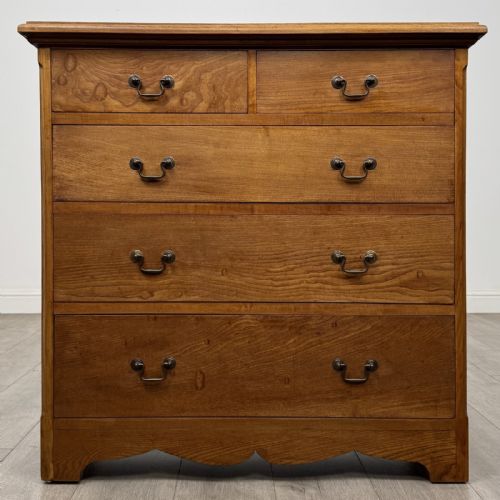
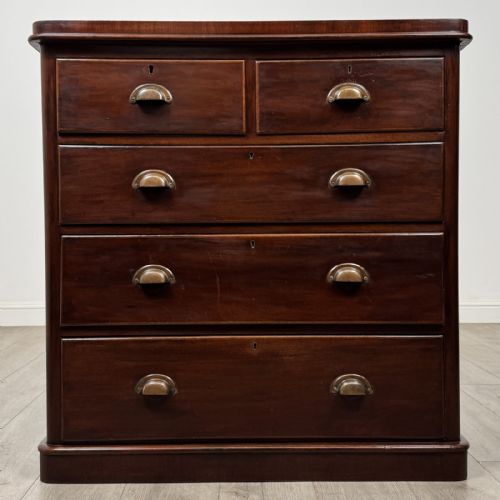
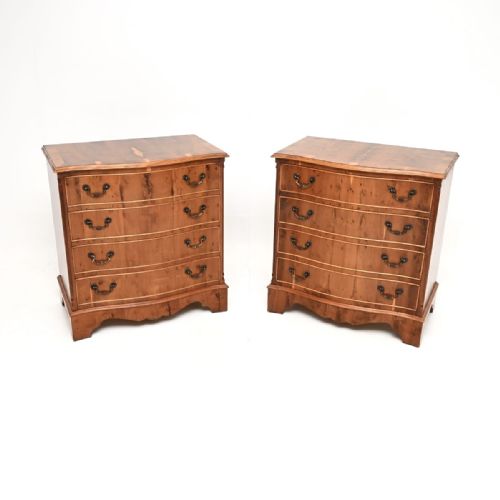
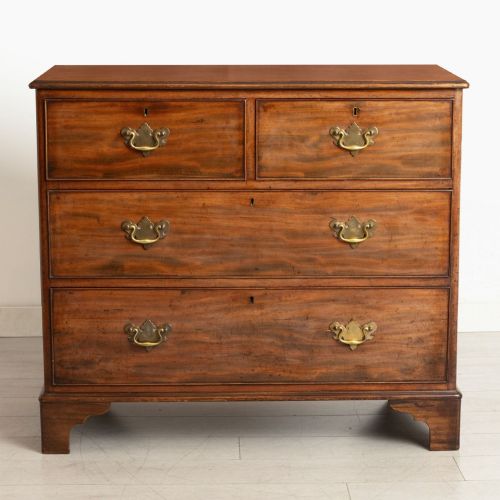
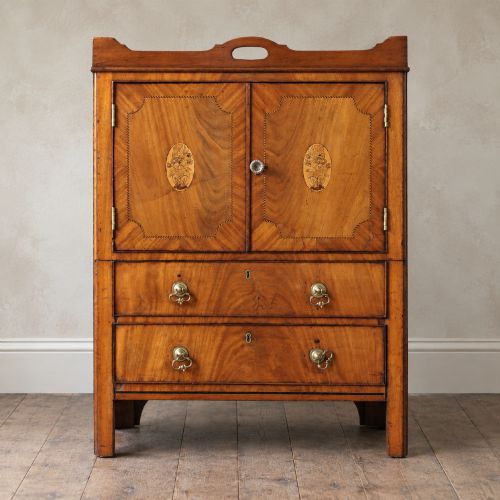
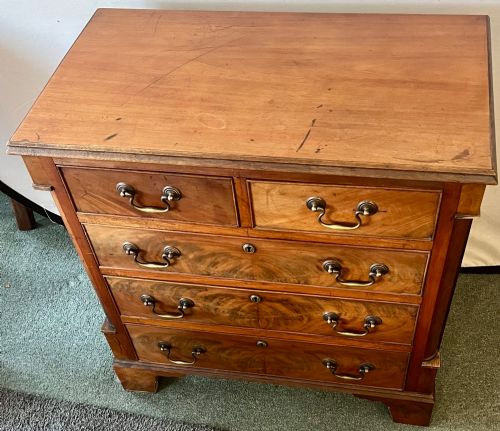
A brown wood commode chest encompasses a variety of storage furniture including chests of drawers, side cabinets, and bedside cabinets. These pieces date from the 18th century through the Edwardian era, spanning Georgian, Regency, and Victorian styles.
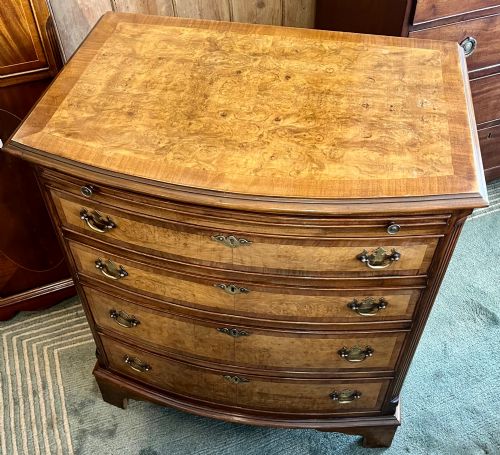
Mahogany forms the majority of the selection, frequently seen in bow front, serpentine, and straight four-drawer configurations. Walnut, oak, and flame mahogany veneer also appear across George III and later revival periods.
Miniature furniture and commdes alongside traditional chests of drawers provide diverse scales for domestic spaces. Buyers encounter everything from compact bedside cabinets to large serpentine outline chests.
What varies in quality
The choice of timber grain, such as highly figured walnut or flame mahogany veneer, distinguishes standard examples from exceptional pieces. Superior items often feature sophisticated shaping like serpentine outlines or bow fronts.
Refinement in execution, from the precision of satinwood banding to the retention of original brass handles, marks the difference at the upper end of the range. Period integrity and balanced proportions further elevate individual chests.
Miniature chests of drawers were originally made as apprentice masterpieces or delicate salesman samples.
The Brown Wood Commode Chest Glossary
- Bow front
- A convex curved front contour popular on many Georgian and Regency chests of drawers. This shaping softens the rectilinear profile of the furniture.
- Serpentine
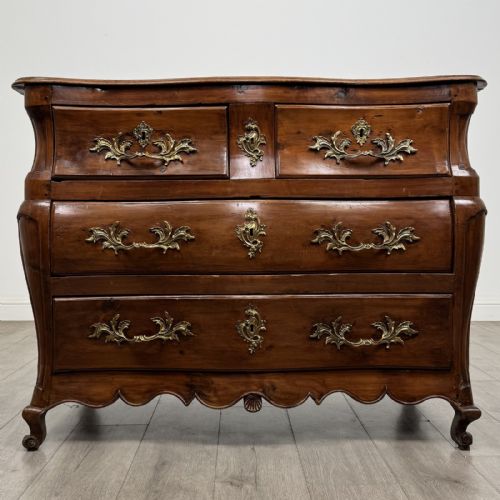
- A gently undulating front edge featuring a convex centre flanked by concave curves. It requires advanced woodworking skill to execute properly.
- Brushing slide
- A pull-out shelf integrated above the top drawers used for folding clothes or writing. This feature is frequently found on George III examples.
- Marquetry
- Decorative patterns formed by fitting together contrasting pieces of wood veneer. It appears on French Louis XV style cabinets and miniature chests.
Brown Wood Commode Chest: Frequently Asked Questions
Where should I place a brown wood commode chest?
These chests suit bedrooms, hallways, or living rooms where surface space and drawer storage are both useful.
Their varied widths and depths allow them to fit against walls of different proportions without dominating a room.
How do I identify a Georgian chest of drawers?
Georgian pieces often display specific proportions, classic bracket or ogee feet, and traditional timber choices like mahogany or oak.
Examination of the drawer construction and hardware helps confirm the 18th or early 19th century period.
What is the difference between a commode and a chest of drawers?
A commode typically refers to a decorative cabinet or low chest, often French in style or featuring serpentine shaping.
Standard chests of drawers focus primarily on stacked horizontal storage drawers for apparel.
How do I care for antique mahogany and walnut surfaces?
Keep wooden furniture away from direct heat sources and strong sunlight to prevent the timber and veneer from drying out.
Regular dusting with a soft, dry cloth maintains the finish without requiring heavy polishes.