

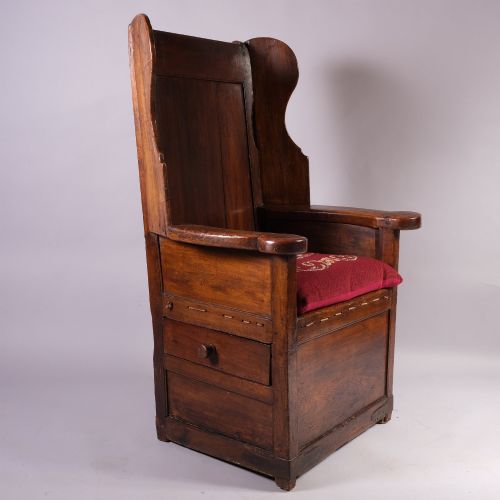
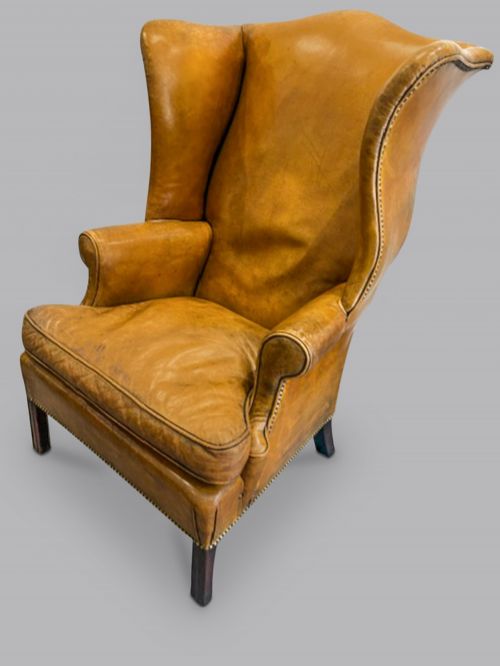
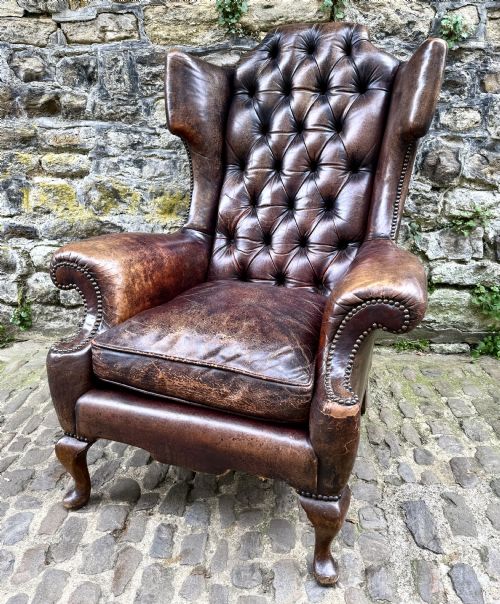
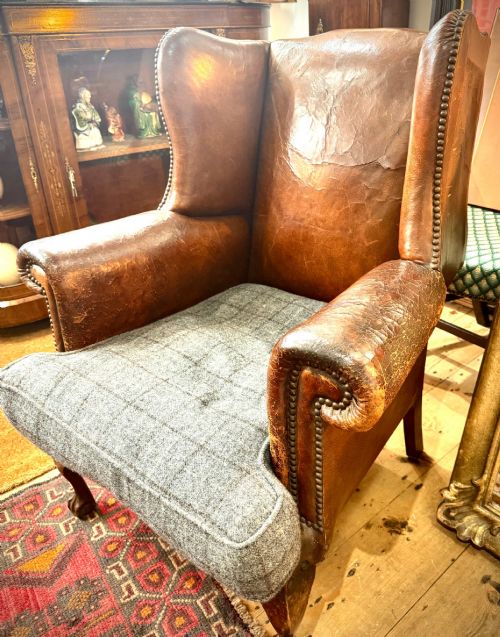
Brown Wingback Armchair
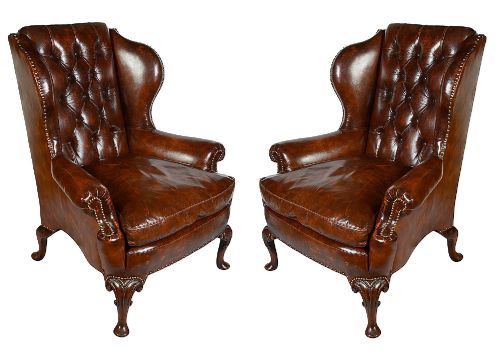
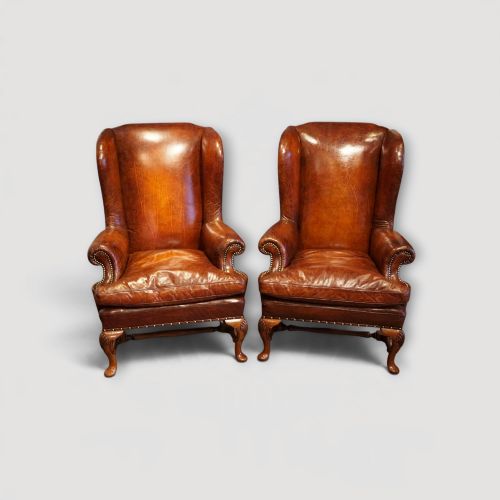
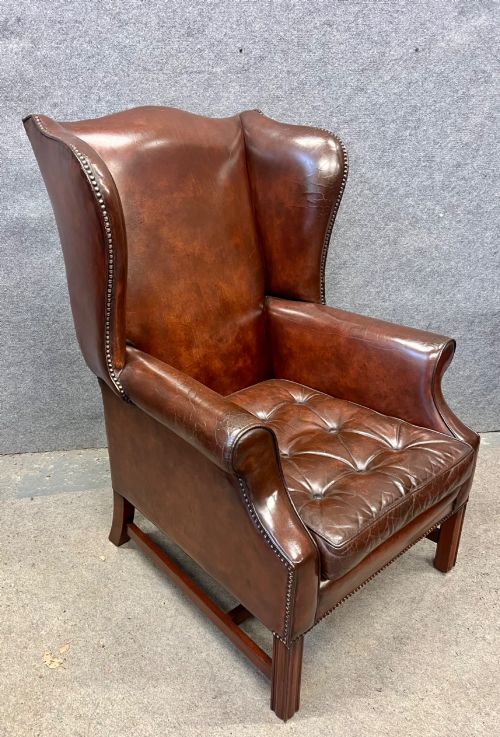
A brown wingback armchair provides deep-seated comfort with tall upholstered sides designed to block drafts and retain warmth.
Brown Wingback Armchair
A brown wingback armchair is a traditional seating form defined by its high back and distinctive lateral panels, or wings, flanking the shoulders. When searching for a brown wingback armchair, buyers encounter pieces spanning the eighteenth century through the early twentieth century, alongside later revival interpretations.
The selections on this page draw from periods such as the Georgian, Victorian, and Edwardian eras, as well as the decades around nineteen twenty and nineteen thirty. Formats range from full-sized library and gentleman's chairs to compact children's chairs and specialised reclining library designs.
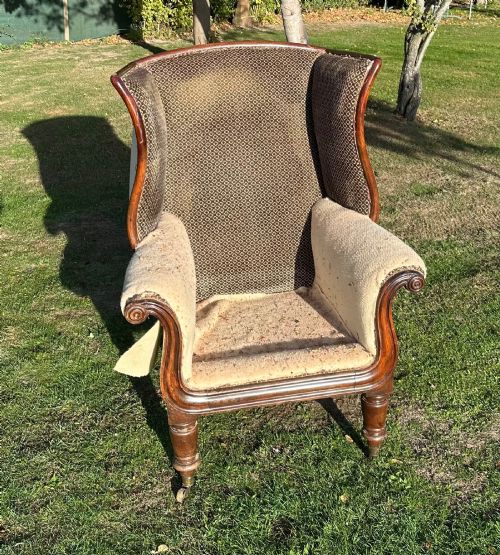
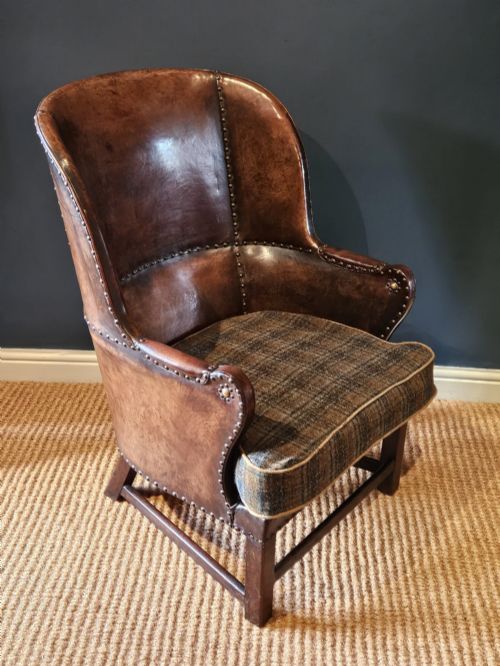
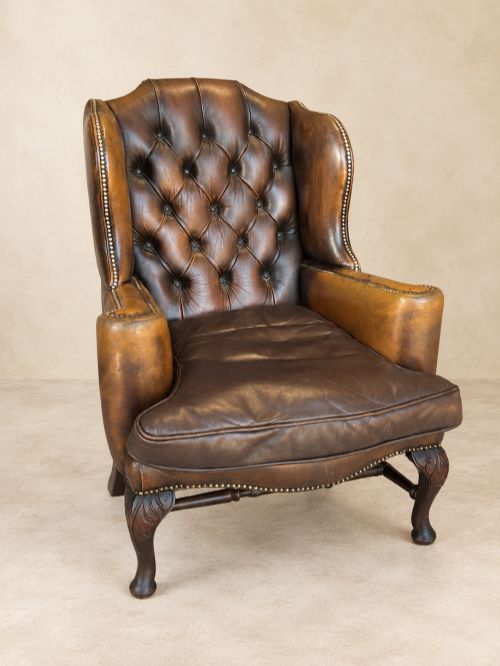
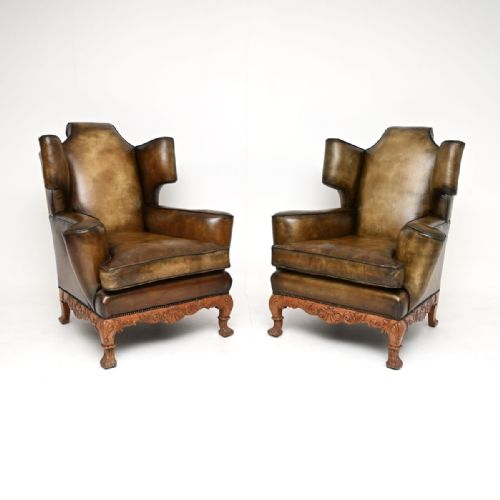
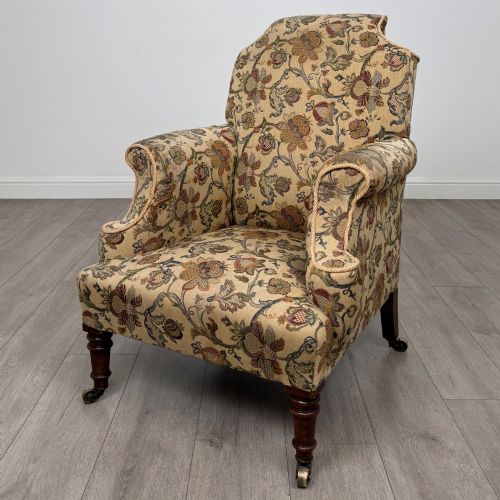
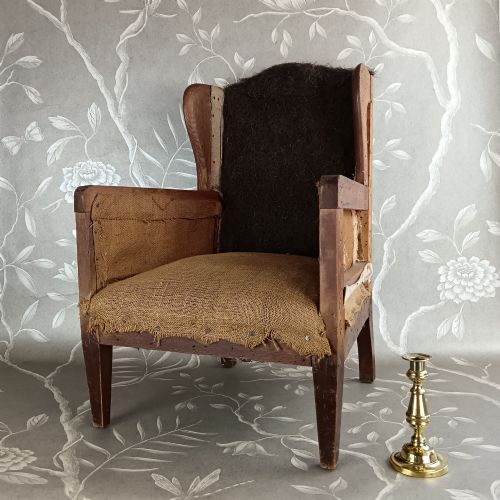
Wooden frames underpin these chairs, constructed from materials including mahogany, walnut, oak, and general timber. Upholstery leans heavily toward traditional leather, often hand-dyed or buttoned, though examples in floral fabric, recycled cotton, hessian, and sheep's hide also appear.
Materials and construction
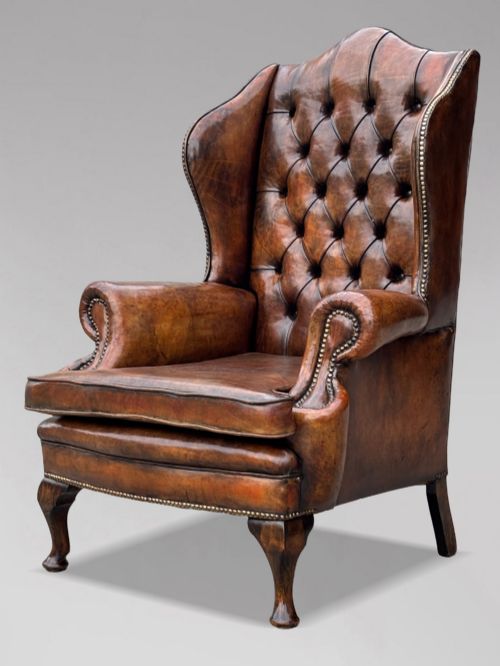
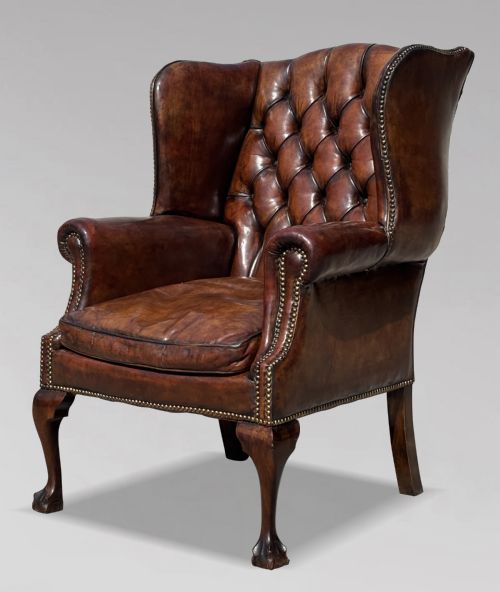
Makers built the structural frames of these armchairs using hardwoods like mahogany, walnut, and oak, supported by durable timber. These sturdy foundations frequently terminated in carved or plain legs, including cabriole forms.
Upholstery relied on natural materials and traditional padding techniques, featuring leather finishes alongside hessian and fabric coverings. Brass accents, such as stud work and mechanical adjustments, added functional and decorative detail to the construction.
Brown Wingback Armchair Retail Price Guide 2026
Typical asking prices for brown wingback armchair among the pieces listed under this phrase on Sellingantiques today, from the lower quarter to the upper quarter. They describe what is for sale here now, not the wider market.
Listings feature wood types including mahogany, walnut, oak, and general timber, paired with leather, hessian, and fabric upholstery.
Distinctions in quality
Quality in these armchairs rests upon the integrity of the timber frame and the skill of the original joinery. Fine examples demonstrate precise carving on the legs and harmonious proportions between the high back, the wings, and the seat base.
The treatment of the leather and upholstery distinguishes standard pieces from superior examples. Hand-dyed leather, deep buttoning, and careful placement of brass detailing indicate a higher level of craftsmanship and attention to period accuracy.
The Brown Wingback Armchair Glossary
- Wingback
- An upholstered armchair featuring protective side panels attached to the arms and back. These wings originally served to shield the sitter from draughts near open hearths.
- Cabriole leg
- A furniture leg that curves outward at the knee and tapers inward toward the ankle, finishing in a pad or claw foot. This form draws inspiration from animal limbs and frequently appears on walnut and mahogany frames.
- Button back
- An upholstery style where depressions are formed in the leather or fabric by stitching through the padding to secure buttons at regular intervals. This technique adds structural tension and visual texture.
- Lambing chair
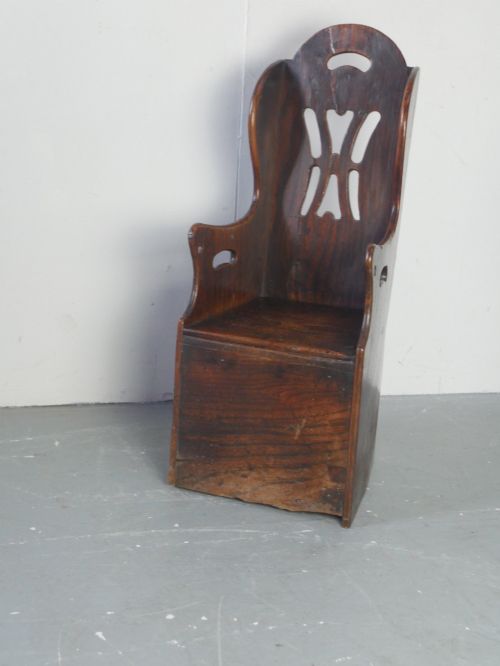
- A traditional form of vernacular seating, often featuring a high wooden back and enclosed sides designed for use in rural farmhouses.
- Metamorphic chair
- A piece of furniture engineered with mechanical adjustments to transform its form, such as reclining mechanisms found in library chairs.
Brown Wingback Armchair: Frequently Asked Questions
What periods do these armchairs come from?
These armchairs originate from various eras, including the eighteenth century, the Georgian period, the Victorian era, and the early twentieth century up to nineteen thirty. Revival styles from later decades also feature alongside period originals.
Each period imparts distinct characteristics to the frame construction, leg design, and upholstery methods employed by the makers.
How were wingback armchairs originally used?
The high back and projecting wings were originally designed to trap heat from a fireplace and protect the occupant from household draughts. They often served as comfortable seating in libraries, studies, and drawing rooms.
Over time, they evolved into statement pieces for reading and relaxation in both grand residences and country homes.
Are these chairs upholstered in leather?
Many of the armchairs feature leather upholstery, including hand-dyed, full button, and tan variations. Some examples also utilise fabrics such as recycled cotton, floral textiles, hessian, or sheep's hide.
Leather surfaces often display patination developed through age and regular use by previous owners.
How do I identify a Georgian style chair?
Georgian and George III pieces typically exhibit classic proportions, timber frames of mahogany or walnut, and characteristic leg forms such as cabriole supports. Later revival pieces replicate these eighteenth-century design traits.
Examining the underlying wood and construction methods helps distinguish between an original period piece and a later interpretation.