

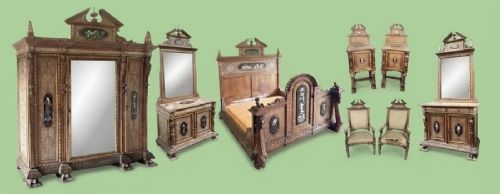

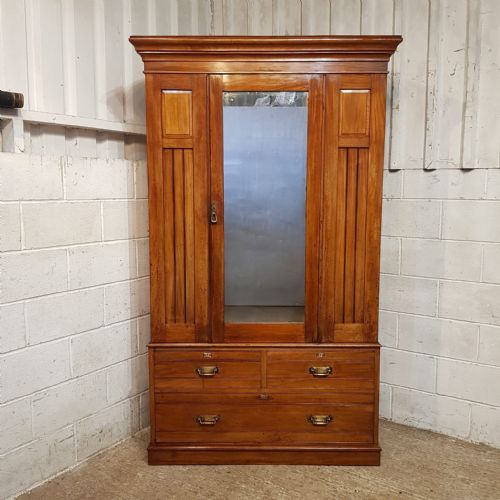
Brown Walnut Wardrobe
A brown walnut wardrobe is a substantial storage piece built from rich, figured timber, offering practical clothes hanging and shelving while anchoring a room with deep colour.
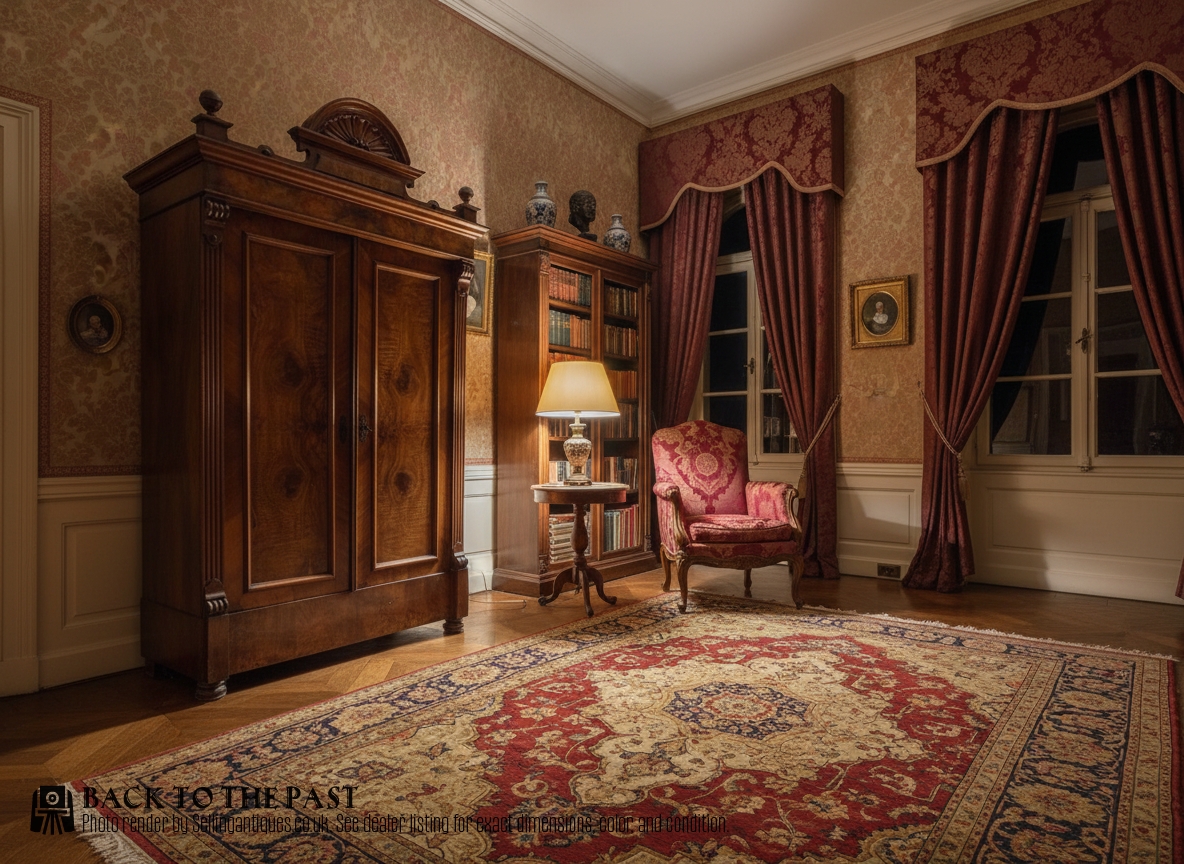
Brown Walnut Wardrobe
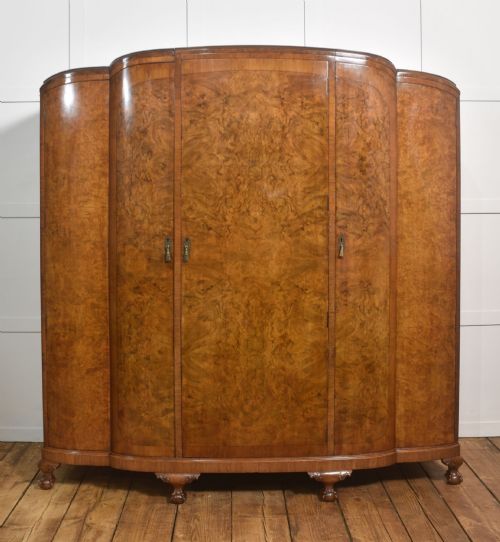
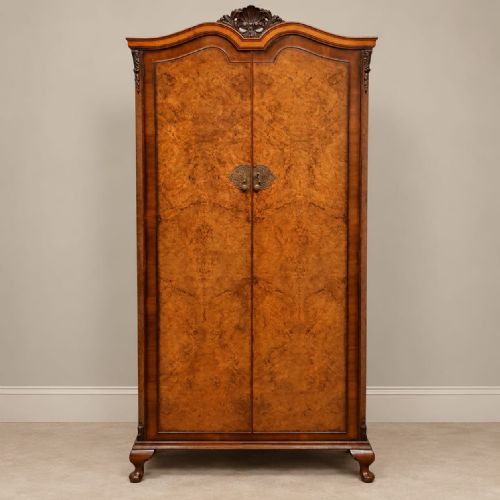
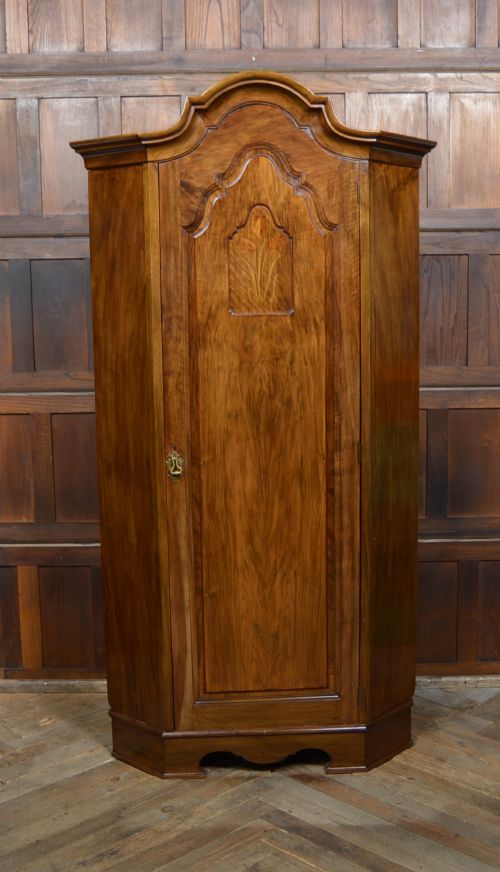
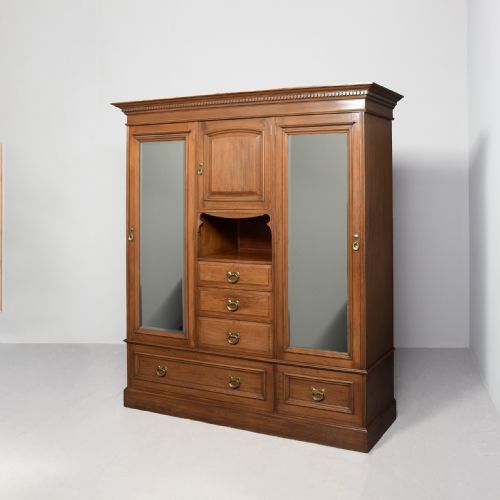
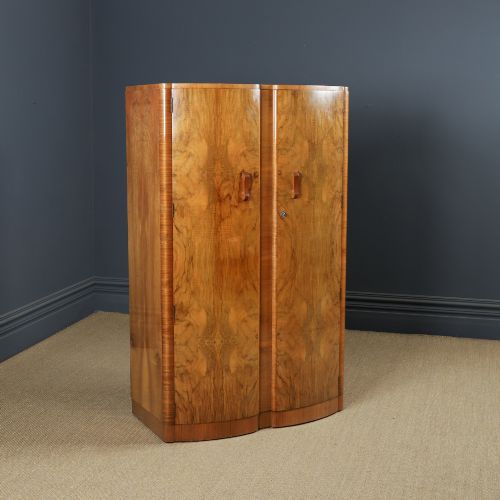
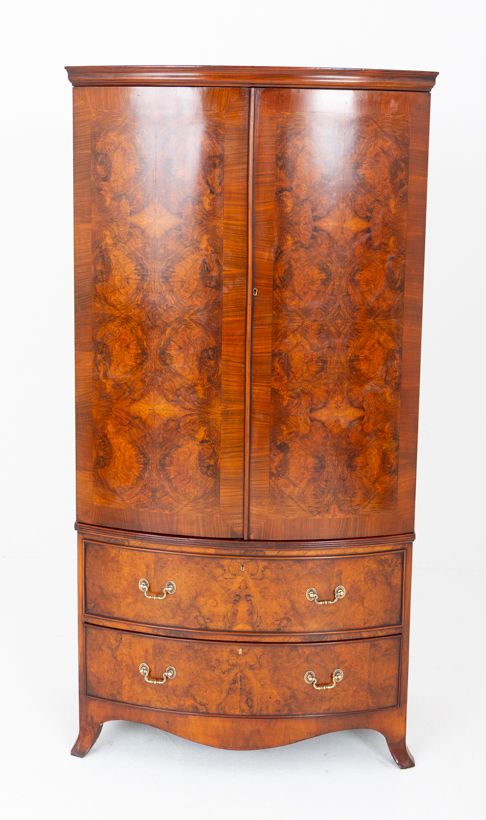
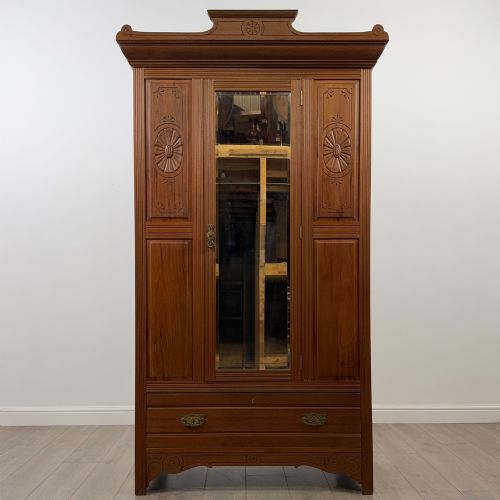
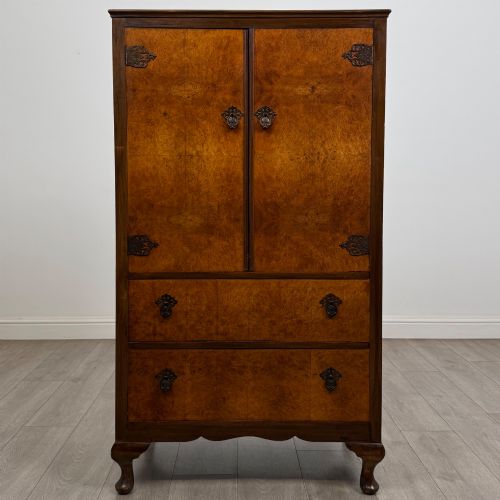
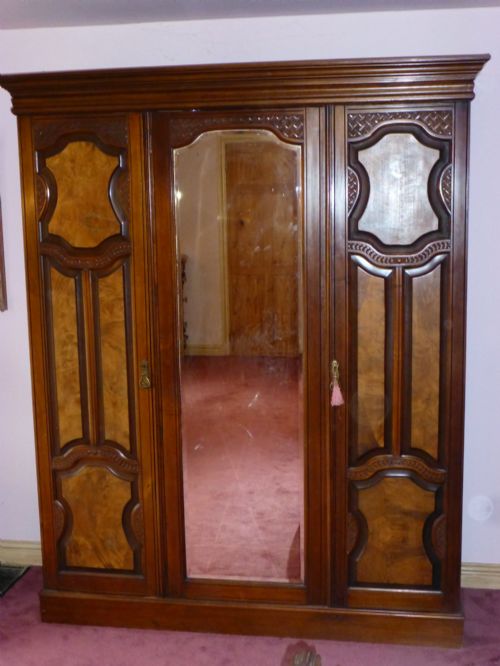
A brown walnut wardrobe brings together large-scale bedroom storage and the rich, varied grain of walnut timber across multiple eras. When searching for a brown walnut wardrobe, buyers encounter forms ranging from clean-lined Art Deco breakfront designs to heavily carved Victorian triple compactums and 18th-century Dutch marquetry linen presses.
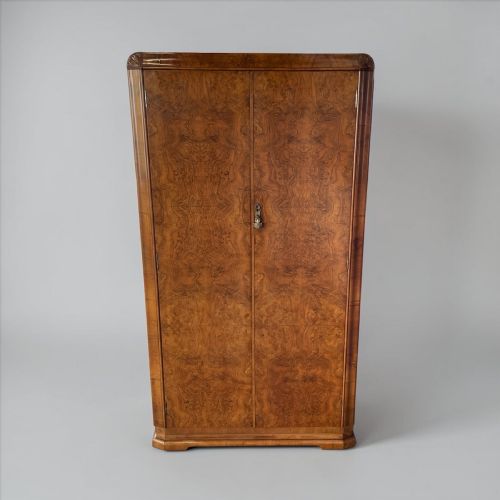
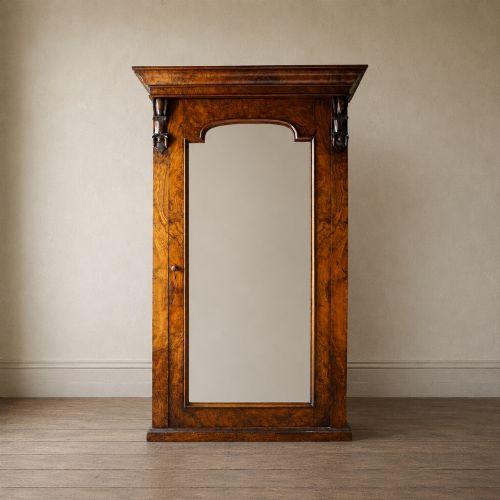
The pieces on this page span the 18th, 19th, and 20th centuries, covering Victorian, Edwardian, and Art Deco styles alongside regional Continental variations like French Provincial and Italian Baroque. Buyers are most likely to meet Victorian and Edwardian examples featuring figured walnut and mirrored doors, or 1930s Art Deco pieces in burr walnut with streamlined silhouettes.
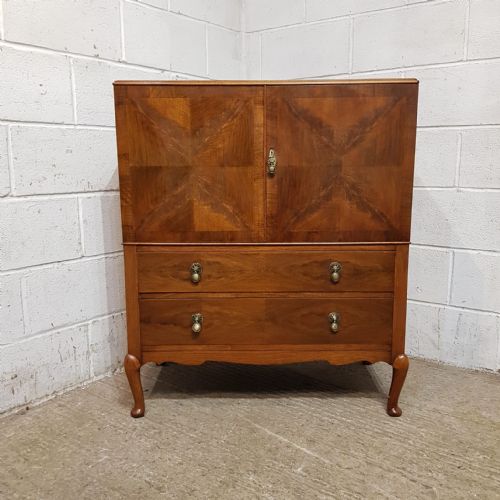
Beyond traditional wardrobes, the selection includes related storage forms such as armoires, tallboys, compactums, and linen presses. These pieces utilise the natural warmth of walnut and burr walnut, often paired with brass hardware, glass panels, and internal fittings designed for specific garments.
Quality Variations
The standard of a brown walnut wardrobe rests upon the selection and matching of the timber veneers. Superior pieces display symmetrical burr walnut grain book-matched across large door surfaces, whereas simpler items rely on plain, straight-grained walnut without decorative banding.
Construction depth and interior complexity also distinguish the range. Top-tier examples incorporate fully fitted interiors with linen slides, shoe racks, and jewellery drawers behind multiple panelled or mirrored doors, while basic versions offer simple open hanging space within a single door frame.
Brown Walnut Wardrobe Retail Price Guide 2026
Typical asking prices for brown walnut wardrobe among the pieces listed under this phrase on Sellingantiques today, from the lower quarter to the upper quarter. They describe what is for sale here now, not the wider market.
Some Edwardian walnut wardrobes still retain faint traces of cedar-lined compartments intended to keep moths at bay.
Holland and Sons·Waring and Gillows
The Brown Walnut Wardrobe Glossary
- Burr Walnut
- A specialised timber cut from the abnormal growth or burl of a walnut tree, yielding a swirling, highly decorative grain pattern that cabinet makers prized for principal door panels.
- Compactum
- A multi-section wardrobe designed to provide comprehensive clothes storage by combining hanging compartments, drawers, shelves, and linen slides within one unified piece.
- Marquetry
- The art of applying decorative pieces of veneer to a structure to form intricate floral or geometric patterns, frequently found on 18th-century Dutch cabinets.
- Linen Press
- A tall storage piece featuring upper sliding trays for folded textiles and lower drawer storage, often updated with hanging space in later periods.
- Breakfront
- A cabinet design where the central section projects forward from the flanking wings, creating architectural depth and varied surface planes.
- Book-matched
- A veneering technique where adjacent thin sheets of walnut are sliced and opened like a book to create a symmetrical mirror-image pattern across the grain.
Brown Walnut Wardrobe: Frequently Asked Questions
What is a brown walnut wardrobe?
A brown walnut wardrobe is an enclosed piece of bedroom furniture designed for hanging clothes and storing garments, constructed primarily from walnut or walnut veneer. These pieces range from antique 18th-century linen presses to 20th-century Art Deco compactums.
The use of figured walnut, burr veneers, and polished timber surfaces gives these wardrobes a distinct, warm appearance. They serve as both functional storage and prominent architectural furniture within a bedroom.
How do I tell Victorian from Art Deco wardrobes?
Victorian wardrobes typically feature dark finishes, heavy carved mouldings, arched panel doors, and often mirrored glass inserts. They emphasise traditional craftsmanship and substantial proportions.
Art Deco wardrobes, by contrast, focus on clean geometric lines, symmetrical burr walnut veneers, and streamlined waterfall edges without heavy carving. They represent a shift toward modernism in the 1930s.
What is a compactum wardrobe?
A compactum is a specialised multi-compartment wardrobe designed to maximise storage by combining hanging space, linen drawers, shoe racks, and sliding trays into one unit. They were particularly popular during the Victorian and Edwardian periods.
These pieces often feature three or more sections, offering organised storage for a complete wardrobe of clothing within a single large cabinet.
How do I care for walnut furniture?
Walnut furniture requires placement away from direct sunlight and heat sources to prevent the timber from drying out and the veneers from lifting. Maintaining stable room humidity preserves the wood.
Cleaning should be done using a soft, dry cloth, avoiding harsh chemical polishes that can damage the antique French polish or waxed finish of the surface.
Did wardrobes come apart for moving?
Many larger antique wardrobes, particularly Victorian triple designs and compactums, were constructed to dismantle into sections including a cornice, base, and side carcases. This allowed them to be transported and assembled in upstairs bedrooms.
Modern buyers should check whether a specific antique wardrobe utilises knock-down bolts or fixed construction before attempting relocation.