



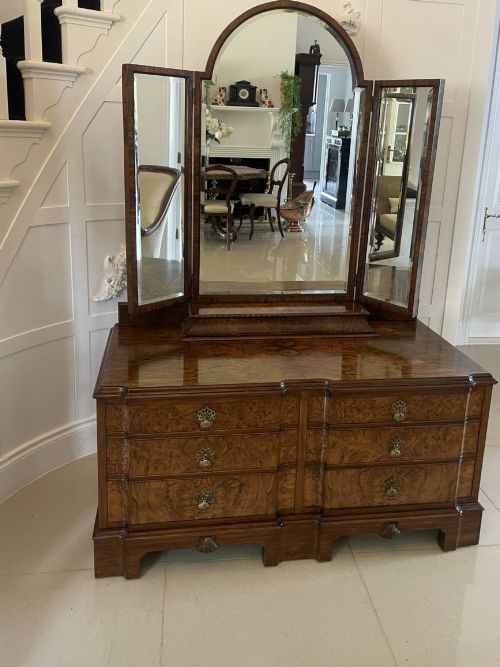
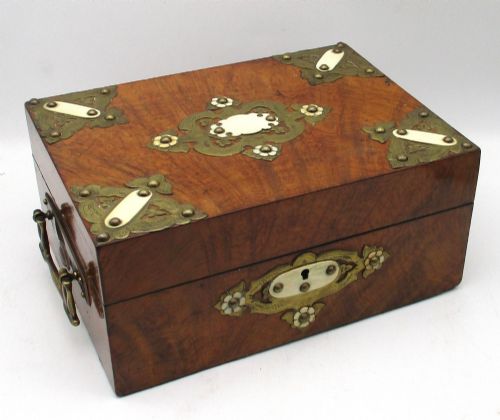
Brown Walnut Vanity Desk
These brown walnut vanity desks combine compact writing surfaces with hidden compartments, offering practical daily workspace and timeless period character.
Brown Walnut Vanity Desk
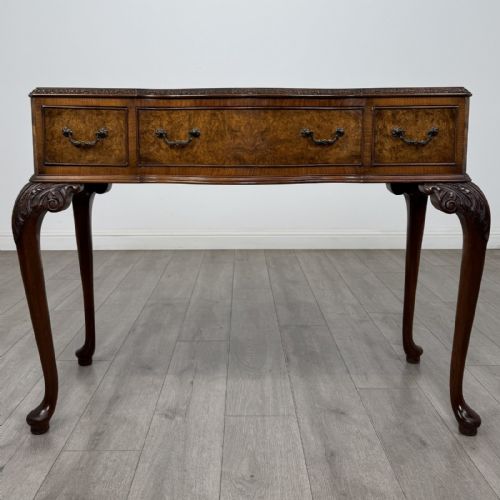
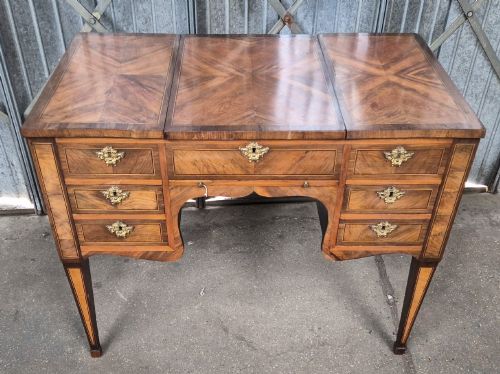
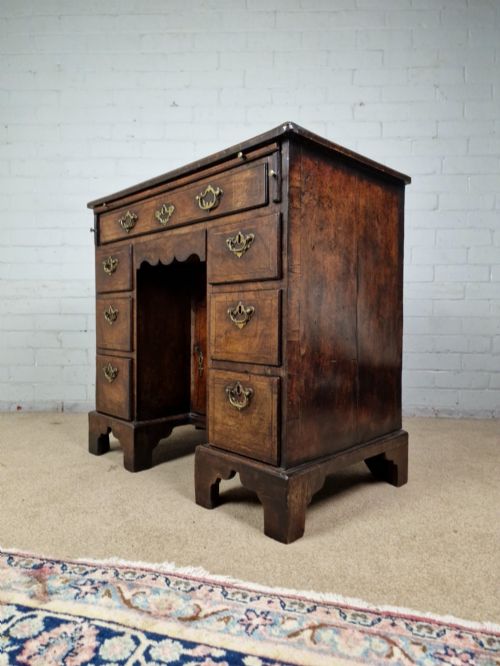
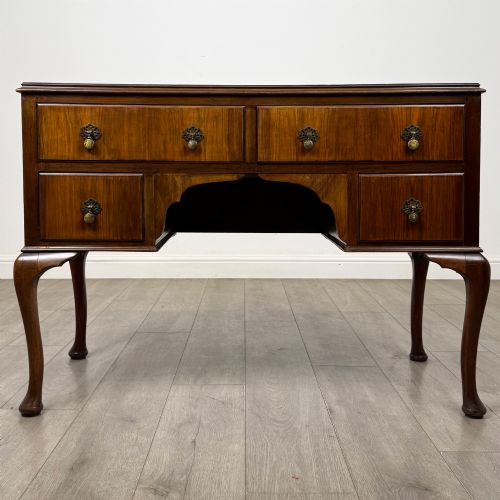
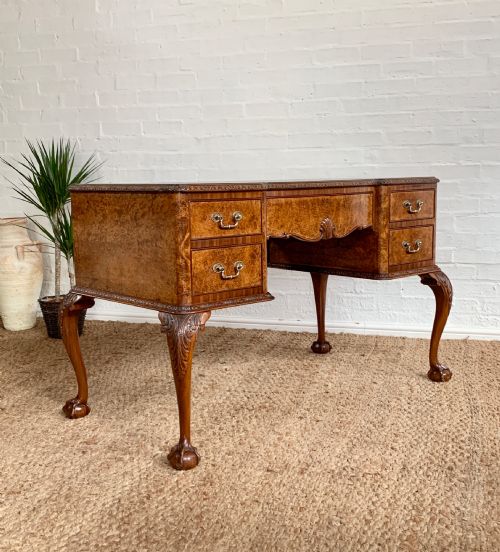
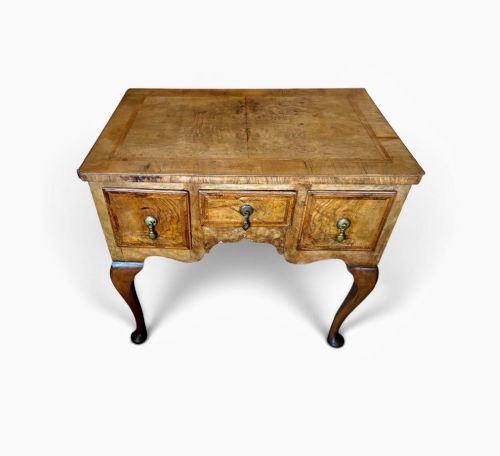
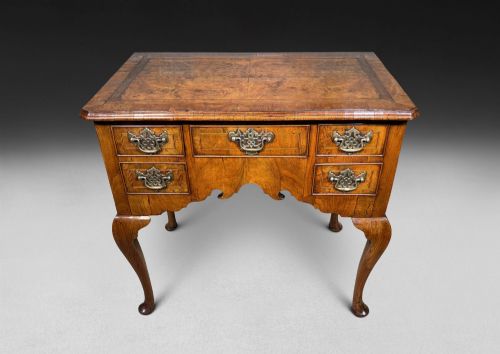
A brown walnut vanity desk serves primarily as a dual-purpose table for grooming and correspondence, often taking the form of a lowboy or kneehole desk. These pieces originate across several centuries, spanning from the Georgian and Queen Anne eras through to Victorian, Edwardian, and Art Deco periods.
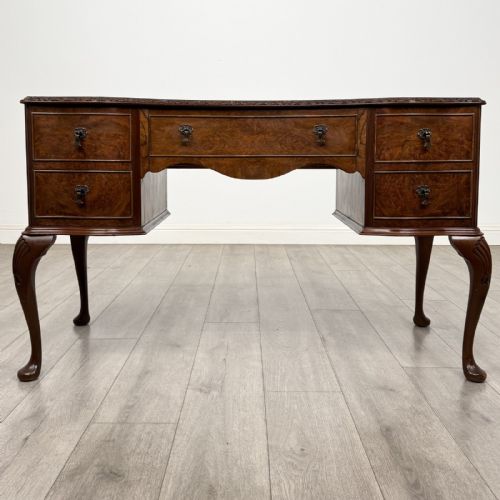
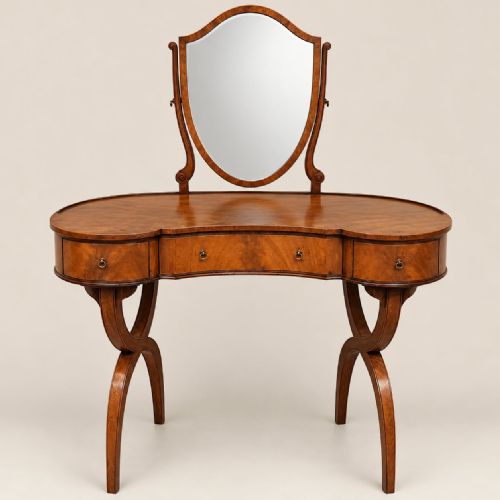
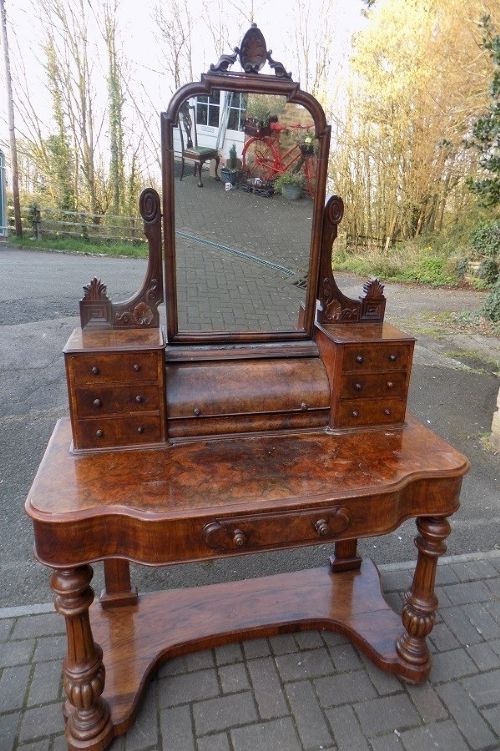
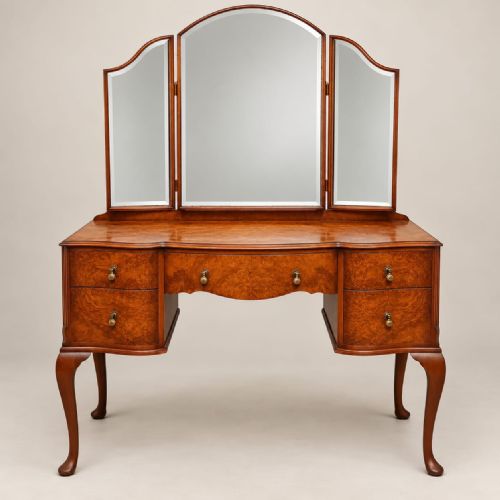
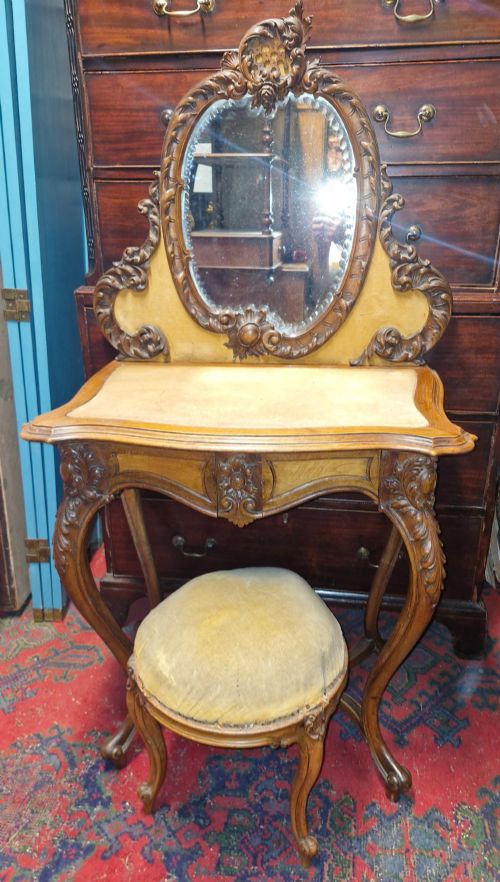
Buyers will encounter various configurations on this page, including traditional kneehole desks with central drawers, dressing tables featuring adjustable mirrors, and serpentine-fronted writing surfaces. The materials incorporate solid walnut alongside decorative burr veneers, complemented by brass handles and leather inserts.
How they were made
Cabinet makers utilised dense timber foundations overlaid with finely figured walnut and burr walnut veneers to create rich, patterned surfaces on the drawer fronts and tops. These wooden structures were frequently combined with secondary timbers such as oak and pine for drawer linings and internal framing.
Metalwork played a structural and decorative role, with cast brass drop handles, key escutcheons, and hinges fitted securely to the cabinetry. Writing surfaces were often inset with tooled leather, while dressing variations integrated bevelled mirror glass into pivoting wooden frames.
Brown Walnut Vanity Desk Retail Price Guide 2026
Typical asking prices for brown walnut vanity desk among the pieces listed under this phrase on Sellingantiques today, from the lower quarter to the upper quarter. They describe what is for sale here now, not the wider market.
Listings feature items spanning the 18th century, Victorian era, Edwardian period, and 1930s Art Deco movement.
What varies in quality
The choice and matching of timber veneers dictate much of the visual appeal, with symmetrical burr walnut figures marking superior cabinet work. The depth of grain and the precision in aligning patterns across drawer tiers distinguish higher-tier examples from simpler builds.
Construction methods also define the standard of execution, visible in hand-cut dovetail joints on drawers and the retention of original brass hardware. The integration of secondary materials like solid oak for internal partitions points to careful craftsmanship during construction.
Maples of London
The Brown Walnut Vanity Desk Glossary
- Lowboy
- A small table with drawers, typically raised on four tall legs, used historically for writing or dressing. They date commonly from the 18th century.
- Burr walnut
- A specialised wood cut from a tree growth or burl, yielding swirling, knotty grain patterns highly prized for decorative veneer work.
- Kneehole desk
- A compact desk featuring a recessed central space for the legs, flanked by pedestals of small drawers on either side.
- Dressing table mirror
- A pivoting mirror mounted on a small stand or base box, designed to sit atop a table or chest for grooming purposes.
Brown Walnut Vanity Desk: Frequently Asked Questions
What is a brown walnut vanity desk used for?
These pieces function as compact writing tables or dressing units, providing a surface for correspondence and personal grooming.
Their integrated drawers offer storage for stationery, cosmetics, and small household items while occupying minimal floor space in a room.
How do I identify a Georgian period piece?
Authentic Georgian pieces display specific structural characteristics such as hand-cut dovetails, solid oak drawer linings, and understated brass hardware.
The timber selection typically relies on figured walnut rather than heavy burr patterns popular in later revivals.
Where should I place a vanity desk at home?
These desks suit bedrooms, studies, or hallways where a shallow profile allows them to sit flush against a wall without obstructing pathways.
Pairing them with a matching low stool or side chair completes the traditional kneehole or dressing configuration.
What maintenance does walnut furniture require?
Walnut surfaces benefit from occasional dusting with a dry cloth and gentle polishing with traditional beeswax to nourish the timber and preserve the sheen of the veneer.
Keeping the furniture away from direct sunlight and heat sources prevents the wood from drying out and the veneer from lifting.