

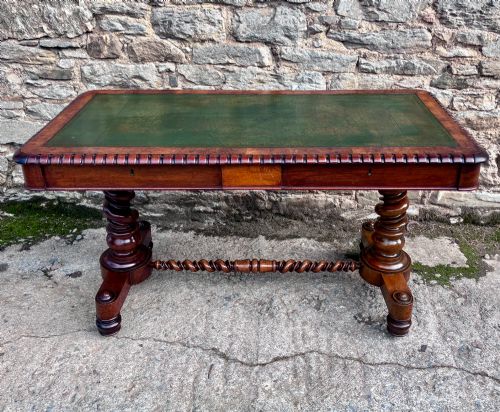
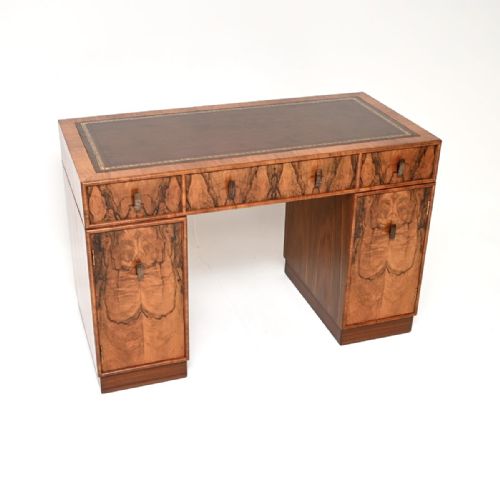
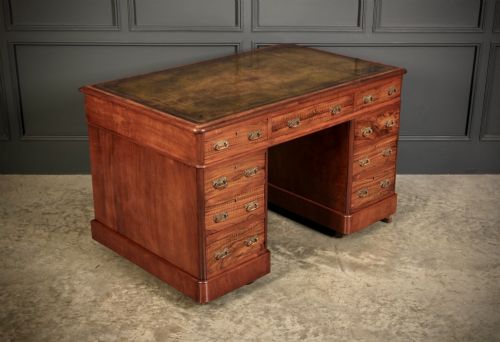
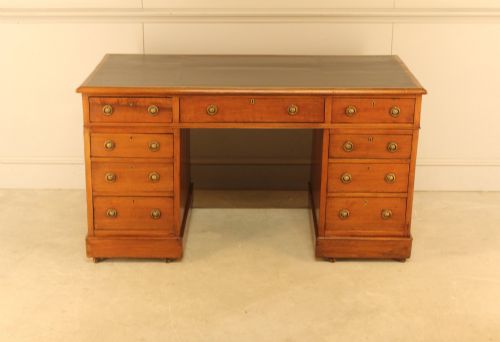
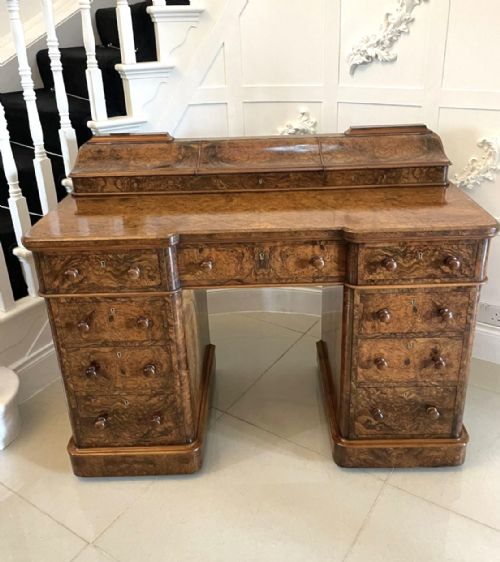
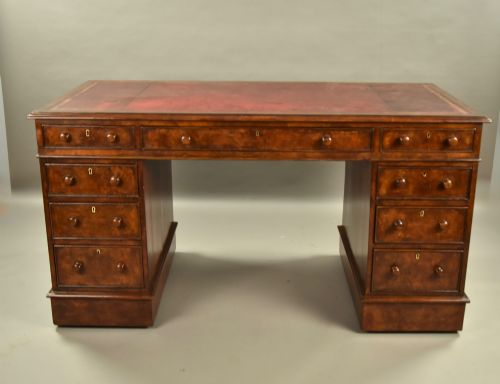
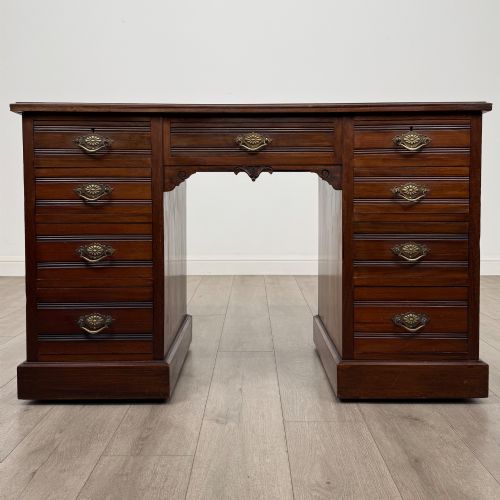
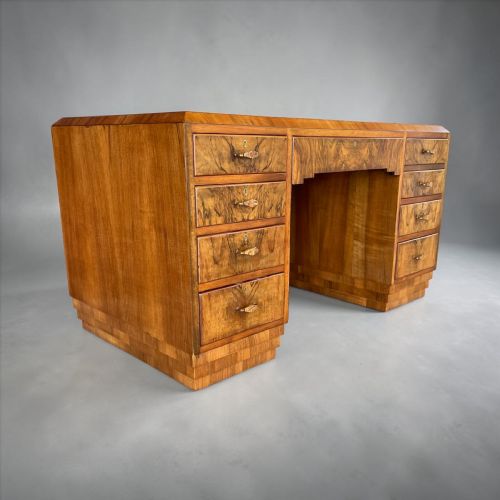

Brown Walnut Partners Desk
These brown walnut partners desk examples are double-sided writing tables designed for two people to work face to face, offering generous proportions and rich timbers.
Brown Walnut Partners Desk
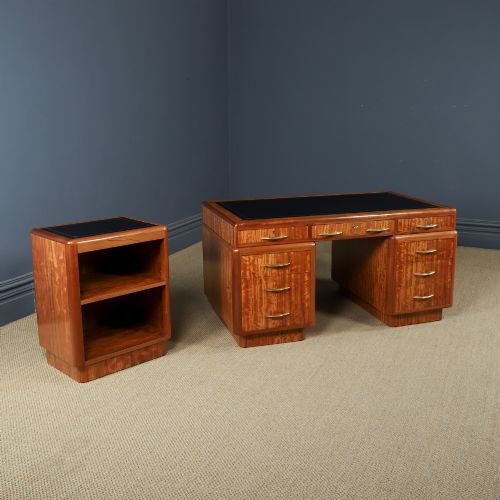
A brown walnut partners desk is a substantial double-sided piece of furniture built to accommodate two users simultaneously. These items appear across various periods including the Victorian era, the William IV period, and into the 20th century.
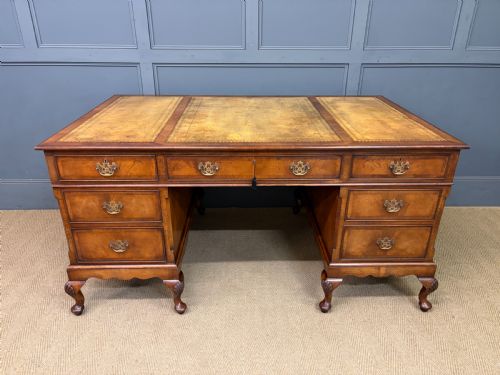
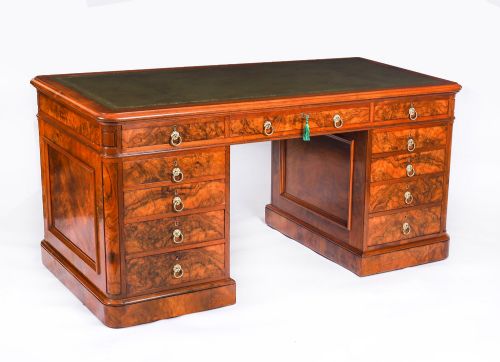
Most examples found on this page take the form of pedestal desks and writing tables, featuring drawers on both sides for shared use. The inventory spans from the early 19th century through to Art Deco pieces from the 1930s.
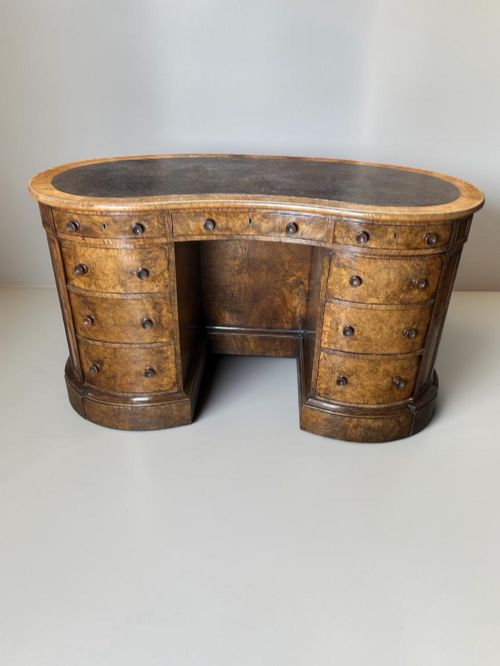
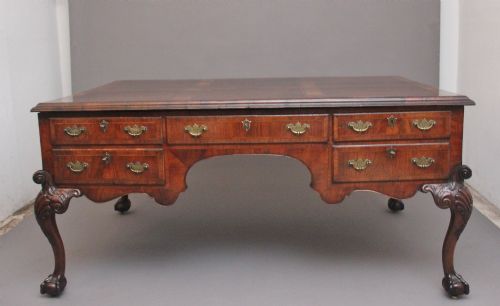
Makers and designers working in walnut utilise diverse styles such as Queen Anne revival, Chippendale revival, and Aesthetic periods. Buyers encounter variations ranging from large twin pedestal formats to smaller kneehole writing desks.
How they were made
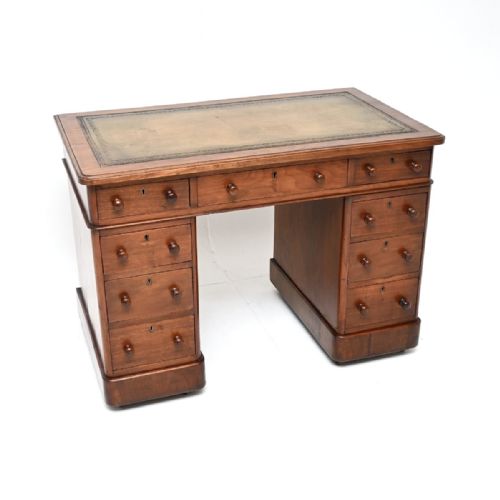
Cabinet makers constructed these large pieces using solid timber, burr walnut, and walnut veneer over secondary woods like oak. Surfaces are frequently set with contrasting inset leather writing panels to provide a durable working area.
Many items incorporate decorative details such as marquetry, satinwood inlay, and brass hardware including original handles. Construction methods range from traditional multi-drawer pedestal configurations to large writing tables supported by pedestals or legs.
Brown Walnut Partners Desk Retail Price Guide 2026
Typical asking prices for brown walnut partners desk among the pieces listed under this phrase on Sellingantiques today, from the lower quarter to the upper quarter. They describe what is for sale here now, not the wider market.
The listings on this page span from the Georgian period through Victorian times and into 20th-century Art Deco.
What varies in quality
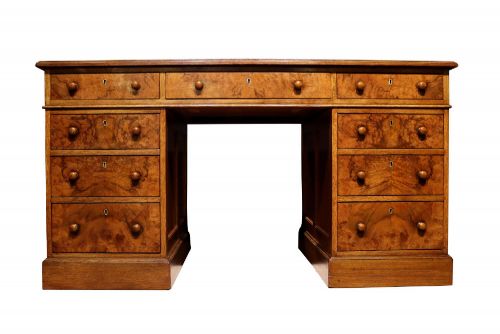
The distinction between standard and exceptional pieces rests upon the selection of timber, particularly the grain figuration seen in burr walnut veneers. Master workshops utilised superior matching of wood veneers across the large double-sided surfaces.
Attribution to notable firms such as Maple & Co., Gillows of Lancaster, Howard and Sons, or Maurice Adams elevates the standing of a desk. Construction integrity, originality of handles and leather inserts, and crispness of inlaid details dictate the overall standard.
Howard and Sons·Maple and Co·Gillow of Lancaster·Maurice Adams
The Brown Walnut Partners Desk Glossary
- Partners desk
- A large double-sided writing table fitted with drawers and cupboards accessible from both front and reverse. It allows two people to sit opposite each other.
- Burr walnut
- Timber obtained from walnut tree growths, producing highly figured, swirling grain patterns. Cabinet makers prized it for decorative veneered surfaces.
- Pedestal desk
- A freestanding desk consisting of a top surface resting on two separate drawer pedestals. They usually feature banks of drawers flanking a central kneehole.
- Marquetry
- The art of applying pieces of veneer to a structure to form decorative patterns. Craftsmen utilised different coloured woods to create intricate surface designs.
- Writing table
- A freestanding table with working drawers designed primarily for correspondence rather than storage. These examples often lack the pedestals found on heavier desks.
Brown Walnut Partners Desk: Frequently Asked Questions
What is a brown walnut partners desk?
A brown walnut partners desk is a large, double-sided writing table designed with drawer space on both the front and back. These pieces allowed two people to work face to face in a library or study.
The use of walnut timber and burr walnut veneer gives these desks deep colour and rich grain patterns across their expansive surfaces.
How do I date a partners desk?
Dating relies on stylistic clues, construction methods, and materials that align with periods like the Victorian era, William IV, or Art Deco. Examining the drawer linings, timber thickness, and hardware styles helps establish the age.
Makers' stamps or cabinet maker signatures found inside drawers provide definitive proof of the period and workshop of origin.
Where were these desks placed?
Historically, these large desks stood in the centre of a room rather than against a wall because they are finished on all sides. This placement allowed both users access to the drawers from their respective positions.
They served primarily in stately homes, professional offices, and substantial morning rooms where two individuals needed dedicated workspace.
How do I care for leather desk inserts?
Leather inserts require gentle cleaning with a damp cloth and occasional treatment with appropriate leather dressings to prevent drying. Avoid harsh chemical cleaners that can strip the gold tooling and natural dye.
Keeping the room humidity stable prevents the underlying timber from shifting and protects the bond between the leather and the desktop.