



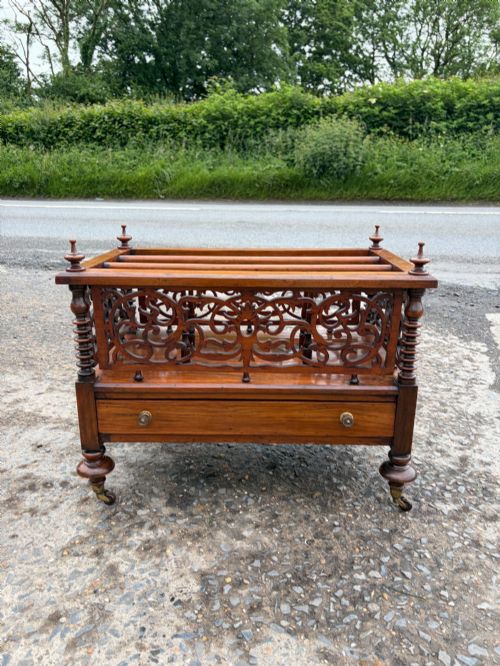



Brown Walnut Music Stand
A brown walnut music stand brings rich wood grain and practical compartmentalisation to a room, holding folios and papers with quiet period elegance.
Brown Walnut Music Stand
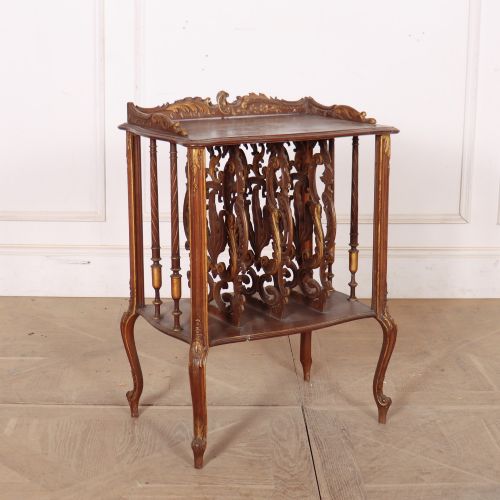
When searching for a brown walnut music stand, buyers encounter a variety of nineteenth-century and early twentieth-century forms designed for holding scores, folios, and periodicals. These pieces span Victorian, Edwardian, and Regency periods, appearing as canterburys, music cabinets, whatnots, and adjustable stands.
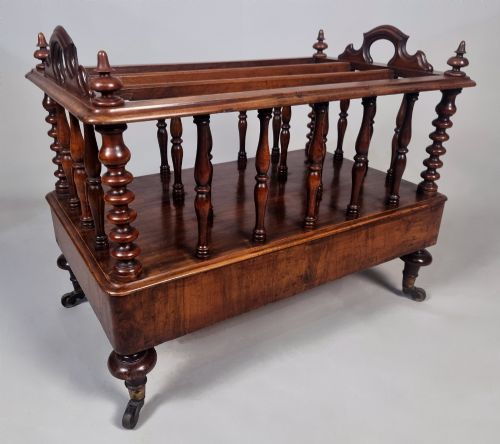
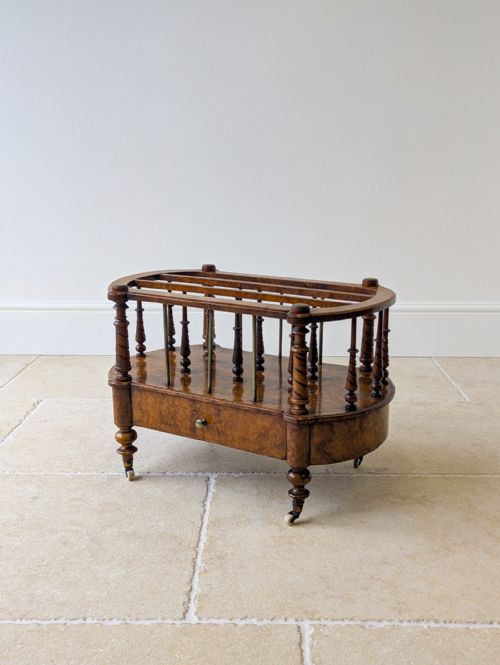
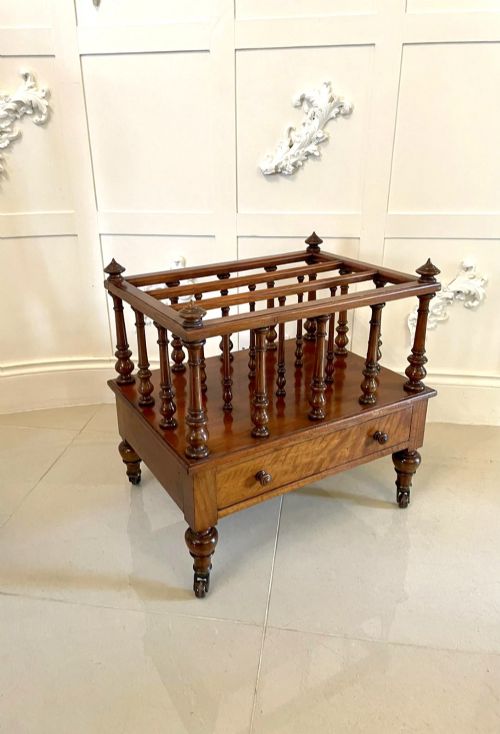
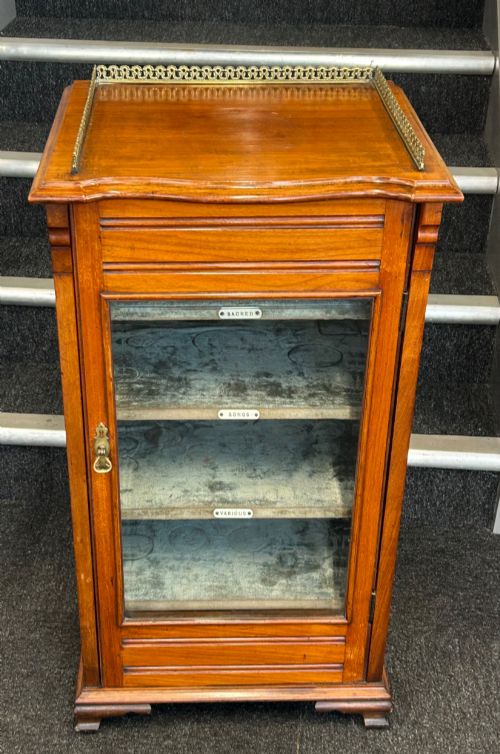
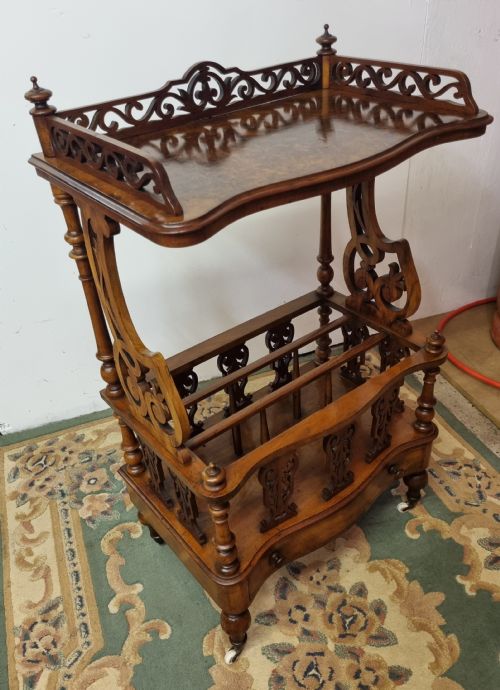
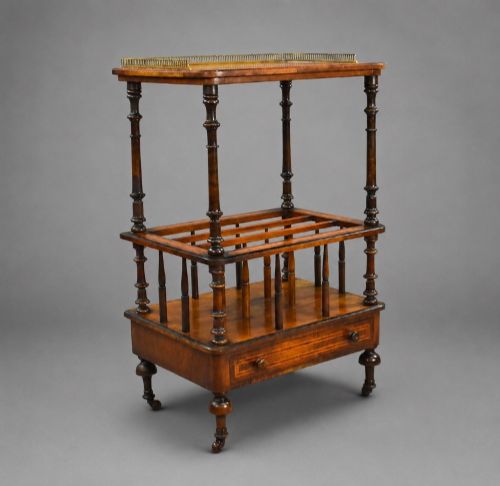
The version most commonly met on this page is the Victorian burr walnut canterbury or music cabinet, often featuring turned supports, glass panels, or inlaid woodwork. Makers such as Shoolbred produced pieces that combined storage compartments with display surfaces, creating versatile items for the Victorian parlour.
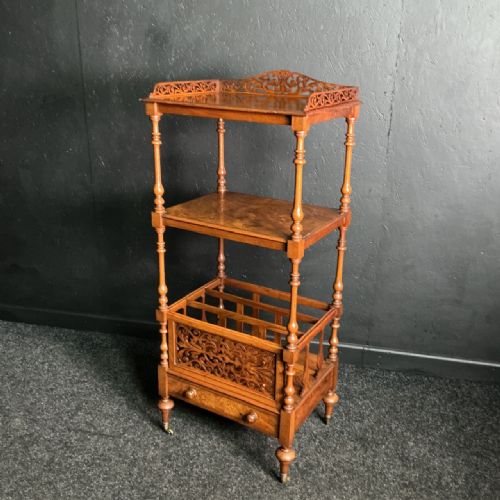
Alongside dedicated music stands, the selection includes related library and salon furniture fashioned from walnut, burr walnut, and black walnut. These items reflect changing domestic habits of the 1850s through to the 1900s, when households required specialised furniture for sheet music and journals.
How they were made
Cabinet makers utilised solid walnut and figured burr walnut veneers applied to secondary timbers, accentuating the natural grain patterns across flat surfaces and cabinet doors. Inlaid stringing and marquetry details frequently embellished the panels, contrasting with the dark tones of the wood.
Structural hardware relied upon cast brass fittings, hinges, and adjustable desk mechanisms that allowed stands to tilt or alter in height. Glass doors on music cabinets incorporated wooden framing, while canterburys featured distinctive vertical slatted partitions to keep folios upright.
Brown Walnut Music Stand Retail Price Guide 2026
Typical asking prices for brown walnut music stand among the pieces listed under this phrase on Sellingantiques today, from the lower quarter to the upper quarter. They describe what is for sale here now, not the wider market.
Listings feature walnut, burr walnut, and black walnut across Victorian, Edwardian, and Regency periods.
What varies in quality
The degree of figuration in the burr walnut veneer largely separates standard items from finer examples, as richly patterned timber was selected for premier commissions. Crispness in carved details and precision in inlaid woodwork indicate the level of craftsmanship invested by the workshop.
The integration of secondary functions, such as combined whatnot tiers, work tops, or mechanical components like adjustable stands, elevates the sophistication of a piece. Original brass hardware, intact glass panels, and sound structural joinery preserve the integrity expected in high-grade cabinetwork.
Shoolbred·Lochmanns
The Brown Walnut Music Stand Glossary
- Canterbury
- A low, multi-tiered stand fitted with vertical partitions for holding sheet music, newspapers, or folios. These pieces often incorporated a drawer at the base and rested upon castors.
- Burr Walnut
- A veneer sliced from the knotty growth of a walnut tree, prized for its swirling, highly decorative grain patterns. Cabinet makers applied these prized sections to the main visual surfaces of furniture.
- Whatnot
- An open set of multi-tiered shelves supported by slender columns, used for displaying ornaments and books. They appeared frequently in Victorian and Edwardian interiors.
- Inlay
- A technique where pieces of contrasting wood, metal, or shell are fitted into depressions within a solid wood or veneered surface to create geometric or floral patterns.
- Musik-automat
- A mechanical self-playing musical instrument housed within a cabinet structure, representing the more complex engineering achievements of the late nineteenth century.
Brown Walnut Music Stand: Frequently Asked Questions
What is a brown walnut music stand used for?
These stands and cabinets were originally designed to organise and display sheet music, books, and periodicals in nineteenth-century drawing rooms and parlours.
Today, they serve equally well in modern homes as side tables, magazine racks, or compact display cabinets for living spaces and studies.
How do I date a Victorian walnut canterbury?
Victorian pieces often display characteristic details such as burr walnut veneers, turned walnut columns, and inlaid marquetry that evolved through the decades from the 1850s onward.
Examining the construction methods, secondary timbers, and the presence of makers' marks or stamps helps narrow down the specific decade of production.
How should I care for antique walnut furniture?
Antique walnut benefits from stable indoor humidity and protection from direct sunlight, which can fade the warm tones of the wood over time.
Regular dusting with a soft cloth and occasional application of appropriate wax preserves the sheen of the burr walnut veneer and protects the finish.