





Brown Walnut Magazine Rack
A brown walnut magazine rack or canterbury brings nineteenth-century craftsmanship directly to your living room.
Brown Walnut Magazine Rack
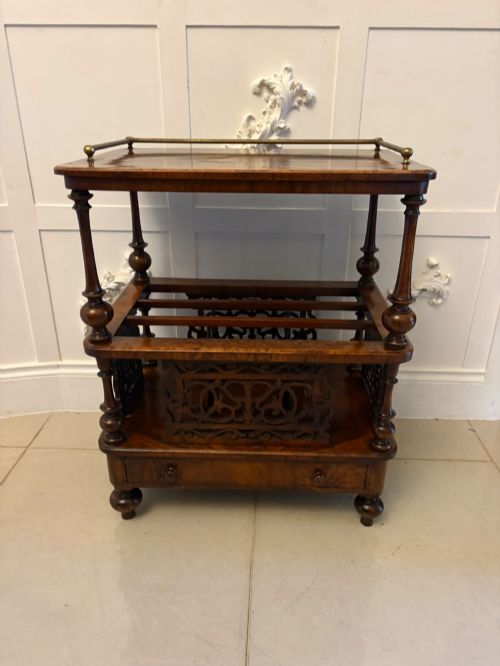
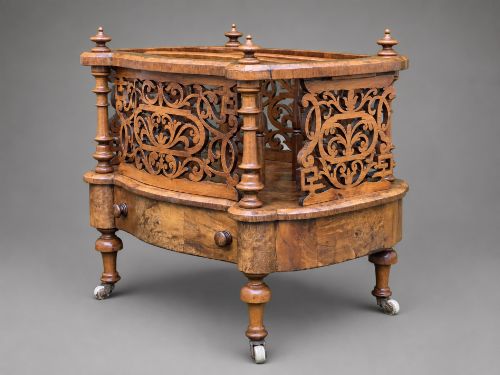
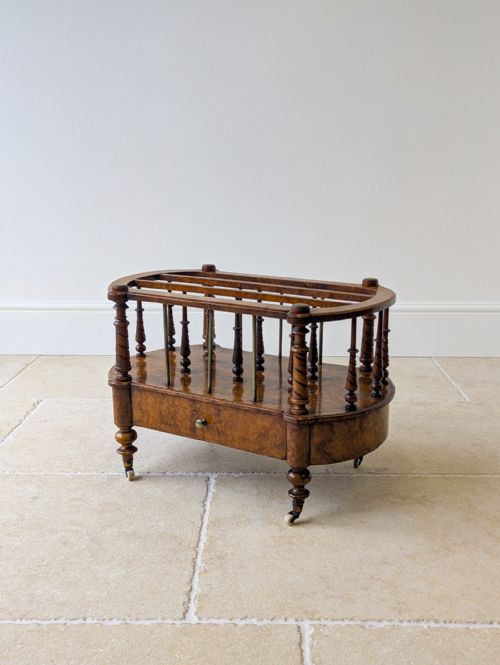
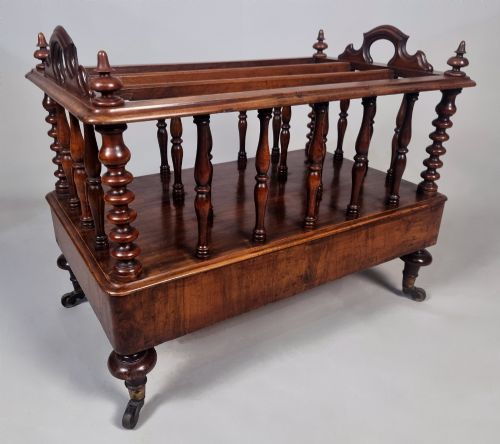
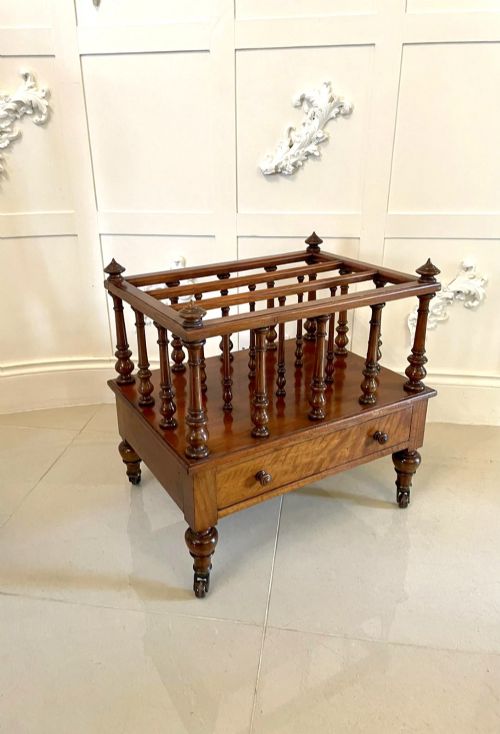
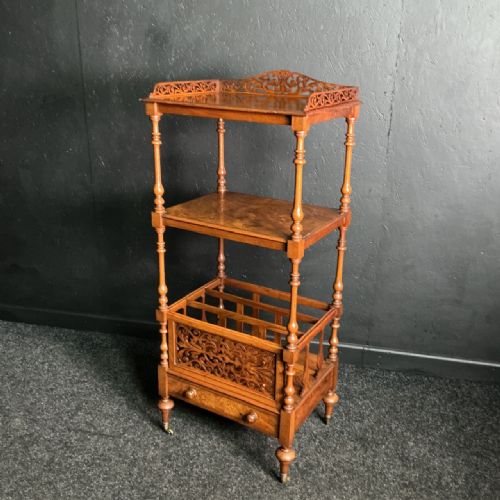
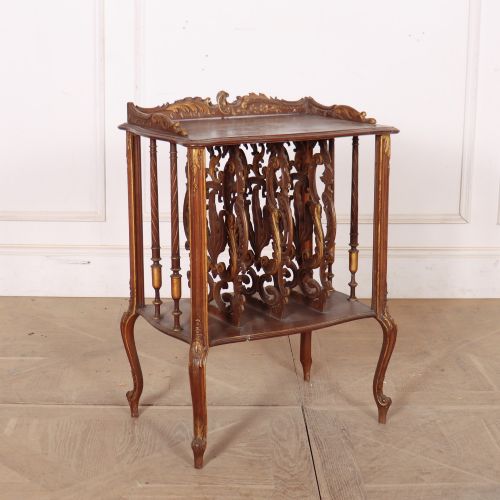
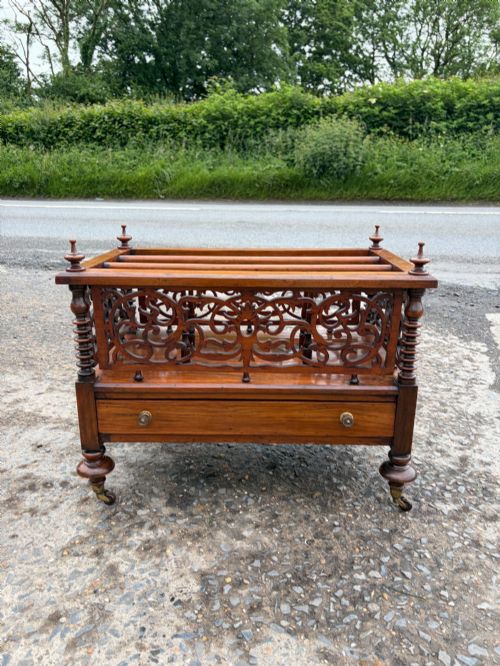
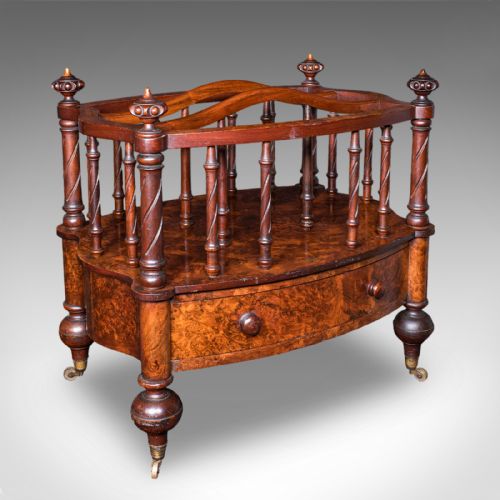
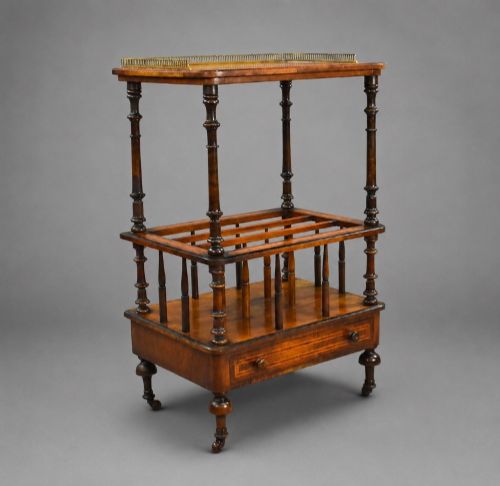
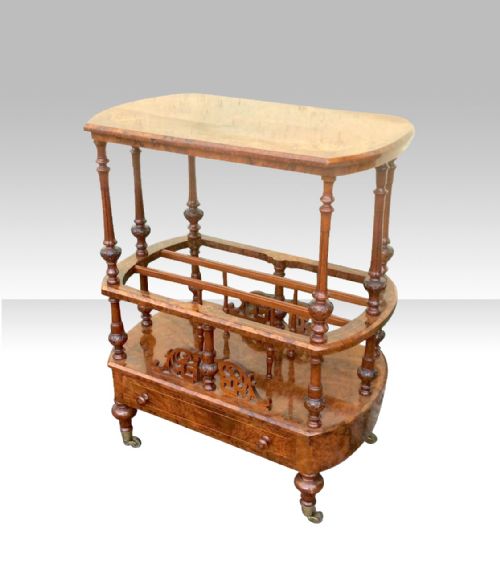
A brown walnut magazine rack in this selection typically presents as a Victorian or nineteenth-century canterbury, often combining compartments for periodicals with lower drawers or whatnot shelving. These pieces trace their origins through the Victorian and Regency periods, frequently manifesting as music stands or side tables designed to organise papers and folios.
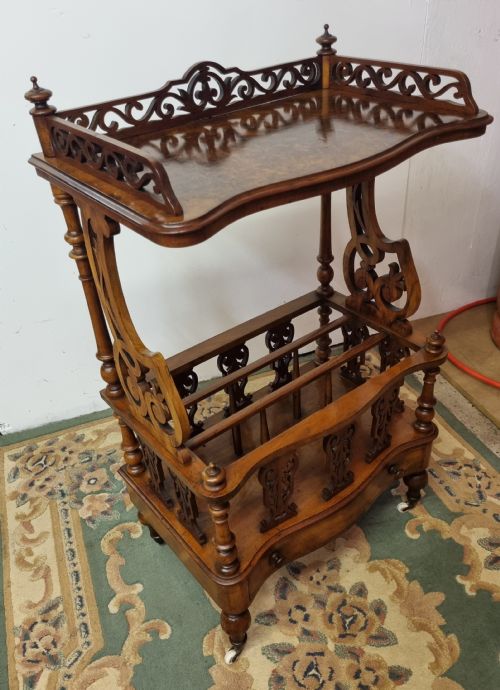
You are most likely to meet Victorian burr walnut canterburys on this page, which frequently display serpentine shapes, fretwork, and turned supports. Alongside these, nineteenth-century magazine stands and combined music racks appear regularly, showing the versatility of walnut furniture from the 1850s to the 1890s.
Factors of distinction
The refinement of the timber figure largely dictates the distinction of a piece, with highly figured burr walnut and complex marquetry inlay commanding greater visual presence than plain dark walnut. Masterful execution of serpentine shaping, fretwork panels, and turned spindles sets finer examples apart from simpler utility stands.
Proportion and structural integrity define the upper tier, where substantial proportions, integrated lower drawers, and multi-functional designs such as combined whatnot tables demonstrate advanced cabinet-making skill.
Brown Walnut Magazine Rack Retail Price Guide 2026
Typical asking prices for brown walnut magazine rack among the pieces listed under this phrase on Sellingantiques today, from the lower quarter to the upper quarter. They describe what is for sale here now, not the wider market.
Object types recorded here include traditional canterburys, music stands, combined magazine racks, side tables, and multi-tiered whatnot tables.
Shoolbred
The Brown Walnut Magazine Rack Glossary
- Canterbury
- A low, freestanding piece of furniture with partitioned sections designed originally for sheet music and later for newspapers and magazines. They often include a small drawer at the base and rest on castors.
- Burr Walnut
- A specialised timber cut from the warted excrescences of walnut trees, prized for its swirling, highly figured grain patterns. Cabinetmakers used it as a decorative veneer on prominent surfaces.
- Whatnot
- An open set of multi-tiered shelves used for displaying ornaments or holding books and papers. They frequently appeared combined with canterburys during the Victorian era.
- Marquetry Inlay
- The art of applying pieces of veneer to a structure to form decorative patterns and pictures. It adds distinct visual texture to walnut furniture tops and panels.
- Serpentine
- A furniture shape featuring a line that curves inward centrally and outward at the ends. This undulating profile adds considerable elegance to nineteenth-century table edges.
Brown Walnut Magazine Rack: Frequently Asked Questions
What is a canterbury?
A canterbury is a low, partitioned stand historically built to hold sheet music, folios, and periodicals near a piano or seating area. Many nineteenth-century versions incorporate lower drawers or multiple tiers.
Over time, these pieces transitioned from musical storage to holding newspapers and magazines while retaining their traditional timber divisions and castors.
How do I date a walnut canterbury?
Dating relies on observing stylistic markers such as Victorian serpentine shapes, French Rococo revival carvings, and the presence of burr walnut veneers. Mid-nineteenth-century examples often feature elaborate fretwork and turned spindle supports.
Construction details, including the use of solid walnut versus veneering and the style of brass castors, provide further clues to whether a piece originates from the Regency or late Victorian era.
Where should I place it?
These pieces fit naturally beside a sofa, armchair, or desk where you need accessible storage for current reading materials. Their compact footprints allow them to function effectively as side tables.
Models featuring integrated whatnot shelving or work tops also serve well as display surfaces for small decorative objects in a living room or study.
How do I care for burr walnut?
Burr walnut benefits from being kept away from direct sunlight and sudden temperature changes to protect the delicate veneer and timber finish. Regular dusting with a soft, dry cloth preserves the polished surface.
Applying a quality beeswax periodically helps nourish the wood and maintain the natural depth of the brown walnut grain without building up heavy residues.