



Brown Walnut Floor Clock
A brown walnut floor clock brings architectural presence and rich grain to a room, offering the steady chime of history.
Brown Walnut Floor Clock
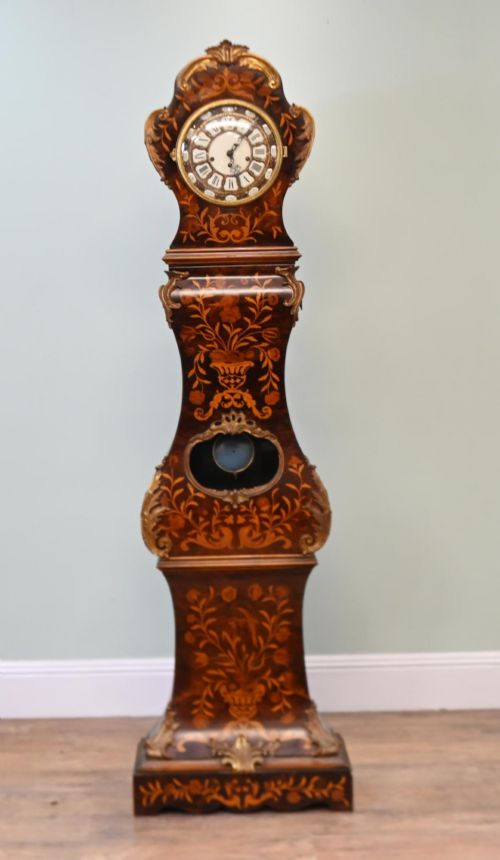
A brown walnut floor clock is an upright timepiece housed in a tall wooden case, designed to stand directly on the floor. Buyers searching for this phrase seek traditional tall clocks, often known as grandfather or longcase clocks, built from rich brown walnut timbers.
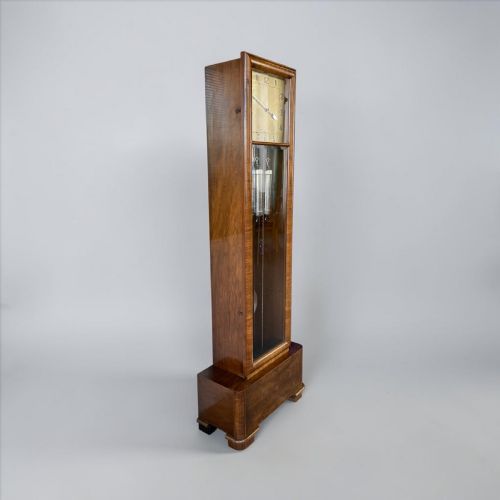
The pieces on this page span from the seventeenth century through the Georgian era and into the twentieth century. Examples range from early seventeenth-century London masterworks to Art Deco and mid-twentieth-century interpretations.
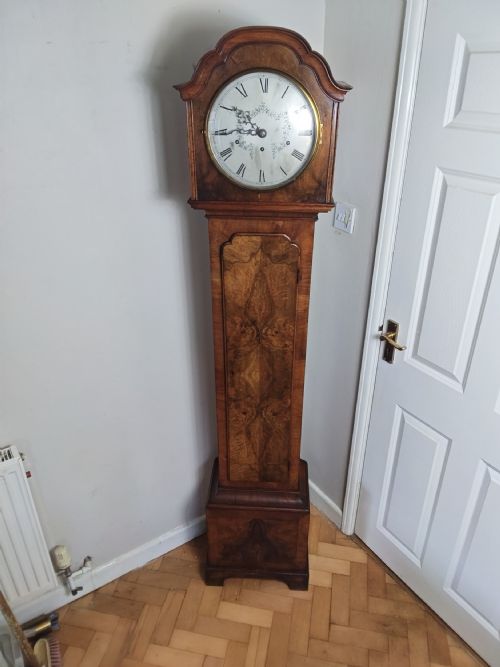
Most pieces seen here adopt classical forms such as longcase clocks, grandfathers, and smaller grandmother variations. They combine utilitarian timekeeping with decorative woodworking traditions like quarter-veneering and burr walnut patterning.
Materials and construction methods
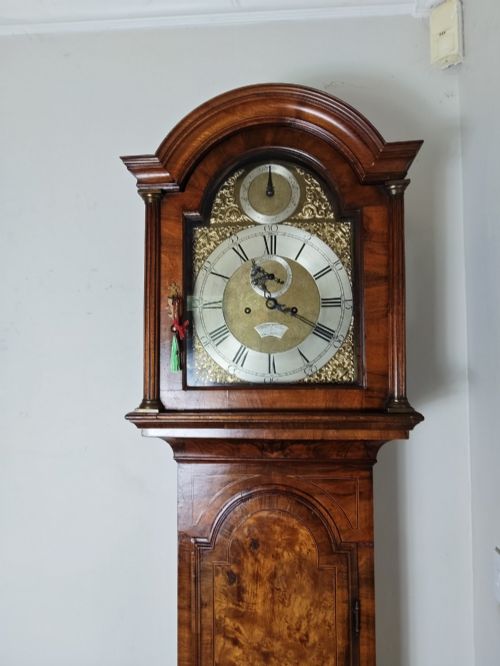
Makers constructed these floor clocks using solid walnut and decorative burr walnut veneers applied over secondary woods like oak. Cabinetmakers utilised quarter-veneering techniques to create symmetrical patterns across the tall door panels.
The internal movements rely on brass and steel components, housed behind glass dial doors. Metal dials often feature brass chapter rings and cast spandrels, while later twentieth-century iterations incorporate chrome elements.
Brown Walnut Floor Clock Retail Price Guide 2026
Typical asking prices for brown walnut floor clock among the pieces listed under this phrase on Sellingantiques today, from the lower quarter to the upper quarter. They describe what is for sale here now, not the wider market.
Early clockmakers occasionally signed their brass dials in hidden corners, leaving a secret handshake for future generations of horologists.
Distinctions in craftsmanship
Quality in these floor clocks rests upon the depth of the timber grain and the precision of the cabinetwork. Finer examples display carefully matched burr walnut veneers and well-proportioned hood mouldings that frame the dial.
Edin Burgis·Langley Bradley·Edward Upjohn·Edward East·Joseph Knibb·John Harrington
The Brown Walnut Floor Clock Glossary
- Longcase clock
- A tall pendulum clock enclosed in a wooden case standing upright on the floor. These pieces are commonly referred to as grandfather clocks.
- Burr walnut
- A specialised wood figuring taken from the growth excrescences on walnut trees. It yields highly decorative, swirling grain patterns highly prized by cabinetmakers.
- Quarter-veneered
- A method of arranging four matching slices of wood veneer to create a symmetrical geometric design. This technique is frequently seen on early cabinet doors.
- Grandmother clock
- A smaller, more compact version of the traditional longcase clock. They offer the presence of a taller floor clock in a reduced scale.
Brown Walnut Floor Clock: Frequently Asked Questions
What is a brown walnut floor clock?
A brown walnut floor clock is a tall vertical timepiece housed within a wooden case, designed to stand directly on the floor. These instruments combine mechanical clockwork with decorative cabinetry.
They serve both as functional timekeepers and prominent furniture centerpieces within a domestic interior.
How do I date a longcase clock?
Dating relies on examining the construction style of the case, the materials used, and the signature on the dial. Earlier examples often feature narrow proportions and specific architectural hood details.
Maker signatures and movement types provide further chronological markers, linking pieces to specific centuries or stylistic periods.
Where should I place a floor clock?
Floor clocks require a stable, level surface away from direct sunlight and major temperature fluctuations. Placing them against a secure interior wall prevents vibrations from disturbing the pendulum.
Ample clearance is necessary around the case to allow for winding weights and opening access doors.
What is burr walnut?
Burr walnut is a specialised timber derived from the burl growth of a walnut tree. It produces intricate, swirling grain patterns that cabinetmakers select for decorative veneer panels.
This material elevates the visual richness of the clock case through its natural organic patterning.