



Brown Walnut Chevet
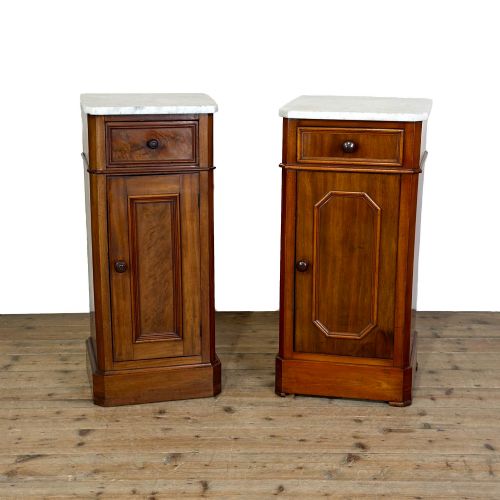
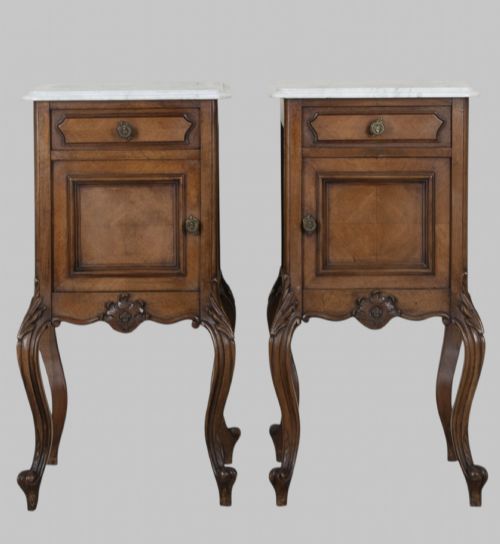
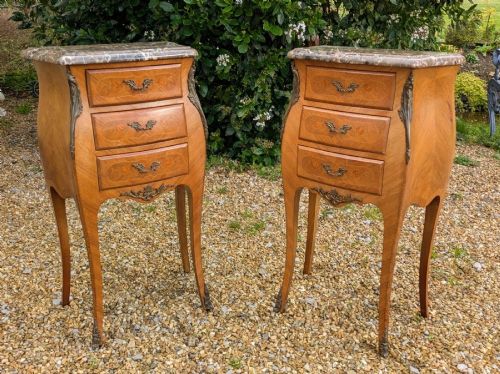
These brown walnut chevet pieces bring compact French elegance to a bedroom, offering a surface for a lamp and enclosed storage below.
Brown Walnut Chevet
When searching for a brown walnut chevet, buyers encounter small bedside cabinets and bedside tables designed for intimate spaces. The most common form on this page is the pair of French bedside cabinets, frequently topped with marble and built during the nineteenth and early twentieth centuries.
The selection spans periods from the Victorian era up to the nineteen-twenties, incorporating styles such as Louis XV revival and French provincial. Alongside conventional bedside cupboards, the listings include side cabinets, tall side cabinets, and nightstands with secret compartments.
Makers and cabinetmakers from these periods favoured walnut for its rich grain, often pairing the timber with contrasting fruitwood, kingwood, or marquetry details. Buyers primarily select these pieces to anchor a bed ensemble with period character and practical enclosed storage.
How they were made
Cabinetmakers constructed these pieces using solid walnut and walnut veneer, applying careful parquetry and marquetry to create geometric patterns or floral motifs across the surfaces. Secondary timbers like fruitwood provided internal structural support for drawers and carcases.
Heavy slabs of marble, including Belgian Sainte-Anne stone, were fitted to the tops of the cabinets to create a durable, water-resistant surface for bedside items. Brass mounts, handles, and gallery rails were cast and affixed to accent the Louis revival and provincial styling.
Brown Walnut Chevet Retail Price Guide 2026
Typical asking prices for brown walnut chevet among the pieces listed under this phrase on Sellingantiques today, from the lower quarter to the upper quarter. They describe what is for sale here now, not the wider market.
Several discreet bedside tables hide a secret compartment behind their polished walnut facades.
What varies in quality
The sophistication of the timber work and veneer matching distinguishes the finer examples from simpler provincial workshop output. Superior pieces display intricate marquetry and precise parquetry alignment that frame the walnut grain effectively.
The Brown Walnut Chevet Glossary
- Chevet
- A small bedside table or cabinet designed to sit beside a bed. These compact pieces typically feature a combination of a cupboard door and a drawer.
- Parquetry
- A geometric mosaic of wood pieces used for decorative floors and cabinet surfaces. Cabinetmakers use contrasting timbers like walnut and fruitwood to form these patterns.
- Marquetry
- The art of applying pieces of veneer to a structure to form decorative patterns and pictures. Floral designs and scrolling motifs frequently appear on French furniture.
- Belgian Sainte-Anne Marble
- A specific dark grey or black fossiliferous limestone quarried in Belgium. It is traditionally utilised for decorative furniture tops.
- Louis XV Revival
- A nineteenth-century style that imitates the ornate, curving lines and asymmetrical cartouches of the mid-eighteenth-century French court.
Brown Walnut Chevet: Frequently Asked Questions
What is a chevet used for?
A chevet serves as a bedside table or cabinet to hold lamps, books, and small personal items within reach of the bed.
The enclosed cupboard and drawer space also provides discreet storage for nighttime essentials, keeping the bedroom surface tidy.
Are these cabinets sold as pairs?
Many listings feature matching pairs of bedside cabinets, which suit placing on either side of a double or king-size bed.
Single bedside tables and side cabinets also appear for spaces that accommodate only one freestanding unit.
How do I identify French revival styles?
French revival pieces from the nineteenth and early twentieth centuries adopt the curved cabriole legs and ornamental mounts of earlier royal periods.
Details such as marble tops and walnut marquetry help distinguish these continental cabinets from plain Victorian English furniture.
How do I care for a marble top?
Marble surfaces require wiping with a soft, damp cloth and gentle soap to avoid scratching the polished stone.
Acidic liquids like juice or wine can etch the marble if left standing, so coasters protect the historic finish.