

Brown Walnut Bedside Drawers
Brown walnut bedside drawers combine compact storage with warm timber grain, offering practical bedside organisation derived from nineteenth and twentieth-century traditions.
Brown Walnut Bedside Drawers
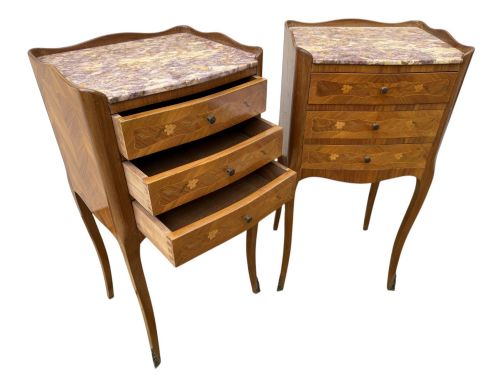
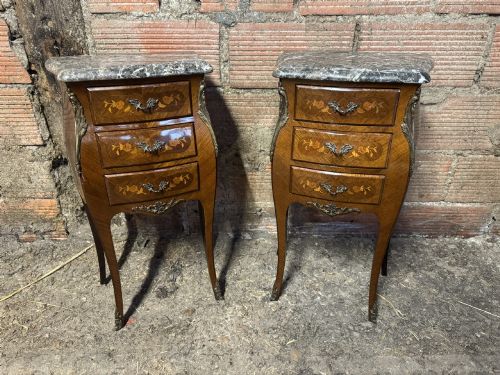
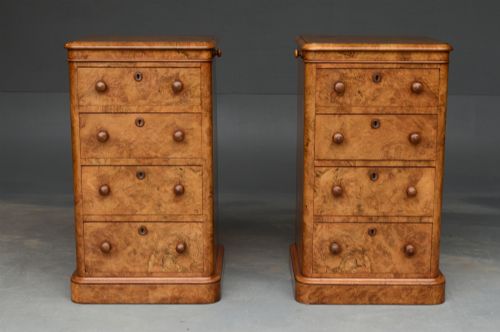
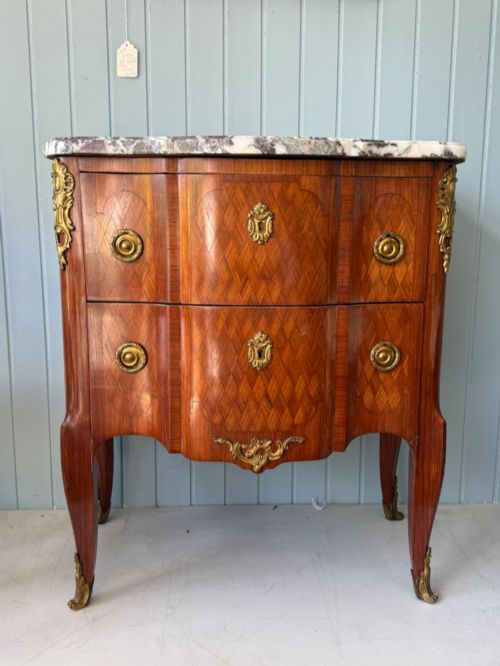
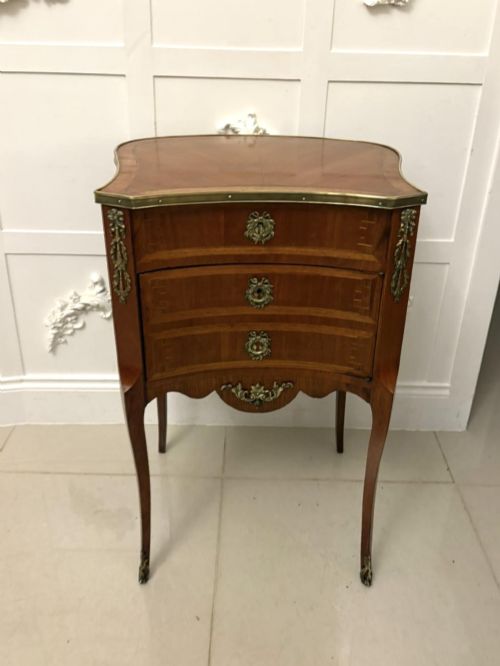
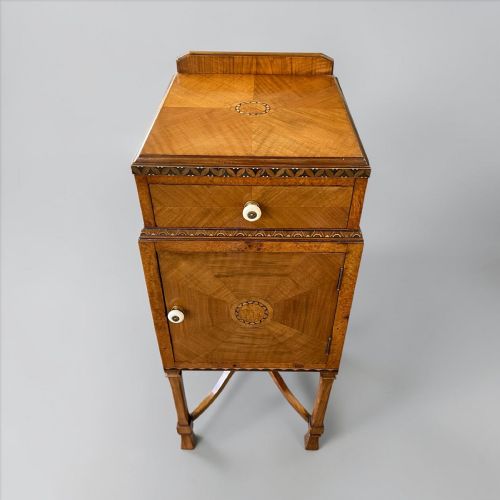
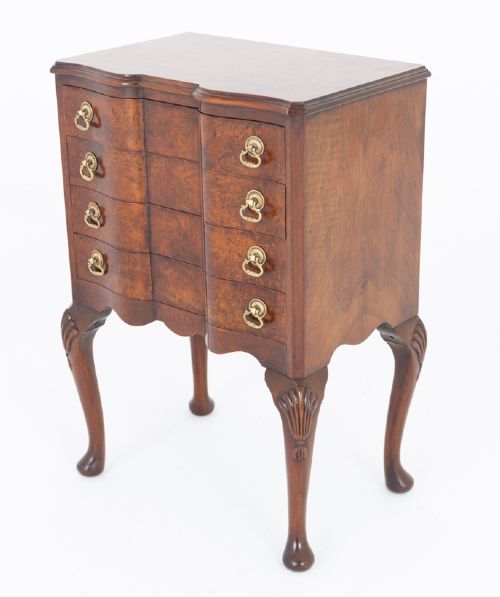
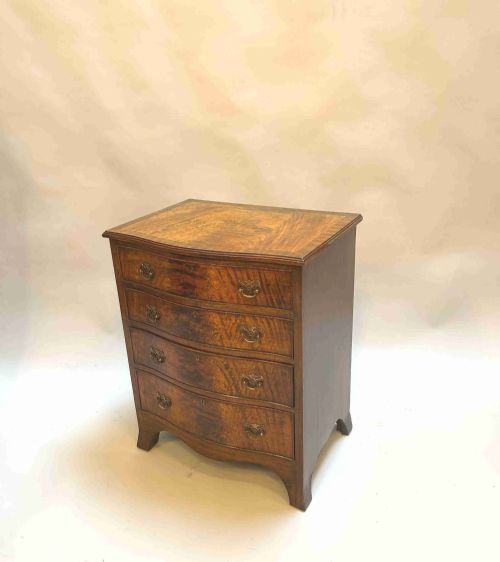
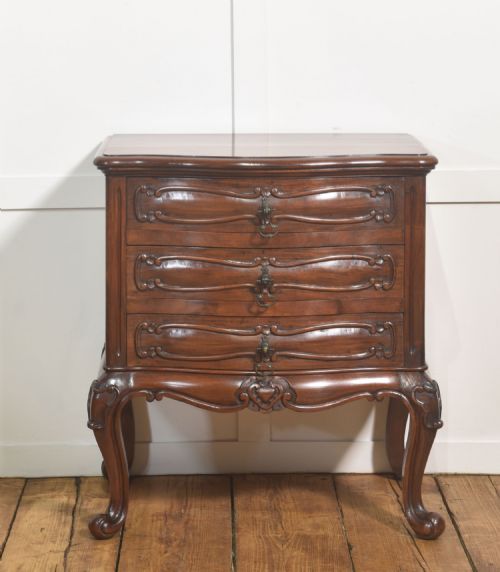
Brown walnut bedside drawers encompass small chests, cabinets, and nightstands designed to sit beside a bed. The pieces listed here span the nineteenth and twentieth centuries, incorporating Victorian, Edwardian, Art Deco, and revival styles.
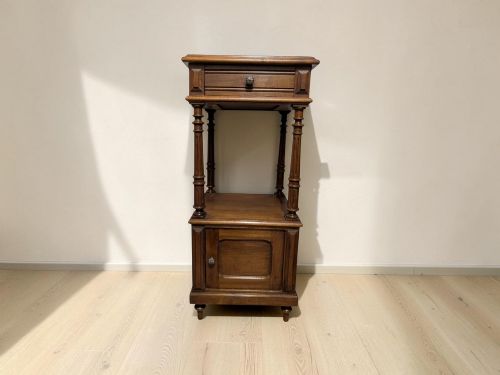
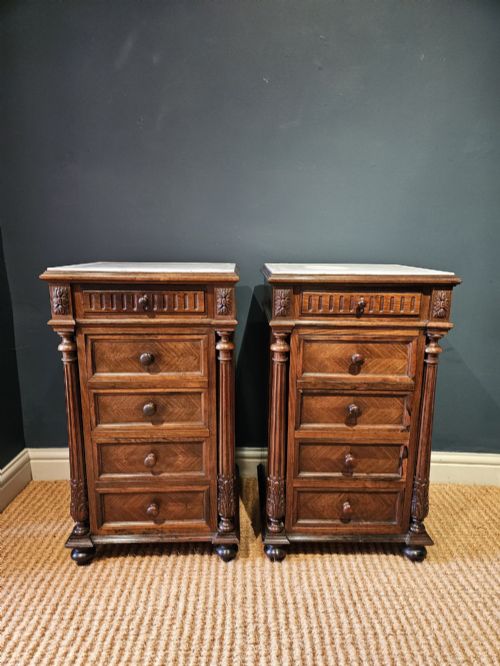
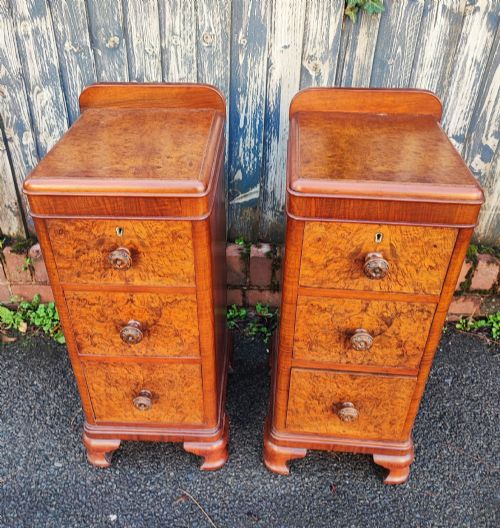
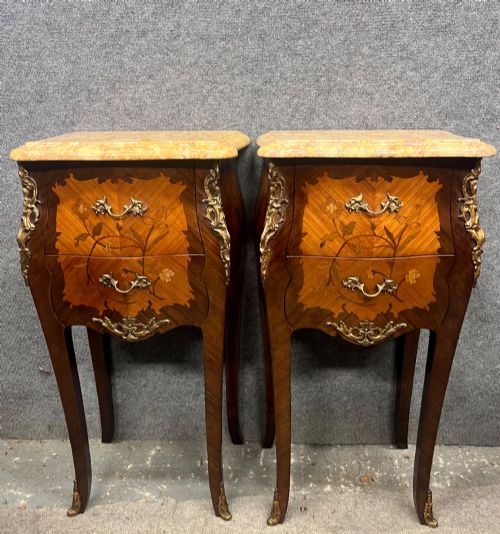
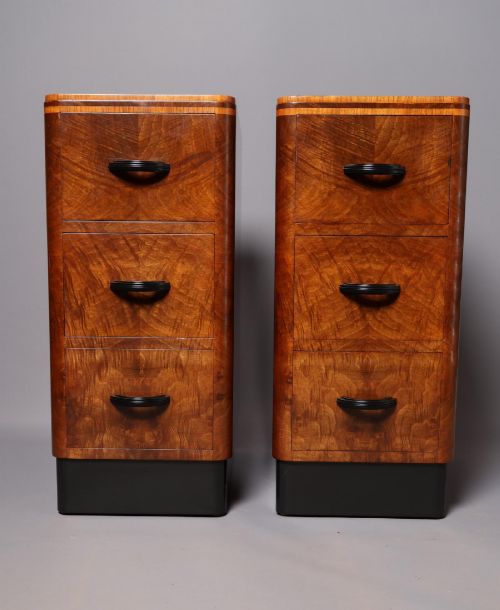
Buyers will find single pieces alongside matching pairs configured with drawers, cupboards, or open shelving. Proportions remain compact, accommodating smaller spaces while providing functional tabletop and drawer storage.
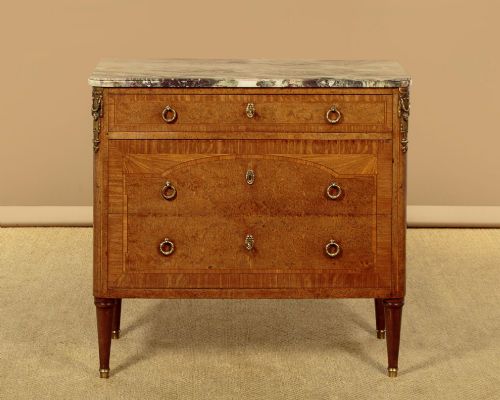
Origins stretch across English and continental workshops, yielding variations in silhouette from serpentine fronts to clean geometric Art Deco lines. Walnut timber provides the unifying material thread across these diverse regional forms.
Materials and construction methods
Cabinetmakers utilised solid walnut and figured burr veneers applied over secondary timber carcases to achieve rich surface patterns. Quartered veneers and marquetry inlay ornament selected surfaces on French and English examples.
Marble tops appear on continental cabinets, providing durable impervious surfaces above timber drawers. Brass handles, escutcheons, and ormolu mounts furnish operational hardware and decorative accents.
Joinery methods reflect traditional cabinetmaking, employing dovetailed drawer construction and panelled carcases. Timber movement is managed through cross-banding and stable internal framing.
Brown Walnut Bedside Drawers Retail Price Guide 2026
Typical asking prices for brown walnut bedside drawers among the pieces listed under this phrase on Sellingantiques today, from the lower quarter to the upper quarter. They describe what is for sale here now, not the wider market.
Current listings span the 1880s to the 1940s, featuring walnut, marble, brass, and ormolu across English and continental forms.
Indicators of quality and execution
Quality rests upon the selection of timber veneers, where symmetrical grain matching and rich burr figures elevate the visual impact. The crispness of marquetry and the precision of inlaid details separate standard items from finer productions.
Structural integrity shows in the smooth action of drawers and the tightness of joints. Original hardware, intact marble slabs, and balanced proportions contribute to the desirability of a piece.
The Brown Walnut Bedside Drawers Glossary
- Burr walnut
- A prized timber harvested from tree growths, yielding intricate swirling grain patterns that decorators favour for statement furniture panels.
- Marquetry
- The art of applying decorative veneer pieces to a structure to create pictorial or geometric designs.
- Ormolu
- Gilt bronze mounts applied to furniture edges and feet, frequently seen on continental cabinets.
- Serpentine
- A gently undulating curved furniture front that sweeps outward and inward symmetrically.
- Nightstand
- A small low bedside table or cabinet intended for holding lamps and nighttime essentials.
Brown Walnut Bedside Drawers: Frequently Asked Questions
How do I clean burr walnut?
Dust surfaces regularly with a soft dry cloth to prevent particulate buildup. Apply traditional wax polish sparingly to nourish the timber and maintain a gentle sheen without heavy chemical cleaners.
Avoid placing wooden furniture near direct heat sources or strong sunlight to prevent timber splitting and veneer lifting over time.
Are pairs common for bedside tables?
Matching pairs appear frequently among nineteenth and twentieth-century bedroom furniture. They provide symmetrical balance flanking a bed while offering identical storage capacity.
Single tables also occur regularly, suited for smaller bedrooms or eclectic interior arrangements where symmetry is less critical.
What is the difference between a cabinet and a chest?
Chests feature stacked horizontal drawers dedicated primarily to clothing or accessory storage. Cabinets typically enclose space behind hinged doors, sometimes combining internal shelving with an upper drawer.
Both forms serve effectively beside a bed depending on whether concealed cupboard space or sliding drawers are preferred.
How do I identify Art Deco pieces?
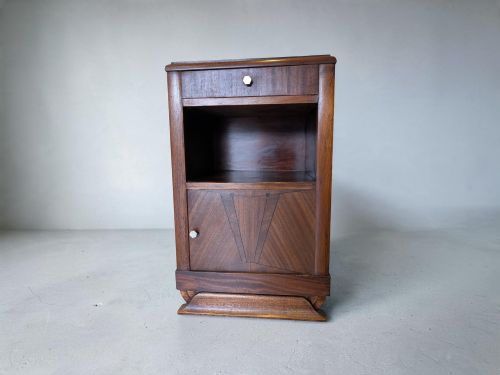
Art Deco bedside drawers exhibit streamlined geometric forms with minimal ornamentation, dating primarily to the 1930s. They often showcase clean lines, curved corners, and contrasting veneer sections.
Earlier Victorian and Edwardian iterations rely on carving, traditional revival styles, and more ornate brass hardware.