





Brown Veneer Desk
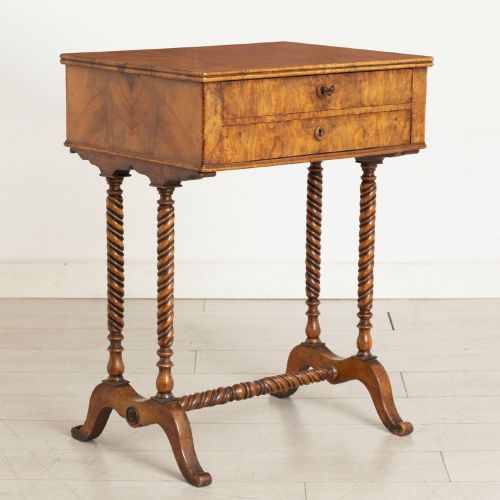
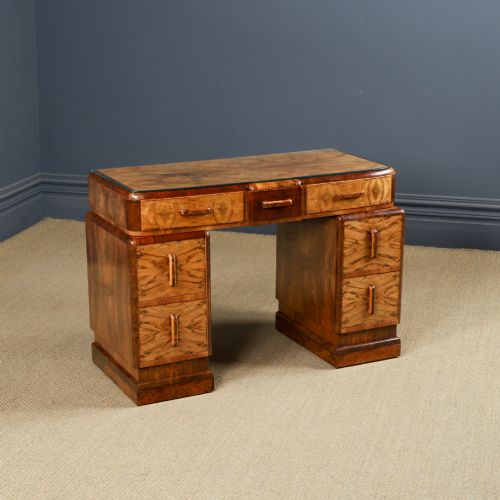
These brown veneer desk examples span centuries of cabinet-making, offering rich timbers and practical writing surfaces for the home.
Brown Veneer Desk
A brown veneer desk brings together centuries of cabinet-making traditions, ranging from seventeenth-century oyster figures to twentieth-century Art Deco forms.
The selection includes bureau bookcases, kneehole desks, and cylinder writing tables, alongside secretaire abattants and lowboys.
Makers utilised various timber surfaces, creating patterned grain effects across surfaces from the Edwardian era back to the seventeenth century.
Assessing craftsmanship
Quality rests in the precision of the veneer matching, particularly where grain patterns meet at corners and centre panels.
The integrity of the underlying construction and the retention of original brass or ormolu mounts elevate specific pieces above standard production.
Brown Veneer Desk Retail Price Guide 2026
Typical asking prices for brown veneer desk among the pieces listed under this phrase on Sellingantiques today, from the lower quarter to the upper quarter. They describe what is for sale here now, not the wider market.
The listings feature walnut, amboyna, yew, and kingwood veneers across periods ranging from the seventeenth century to Art Deco designs.
The Brown Veneer Desk Glossary
- Veneer
- A thin layer of figured wood applied to a solid or plied substrate to display decorative grain. This technique allows cabinet-makers to utilise striking timbers efficiently.
- Oyster veneer
- Cross-sections of small branches cut to resemble oyster shells, creating concentric circular patterns. This method appears on seventeenth-century and revival pieces.
- Featherbanding
- Inlaid banding made from matched veneers cut diagonally to form a herringbone pattern. It typically frames drawer fronts and desk tops.
- Kneehole desk
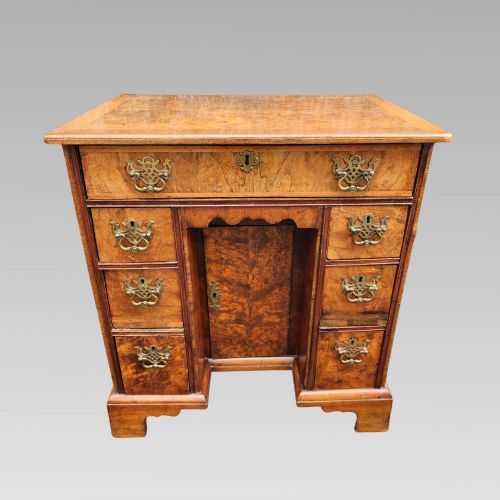
- A compact desk featuring a central recessed space for the legs, flanked by pedestals of small drawers. This form became popular during the seventeenth and eighteenth centuries.
- Secretaire abattant
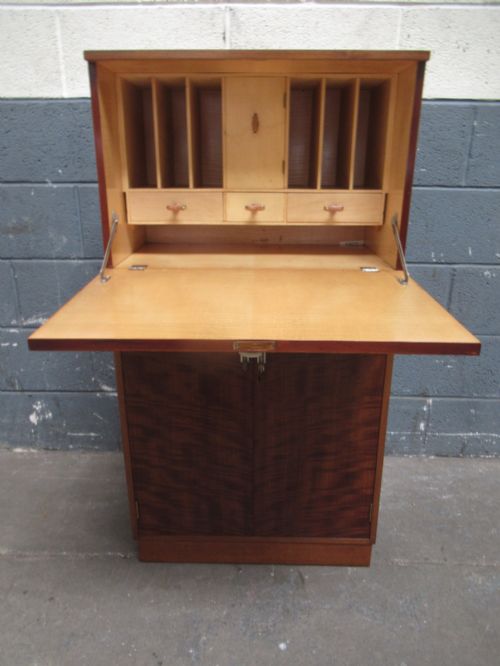
- A tall writing cabinet with a fall-front panel that drops to reveal a writing surface and interior compartments. These often feature amboyna or kingwood surfaces.
Brown Veneer Desk: Frequently Asked Questions
How do I date a veneer desk?
Dating relies on the carcass construction, timber choice, and the style of the hardware. Earlier pieces often employ oak or pine secondary woods beneath walnut or yew.
Revival pieces from later centuries mimic earlier styles, so examining the internal drawer joints and veneer thickness helps confirm the period.
What is quarter-veneering?
Quarter-veneering involves cutting four matching slices of figured timber from the same log section. These are arranged symmetrically to create a mirrored pattern across the surface.
This technique highlights the natural grain and was favoured for prominent top surfaces on desks and lowboys.
Are these desks suitable for daily use?
Many historical writing desks function well for modern study tasks, provided they offer adequate knee clearance and surface area. Care must be taken to protect antique polish from moisture and heat.
Using blotters and gentle cleaning methods preserves the delicate veneer surfaces during everyday work.
How do I maintain wood veneer?
Veneered surfaces require stable indoor humidity to prevent the wood from expanding or shrinking. Direct sunlight and heat sources should be avoided to stop the finish from drying.
Applying microcrystalline wax periodically helps nourish the timber and protect the historical polish without building up heavy residue.