




Brown Veneer Chest Drawers
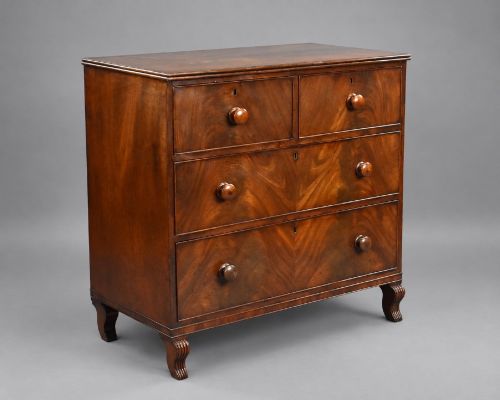
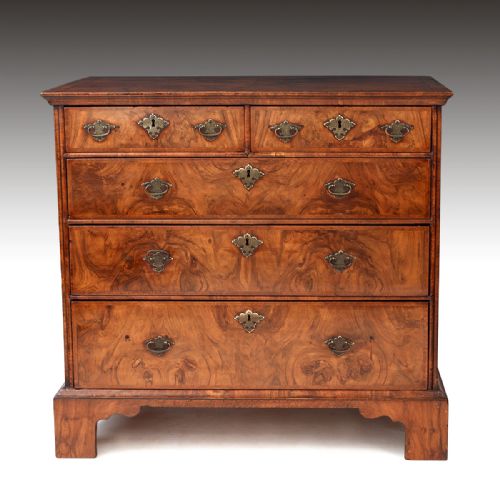
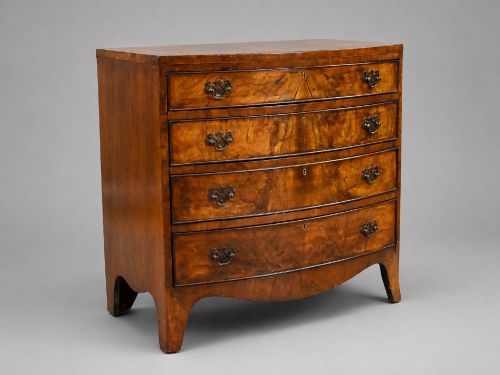
A brown veneer chest drawers brings rich timber grain and practical storage to a room, spanning periods from the seventeenth century onward.
Brown Veneer Chest Drawers
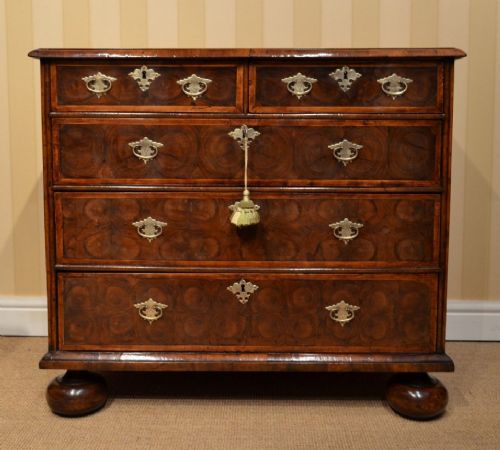
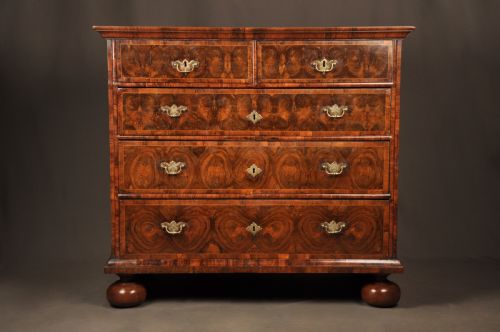
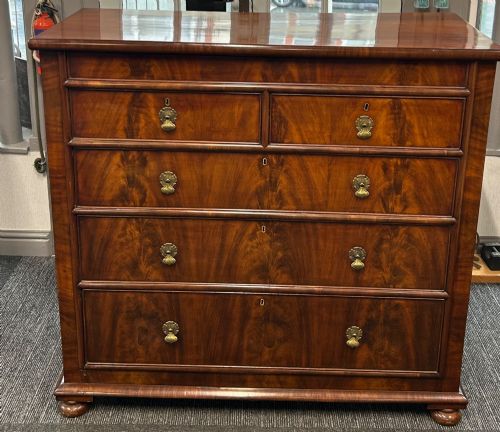
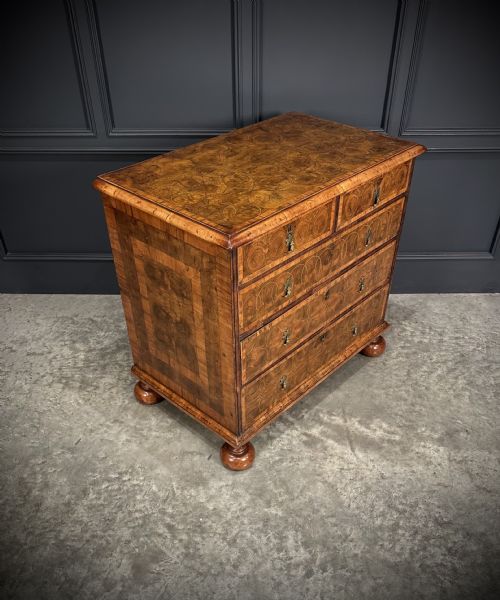
A brown veneer chest drawers offers timber surfaces patterned in walnut, mahogany, and olivewood across various historical periods. The selection on this page ranges from seventeenth-century William and Mary oyster pieces to nineteenth-century Victorian and Regency examples.
Forms include traditional chests of drawers, elevated chests on stands, and compact linen presses. Buyers encounter both British craftsmanship and continental European commodes featuring figured veneers.
The prevailing aesthetic relies on the natural warmth and grain movement of woods like burr walnut, flame mahogany, and laburnum. These storage items function as both practical furniture and focal points within a room.
How they were made
Cabinet makers utilised thin slices of decorative timber laid over secondary woods such as oak and pine. This technique allowed workshops to display intricate grain patterns like oyster cuts and flame figures across wide drawer fronts.
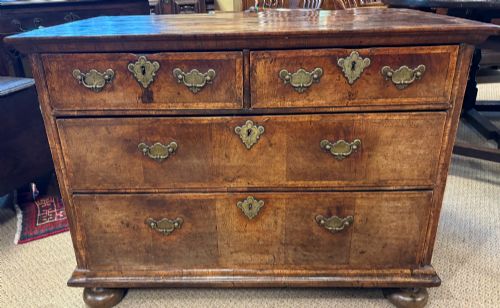
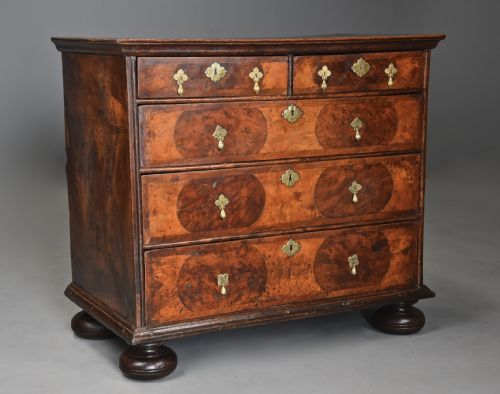
Surfaces frequently incorporated brass hardware, including drop handles and escutcheons, which contrasted with the dark tones of walnut and mahogany. Joinery methods relied on solid carcasses built to support heavy timber drawers over centuries of use.
Listings feature walnut, mahogany, oak, and exotic veneers across periods spanning the seventeenth to the twentieth century.
What varies in quality
The continuity and alignment of the wood grain across drawer fronts dictate the visual harmony of a piece. Finer examples show careful selection where circular oyster rings or flame patterns mirror across the central axis.
The depth of the patina and the preservation of the original timber surface separate standard items from exceptional ones. Gradations in quality depend on how cleanly the original veneer was laid and whether the underlying secondary wood remains stable.
The Brown Veneer Chest Drawers Glossary
- Oyster veneer
- Small circular sections sliced from branches or small logs, laid together to create a repeating pattern that resembles oyster shells. This technique appears frequently on seventeenth-century pieces.
- Flame mahogany
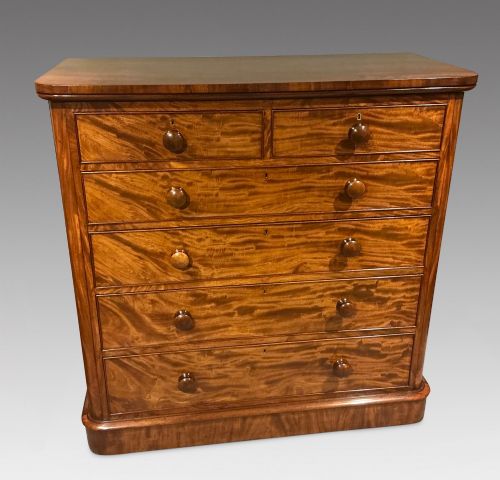
- A veneer cut from the branch junction of a mahogany tree, producing a distinctive flickering flame pattern. It gained popularity during the Regency and Victorian periods.
- Chest on stand
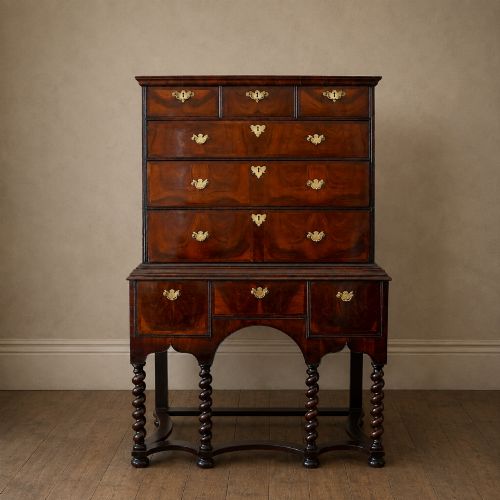
- A form consisting of a main drawer chest raised upon a separate base with legs. This configuration lifts the storage higher and often dates to the William and Mary or George periods.
- Commode
- A European term for a decorative chest of drawers or cabinet, frequently associated with continental styles such as French or Swedish furniture.
- Burr walnut
- Timber taken from a growth or burl on a walnut tree, yielding a swirling, highly figured grain. Cabinet makers used it for high-status surfaces.
Brown Veneer Chest Drawers: Frequently Asked Questions
How do I date a veneer chest?
Dating relies on carcass construction, handle types, and the specific style of the veneer work. Earlier pieces from the seventeenth century often employ oyster cuts on oak frames, while later Victorian versions use dense flame mahogany.
Secondary woods inside the drawers also provide clues to the origin and period. Comparing the joinery methods against known historical periods helps narrow down the decade of manufacture.
Where should I place a veneer chest?
These chests suit bedrooms, hallways, or living spaces where their figured timber grain can catch indirect light. Keeping them away from direct sunlight and strong heat sources protects the old veneer from drying out.
Ensure the room maintains stable humidity to keep the timber stable. A flat wall with adequate clearance allows the drawers to open smoothly without obstruction.
How do I care for antique veneer?
Maintenance involves dusting with a soft, dry cloth and applying traditional wax polish sparingly to nourish the timber. Avoid modern silicone sprays or excessive moisture which can damage the old finish.
Checking the environment for sudden temperature shifts prevents the veneer from lifting over time. Gentle handling of original brass pulls preserves the timber around the keyholes.
What is a chest on stand?
A chest on stand combines a traditional set of drawers sitting atop an open framed base with legs. This form elevates the main storage compartment and lightens the visual weight of the furniture.
Originating in earlier periods, these pieces often feature walnut or laburnum veneers. The base structure typically includes stretcher rails connecting the legs for added stability.