




Brown Timber Trays
Brown timber trays bring rich grain and dependable utility to a room, ranging from simple serving pieces to intricate carved platters.
Brown Timber Trays
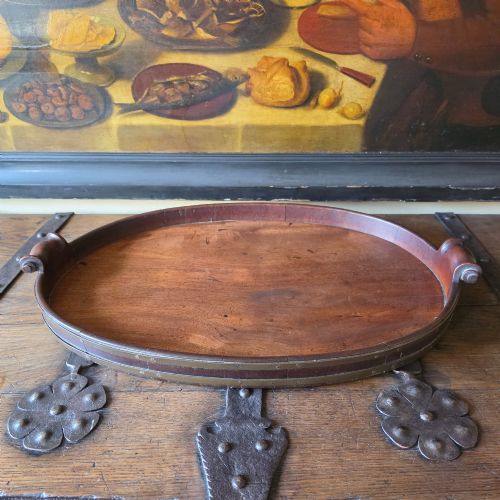
Brown timber trays encompass serving items, display platters, and occasional surfaces found across the eighteenth, nineteenth, and early twentieth centuries. When searching for brown timber trays, buyers encounter serving trays, decorative bowls, and garden trugs fashioned in woods such as mahogany, walnut, and oak.
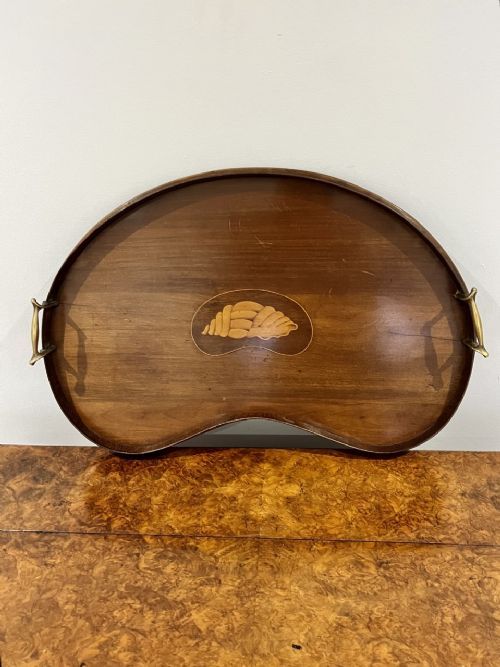
The selection includes formal Georgian Revival and Edwardian tea trays alongside regional English country house pieces and imported Anglo-Indian or Kashmiri work. These items served practical domestic functions or decorative display, utilising traditional joinery and turning techniques appropriate to their era.
How they were made
Maker construction relies on cabinet timbers such as mahogany, walnut, oak, and teak, frequently shaped with raised edges or turned handles. Surface work incorporates fine inlay, carved detail, and contrasting woods like satinwood, alongside brass fittings where functional hardware is required.
Regional variations span British workshop traditions to specialised carving centres in Kashmir and Anglo-Indian provinces. Joinery methods and turning techniques reflect the period of production, from eighteenth-century provincial craftsmanship to late Victorian decorative styles.
Listings feature items spanning the eighteenth, nineteenth, and early twentieth centuries, constructed in mahogany, walnut, oak, and teak.
What varies in quality
Quality rests in the selection of timber grain, the precision of inlay or carving, and the integrity of the original construction. Superior examples display thoughtful proportion, crisp detail in carved elements, and well-chosen figuring in the wood.
Lesser pieces show simpler execution, heavier or coarser timber selection, and less refined finishing around handles and rims. The distinction lies in the balance between functional utility and decorative refinement.
The Brown Timber Trays Glossary
- Mahogany
- A durable tropical hardwood valued for its rich reddish-brown colour and stable grain. It became the dominant timber for quality furniture and serving wares from the eighteenth century onward.
- Inlay
- A decorative technique where pieces of contrasting timber or shell are inserted into recess channels on the surface. Edwardian and Georgian tea trays often employ this method to create geometric or floral borders.
- Trug
- A traditional shallow container traditionally used for gathering garden produce or tools. Welsh oak and rustic garden examples represent this utilitarian form.
- Anglo-Indian
- A descriptive term for items made in the Indian subcontinent during the British colonial period for export or domestic use. These pieces typically feature dense carving in teak or walnut.
Brown Timber Trays: Frequently Asked Questions
How were brown timber trays used?
These items served a variety of domestic and social functions, from carrying tea and serving guests to holding coins or cutlery.
Larger versions functioned as portable serving surfaces or table tops on folding stands, while smaller dishes managed personal items.
How do I date an antique tray?
Dating relies on timber selection, construction methods, and stylistic cues such as inlay patterns or carved motifs.
Eighteenth-century examples often display simpler, robust forms, whereas Edwardian and Victorian pieces show greater decorative elaboration and varied exotic woods.
Are these trays suitable for daily use?
Many of these pieces were built for functional domestic service and retain sturdy construction suitable for careful handling.
Items with delicate inlay or antique finishes require gentle maintenance and protection from moisture to preserve the wood.
What is the difference between regional styles?
Regional styles reflect the local timbers and carving traditions available to the maker, spanning British oak and mahogany to imported teak and walnut.
English country pieces prioritise utilitarian strength, while Kashmiri and Anglo-Indian examples showcase intricate hand-carved surface decoration.