

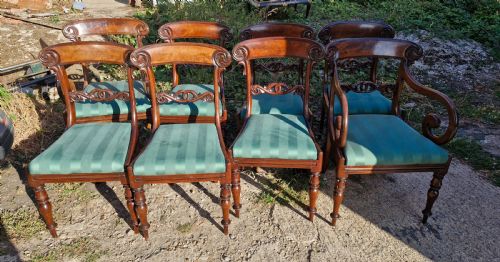


Brown Stripe Armchair
These brown stripe armchair selections bring together centuries of refined seating in sturdy mahogany, oak, and walnut, offering classic comfort and distinguished style for any traditional interior.
Brown Stripe Armchair
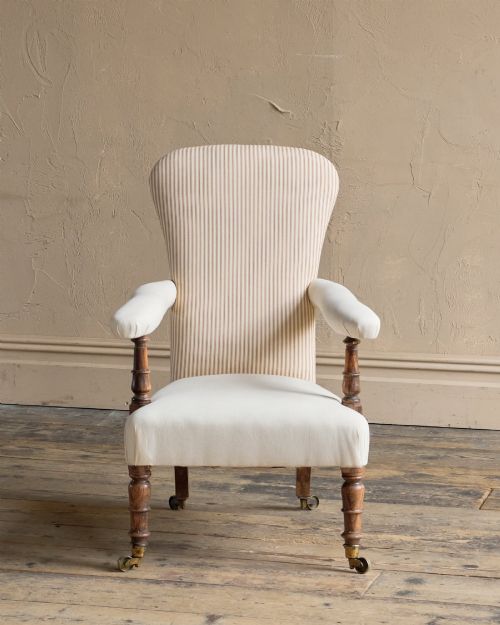
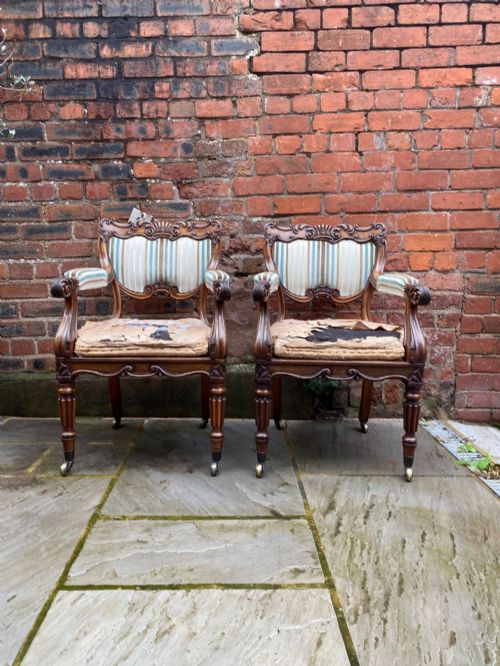
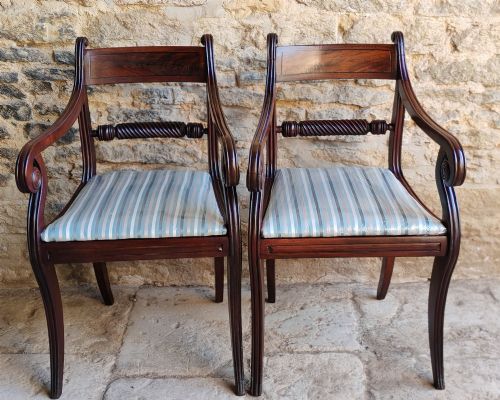
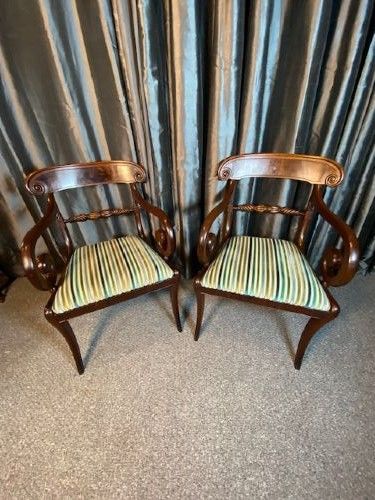
A brown stripe armchair encompasses a variety of antique seating forms, ranging from sturdy library armchairs to elegant desk chairs and decorative parlour pieces. Buyers searching for a brown stripe armchair will encounter diverse historical iterations shaped by distinct design movements spanning the Georgian, Regency, and Victorian eras.
While formal dining chairs and desk chairs appear in the listings, the primary focus rests on substantial armchairs built for comfort and presence. These seating options integrate traditional upholstery fabrics with robust timber frames.
How they were made
Makers constructed these frames using dense hardwoods like mahogany, oak, walnut, and satinwood, frequently employing brass accents and intricate carved details. The structural integrity relies on traditional joinery methods suited to the demands of daily use.
Upholstery techniques involved durable textile coverings secured to sprung or padded frames. Surface finishes ranged from polished mahogany to hand-painted decorative walnut and satinwood.
Brown Stripe Armchair Retail Price Guide 2026
Typical asking prices for brown stripe armchair among the pieces listed under this phrase on Sellingantiques today, from the lower quarter to the upper quarter. They describe what is for sale here now, not the wider market.
Listings feature multiple periods including Regency, Georgian, and Victorian, constructed from mahogany, oak, walnut, and satinwood.
What varies in quality
The distinction between standard pieces and finer examples rests upon the crispness of timber carving, the selection of figured veneers, and the integrity of the underlying frame. Superior items exhibit balanced proportions and refined turning or saber legs.
Attention to detail in secondary woods, original brass fittings, and the sophistication of stylistic revivals distinguish exceptional workshop production from simpler domestic output.
The Brown Stripe Armchair Glossary
- Bergère
- An enclosed upholstered armchair with wooden sides and back, typically featuring a cane or upholstered panel. These seats date back to French eighteenth-century designs.
- Gainsborough
- A wide armchair with a padded back and armrests, supported by short cabriole or square legs. This form originated during the mid-eighteenth century.
- Saber leg
- A concave sweeping leg tapering towards the foot, commonly found on Regency dining and desk chairs. The shape mimics a cavalry sword.
- Lyre front
- A decorative front support shaped like an ancient Greek lyre, frequently utilised on Regency mahogany desk chairs. It adds architectural elegance to the frame.
- Chinoiserie
- A European decorative style reflecting Chinese artistic motifs, popular in eighteenth-century and later revival furniture. It incorporates painted or lacquered finishes.
Brown Stripe Armchair: Frequently Asked Questions
How do I identify a Regency armchair?
Regency armchairs typically feature classical motifs, dark mahogany timbers, and scroll or saber legs. Many incorporate brass inlays or lyre-shaped supports reflecting ancient Greek and Roman influences.
Proportions tend to be clean and architectural, distinguishing them from heavier Victorian or lighter Georgian predecessors.
Where were library armchairs placed?
Library armchairs were designed for reading rooms, studies, and private libraries within large country houses. Their robust construction and supportive arms suited prolonged periods of reading and administrative work.
They often accompanied partner desks or sat beside open fireplaces.
What is a Gainsborough chair?
A Gainsborough chair is a wide, upholstered armchair designed for comfort during desk work or social gatherings. They feature open padded arms and sturdy wooden frames raised on straight or cabriole legs.
Cabinet makers produced them extensively during the Georgian period.
How do I care for antique upholstery?
Antique upholstery requires gentle vacuuming with a soft attachment to remove dust without stressing old fibres. Avoiding direct sunlight prevents fading and degradation of historic textiles.
Professional conservation cleaning preserves fragile fabrics and internal padding.