

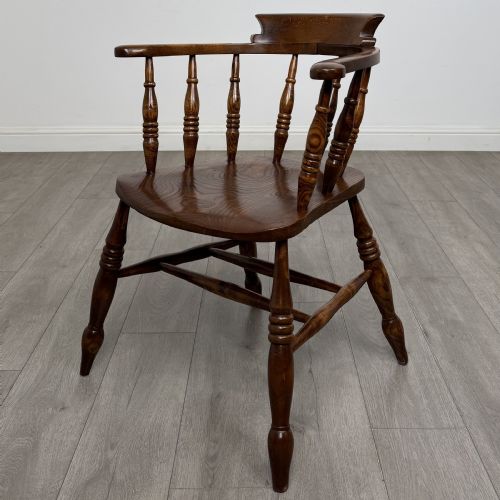
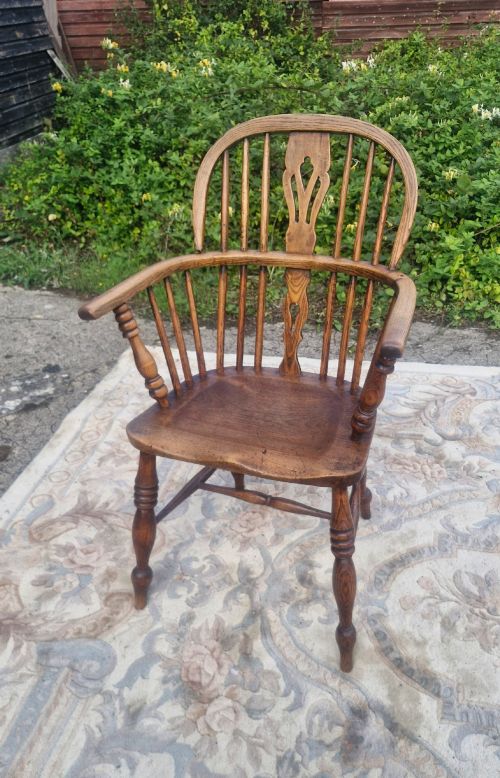
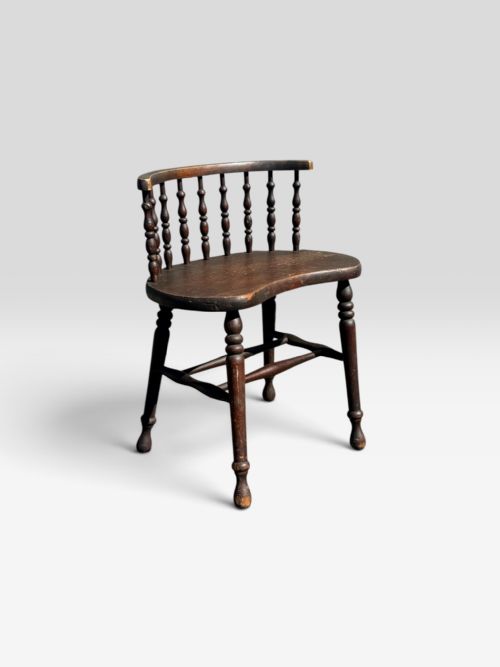
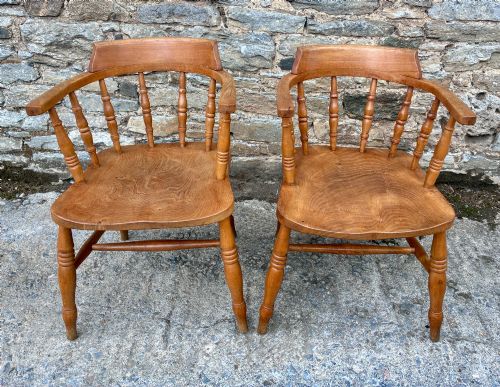
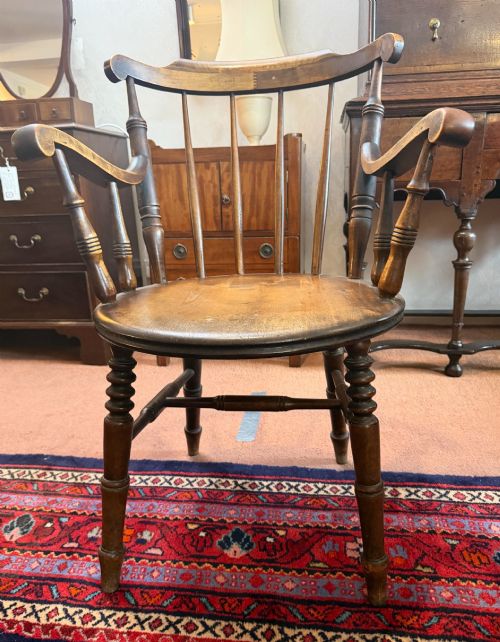
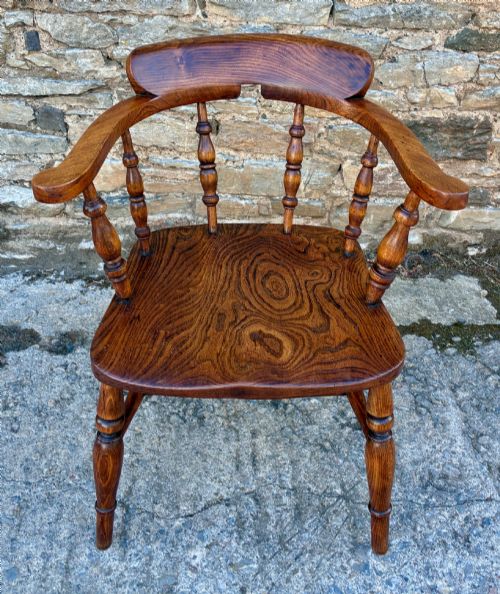
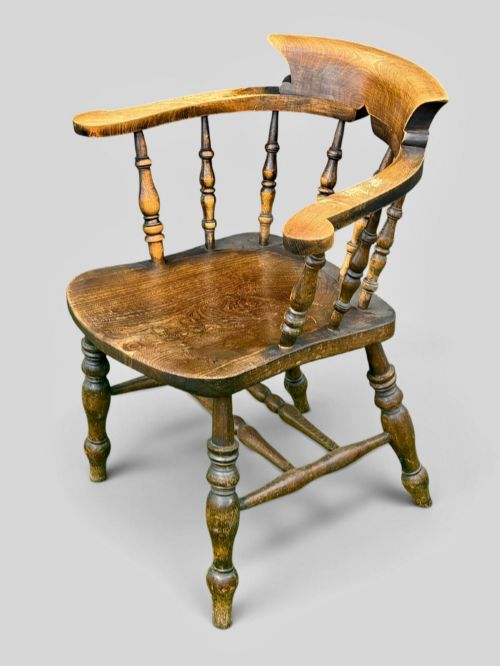
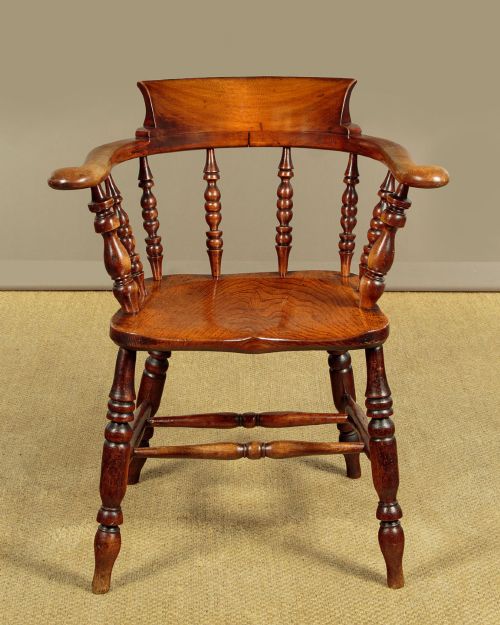
Brown Smokers Bow
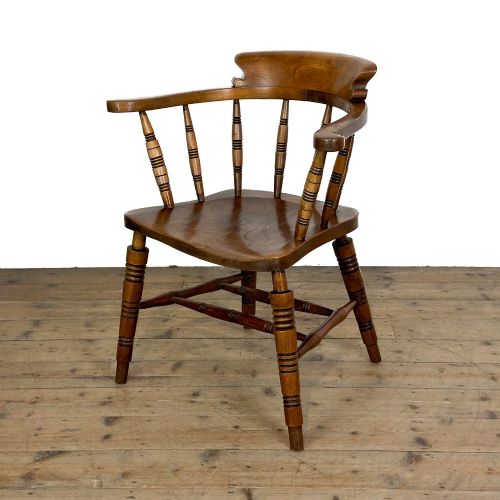
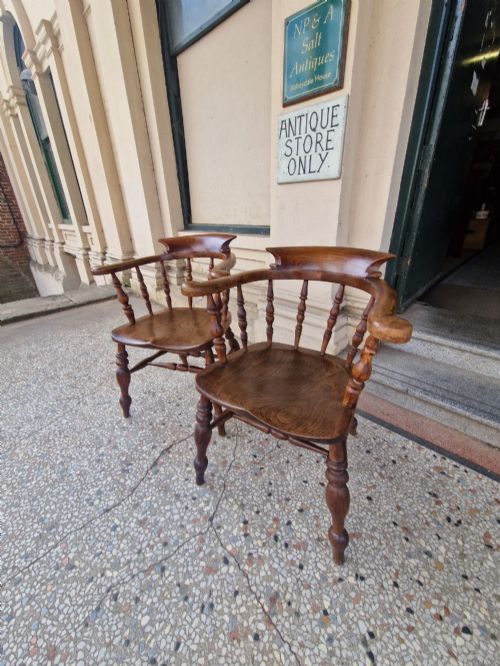
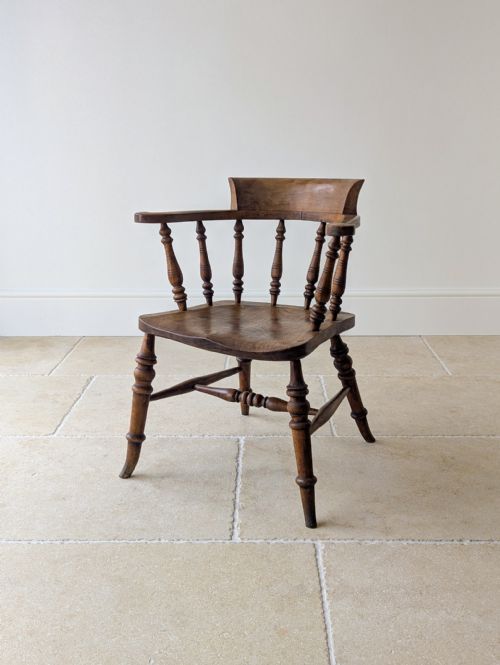
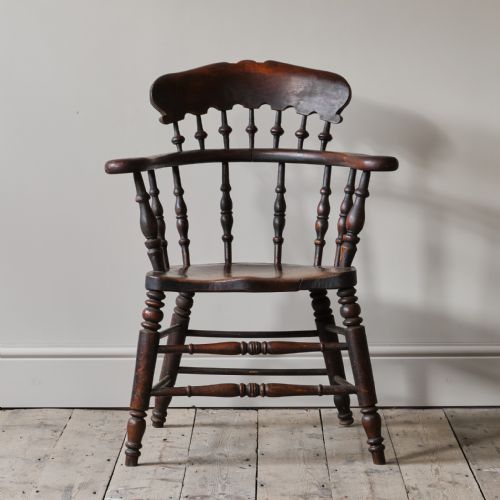
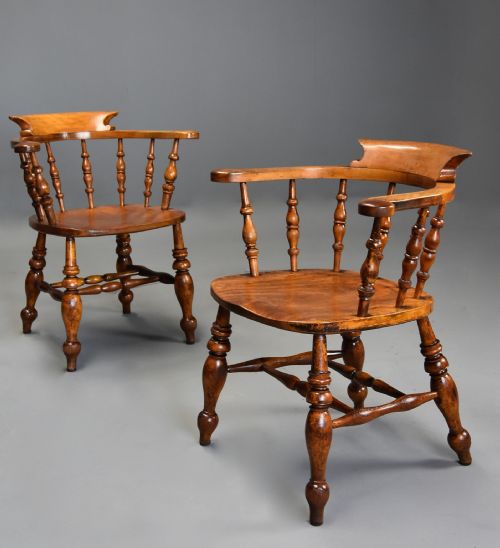
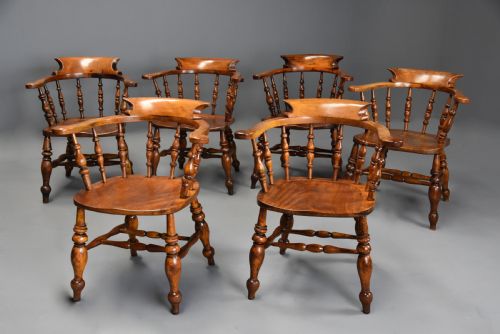
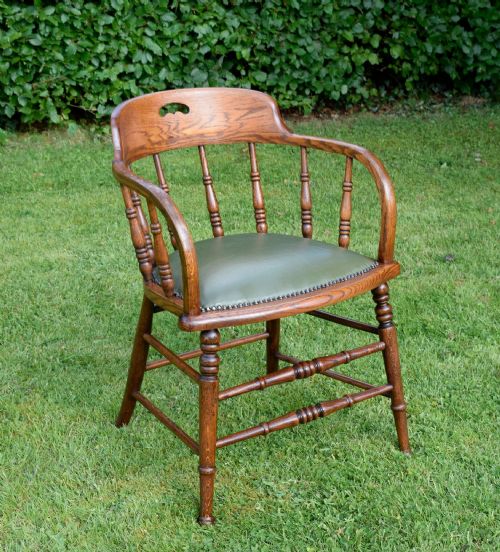
These brown smokers bow armchairs combine low-backed Windsor construction with sturdy country timbers for a robust seating option.
Brown Smokers Bow
A brown smokers bow is a traditional low-backed Windsor armchair designed for comfort and durability in domestic or office settings. The version most commonly met on this page is an elm and beech hybrid dating from the nineteenth century or the Edwardian era.
How they were made
Joiners utilised native timbers, pairing elm seats with bentwood beech or ash for the arms and backs. This combination provided the necessary flexibility for the steam-bent components alongside the dense grain required for carved saddle seats.
Constructors relied on traditional wedged tenon joints to secure the legs and spindles into the solid seat slab. Turning lathes shaped the spindles and legs, while hand planes and drawknives refined the ergonomic curves of the armbow.
Brown Smokers Bow Retail Price Guide 2026
Typical asking prices for brown smokers bow among the pieces listed under this phrase on Sellingantiques today, from the lower quarter to the upper quarter. They describe what is for sale here now, not the wider market.
Many of these sturdy armchairs survived decades of smoky study rooms and bustling kitchens, acquiring a deep, glowing patina on their elm seats.
What varies in quality
Quality depends heavily on the depth of the timber figuring and the tactile warmth of the surface finish. Chairs with deeply saddled elm seats and well-defined grain patterns demonstrate superior selection of raw materials by the original makers.
Construction robustness distinguishes finer examples from simpler utilitarian output. Examples featuring balanced spindle turnings and tight, original joinery maintain structural integrity far better over generations of use.
The Brown Smokers Bow Glossary
- Windsor chair
- A chair built with a solid wooden seat into which the legs and back spindles are driven directly. This technique creates a sturdy frame without the need for a traditional box underframe.
- Saddle seat
- A wooden seat base carved into a concave, ergonomic shape resembling a horse saddle. This shaping improves sitting comfort during extended desk or table use.
- Steam bending
- A woodworking process that applies moisture and heat to timber until it becomes pliable. Craftsmen then clamp the wood into curved forms to create continuous armrails.
Brown Smokers Bow: Frequently Asked Questions
What is a smokers bow chair?
A smokers bow is a sturdy wooden armchair with a low, continuous back rail supported by turned spindles. It emerged during the nineteenth century as a comfortable seat for studies, kitchens, and smoking rooms.
These chairs evolved from traditional Windsor designs, sharing the characteristic solid wood seat and pegged leg construction. They offer a compact footprint while maintaining robust support for daily sitting.
How do I date a smokers bow?
Dating relies on examining timber choices, turning styles, and construction wear. Mid-nineteenth-century examples frequently combine ash and elm with hand-carved saddle seats and distinct patination.
Later Edwardian versions often display more uniform machine turnings and lighter timber selections. Comparing the joint construction beneath the seat also reveals the manufacturing period.
Are these chairs comfortable for a desk?
Yes, their ergonomic curved armrests and supportive spindles suit prolonged sitting at a writing table. The low back allows freedom of movement while the solid elm seat provides a stable base.
Many period examples served specifically as desk or office chairs because of this practical combination of lumbar support and compact proportions.
What woods were used to build them?
Cabinetmakers selected native British hardwoods renowned for strength and flexibility. Elm provided a heavy, split-resistant material ideal for solid contoured seats.
Beech and ash supplied the tensile strength needed for steam-bent armrails and slender turned spindles. Oak and mahogany appear less frequently in specific regional variations.