


Brown Sail Seascape
A brown sail seascape captures maritime history on canvas and paper, bringing historic vessels and coastal light directly into domestic rooms.
Brown Sail Seascape
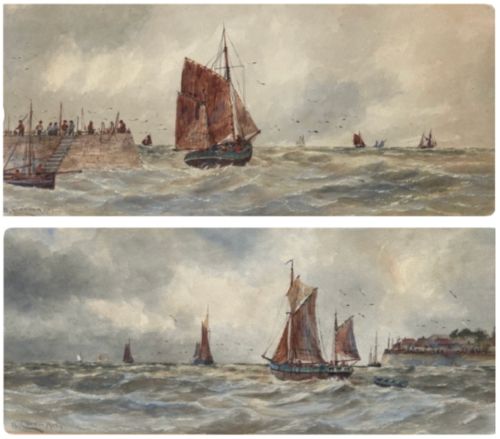
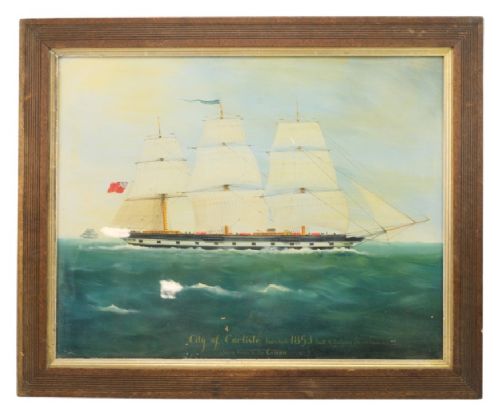
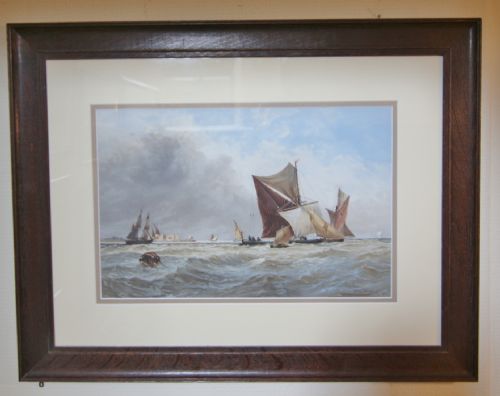
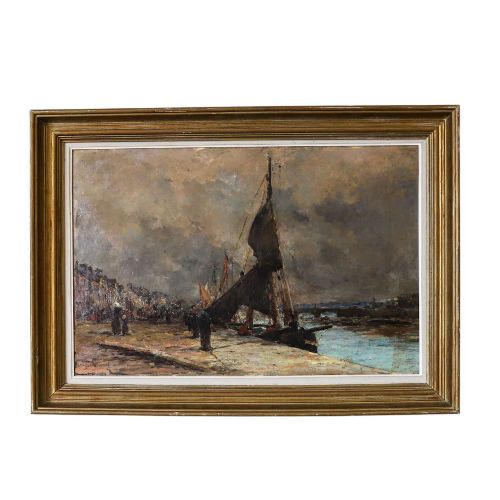
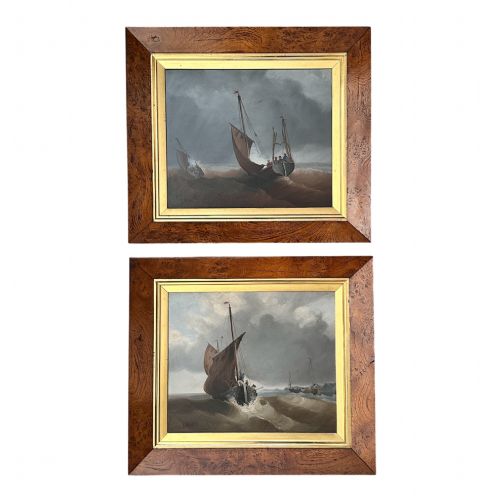
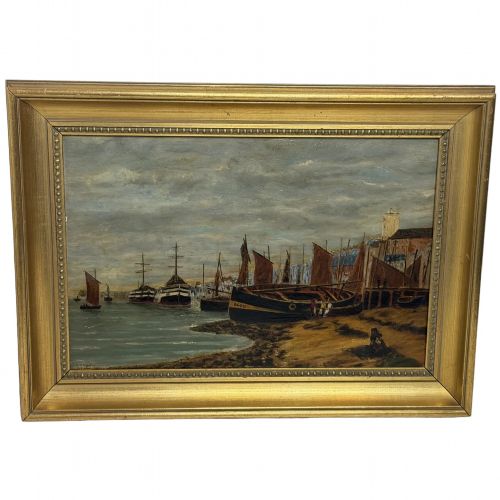
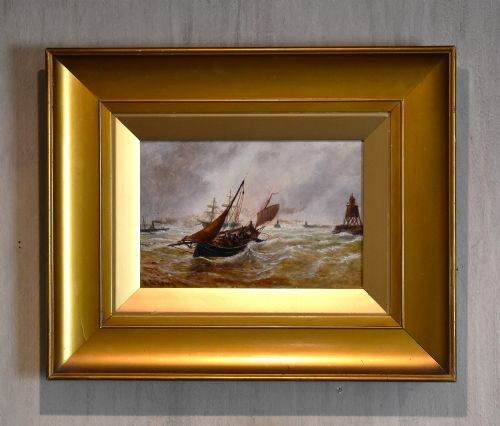
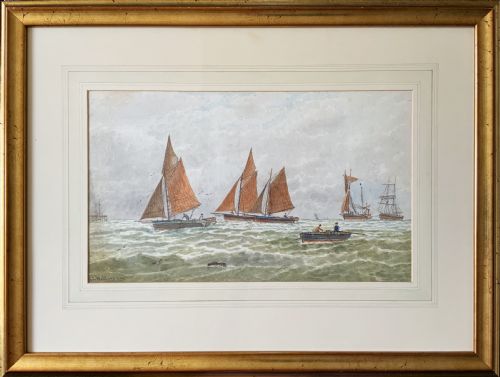
A brown sail seascape captures coastal life, harbour views, and shipping scenes through historical paintings and works on paper. When searching for this subject, a buyer encounters depictions of fishing boats, Thames barges, and naval vessels rendered with earthy tones.
The selections span from the eighteenth century through to the mid-twentieth century, with Victorian marine art forming a substantial portion of the available range. Pieces vary from intimate watercolour sketches to large oil paintings housed in gilt frames.
How they were made
Artists captured these coastal and maritime subjects primarily using oil on canvas or delicate watercolour pigment applied to paper. Canvases received layers of oil paint to build texture in the water and sky, while works on paper relied on washes and ink lines.
Many of these historical artworks remain preserved behind glass within traditional gilt frames that complement the maritime subjects.
Listings feature works spanning the 18th, 19th, and 20th centuries, executed in oil, watercolour, and mixed media.
What varies in quality
The handling of light and atmospheric perspective distinguishes finer marine works from standard decorative pieces. Masterful brushwork brings movement to the water and volume to the sails.
Provenance and attribution also influence standing, as signed works by recognised marine painters carry stronger historical documentation than anonymous school pieces.
William Cannon·TB Hardy·John Moore of Ipswich·Bernard Benedict Hemy·George Stanfield Walters·Edward Henry Eugene Fletcher·Owen Bowen·George Henry Knight·John Callow·Paul Jean Clays·Fred Mayor·Samuel John Milton Brown·Bertram Priestman·Rowland H Hill·Edward Wesson·Stephen Brownlow
The Brown Sail Seascape Glossary
- Watercolour
- A paint consisting of colour pigments suspended in a water-based solution, typically applied to paper in transparent washes.
- Oil on canvas
- A painting technique utilising pigments bound with drying oils, stretched across a woven fabric support.
- Gilt frame
- A decorative wooden surround coated with a thin layer of gold leaf or metallic gilt paint.
- Maritime
- Depicting ships, seafaring life, and coastal environments.
- Barque
- A sailing vessel with three or more masts having square-fitted sails on the fore and mainmasts and fore-and-aft sails on the mizzenmast.
Brown Sail Seascape: Frequently Asked Questions
What periods do these seascapes come from?
The available selection spans several centuries, starting from eighteenth-century works depicting warships and galleons. Most examples originate from the nineteenth century and the Edwardian era.
Later pieces extend into the mid-twentieth century, reflecting changing artistic interpretations of coastal life and maritime transport.
How were these maritime watercolours and oils displayed?
Period works on paper and canvas were typically mounted behind glass and secured within heavy gilt frames designed to enhance the composition. These frames protected the delicate surfaces from domestic soot and handling.
Many original frames survive with the artwork, preserving the complete historical presentation.
What subjects appear in these coastal scenes?
Artists recorded busy commercial harbours, naval engagements, and quiet estuaries alongside routine fishing operations. Scenes frequently feature named vessels, Thames barges, and local craft at work near ports like North Shields or Yarmouth.
Foreign harbours also appear, ranging from the Dutch coast to the French Riviera.
How do I identify a Victorian marine painting?
Victorian marine pieces often focus on detailed ship rigging, atmospheric coastal light, and specific maritime events such as troop deployments or harbour traffic. They utilise traditional mediums like oil on canvas or detailed watercolour washes.
Signatures, artist registry records, and framing styles frequently help confirm the nineteenth-century origins of these artworks.