
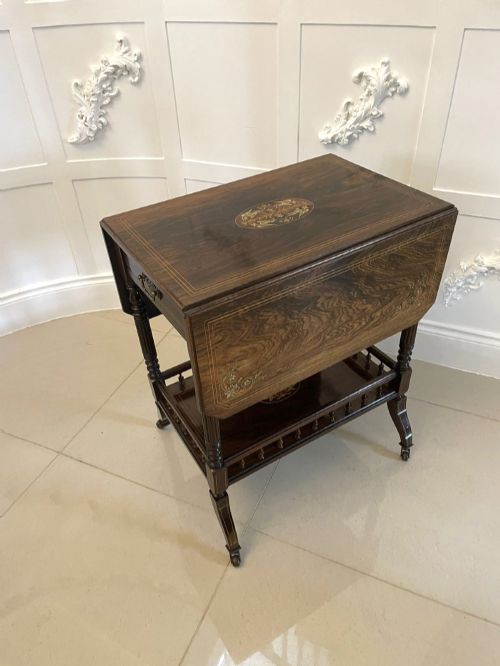
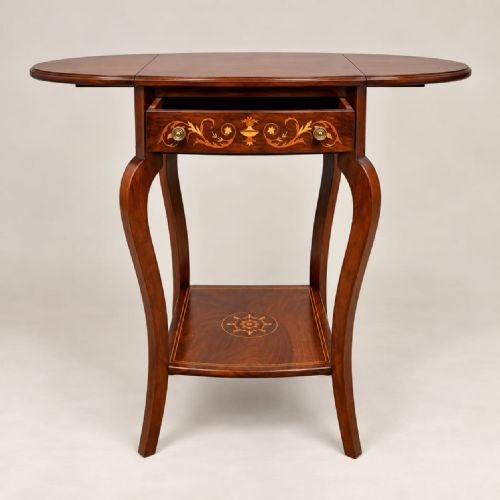

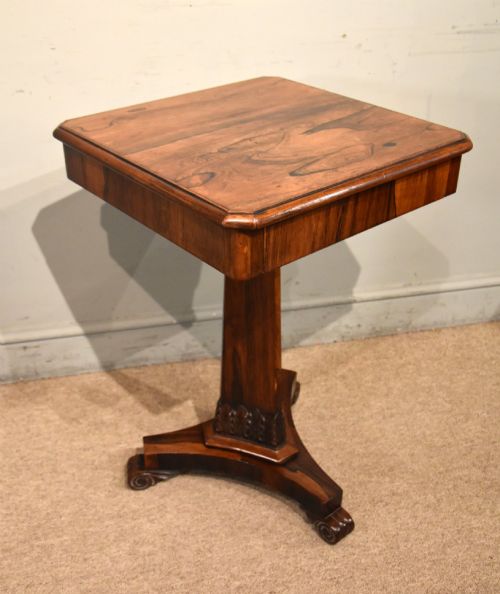
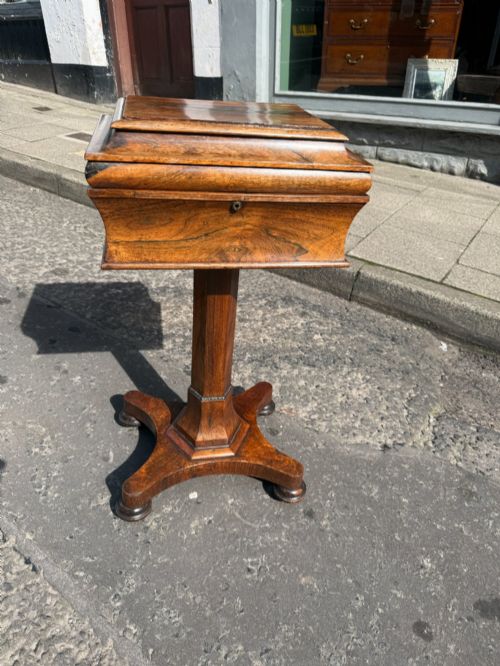


Brown Rosewood Tea Table
A brown rosewood tea table brings deep timber grain and refined joinery into a room, serving as a versatile surface for daily use or formal display.
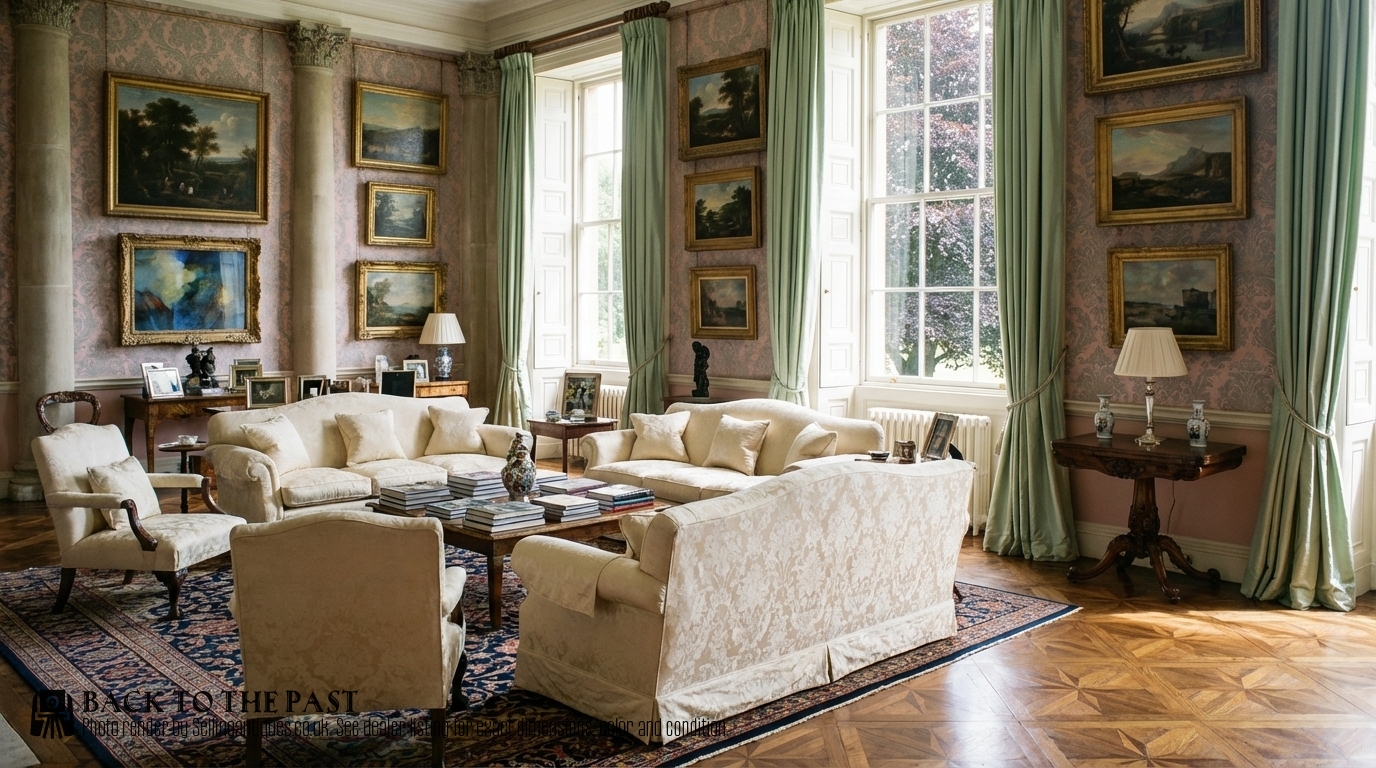
Brown Rosewood Tea Table
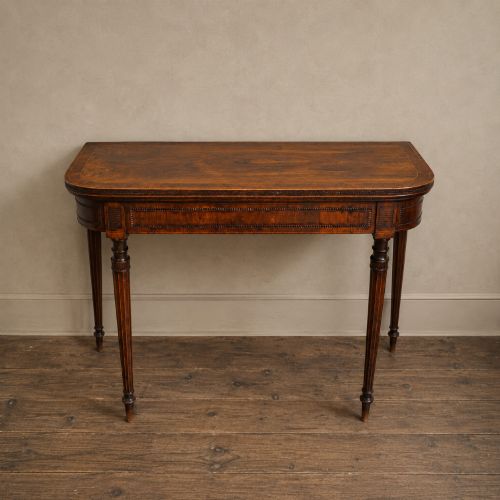
A brown rosewood tea table is typically encountered in forms spanning the Regency, William IV, and Victorian periods, alongside regional Anglo-Indian and Chinese designs. These pieces function as occasional tables, card tables, games tables, and centre tables, reflecting diverse domestic uses across the nineteenth century.
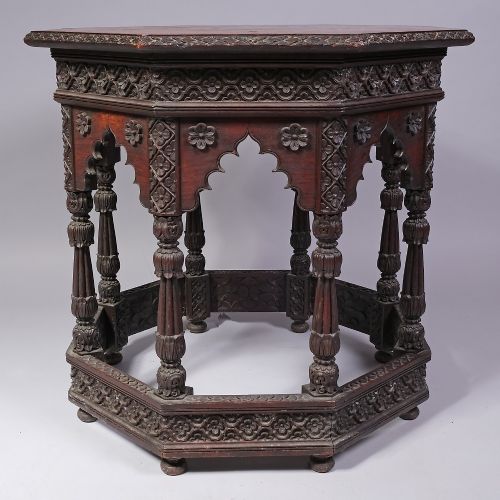
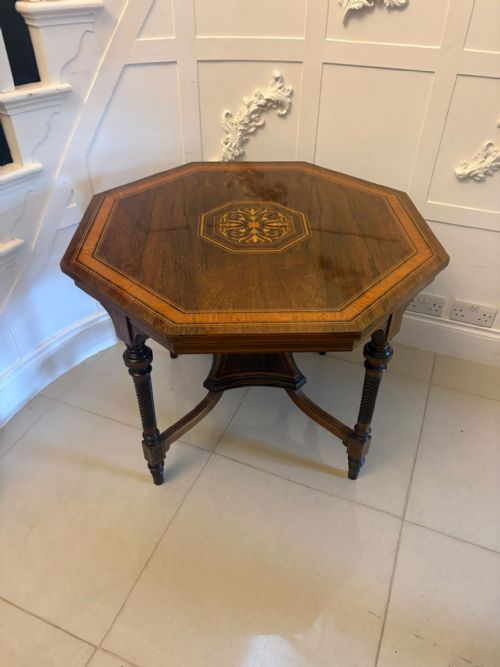
The selection on this page ranges from compact occasional drop-leaf tables to larger octagonal pedestal pieces and fold-over card tables. English cabinet makers worked alongside craftsmen in workshops from Hoshiarpur and Qing Dynasty traditions to produce these varied domestic forms.
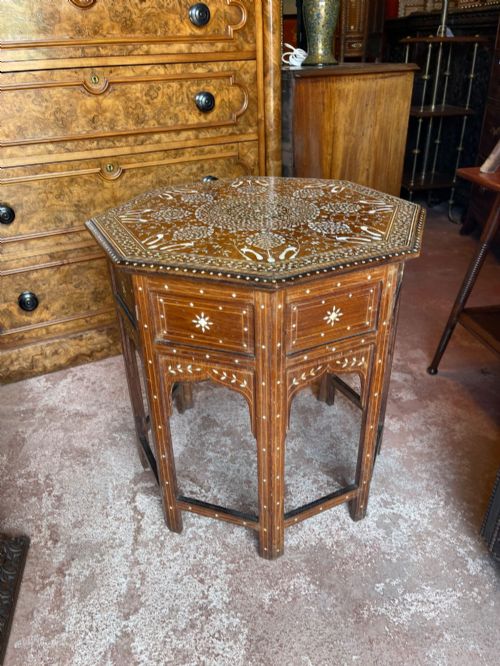
Buyers seeking a brown rosewood tea table will find examples incorporating satinwood, boxwood, and brass inlay, as well as carved hardwood structures. The styles encompass classical English Regency lines as well as intricate marquetry and mother-of-pearl ornamentation.
Factors influencing quality
Quality rests in the crispness of the carving, the precision of crossbanding and inlay, and the natural figuring of the rosewood timber selected by the maker. Pieces featuring intricate marquetry or integrated brass work demonstrate advanced cabinet-making skills.
Structural harmony also dictates standing; tables that retain original swivel mechanisms, smooth folding leaves, and stable pedestals without excessive timber shrinkage represent superior workshop output.
Listings feature tables spanning the Georgian, Regency, William IV, and Victorian eras, alongside twentieth-century oriental coffee and low tables.
William Trotter·George Bullock
The Brown Rosewood Tea Table Glossary
- Crossbanding
- A border of veneer laid perpendicular to the grain of the main surface. This technique frames the top of card and games tables.
- Marquetry
- Elaborate patterns created by fitting different wood veneers and decorative materials together. It appears frequently on Victorian inlaid centre and occasional tables.
- Teapoy
- A small stand or chest originally designed for storing loose tea leaves. Examples in this category often feature rosewood construction and pedestal supports.
- Kang table
- A low Chinese domestic platform table used for resting or serving. These are carved from dense oriental hardwoods.
- Hoshiarpur
- A North Indian centre known for intricate woodwork and inlay. Tables from this tradition use dense hardwood embellished with floral motifs and mother-of-pearl.
Brown Rosewood Tea Table: Frequently Asked Questions
How do I identify a Regency rosewood table?
Regency tables generally display classical proportions, brass inlay, and rectilinear or circular top designs supported by pedestal columns. The timber often shows deep, dark brown figuring characteristic of early nineteenth-century cabinet work.
Look for crisp brass stringing and restrained classical motifs rather than the heavier floral marquetry associated with later Victorian production.
How should I care for a rosewood surface?
Rosewood requires stable indoor humidity away from direct heat sources and sunlight to prevent the timber from splitting or the polish from fading. Dusting with a dry, soft cloth preserves the original finish.
Avoid silicone-based polishes and excessive moisture, utilising traditional beeswax sparingly if the timber appears dry.
Are Anglo-Indian tables made of rosewood?
Anglo-Indian tables from regions like Hoshiarpur are typically constructed from dense local Indian hardwoods, sometimes referred to broadly in historical records alongside rosewood and teak. They frequently feature intricate pierced carving and mother-of-pearl inlay.
These pieces reflect nineteenth-century stylistic exchange between British domestic demand and Indian artisan craftsmanship.