

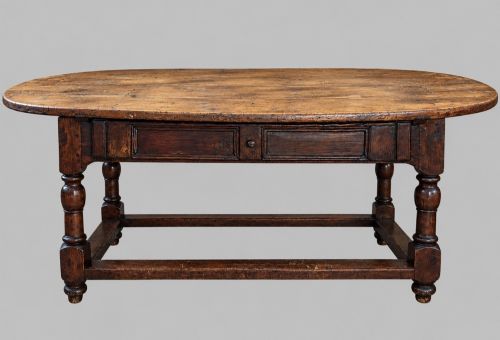

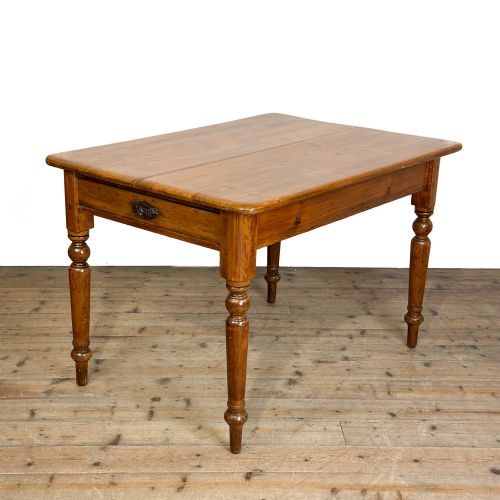
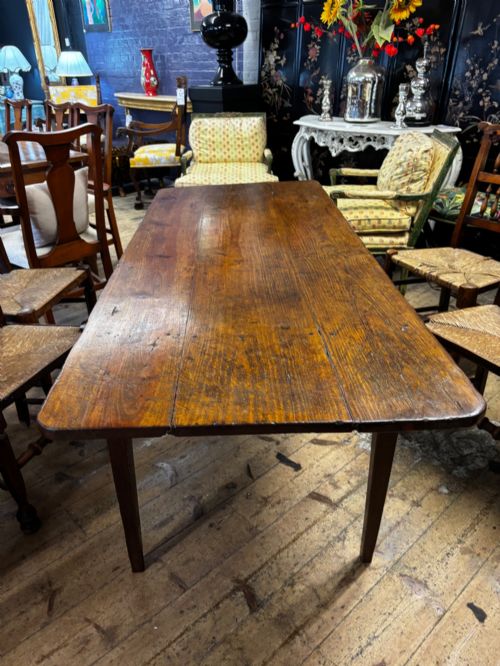
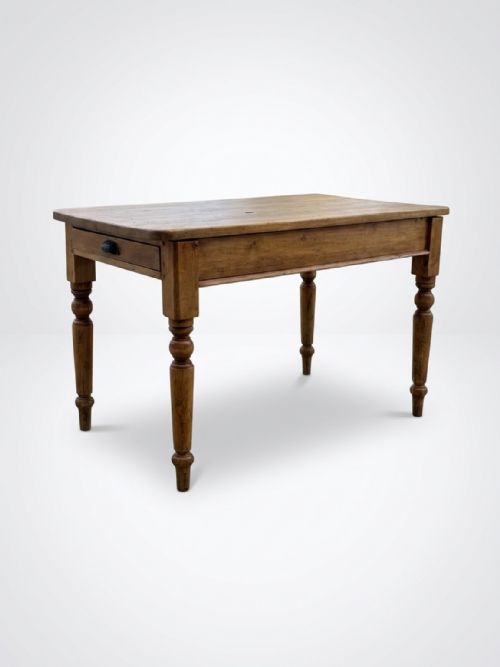




Brown Pine Kitchen Table
A brown pine kitchen table brings enduring utility and warmth to a room, offering a solid surface shaped by generations of domestic use.
Brown Pine Kitchen Table
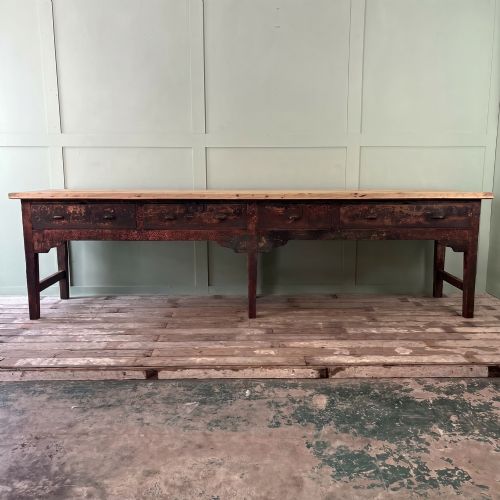
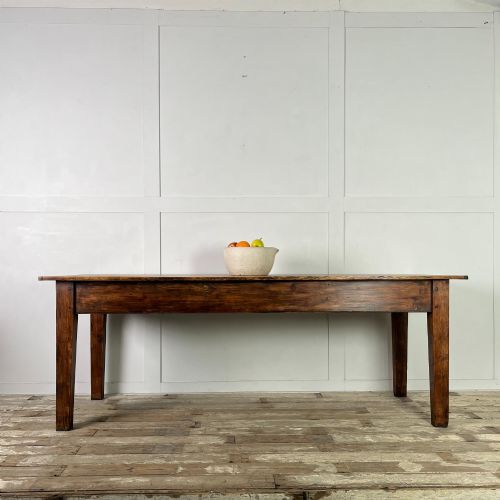
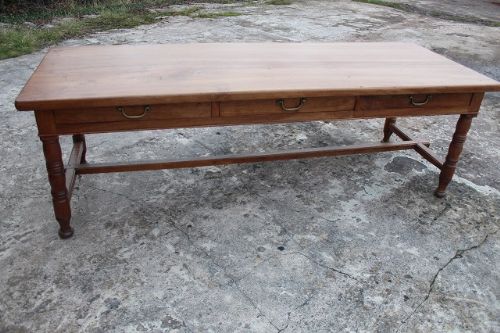
A brown pine kitchen table is a functional domestic surface designed for food preparation and daily dining, drawing on centuries of vernacular woodworking traditions. These pieces predominantly date from the Victorian era and the nineteenth century, reflecting robust construction intended for hard household use. Examples span regional British designs alongside French, Swedish and general European provincial styles.
The selection here encompasses various forms suited to different domestic spaces, from large farmhouse dining tables and extending tables to compact side tables and workbenches. Many retain the warm honey tones or deeper patinas acquired through decades of polishing and everyday wear. Buyers will frequently encounter sturdy timber tops paired with substantial legs, occasionally augmented by drawers or drop leaves.
Origins vary across English, Welsh and continental workshops, with each region imparting distinct proportions and framing methods to the furniture. While the Victorian period is particularly well represented, items extend from the eighteenth century into the early twentieth century. Each table serves as a practical centrepiece that carries the physical evidence of its past labour.
What varies in quality
Quality in these tables is determined by the integrity of the timber selection and the retention of original structural framing. Pieces built from dense, old-growth pine with minimal replacement timber represent the upper echelon of surviving examples. The character of the surface patina, resulting from natural oxidation and historical use, significantly influences desirability.
Proportion and execution of joinery separate utilitarian workshop output from finer country house furniture. Tables that maintain their original height, unmodified stretcher bases and untampered topboards command greater respect among collectors. Conversely, heavy alterations or excessive sanding diminish the historical authenticity of the piece.
Brown Pine Kitchen Table Retail Price Guide 2026
Typical asking prices for brown pine kitchen table among the pieces listed under this phrase on Sellingantiques today, from the lower quarter to the upper quarter. They describe what is for sale here now, not the wider market.
Materials extend beyond standard pine to include fruitwood, oak, iron braces and brass fittings across dining, work and serving formats.
The Brown Pine Kitchen Table Glossary
- Patina
- The surface sheen and colour developed over decades through handling, waxing and oxidation. It serves as a visual indicator of age and genuine historic use.
- Stretcher
- A horizontal wooden brace connecting the legs of a table to enhance structural stability. These are common in farmhouse and trestle designs.
- Dresser base
- A low cabinet form featuring drawers or cupboards beneath a flat top, often utilised for kitchen storage and preparation. They share the robust timber construction typical of kitchen tables.
- Trestle table
- A table comprising two or more supports connected by a longitudinal beam upon which the top rests. This form allows for unobstructed legroom along the length of the furniture.
- Drop leaf table
- A table featuring hinged flaps on one or both sides that fold down to save space. They offer adaptable surface area for smaller domestic interiors.
Brown Pine Kitchen Table: Frequently Asked Questions
How do I clean a pine table?
Clean the surface using a damp cloth with mild soap, avoiding harsh chemicals that strip the historic finish. Apply a quality beeswax periodically to nourish the dry timber and maintain the soft sheen.
Prevent moisture rings by using coasters and placemats during daily meals. Regular gentle buffing preserves the accumulated patina without damaging the underlying wood.
Are these tables suitable for daily use?
These tables were originally built for heavy domestic labour and dining, making them exceptionally durable for modern family life. Solid pine withstands normal household activity while absorbing the marks of daily use as part of its character.
Protecting the surface from excessive heat and standing water ensures the timber remains stable. Their robust construction allows them to function reliably as central dining or workspace hubs.
How can I date an old pine table?
Dating relies on examining tool marks, construction methods, and the type of hardware or fasteners utilised in the frame. Hand-sawn timber edges and pegged mortise and tenon joints generally point towards earlier eighteenth and nineteenth-century production.
Wear patterns around the edge of the top and the nature of the accumulated finish offer further clues. Comparing the overall proportions to established regional styles helps narrow the period of origin.