


Brown Oak Stool Table
These brown oak stool table options bring robust character to a room, spanning periods from the seventeenth century onward in solid timber.
Brown Oak Stool Table
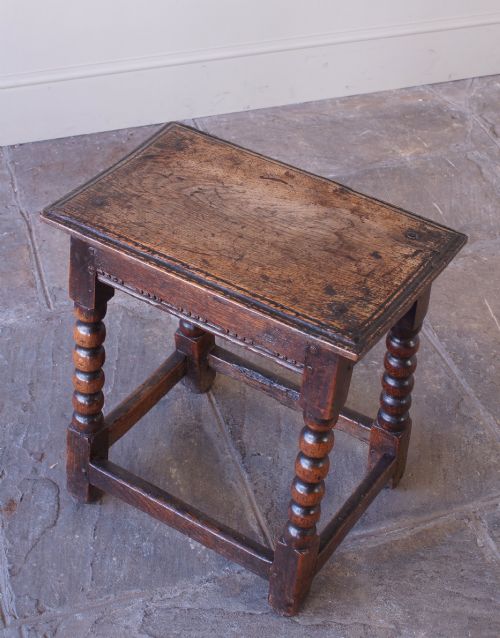
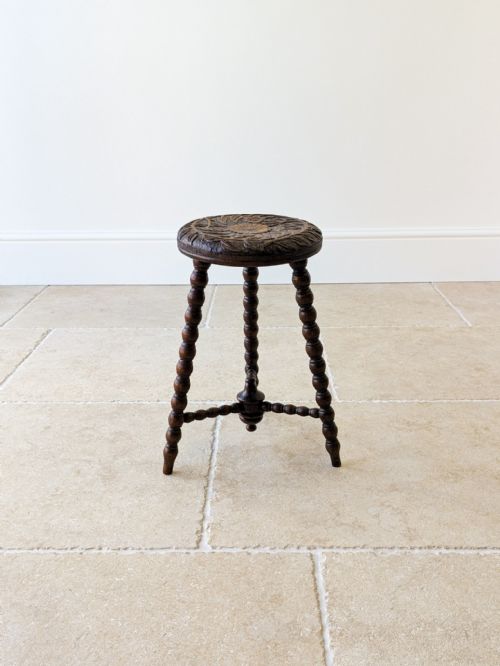
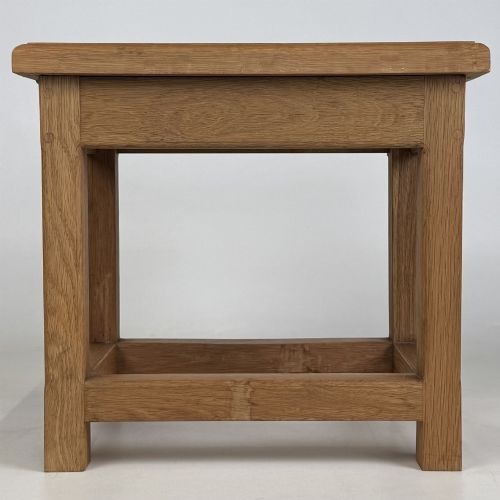
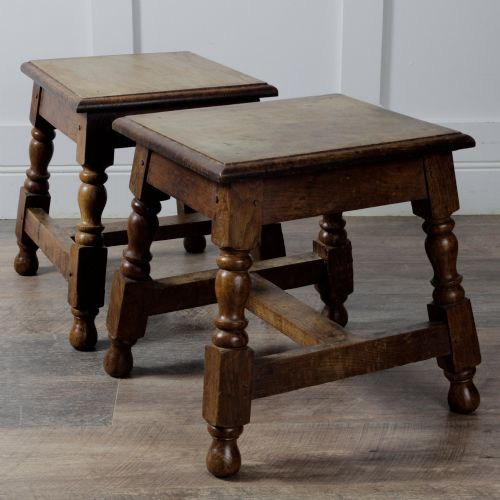
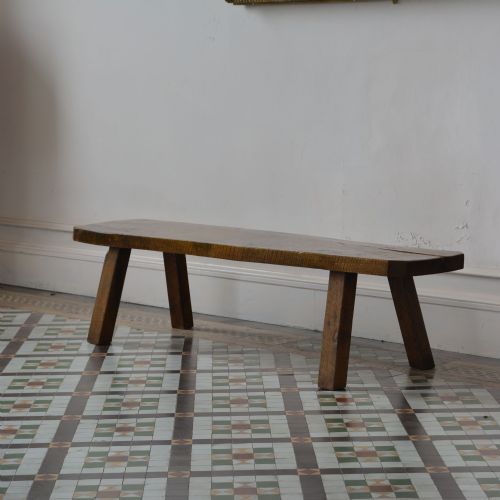
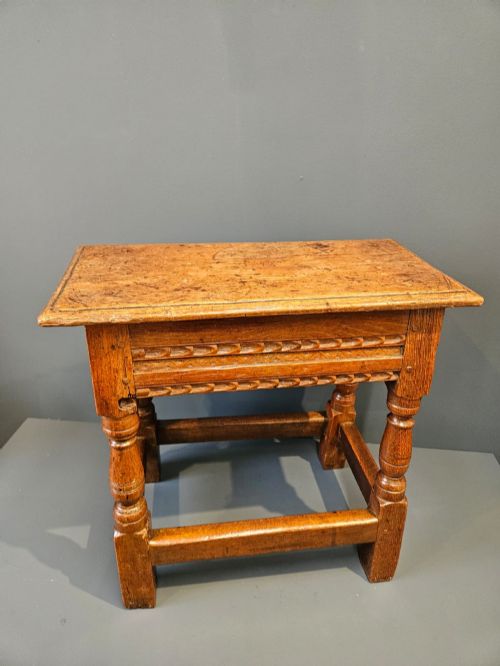
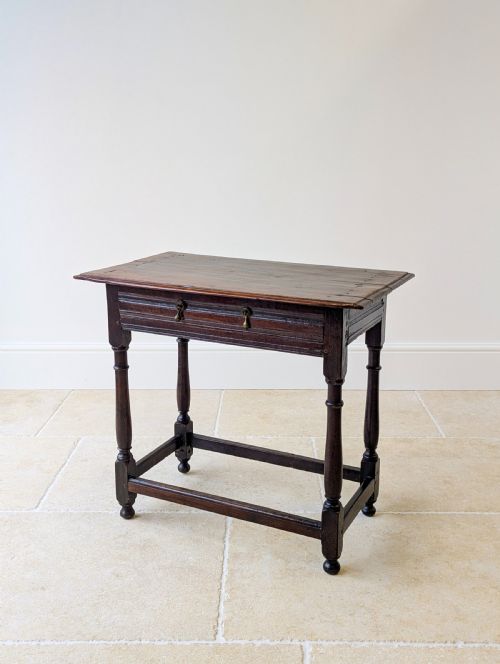
When you search for a brown oak stool table, you meet a sturdy hybrid form that bridges seating and surface use. These pieces often take the shape of joint stools, low side tables, or provincial milking stools fashioned from durable hardwood.
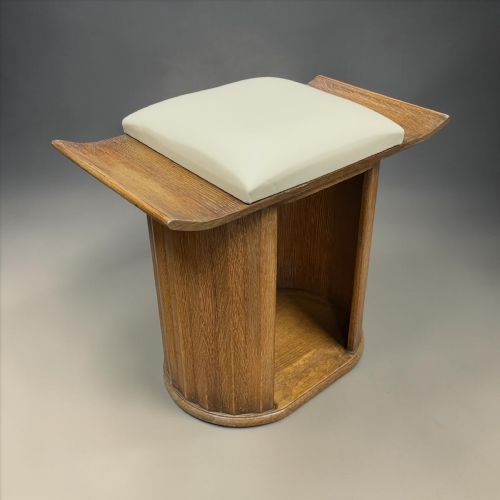
The selections on this page draw heavily from seventeenth-century Jacobean roots through to the Arts and Crafts movement and twentieth-century revivals. You will encounter low benches, close stools, and small occasional tables that double as perches or display stands.
English provincial workshops dominate the origins, yielding utilitarian items intended for everyday farmhouse or domestic life. Their compact footprints make them adaptable additions to modern interiors needing rustic warmth.
What varies in quality
Integrity of the original timber and the tightness of the pegged joints separate robust examples from compromised ones. Pieces retaining their early surface patination and rich colour command greater appreciation than those stripped or overly restored.
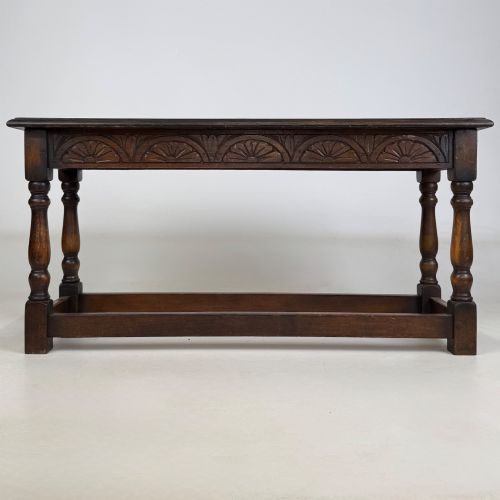
The crispness of hand-carved details, such as Jacobean motifs or Celtic patterns, indicates the maker's skill level. Proportions also matter, as well-balanced proportions in smaller occasional tables and joint stools reflect thoughtful original design.
Listings feature oak, elm, and yew timbers shaped into forms ranging from seventeenth-century joint stools to twentieth-century Arts and Crafts plant stands.
Liberty and Co
The Brown Oak Stool Table Glossary
- Joint stool
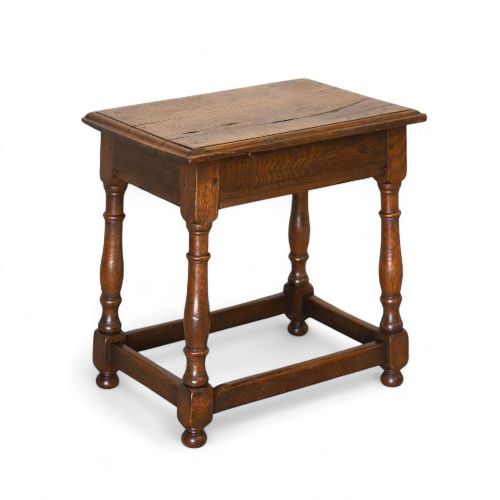
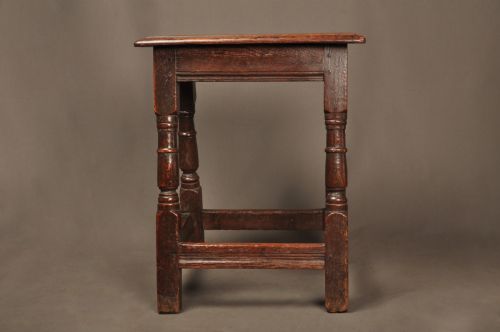
- A sturdy wooden stool built with pegged mortise and tenon joinery rather than turned legs glued into holes. These were common in sixteenth and seventeenth-century households for seating or holding objects.
- Lowboy
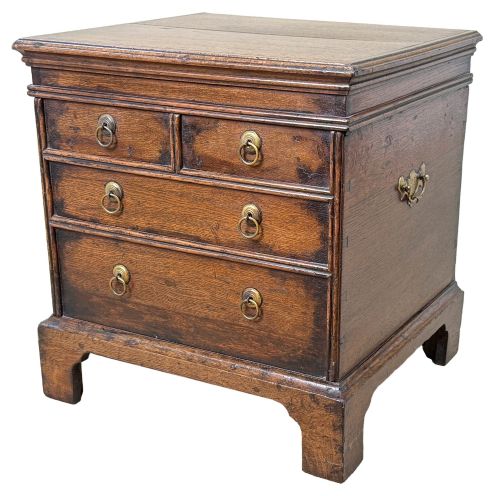
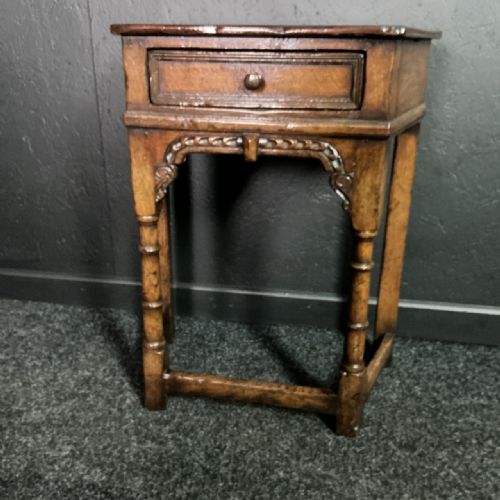
- A small seventeenth or eighteenth-century table with drawers, often set on cabriole or straight legs. They served various domestic functions as dressing tables or side tables.
- Close stool
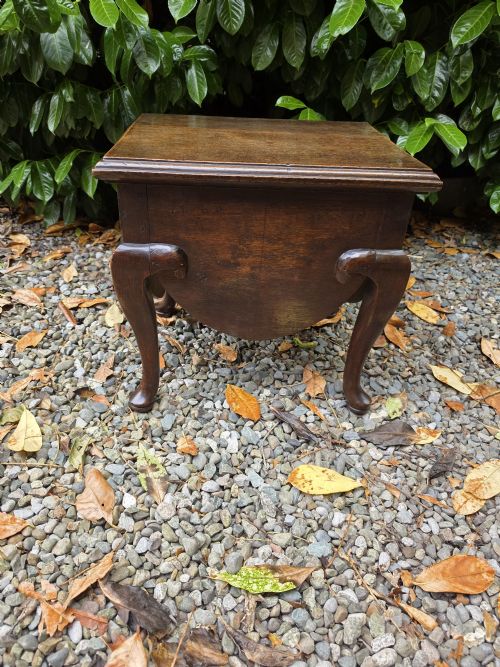
- An enclosed piece of furniture designed to conceal a chamber pot beneath a hinged seat. Many survivors have been adapted over the centuries into standard small cupboards or bedside chests.
- Pegged construction
- A method of securing joints by driving wooden pins through the mortise and tenon. This traditional technique avoids metal nails and accommodates the natural expansion of timber.
- Bobbin turning
- A type of lathe work producing a series of rounded, spool-like shapes along a furniture leg or stretcher. It appears frequently on seventeenth-century and later revival pieces.
Brown Oak Stool Table: Frequently Asked Questions
What is a brown oak stool table?
A brown oak stool table refers to versatile wooden furniture pieces that function as both seating and small surfaces. They encompass joint stools, low benches, and occasional tables built from durable timber.
These items originate from various eras, including seventeenth-century provincial workshops and later Arts and Crafts revivals. Their sturdy build makes them practical for everyday use in compact spaces.
How were joint stools used historically?
Joint stools served primarily as sturdy seating around dining tables in early homes. Because of their flat tops and strong frames, people also used them as temporary side tables for food or household goods.
In some contexts, they functioned as portable surfaces that could be moved easily near hearths or windows. Their robust construction allowed them to double as small mounting steps when needed.
How do I care for antique oak furniture?
Maintain antique oak by applying quality beeswax periodically to nourish the dry wood and preserve its natural sheen. Keep pieces away from direct heat sources and strong sunlight to prevent timber splitting.
Dust surfaces regularly with a soft, dry cloth rather than using wet cleaners or silicone polishes. Gentle care protects the historic patination accumulated over centuries of use.
How can I tell a seventeenth-century stool from a revival piece?
Examining the tool marks, timber wear patterns, and construction methods helps distinguish period pieces from later nineteenth-century revivals. Seventeenth-century examples often display hand-riven oak with irregular shrinkage and genuine age-related patination.
Revival pieces made during the Victorian or Edwardian eras typically feature more uniform machine preparation and standardised peg placement. Comparing the wear on the foot edges provides further clues to the true age of the timber.