

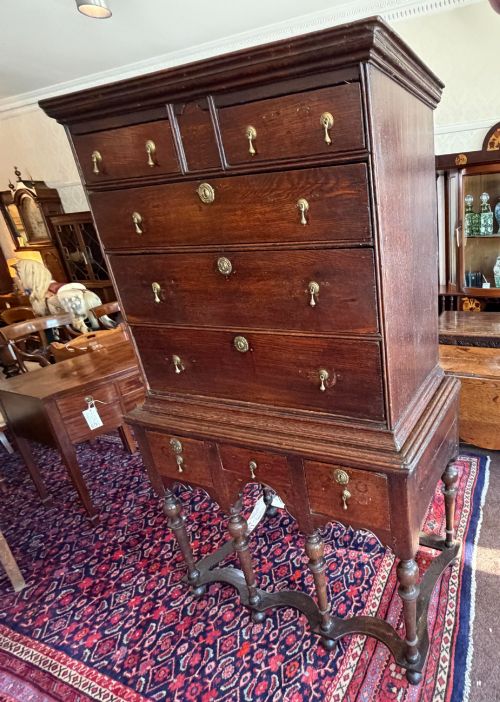
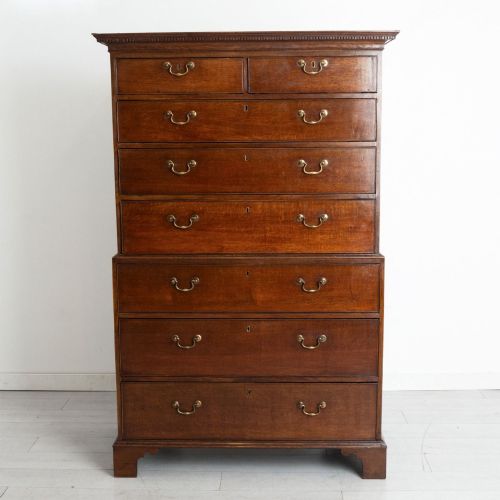
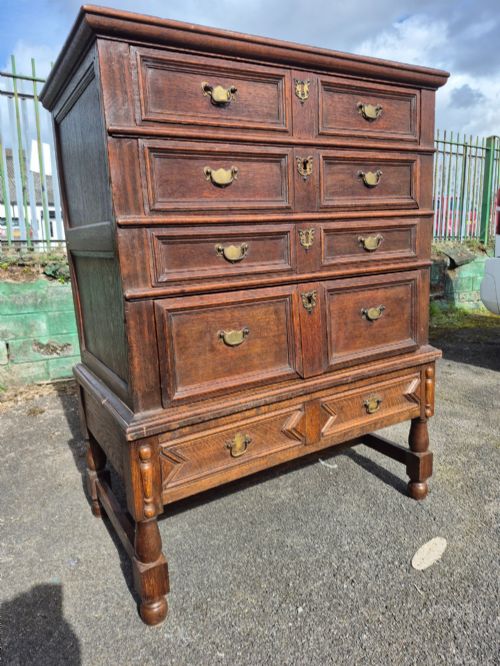
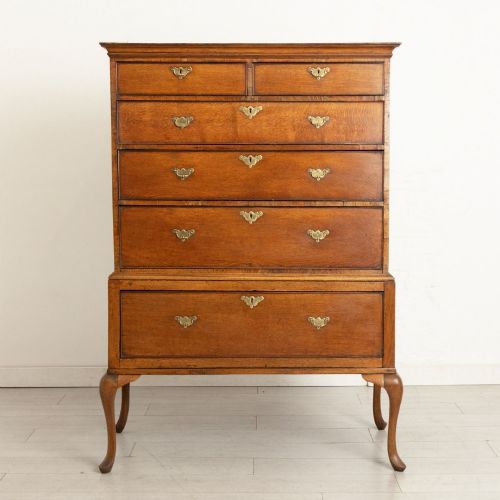
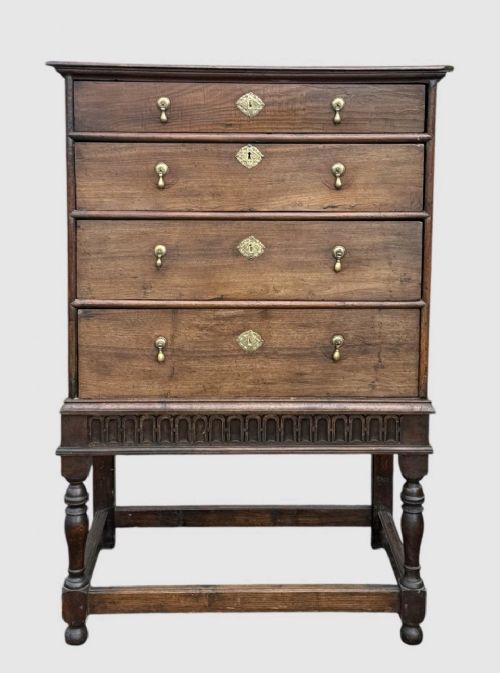


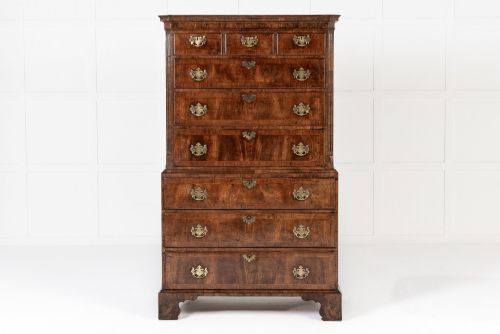


Brown Oak Highboy
These brown oak highboy examples deliver stately height and deep timber grain for serious collectors of early English furniture.

Brown Oak Highboy
A brown oak highboy combines the vertical storage of a tall chest with a raised stand, offering deep proportions and tiered drawers for domestic organisation. These pieces span the 17th century, 18th century, and around 1800, encompassing forms such as chests on stands, tallboys, and chests on chests.
The dominant material visible across these listings is oak, occasionally paired with walnut and fitted with brass hardware. Buyers encounter specific regional expressions ranging from Charles II and Jacobean origins through Queen Anne, George I, and Georgian periods.
Materials and construction
Cabinet makers utilised solid oak and walnut timbers to build these substantial frames, often pairing the denser woods across drawer fronts and structural stands. The joinery relies on traditional methods designed to support stacked cabinetry without warping over centuries of use.
Original brass handles and mountings provide functional contrast to the dark timber grain. These metal fittings complete the structural assembly, securing the stacked tiers of drawers from the base up to the cornice.
Several examples preserve their original brass handles, offering a tactile link to the hands that opened them over three hundred years ago.
Judging quality in brown oak highboy pieces
Quality rests upon the purity of the timber selection and the integrity of the structural transition between the upper chest and the supporting stand. Pieces retaining their original brass handles and untouched drawer configurations hold greater architectural harmony.
The refinement of period styling, from early Jacobean severity to later Georgian proportions, dictates the elegance of the silhouette. Finer examples display crisper mouldings and more cohesive integration between the walnut and oak elements.
The Brown Oak Highboy Glossary
- Highboy
- A tall chest of drawers consisting of a lower section or stand supporting an upper chest. This term encompasses the tallboy and chest on stand variants seen in these listings.
- Oak
- A durable, heavy hardwood displaying a prominent grain pattern that dominates 17th century and 18th century English furniture. It provides both structural strength and distinct visual warmth.
- Walnut
- A rich, figured timber utilised alongside oak in Georgian and earlier pieces to create contrasting drawer fronts and decorative veneers. Its darker tones add depth to the cabinet facade.
- Chest on Stand
- A cabinet form featuring a smaller set of drawers elevated on a framed base with legs, common in Queen Anne and Charles II periods. This design lightens the visual weight of tall storage.
- Georgian
- A style encompassing the reigns of the Georges, marked by classical proportions and refined cabinet making from the 18th century onwards. It bridges heavier early forms with lighter, sophisticated details.
Brown Oak Highboy: Frequently Asked Questions
What is a brown oak highboy?
A brown oak highboy is a tall, stacked storage unit featuring multiple drawers raised on a stand or lower frame. These pieces provide substantial vertical capacity while maintaining a lifted footprint.
They appear primarily in oak and walnut materials, reflecting styles from the 17th century through the Georgian era.
How do I date a highboy?
Dating relies on examining the overall style, construction methods, and hardware integration across the piece. Characteristics shift from the robust joinery of Charles II and Jacobean periods to the refined lines of George I and Georgian eras.
Material choices like walnut accents or the presence of original brass handles offer further clues to the decade of manufacture.
Where were these pieces used?
These tall storage units served in principal rooms and bedrooms of large English houses to store clothing, linens, and valuables. Their elevated design kept contents away from damp floors while offering accessible tiered drawers.
Today, they function as statement storage pieces in traditional or contemporary interiors.
How do I care for antique oak?
Preserving antique oak requires stable indoor humidity and protection from direct sunlight to prevent timber movement and fading. Regular dusting with a dry, soft cloth maintains the finish without chemical buildup.
Avoid placing these heavy wooden pieces near heat sources that might dry out the ancient grain.