
Brown Oak Hall Settle
A brown oak hall settle is a sturdy timber seat designed for corridors, bringing deep grain and history straight into an entranceway.
Brown Oak Hall Settle
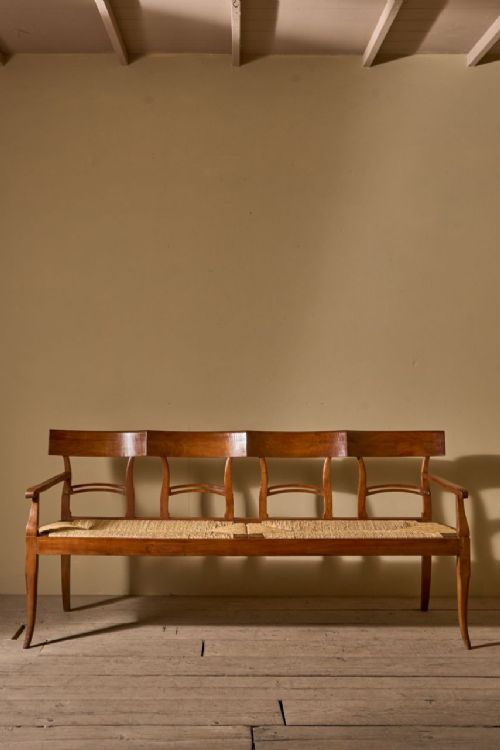
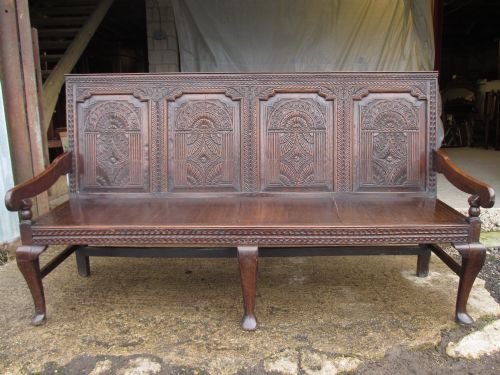
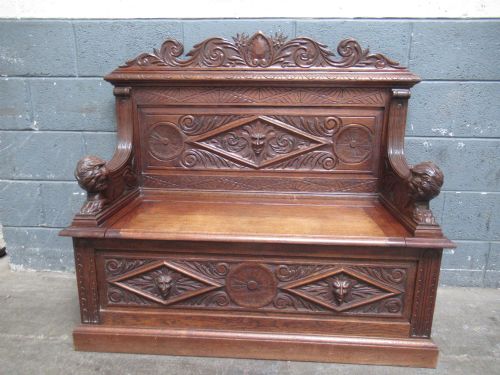
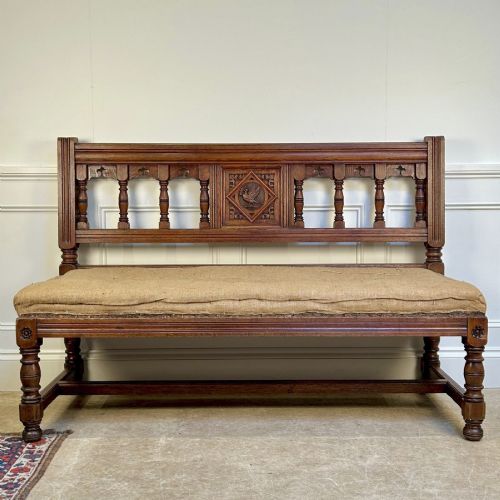
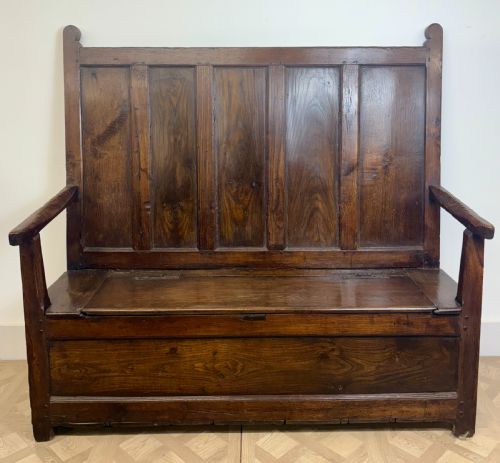
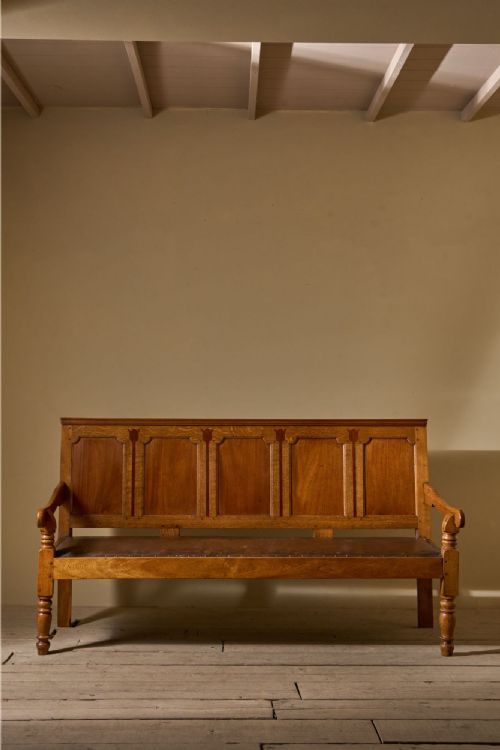
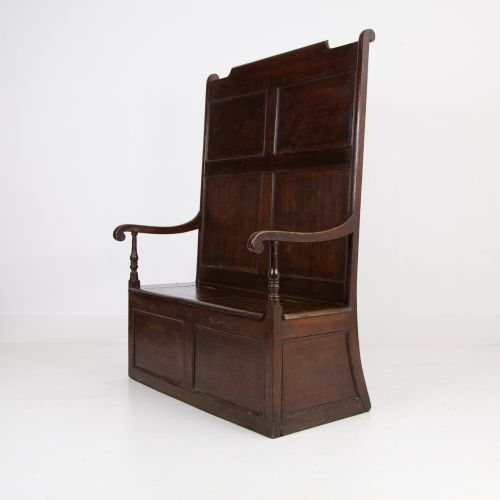
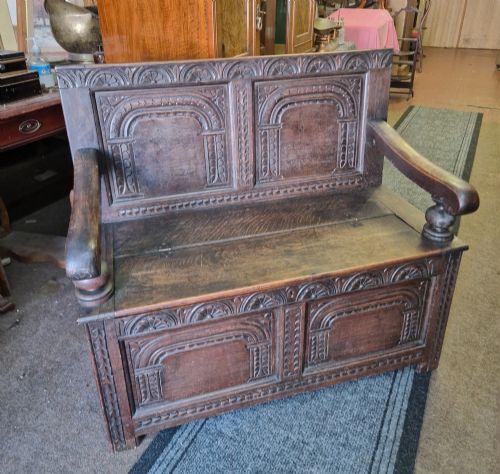
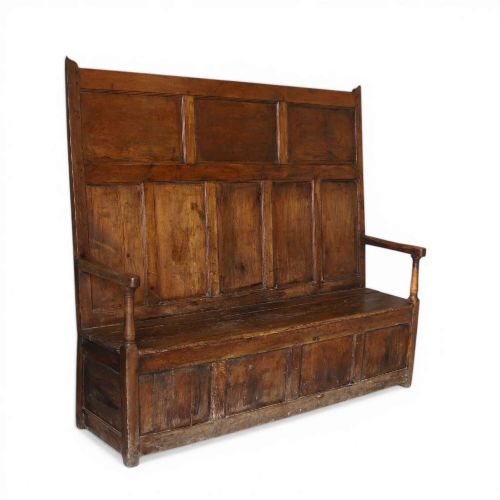
A brown oak hall settle is a high-backed wooden bench built to shield inhabitants from draughts in corridors and entrance spaces. These pieces appear across several periods, most notably the 17th, 18th, and 19th centuries, as well as the Victorian era.
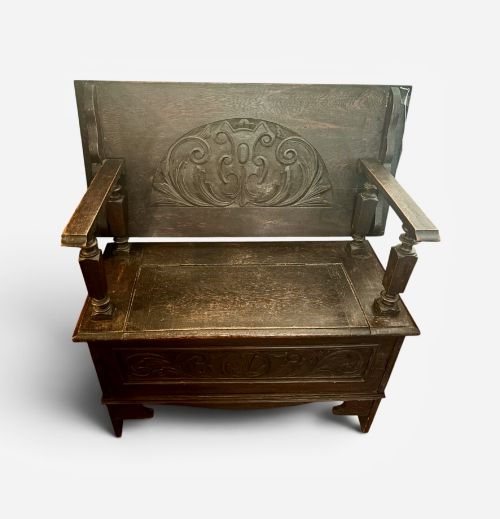
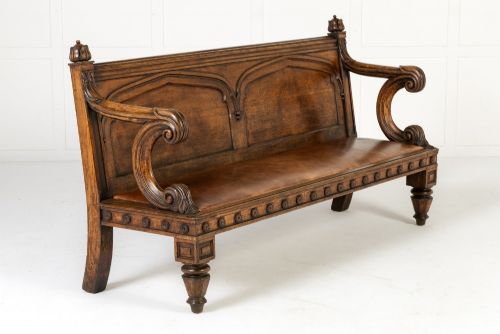
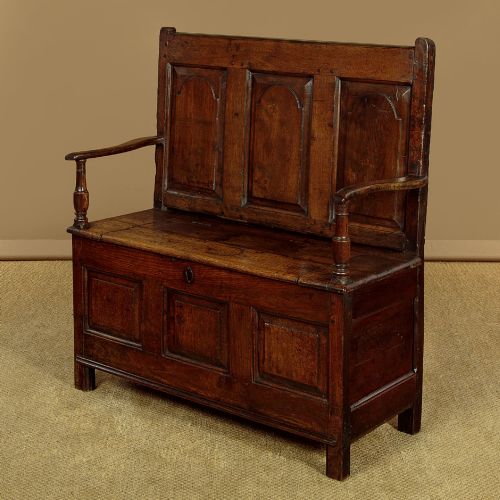
Makers shaped these items as straight-backed seats, box settles with storage beneath the hinged lid, and monk's benches that convert into tables. The examples found here span styles from Georgian vernacularto Gothic Revival and Arts & Crafts.
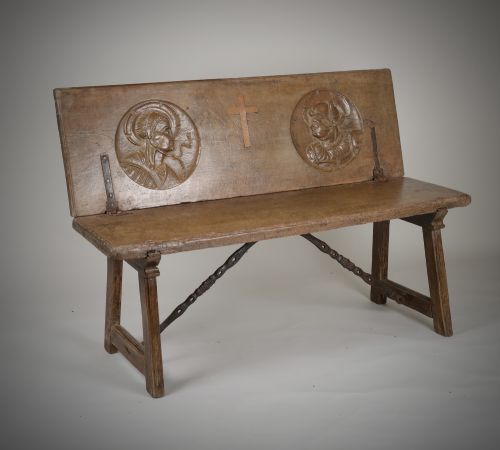
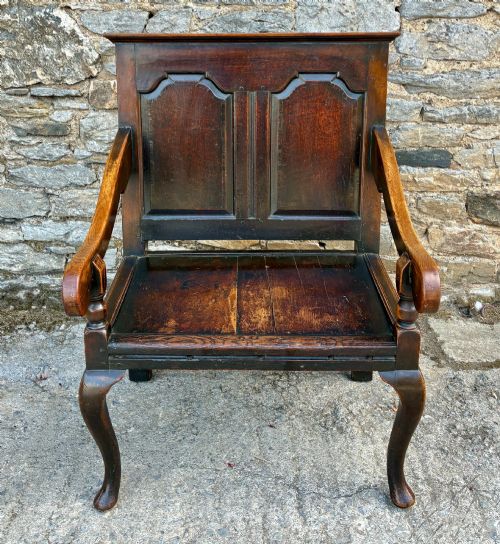
Buyers searching for a brown oak hall settle encounter regional variations including Welsh and Scottish forms, alongside English country pieces. Oak dominates the material record, paired occasionally with ash, cherrywood, or elm.
How they were made
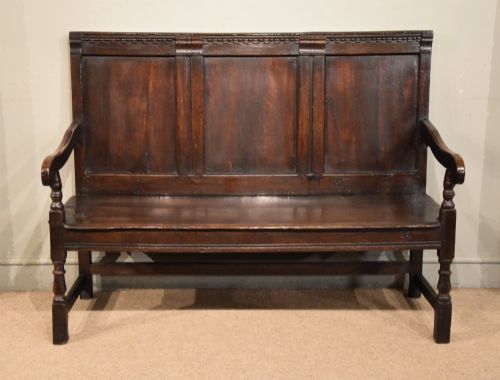
Makers constructed these settles primarily from solid oak, sometimes combining panels of ash, burr elm, or cherrywood. Joinery relied on traditional pegged mortise and tenon joints to build rigid frames that could withstand heavy daily use in busy hallways.
Decoration involved hand carving, panel moulding, and occasional painted or tulip-shaped ornamentation. Box settles incorporated hinged lids over storage compartments, requiring simple iron or brass hinges and fastenings.
Periods represented on the site span from the 17th century through the Georgian and Victorian eras up to the 1920s and 1930s.
What varies in quality
Quality in a brown oak hall settle rests on the depth of the timber's colour, the crispness of any hand carving, and the integrity of the original joints. Pieces featuring integrated storage boxes show superior utility, while untouched patination on the oak surfaces elevates the character.
Proportions and regional vernacular design also dictate standing, with well-balanced high backs and untouched panel construction marking out the finest examples from simpler utility benches.
GIllows·Liberty·Wylie Lockhead Manufacturers
The Brown Oak Hall Settle Glossary
- Box settle
- A wooden bench featuring an enclosed storage compartment beneath the seat, accessed by lifting the lid. This design kept boots and blankets dry in cold halls.
- Monk's bench
- A multi-functional furniture form with a hinged back that folds down to create a table top. It combines seating and surface utility in compact spaces.
- Panel-back
- A seat construction where the backrest consists of fitted wooden panels held within a grooved frame. This technique allowed timber to expand and contract without warping.
- Vernacular furniture
- Domestic objects made by local craftsmen using regional styles and readily available woods rather than following metropolitan court fashions. These pieces reflect local building traditions.
- Patina
- The surface sheen and softening of colour developed on wood over centuries of handling and polishing. It marks genuine age and exposure to light.
Brown Oak Hall Settle: Frequently Asked Questions
How were settle benches used?
Settles served as primary seating by the hearth or in drafty hallways, where the high solid back and winged sides deflected cold air away from the occupant.
Many examples incorporated lift-up seats above storage boxes, providing practical space for boots, textiles, and household goods.
How do I date an oak settle?
Dating relies on examining the construction methods, tool marks, and stylistic details such as panel moulding or carved motifs. Earlier 17th-century pieces display heavier framing and pegged joints, whereas 19th-century revivals borrow Gothic or Arts & Crafts aesthetics.
Wood patina, wear patterns around the arms, and timber selection also offer clear clues to the period of manufacture.
Will a hall settle fit my space?
Hall settles vary from compact monk's benches and small box seats to large multi-panel country benches. Measuring the available corridor depth and doorway clearance ensures the high back and arms can pass through safely.
Consider whether you need a model with integrated storage or a slimmer straight-backed profile for narrower walkways.