
Brown Oak Blanket Chest
A brown oak blanket chest brings deep grain and centuries of utility into a room, offering sturdy storage wrapped in history.
Brown Oak Blanket Chest
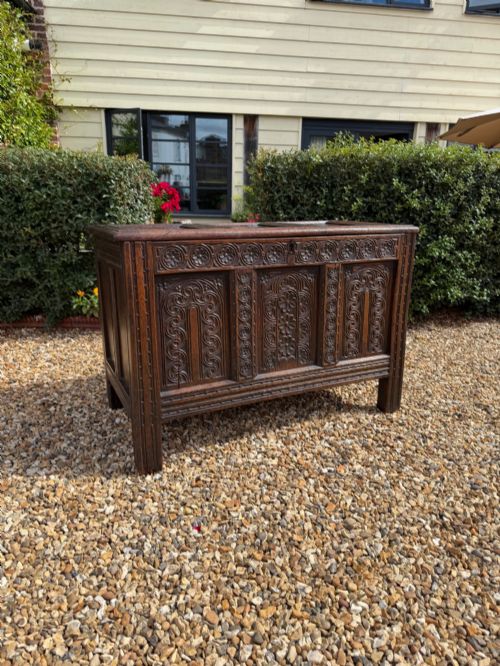
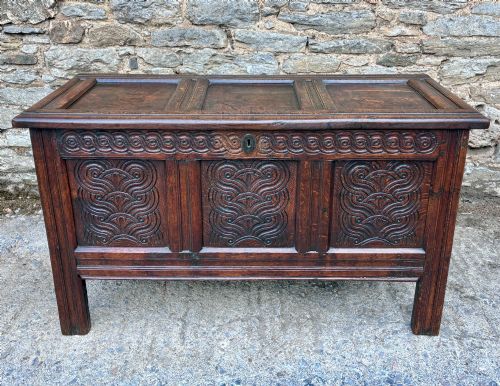
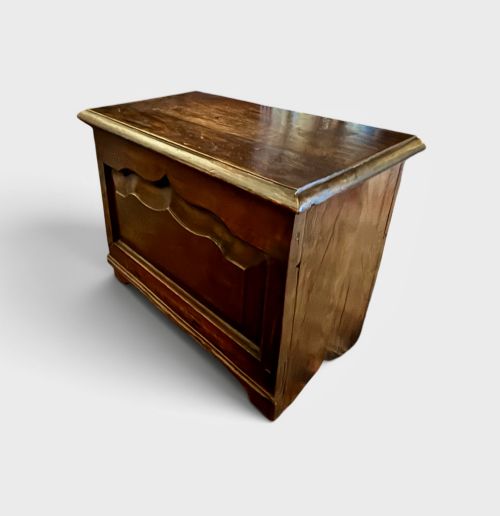
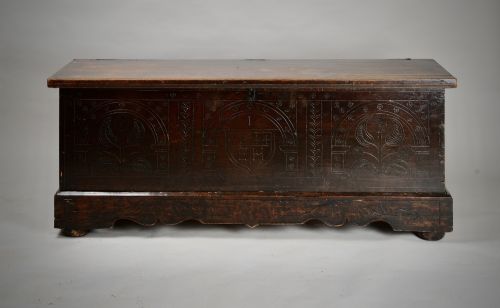
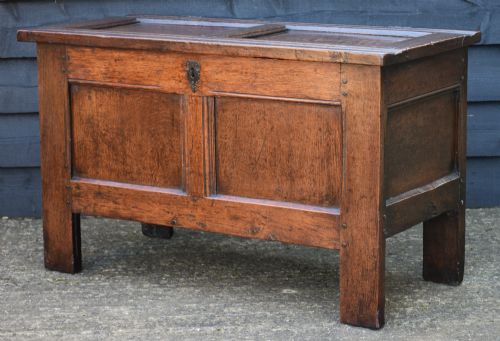
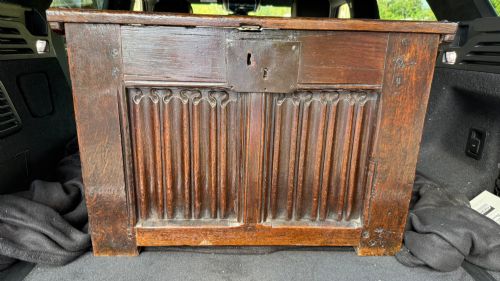
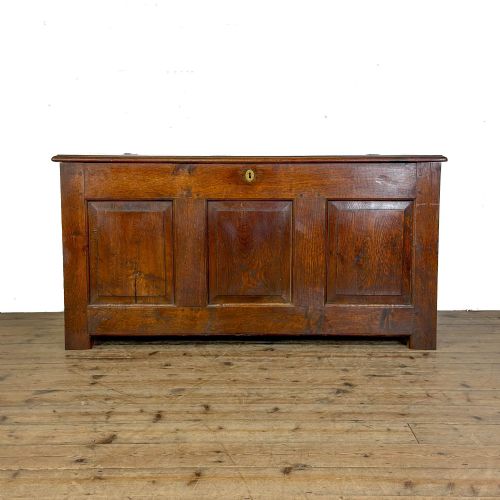
A brown oak blanket chest serves as a robust storage receptacle, originating primarily in domestic settings from the sixteenth through the nineteenth centuries. These pieces appear as heavy wooden coffers, mule chests, and low storage boxes designed to hold household textiles and garments.
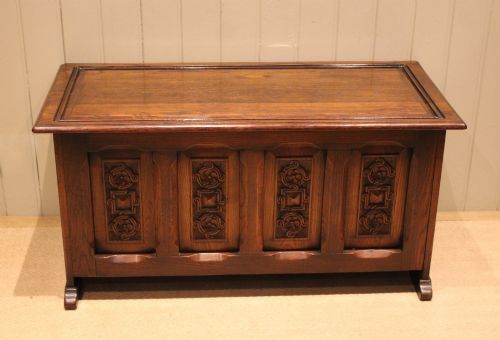
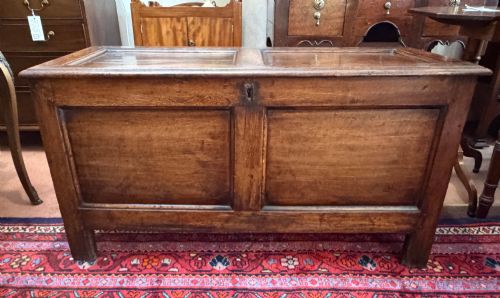
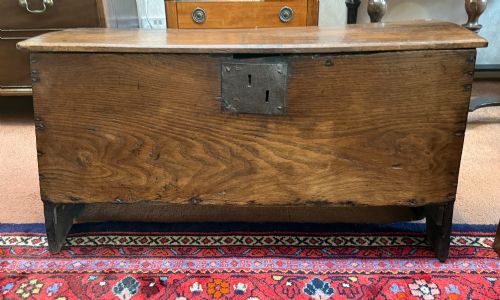
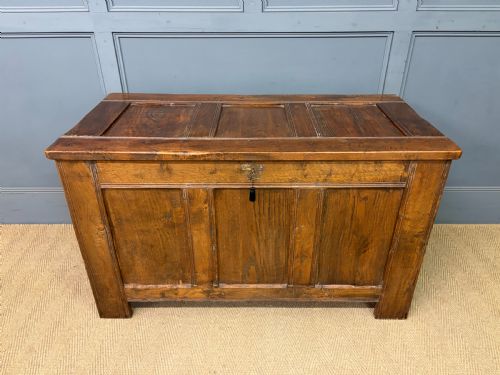
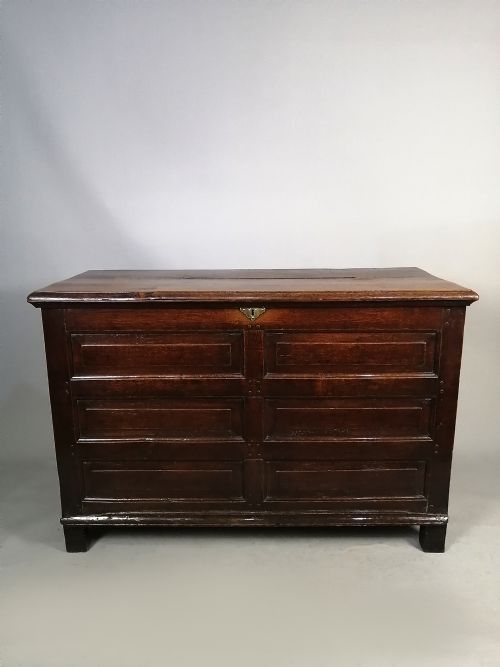
Most examples encountered here date from the seventeenth and eighteenth centuries, displaying the deep patination characteristic of early English and continental joinery. Forms range from plain boarded trunks to panelled coffers and regional variants featuring drawers.
Makers constructed these items to withstand heavy daily use, employing solid timbers that darken naturally over decades. The selection includes specific regional subtypes such as Welsh and Dorset pieces alongside standard Georgian iterations.
How they were made
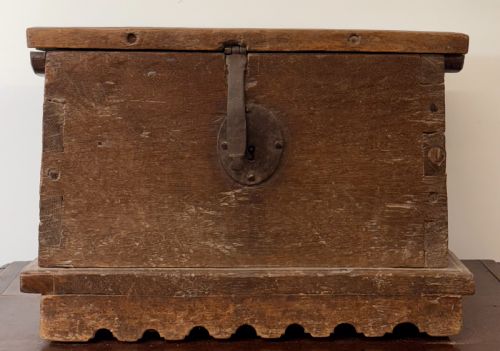
Craftsmen built these containers using solid oak, frequently augmented with iron or brass hardware for hinges and locks. Structural integrity relied upon pegged frame and panel construction, allowing the timber to expand and contract without splitting.
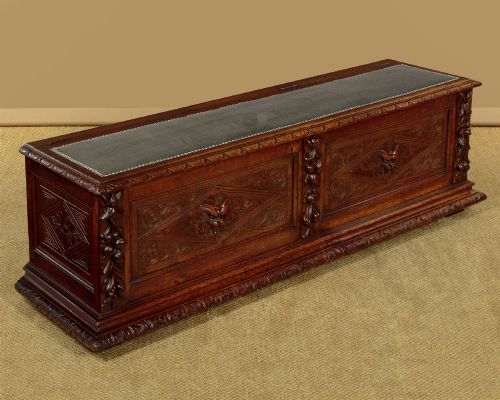
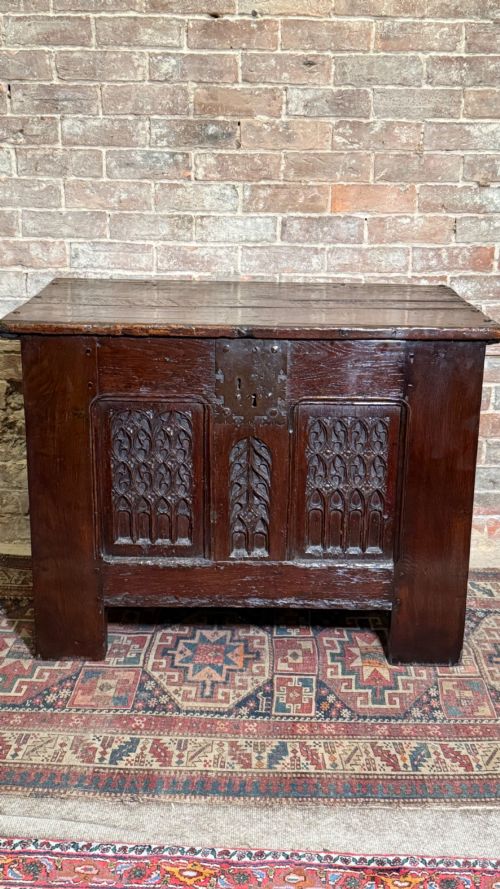
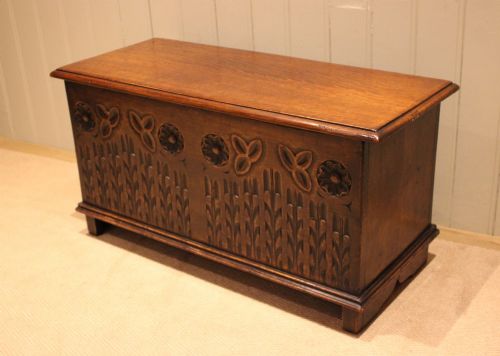
Surface decoration involved hand carving, moulded fronts, and occasional wood inlay or mahogany crossbanding on later pieces. Wrought iron reinforcement often secured the corners and lids of earlier sixteenth and seventeenth century examples.
Listings span periods from the 16th century through the Edwardian era, predominantly featuring solid oak alongside iron and brass hardware.
What varies in quality
Quality rests upon the depth of the timber's natural patina and the crispness of any period carving. Original ironwork and untouched surfaces elevate an example far above those altered by modern restorations or excessive sanding.
Proportion and scale dictate desirability, with smaller proportions and well-balanced panel layouts commanding greater attention. The integrity of the internal structure and the retention of original floorboards and till boxes define the upper tiers of the range.
The Brown Oak Blanket Chest Glossary
- Cofer
- A large wooden chest used for storing valuables, linen, and clothes. Early versions feature heavy boarded construction before panelled techniques took precedence.
- Mule chest
- A storage chest equipped with one or more drawers at the base beneath the main compartment. This form bridges the evolution between the traditional coffer and the chest of drawers.
- Crossbanding
- A decorative border technique where thin strips of veneer are laid across the grain of the primary wood. This method appears on more refined Georgian examples.
- Boarded construction
- A simple method of joining flat planks directly at the edges using nails, dowels, or V-joints. It represents the earliest and most straightforward form of box building.
- Patina
- The surface sheen and darkening developed by wood through age, handling, and exposure to light. A deep patina indicates centuries of untouched care.
Brown Oak Blanket Chest: Frequently Asked Questions
How are these chests dated?
Datation relies on construction methods, timber species, and stylistic motifs such as carved strapwork or linenfold panels. Tool marks and joinery details shift noticeably between sixteenth-century medieval styles and later Georgian periods.
Secondary indicators include the evolution of hinge types and the presence of regional traits. Comparing joint styles provides a reliable timeline for pieces lacking explicit dates.
What was a mule chest used for?
A mule chest provided dual storage for bulky blankets in the top compartment and smaller garments in the base drawers. This combination made it a central piece of furniture in domestic bedchambers.
Households utilised the flat top for display or seating when the room lacked space. The addition of drawers marked a step forward in household organisation.
How do I care for old oak?
Old oak requires stable room humidity and protection from direct sunlight to prevent the timber from drying and splitting. Applying natural beeswax preserves the surface without building up synthetic residues.
Avoiding excessive moisture safeguards the historic hardware and ironwork from corrosion. Gentle dusting maintains the finish without harming the centuries-old patina.
What is a panelled coffer?
A panelled coffer uses a sturdy frame holding thinner floating panels within grooves to accommodate wood movement. This technique replaced simpler boarded construction to create lighter, stronger containers.
Carpenters decorated these frames with mouldings and geometric carvings characteristic of Jacobean and Elizabethan workshops. The design distributed weight effectively across the entire structure.