


English Period Oak Chest
An english period oak chest brings solid, timber-hewn character to a room, offering centuries of utility through sturdy construction and honest joinery.
English Period Oak Chest
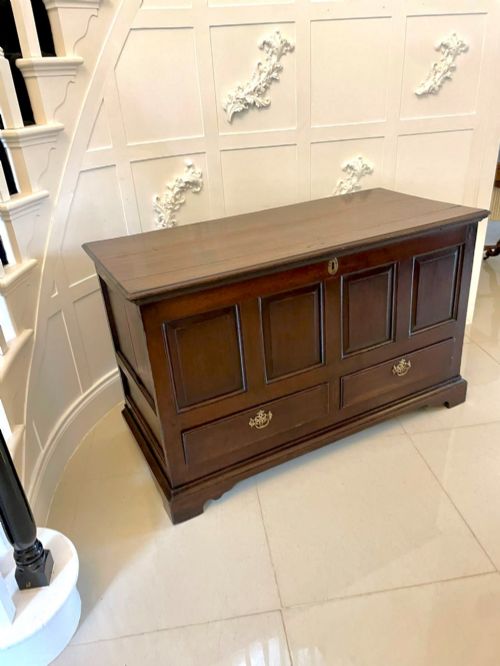
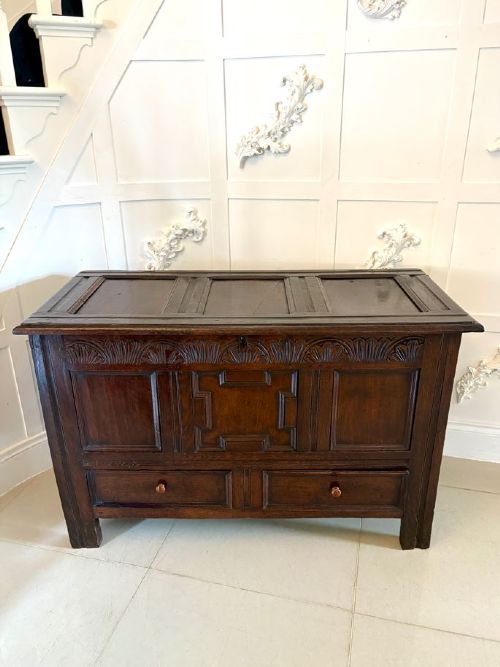
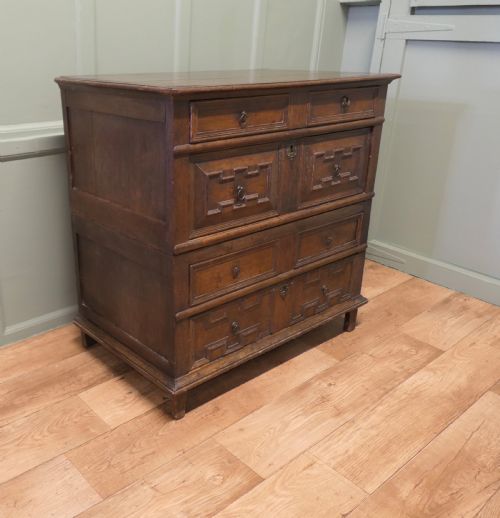
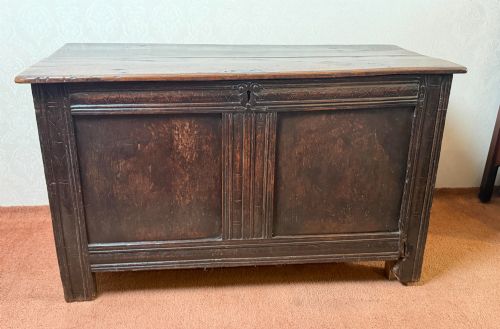
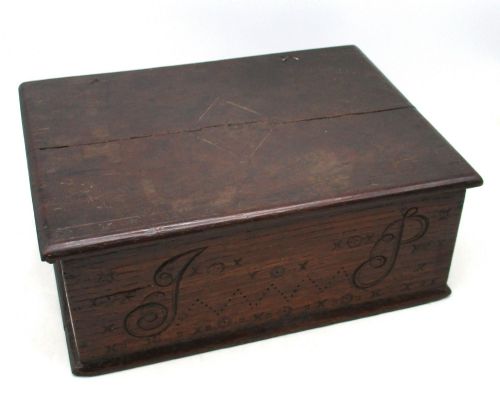
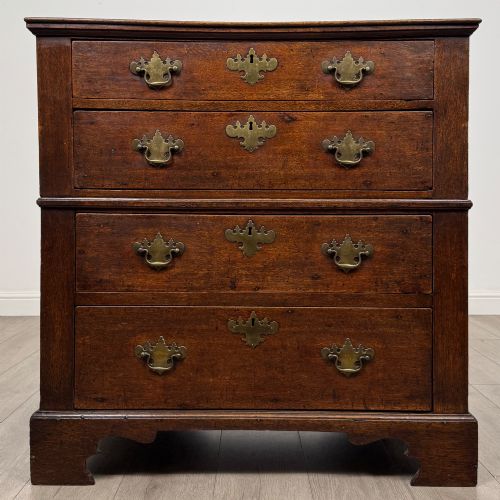
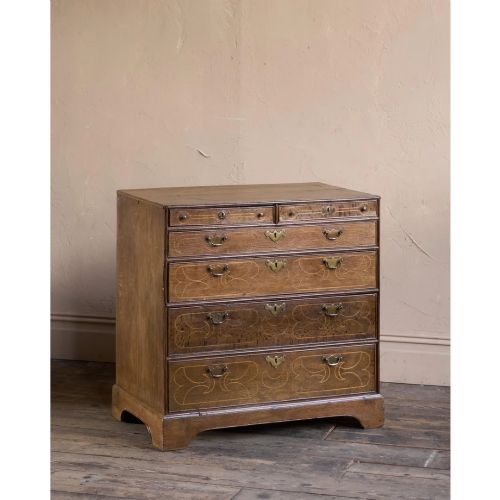
An english period oak chest encompasses robust storage furniture built across the sixteenth, seventeenth and eighteenth centuries, including coffers, blanket chests, document boxes and multi-drawer chests.
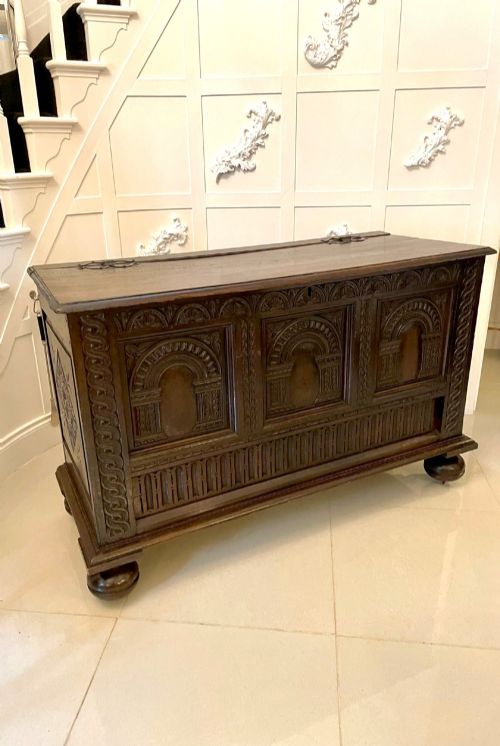
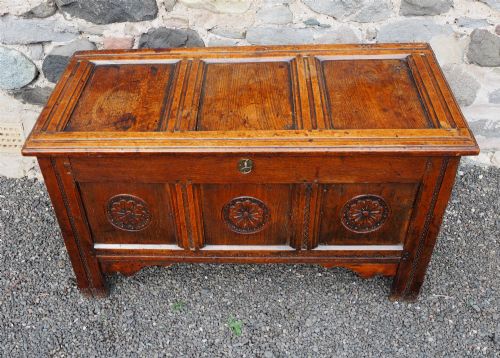
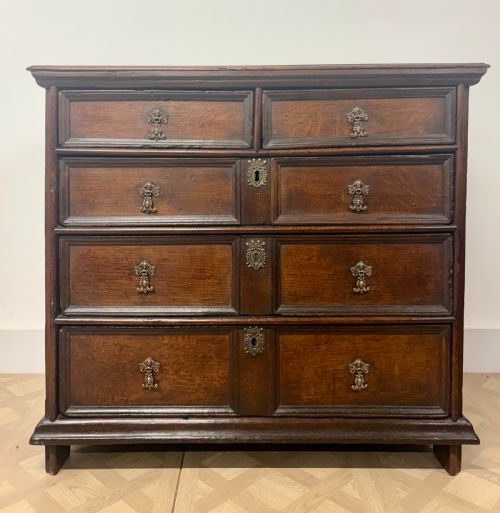
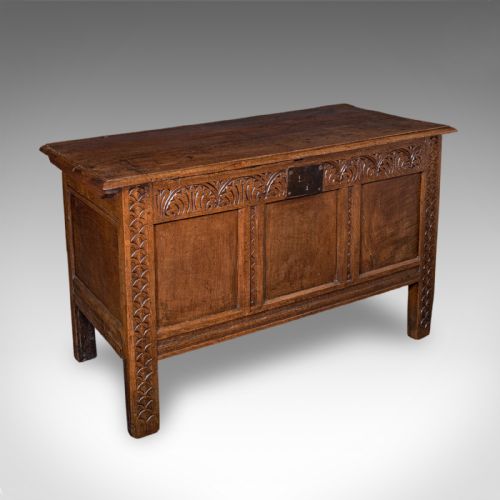
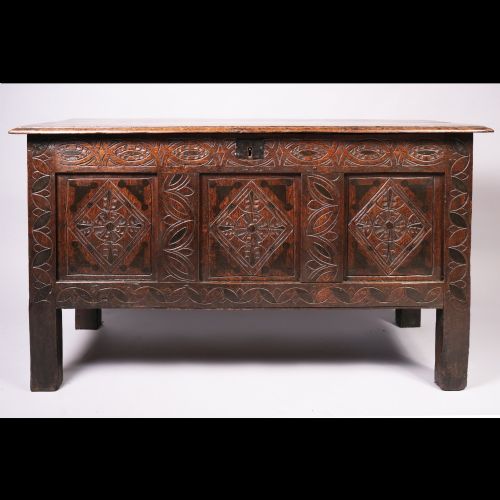
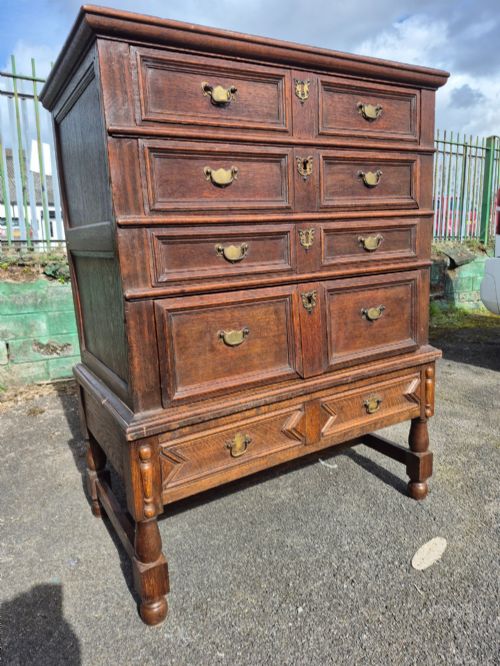
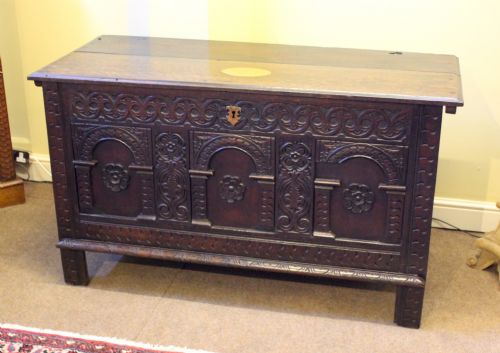
The versions most commonly met on this page date from the seventeenth century, taking the form of panelled coffers, carved marriage chests and early chests of drawers reflecting Jacobean and Charles II styles.
Regional variants such as Dorset coffers and country pieces appear alongside grander urban examples, showing the wide scope of domestic storage used in English households over successive centuries.
Materials and Technique
Joiners built these pieces primarily from solid English oak, frequently framing panels with mortise and tenon joints held together by wooden pegs rather than metal nails.
Secondary timbers such as elm, fruitwood, yew wood and olive appear in specific components like drawer linings or decorative veneers, whilst iron and brass provide hinges, escutcheons and complex locking mechanisms.
English Period Oak Chest Retail Price Guide 2026
Typical asking prices for english period oak chest among the pieces listed under this phrase on Sellingantiques today, from the lower quarter to the upper quarter. They describe what is for sale here now, not the wider market.
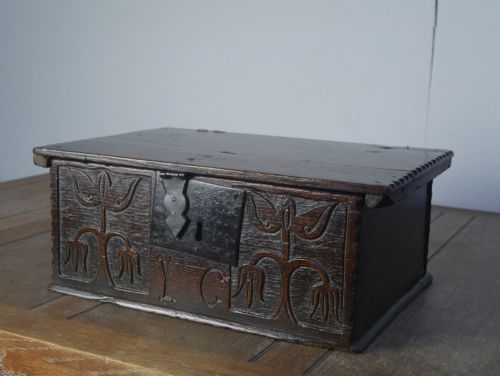
A seventeenth-century mule chest here carries the initials RF and the year 1653, scratched right into history during Cromwell's Commonwealth.
Distinguishing Quality
The standard of carving sets individual pieces apart, moving from stiff, simple geometric mouldings to fluid, deeply chiselled floral and arcaded panels executed by skilled hands.
Originality of surface timber, hardware and structural integrity dictate the standing of an item, distinguishing untouched patination and intact period locks from later replacements or heavy restorations.
The English Period Oak Chest Glossary
- Coffer
- A large wooden chest used for storing valuables, linens or documents. They often feature hinged lids and heavy front panels.
- Panel
- A flat piece of wood fitted within a surrounding frame, allowing the timber to expand and contract with seasonal humidity without splitting.
- Mule chest
- A storage chest fitted with one or more drawers at the base beneath the primary compartment. They bridge the design gap between simple coffers and full chests of drawers.
- Linenfold
- A carved wooden panel motif resembling folded cloth or parchment, popular in Tudor and Elizabethan furniture. It creates a subtle, rhythmic texture across the front.
- Oyster veneer
- Slices cut across small branches of timber such as olive, producing circular patterns resembling oyster shells. This technique decorated high-status cabinet work.
English Period Oak Chest: Frequently Asked Questions
What was an english period oak chest used for?
These chests served primarily for storing household textiles, valuable garments, silver and important household documents safely away from damp floors and pests.
Over time, many functioned as domestic furniture pieces that doubled as impromptu seating or tables within early English homes.
How do I date an antique oak chest?
Dating relies heavily on examining construction methods, such as hand-split boards, pegged joints, and the evolution of hardware like iron locks and hinges.
Stylistic markers like arcaded carving, geometric mouldings, and specific regional traits also align pieces with reigns from Henry VIII through to the Georgian period.
Are these chests suitable for modern homes?
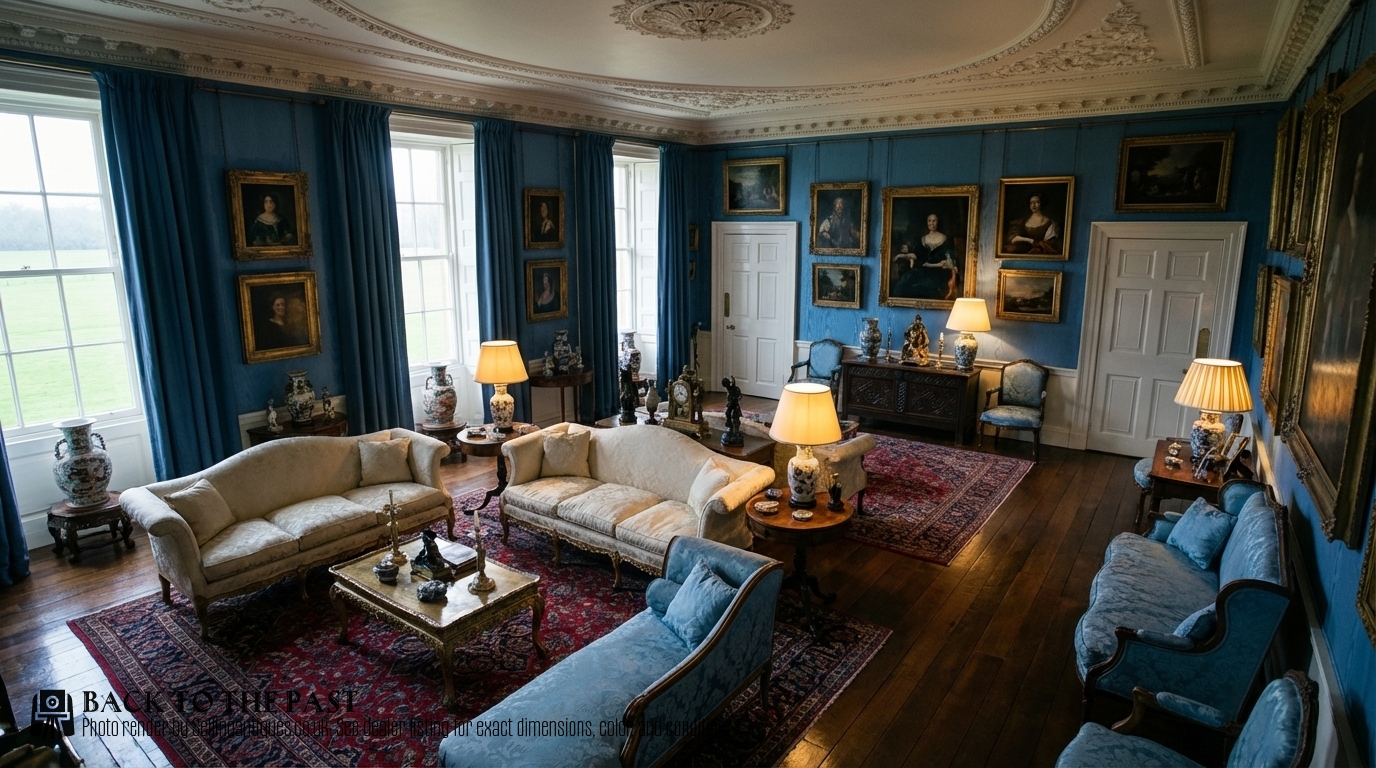
Their sturdy timber construction and practical dimensions make them well-suited for everyday storage at the foot of a bed or beneath a window.
Placing them away from direct heat sources and sudden humidity shifts protects the historical timber and maintains the stability of the joints.
What is the difference between a coffer and a chest of drawers?
A coffer opens from a hinged lid at the top, housing items in a single deep compartment accessed from above.
A chest of drawers provides horizontal storage divided into sliding tiers, which emerged later in the seventeenth century for more accessible organisation.