



Brown Muted Landscape
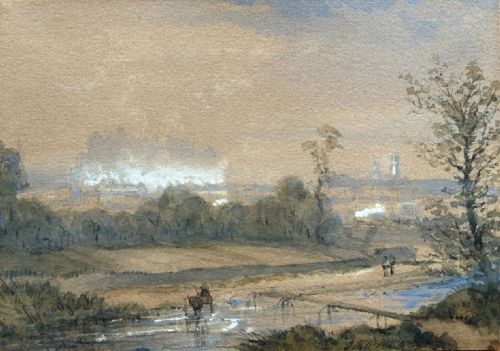
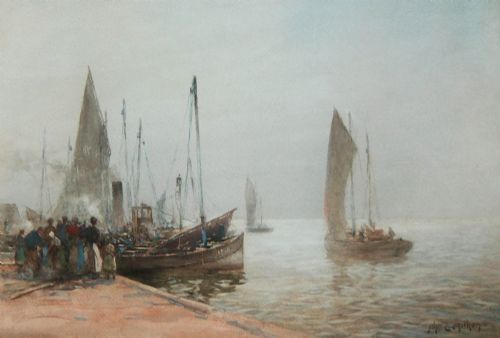
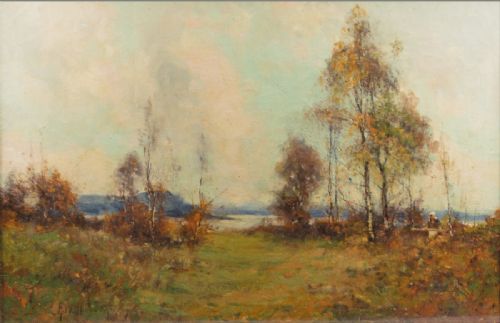
These works capture a brown muted landscape through atmospheric brushwork, understated palettes and historic settings.
Brown Muted Landscape
A brown muted landscape brings together oil and watercolour paintings focused on subdued earth tones, natural scenery and coastal views. These works emerge from nineteenth-century origins through the mid-twentieth century, spanning Victorian, Edwardian and British Impressionist movements.
Buyers meet paintings executed on canvas, board and paper, depicting harbours, rural fields and winter scenes. The selection draws heavily on British and Scottish school traditions, alongside continental European views.
Subject matter ranges from Yorkshire valleys and Scottish watercolours to French village scenes and marine harbours. The dominant aesthetic relies on restrained colour palettes rather than vibrant primaries.
Assessing quality and handling
Quality rests in the confidence of the brushwork, compositional balance and the artist's command of atmospheric light. Superior examples capture a specific place and weather condition with economy and precision.
The relationship between the support and the medium dictates the longevity and visual impact of the piece. Stronger works demonstrate assured handling of subdued tones without losing clarity in shadow and highlight.
Weather conditions recorded on these boards include unexpected hot days brightening to blue and deep winter snow.
Kenneth Cozens·John R Prentice·James E Aitken·Alexander Wellwood Rattray·Alfred George Morgan·Gyrth Russell·Fred Lawson·Sir Thomas Newenham Dean·Ernest Pile Bucknall·Tom Clough·James Orrock·Louie Stanley Maurice Prince·Arthur Winter Shaw·Henry Charles Fox·Edmund Morris Wimperis·John D Walker·Harold Swanwick·William James Muller·Owen Bowen·Fred Mayor·Edward Killingworth Johnson·Ernest Higgins Rigg·George Graham·Robert Lesley Howey·William Greaves
The Brown Muted Landscape Glossary
- Watercolour pigment
- Water-soluble colour suspended in a binder used on paper supports. It permits translucent washes and delicate layering.
- Impressionism
- A style focusing on accurate depiction of light and fleeting moments. Brushstrokes remain visible and boundaries soften.
- Board
- A rigid flat surface used as a painting support instead of woven fabric. Artists applied both oil and watercolour directly to prepared variants.
- Post-Impressionism
- A subsequent movement extending impressionist techniques while emphasising geometric forms and expressive qualities. Artists prioritized structural clarity over strict naturalism.
Brown Muted Landscape: Frequently Asked Questions
What defines a brown muted landscape?
These paintings rely on restrained, earthy tones rather than bright or saturated palettes. They capture historic rural, coastal and urban views through nineteenth and twentieth-century artistic traditions.
Subjects include harbours, fields and winter scenes executed in oil or watercolour. The aesthetic prioritises atmosphere and subdued light over vivid colour.
How should I hang these paintings?
Keep works out of direct sunlight to protect watercolours and oils from fading or discolouration. Stable indoor humidity prevents paper from warping and canvas from slackening.
Pair frames appropriately with the period of the artwork to maintain historical context. Simple, neutral wall colours allow subdued earth tones to stand out.
How do I date these artworks?
Examine the signature, framing, mounting style and support materials for period clues. Victorian and Edwardian works often feature specific framing techniques and paper watermarks.
Signatures and exhibition labels on the reverse provide direct attribution. Stylistic markers align with movements like British Impressionism or the Camden Group.
Are watercolour or oil paintings better?
Choice depends on personal preference for surface texture and framing requirements. Watercolours require protective glass and paper supports, whereas oils utilise canvas or board.
Both mediums achieve atmospheric depth when handled by skilled hands. Oils offer richer pigment texture, while watercolours excel at translucent luminosity.