
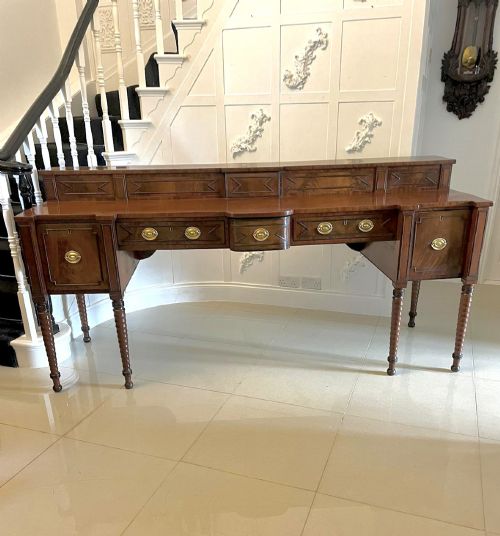
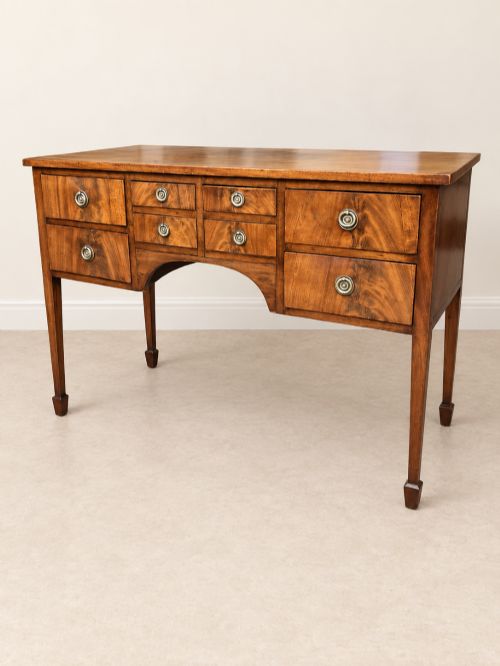
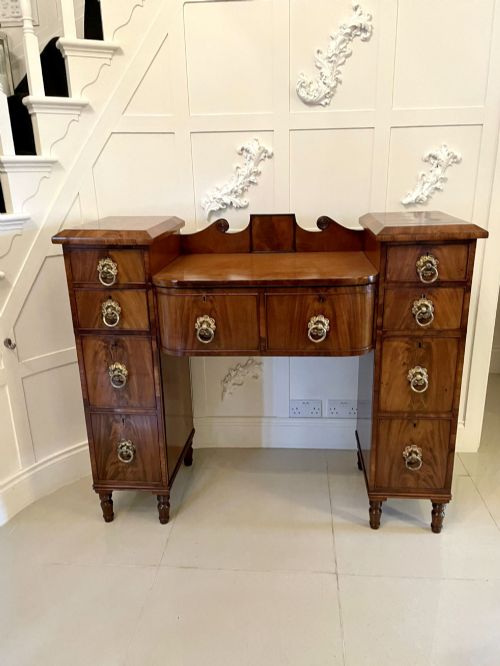
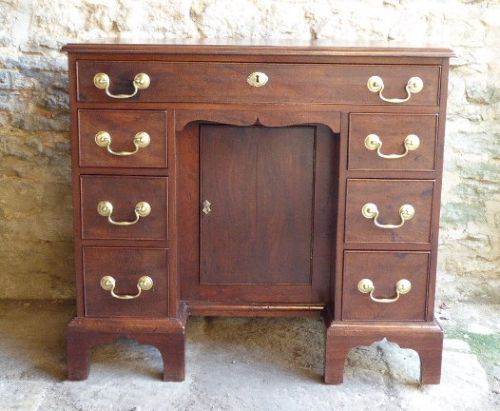
Brown Mahogany Sideboard Table
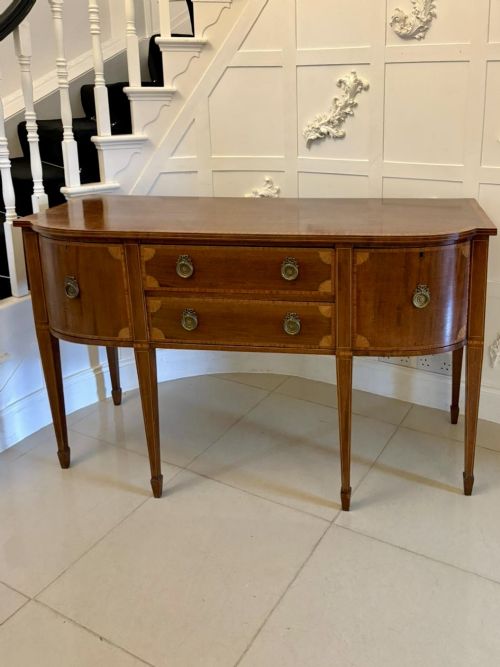
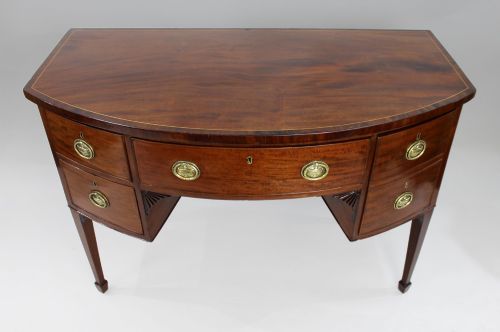
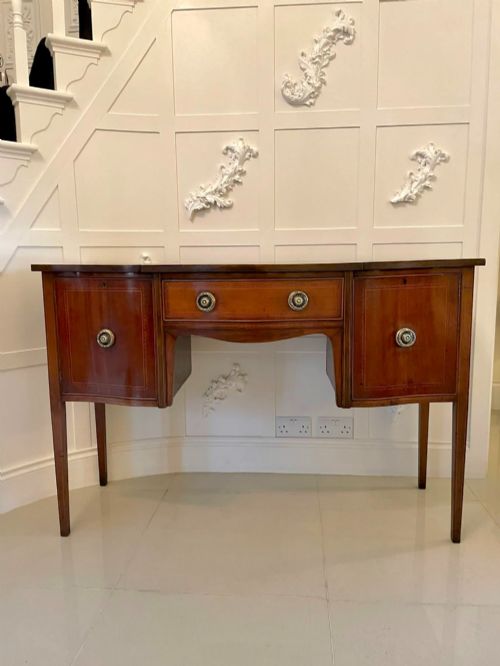
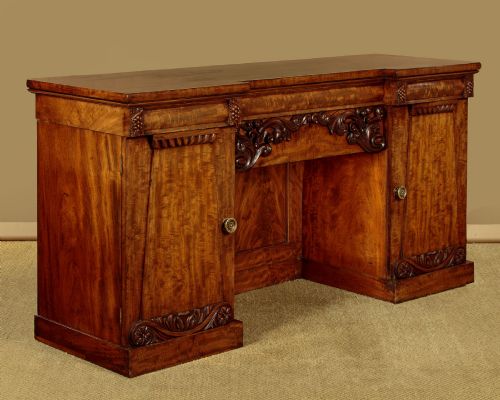
These brown mahogany sideboard table examples bring solid construction and rich timber figure to any dining room.
Brown Mahogany Sideboard Table
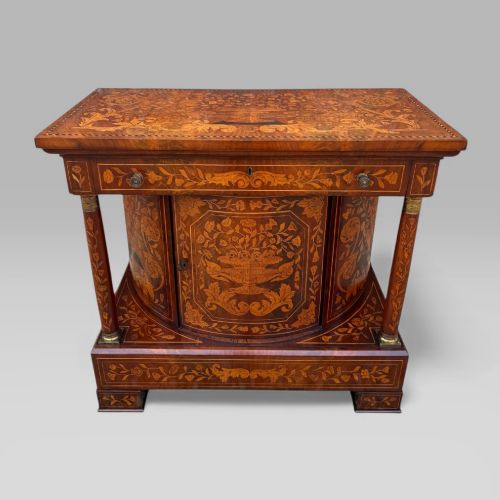
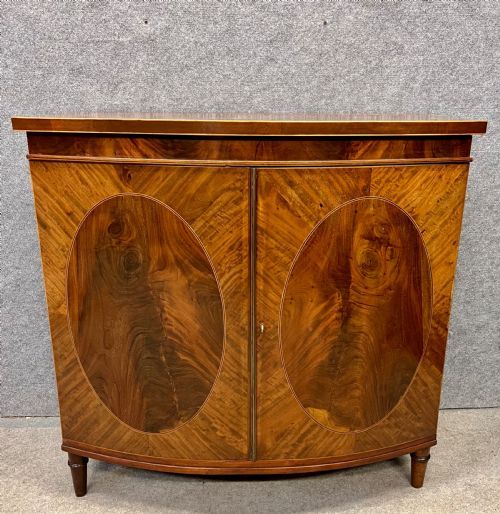
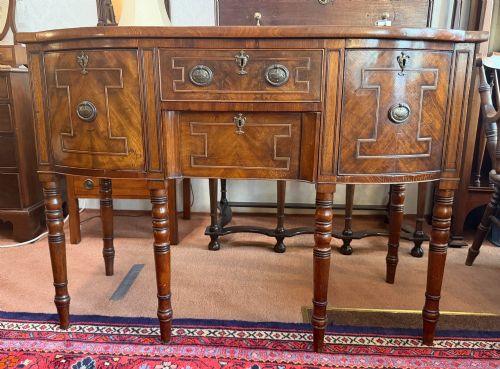
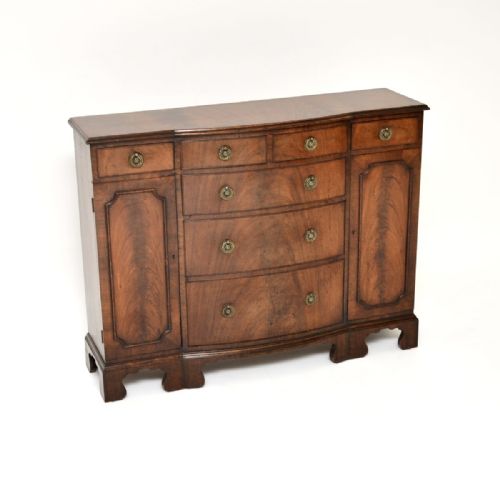
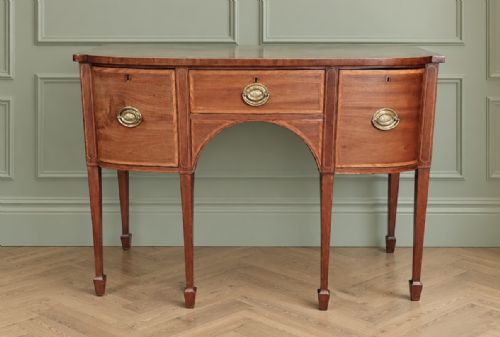
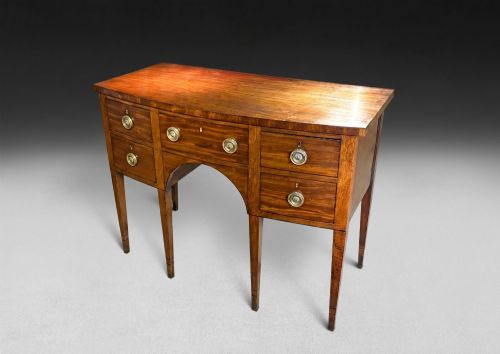
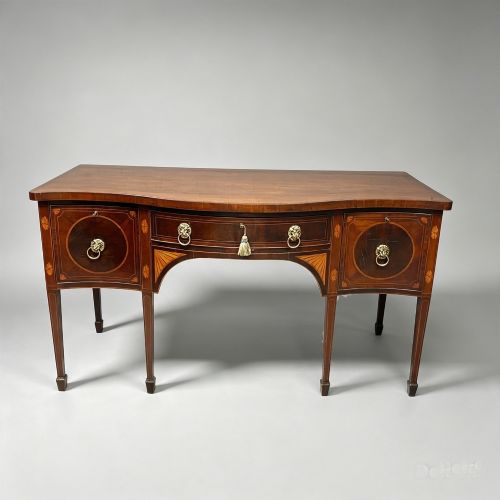
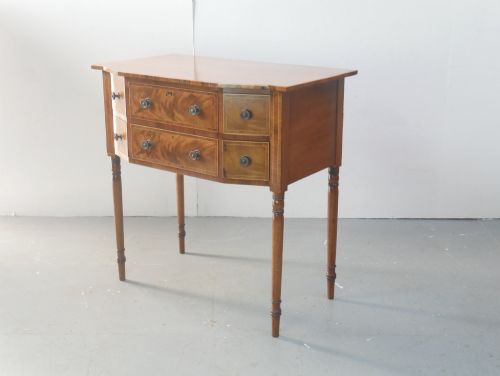
A brown mahogany sideboard table combines utility with formal presence, most frequently appearing in Georgian and Regency interpretations across this selection. Buyers find curved bow-fronts, straight geometric lines, and serpentine shapes designed to serve dining spaces.
The inventory ranges from eighteenth-century George III pieces to Edwardian revivals and later nineteenth-century interpretations. Sideboards, console tables, and servers dominate the forms, offering practical surface area alongside concealed storage.
Materials and Construction
Craftsmen built these brown mahogany sideboard table forms using solid mahogany and flame mahogany veneers over secondary timbers. Workshops applied boxwood and satinwood inlay to define borders and draw the eye across drawer fronts and tabletops.
Brass fittings appear as handles, campaign mounts, and gallery rails, while careful joinery secures curved panels and bow-front structures. Timber selection prioritises rich grain patterns, particularly in flame mahogany applications.
Several examples incorporate hidden cellaret drawers designed specifically for cooling wine bottles beside the dining table.
Design and Execution
Quality separates through the crispness of inlaid borders, the depth of the mahogany figure, and the precision of the joinery along curved frames. Superior examples display balanced proportions, such as narrow profiles or harmonious serpentine sweeps.
Makers achieved distinction through refined hardware choices, such as fitted brass mounts, and subtle details like purpleheart banding. The finest pieces maintain integrity in their secondary woods and original structural surfaces.
M. D. Miller and Sons
The Brown Mahogany Sideboard Table Glossary
- Bow-front
- A convex, outwardly curved front facade common on many dining room servers and cabinets. This shape softens the corners of a room while maximising internal storage depth.
- Serpentine
- A gently undulating front line featuring a convex centre flanked by concave curves. This sophisticated shape demands precise carpentry.
- Crossbanding
- A border of veneer laid around the perimeter of a tabletop or drawer front with the grain running perpendicular to the centre panel. It frames the primary timber figure.
- Demi-lune
- A half-moon shape used for console tables and small sideboards designed to sit flush against a wall. The semicircular top provides compact surface utility.
Brown Mahogany Sideboard Table: Frequently Asked Questions
Where did people use these tables?
These pieces historically stood in dining rooms and formal halls to assist with food service and store silverware.
Today, they serve similar functional roles in modern dining spaces or act as display consoles in hallways.
How do I date a sideboard?
Dating relies on stylistic clues like Sheraton inlay motifs, leg shapes, and the specific curvature of the front panels.
Construction methods and timber choices further clarify whether a piece originates in the eighteenth century or during later revival periods.
How do I clean mahogany surfaces?
Maintenance involves dusting with a soft, dry cloth and applying traditional wax polish periodically to nourish the timber.
Avoid placing these tables in direct sunlight or near heat sources to prevent the wood and veneer from drying out.