
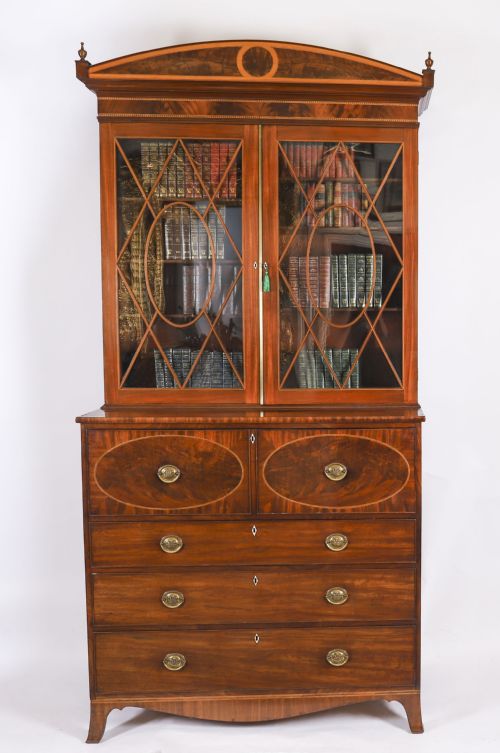


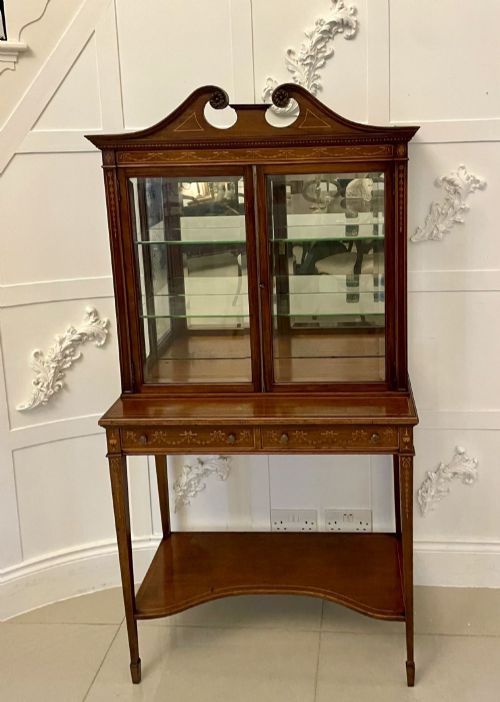
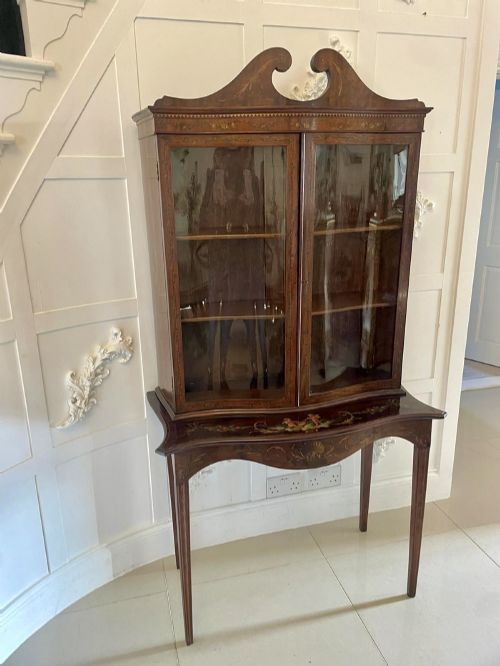
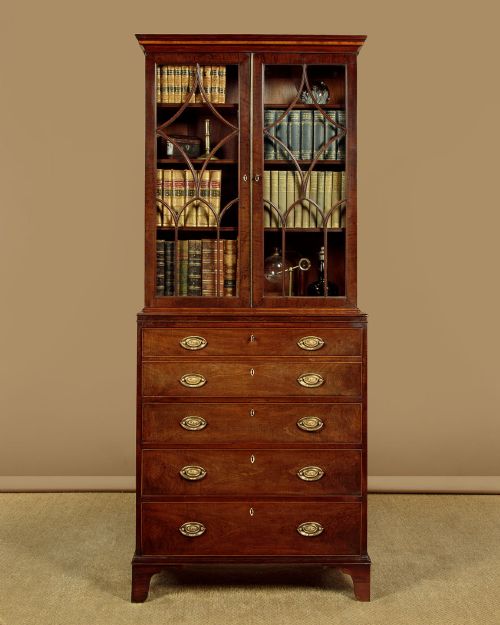
Brown Mahogany Glazed Cabinet
A brown mahogany glazed cabinet brings warmth and structured display to a room, holding books or collections behind clear glass.
Brown Mahogany Glazed Cabinet
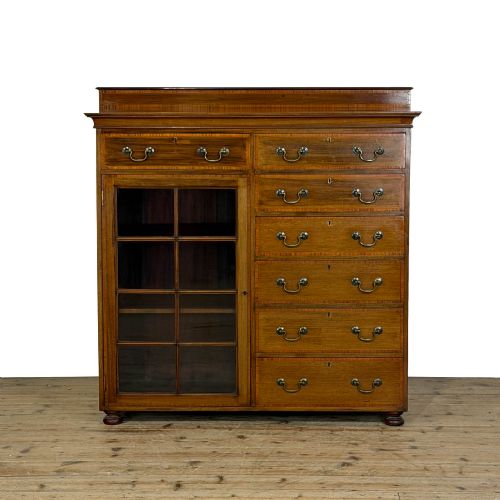
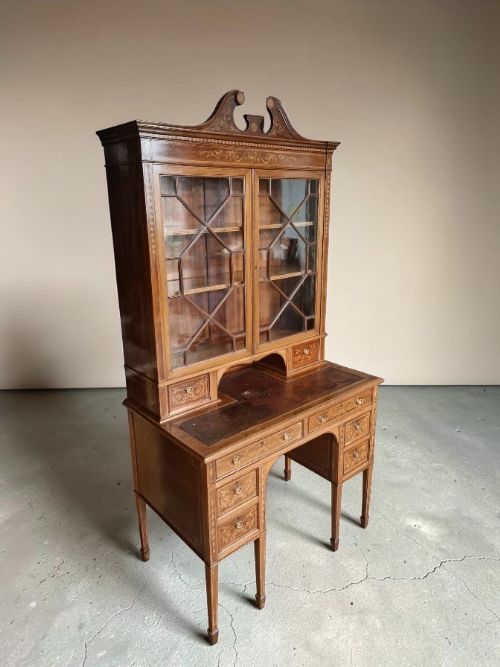
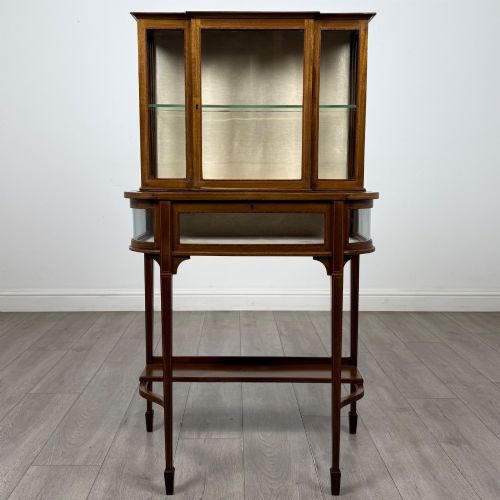
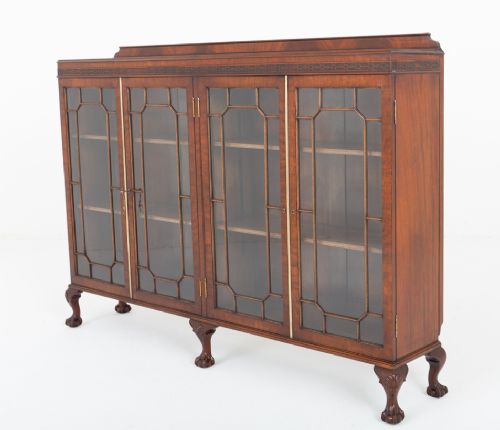
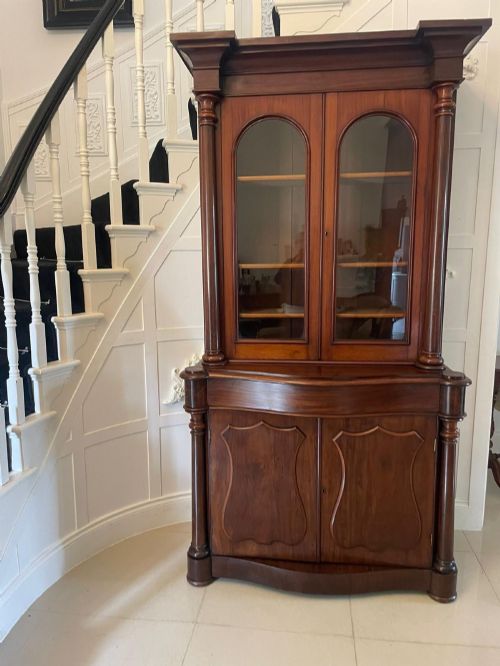
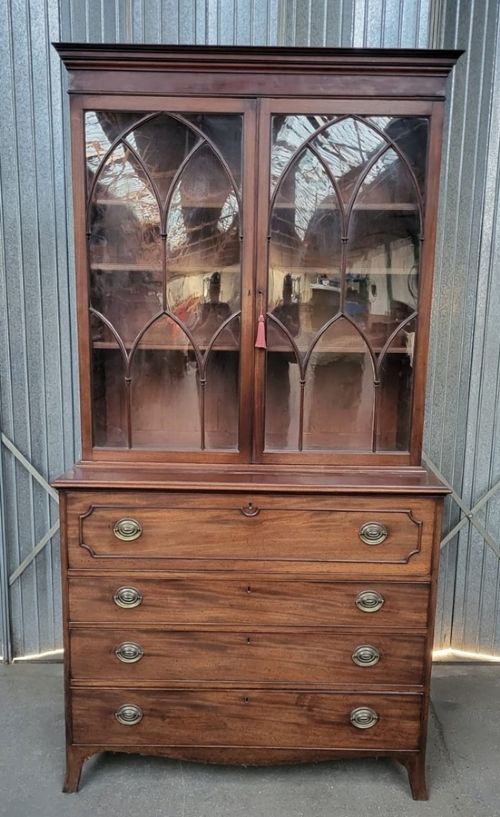
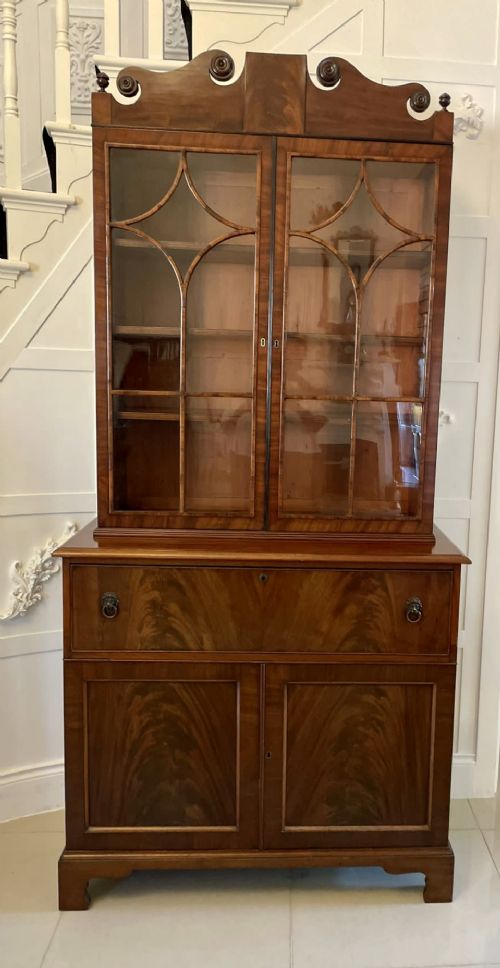
A brown mahogany glazed cabinet combines timber framing with glass panels, appearing across George III, Victorian, Edwardian, and Regency periods. These pieces serve as bookcases, display cabinets, corner cupboards, and secretaire bookcases.
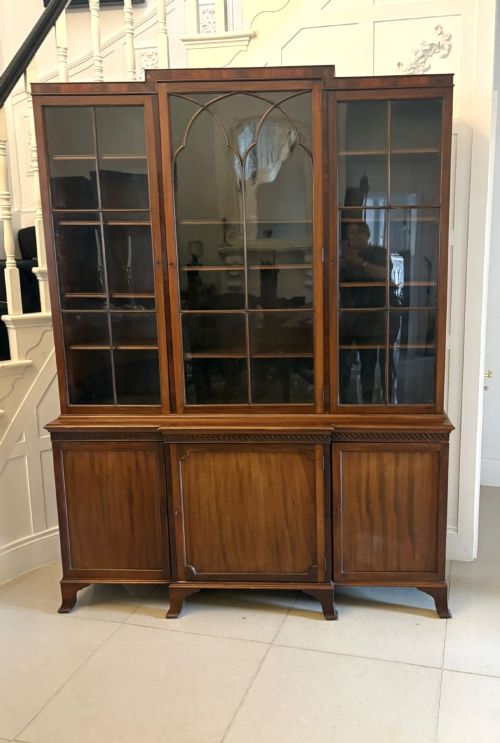
The most common versions met here span the Victorian and Edwardian eras, often featuring glazed upper doors above lower wooden cupboards or drawers. Tall breakfront bookcases and compact corner cabinets both appear regularly.
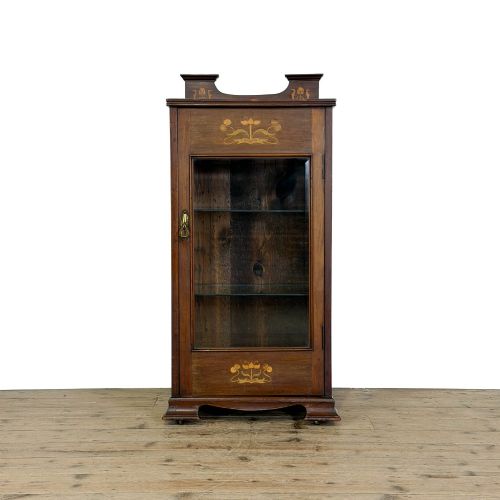
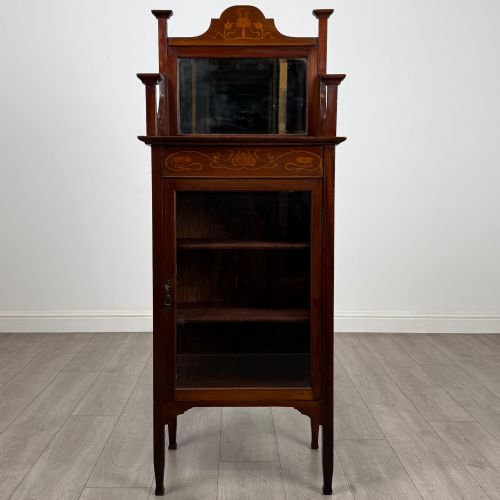
Makers utilised rich timber varieties, incorporating flame mahogany, satinwood inlay, and brass hardware. Certain examples feature specialised interiors like adjustable shelves or drop-front writing sections.
Distinguishing Quality and Craft
Timber selection governs the visual depth of a piece, separating figured flame veneers and crisp marquetry from plain grain. The precision of the inlay work and the symmetry of the wood grain across doors indicate higher workshop standards.
Joinery execution defines the structural integrity, visible in tightly fitted dovetail drawers and robust internal framing. Original glass panes, intact brass hardware, and well-balanced door alignment contribute to overall desirability.
Proportion and decorative restraint distinguish finer Georgian and Regency examples from later revival pieces. Details such as carved astragal bars or painted interior decoration elevate specific items above standard utility furniture.
Materials recorded across current items include brass, satinwood inlay, mirror glass, and flame mahogany.
Gillows·Globe Wernicke·Edwards and Roberts
The Brown Mahogany Glazed Cabinet Glossary
- Secretaire bookcase
- A cabinet featuring a pull-down writing drawer with internal compartments concealed beneath upper glazed shelves. This form provides a compact desk space within a tall storage unit.
- Astragal glazed
- Glass doors divided into smaller panes by narrow wooden mouldings. These intersecting bars create geometric or curving patterns across the front of the cabinet.
- Breakfront
- A large cabinet design where the central section projects forward from the flanking wings. This architectural arrangement adds visual depth to library bookcases.
- Flame mahogany
- Timber veneer cut from the fork of the tree where branches meet, producing a distinctive flickering flame pattern. Cabinet makers reserved this highly figured wood for prominent door panels.
- Satinwood inlay
- Contrasting pale yellowish wood inserted into recessed channels within the darker mahogany surface. This decorative technique defines borders and motifs on Edwardian and Sheraton Revival pieces.
Brown Mahogany Glazed Cabinet: Frequently Asked Questions
What is a secretaire bookcase?
A secretaire bookcase combines a bookshelf with a built-in desk by incorporating a drop-front writing drawer. The fold-down panel reveals small pigeonholes and letter drawers.
Below this writing surface, the cabinet usually provides enclosed wooden cupboards or additional drawers for storage.
How do I date a mahogany cabinet?
Dating relies on stylistic clues, construction methods, and timber characteristics. Georgian pieces often display architectural cornices and fine astragal glazing bars.
Edwardian items frequently feature lighter satinwood inlay and marquetry, while Victorian examples lean towards heavier proportions and figured flame veneers.
Are the shelves adjustable?
Many library bookcases and display cabinets include adjustable wooden shelves supported by rackwork or wooden pegs. This feature allowed owners to accommodate books of varying heights.
Earlier Georgian cupboards sometimes feature fixed shelving integrated directly into the structural carcass.
Where should I place a corner cabinet?
A corner cabinet fits neatly into ninety-degree room angles, utilising dead space for display and storage. These pieces work well in dining rooms or studies to house collections of porcelain or books.
Their triangular footprint allows them to anchor an empty room corner without obstructing pathways.