


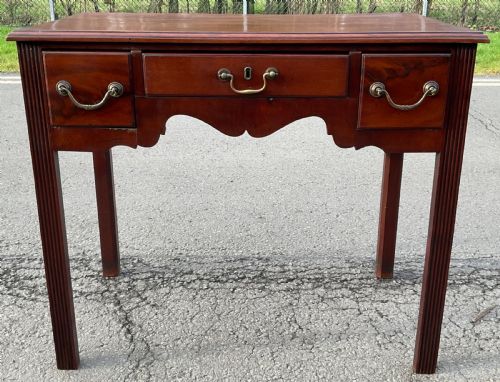


Brown Mahogany Entryway Table
These brown mahogany entryway tables bring practical surface space and traditional timber figure to an entrance hall.
Brown Mahogany Entryway Table
A brown mahogany entryway table usually takes the form of a console table, hall table, side table, or tea table designed to sit flat against a wall in a passage or reception room. These pieces emerge from periods spanning the eighteenth century through to the Edwardian era, encompassing George III, Victorian, William IV, and Edwardian design idioms.
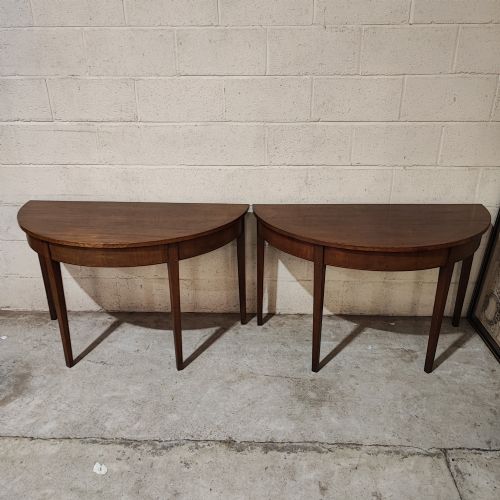
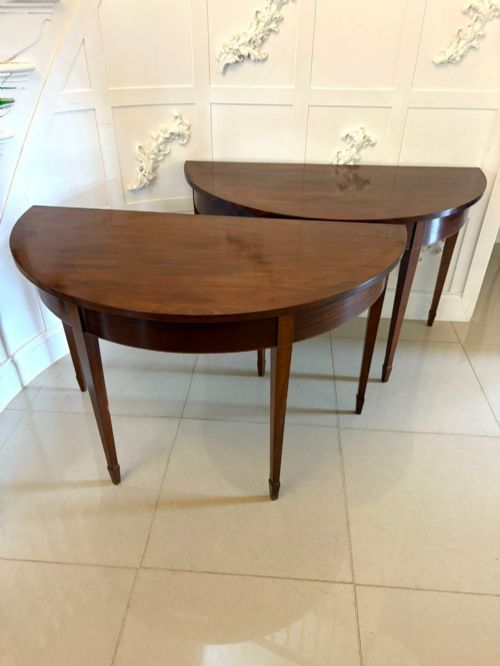
The most common formats met here are demi-lune, D-shaped, and serpentine shapes that save valuable floor space while providing a useful top surface. Mahogany forms the primary timber body across these examples, often enriched with satinwood inlay, wood inlay, or crossbanding.
Originating largely from English workshops alongside occasional continental pieces, these tables serve both decorative and functional roles in domestic interiors. Buyers encounter variations ranging from simple Georgian side tables to large marble-topped console tables with ormolu mounts.
Materials and construction methods
Makers utilised solid mahogany and figured mahogany veneers over secondary timbers to construct the structural carcasses and tabletops. Timber selection focused on grain pattern and rich natural brown colour, occasionally enhanced through French polishing.
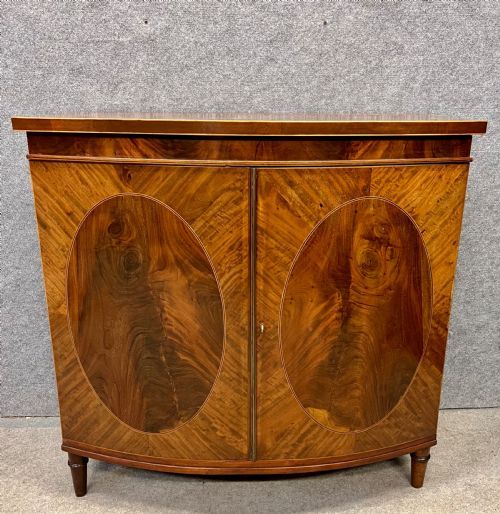
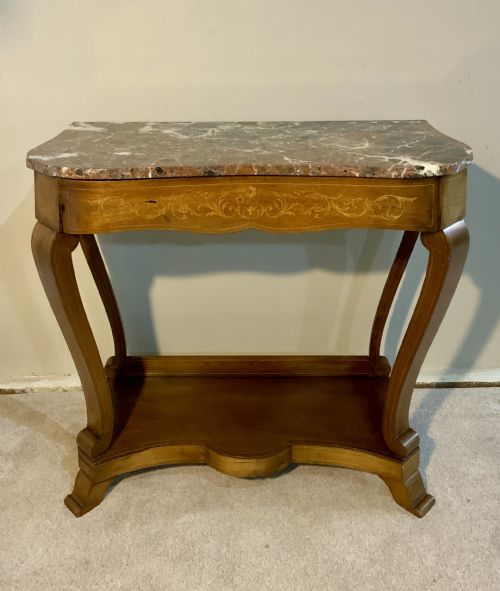
Surface decoration frequently incorporated contrasting timbers such as satinwood inlay, stringing, and crossbanding to define the edges of tabletops and friezes. Certain larger console tables introduced inset marble tops, while brass and ormolu mounts appeared on specific revival and continental pieces.
Listings feature mahogany, marble, brass, and ormolu across Georgian, Victorian, and Edwardian periods.
Distinctions in quality and execution
Quality reveals itself in the choice of figured mahogany and the precision of the cabinetmaking, particularly in the hand-cut joints and the alignment of inlay work. Superior examples display balanced proportions, crisp carving where present, and harmonious integration of secondary woods like satinwood.
The refinement of the silhouette, such as the graceful sweep of a demi-lune curve or the tightness of a D-shaped joint, separates standard utility pieces from high-grade metropolitan commissions. Original hardware, stable structural integrity, and well-preserved timber surfaces further distinguish the upper tier of surviving examples.
The Brown Mahogany Entryway Table Glossary
- Demi-lune
- Having a half-moon shape with a flat straight edge that places flush against a wall. This format dominated eighteenth-century console and card table design.
- Serpentine
- A curved line that undulates inwards and outwards, typically forming the front edge of a table top or drawer frieze. It requires advanced woodworking skill to execute cleanly.
- Crossbanding
- A border of veneer laid around the perimeter of a tabletop with the wood grain running perpendicular to the centre panel. This technique frames the primary timber.
- Ormolu
- Gilded bronze mounts applied for decorative effect on furniture surfaces. The material appears mainly on nineteenth-century continental console tables.
- Satinwood
- A hard, durable timber with a golden-yellow sheen used extensively for stringing and contrasting inlay details. It highlights the darker brown tones of mahogany.
Brown Mahogany Entryway Table: Frequently Asked Questions
Where should I place a console table?
A console table fits naturally in a hallway, entrance passage, or narrow reception room where floor space is limited. Its shallow depth allows it to stand against a wall without obstructing movement.
These pieces also function effectively beneath a mirror or painting to create a focal point upon entering a home.
How do I clean mahogany wood?
Dust mahogany surfaces regularly with a soft, dry cloth to prevent dirt accumulation. Avoid using silicone sprays or household polishes that leave residues.
Apply a traditional beeswax paste occasionally to nourish the timber and maintain the natural lustre of the finish.
What is the difference between a console and hall table?
A console table historically stood against a wall, sometimes supported by legs at the front and brackets at the back. Hall tables generally possess four independent legs and a simpler domestic utility.
Both types serve the same functional purpose in modern entrance spaces for holding keys and small objects.
How can I date an antique mahogany table?
Dating relies on examining construction methods, tool marks on secondary timbers, and the prevailing style of the period. Georgian pieces often display hand-cut dovetails and simpler structural framing.
Later Victorian and Edwardian examples incorporate machine-sawn elements and distinct revival decorative motifs.