

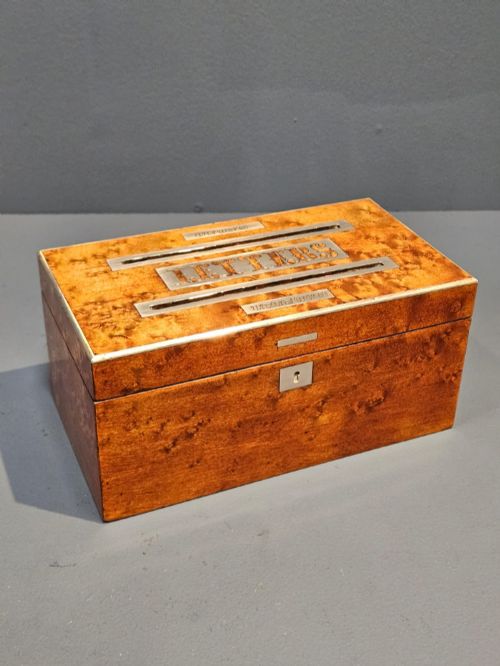
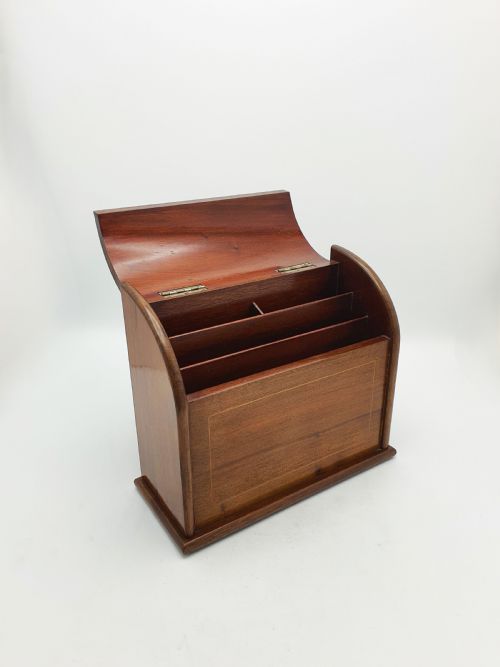


Brown Letter Box
A brown letter box organises correspondence in timber, emerging from the eighteenth, nineteenth and early twentieth centuries as a practical desk or wall accessory.
Brown Letter Box
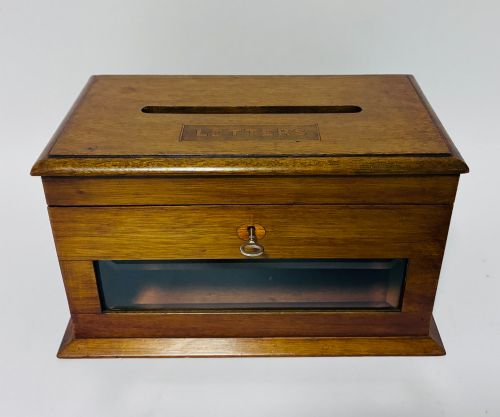
A brown letter box serves to hold correspondence, stationery and desk accessories within domestic and commercial settings. These pieces range from simple desk tidies and letter holders to elaborate stationery cabinets and country house post boxes.
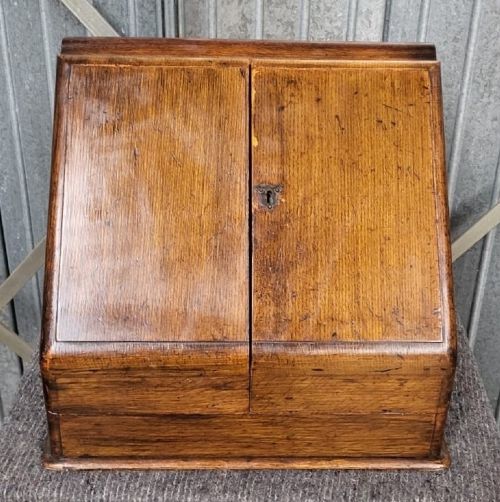
The versions met most frequently on this page belong to the Victorian and Edwardian eras, constructed in substantial timbers like oak, walnut and mahogany. They often feature compartments, hinged lids or drop fronts designed for daily desk use.
Earlier examples reach back into the Georgian and eighteenth-century periods, showcasing simpler forms alongside refined writing boxes. Makers employed boxwood inlay, brass mounts and burr veneers to elevate these functional desk pieces.
How they were made
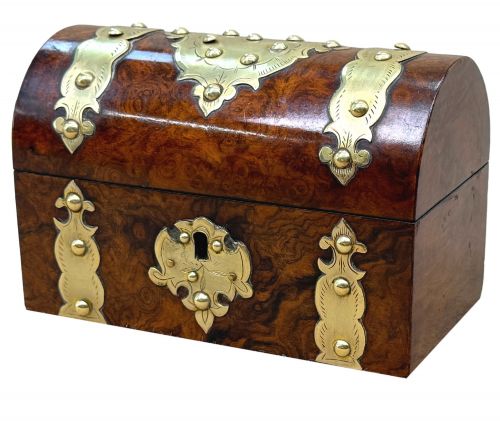
Cabinet makers utilised dense hardwoods including mahogany, oak and walnut as the primary structural foundations for these boxes. Burr walnut, burr satinwood and olivewood veneers were applied to surfaces to provide rich grain patterns.
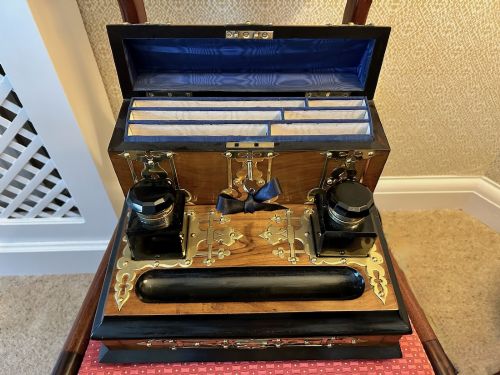
Brass mountings, hinges and handles reinforced the construction while adding decorative contrast to the timber. Inlaid details such as boxwood and Tunbridge ware mosaic work further decorated the exterior surfaces of finer boxes.
Brown Letter Box Retail Price Guide 2026
Typical asking prices for brown letter box among the pieces listed under this phrase on Sellingantiques today, from the lower quarter to the upper quarter. They describe what is for sale here now, not the wider market.
Secret drawers tucked beneath stationery compartments offer a clever hiding place for private notes.
What varies in quality
The standard of timber selection and veneer matching defines the initial impression of a box, with figured grains and burrs commanding greater attention. Finer items integrate complex internal arrangements, secret drawers and adjustable dates.
Hardware execution and decorative techniques like Tunbridge ware or marquetry inlay separate standard utility pieces from exceptional workshop output. The precision of the joinery and the integrity of the fitted interiors reflect the skill of the original maker.
Edmund Nye·Amberg
The Brown Letter Box Glossary
- Stationery box
- A desk accessory designed to hold writing paper, envelopes and correspondence neatly. These cabinets often feature sloping lids or tiered internal partitions.
- Tunbridge ware
- A form of decorative woodworking characterised by tiny mosaic tiles formed from naturally coloured woods to create pictorial designs. It appears on nineteenth-century boxes.
- Marquetry
- The art of applying pieces of veneer to a structure to form decorative patterns and pictures. Craftsmen utilised contrasting timbers to achieve detailed floral or geometric motifs.
- Writing box
- A portable desk fitted with a sloped writing surface and internal compartments for inkwells and pens. They often double as storage for letters and documents.
Brown Letter Box: Frequently Asked Questions
What is a brown letter box?
A brown letter box is a timber desktop or wall-mounted container used for sorting and storing correspondence, envelopes and writing materials.
These pieces range from simple open letter holders to enclosed cabinets with hinged lids, drop fronts and internal dividers.
How were these boxes used?
They kept desks tidy by sorting incoming and outgoing mail, stationery and notes in domestic studies and offices.
Some country house post boxes functioned as central collection points for household mail before postal deliveries.
How do I date a letter box?
Dating relies on observing the timber choice, construction methods, decorative styles and hardware associated with specific periods.
Victorian and Edwardian pieces often incorporate brass mounts, quarter-sawn oak, marquetry or fitted calendars, whereas Georgian examples show simpler lines.
Where should I place a stationery box?
These boxes suit placement on a traditional desk, writing table or sideboard where they continue their original function of holding letters.
Wall-mounted versions require secure fixing to support the weight of the timber and stored paper.