


Brown Leather Library Desk
A brown leather library desk brings substantial writing space and traditional presence into a room, uniting timber structure with a supple hide writing surface.
Brown Leather Library Desk
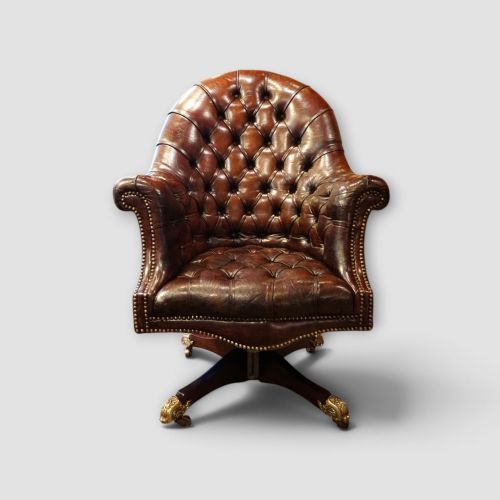
A brown leather library desk encompasses writing tables, pedestal desks, partners desks and revolving chairs designed for study and administration. These pieces emerge predominantly from the Georgian, Regency, William IV and Victorian periods, utilising sturdy timbers like mahogany, oak and walnut.
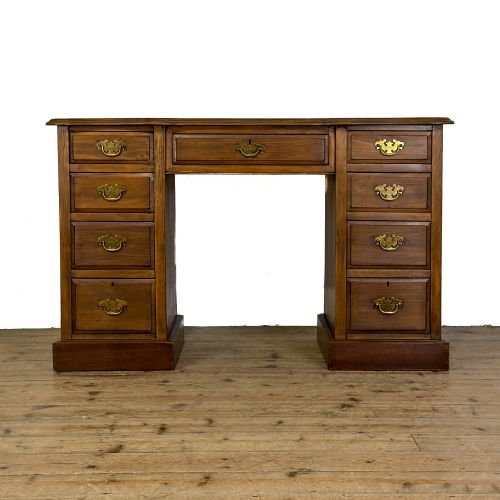
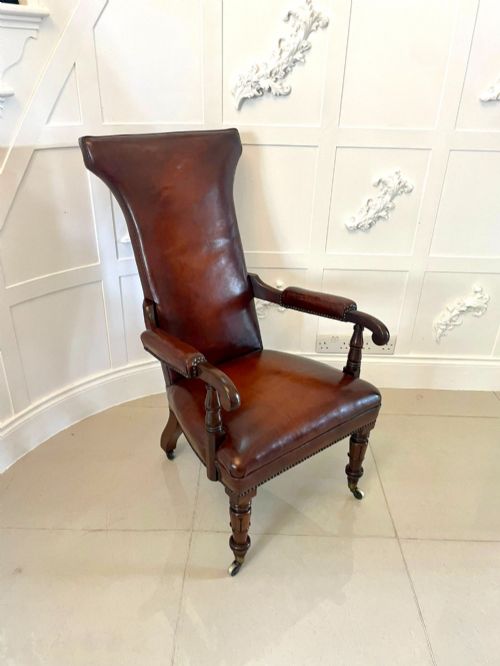
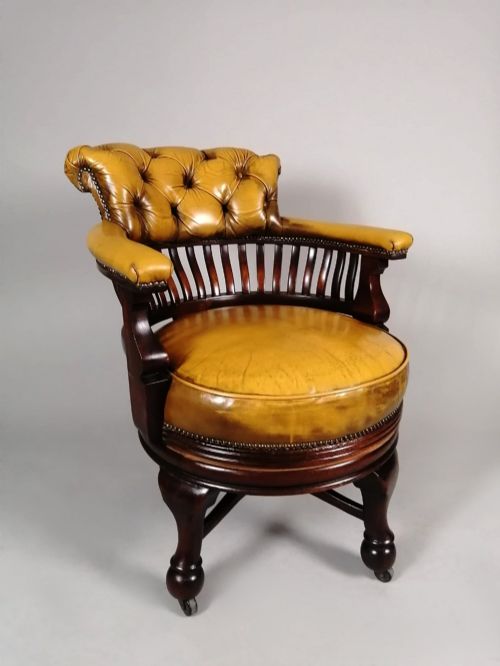
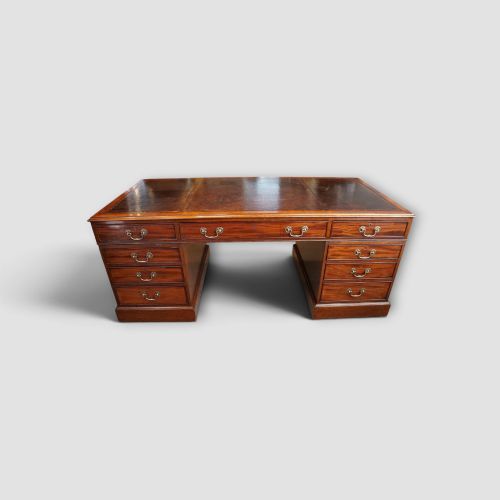
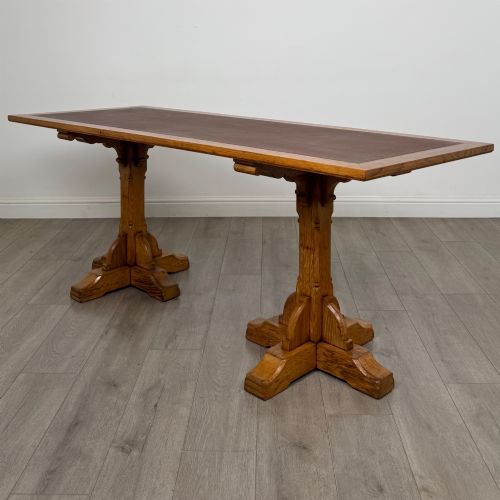
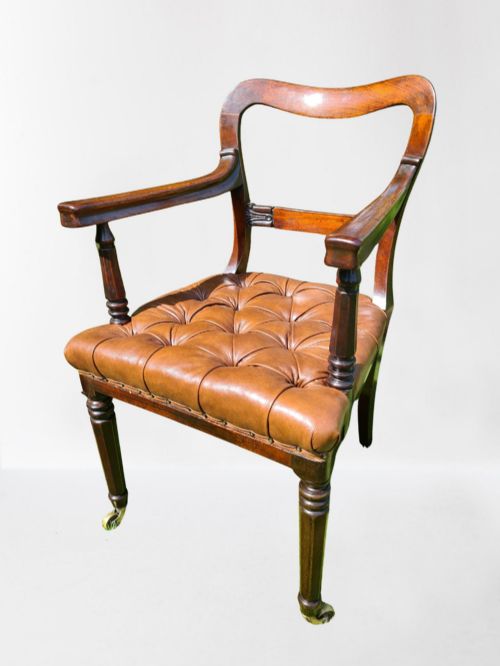
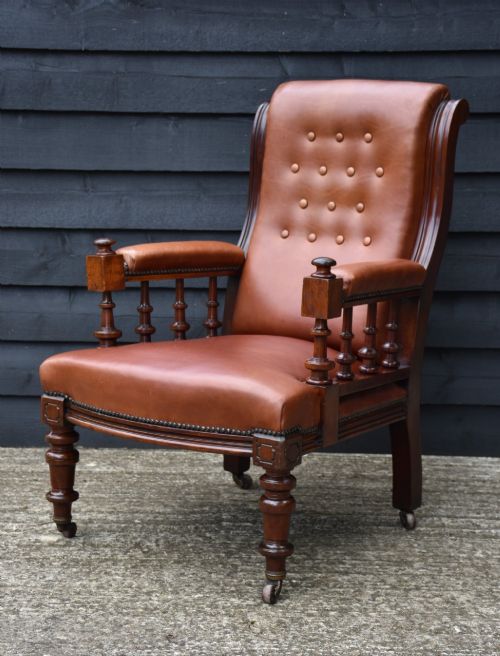
Pedestal desks and partners desks provide substantial double-sided workspace with banks of drawers, while writing tables offer simpler four-legged forms with inset leather panels. Library armchairs and desk chairs accompany these writing surfaces, upholstered in leather and constructed from mahogany or oak.
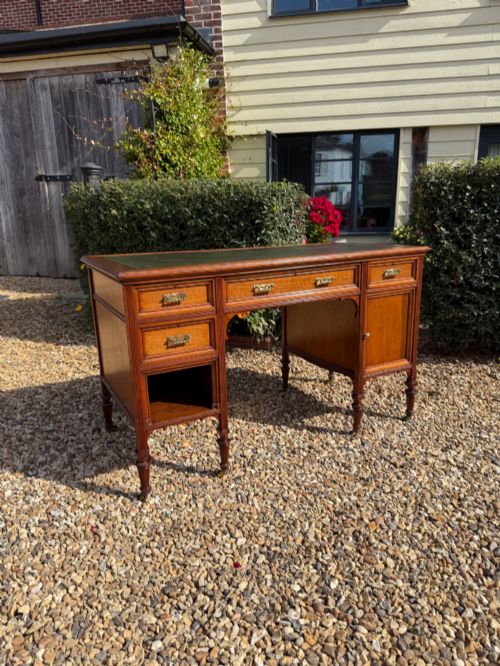
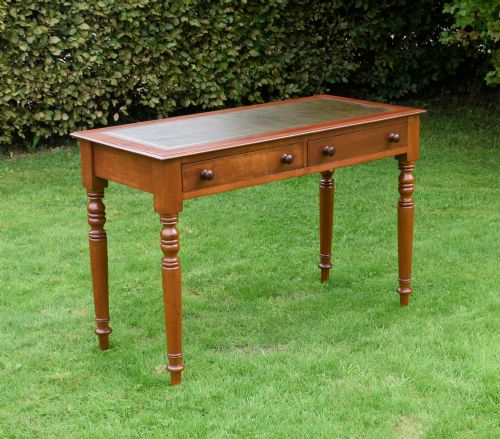
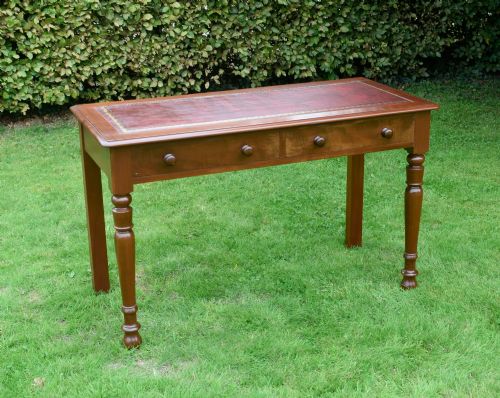
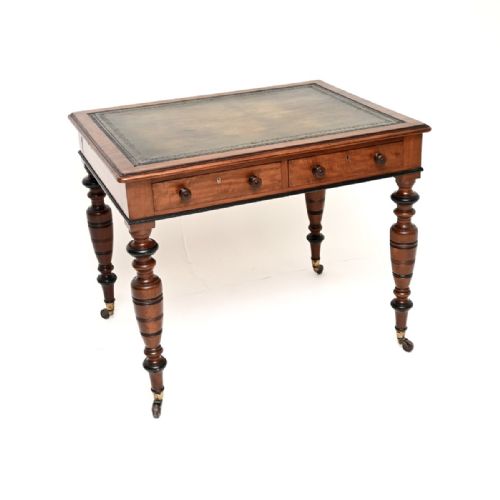
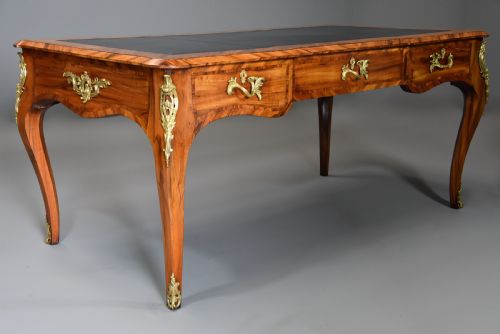
The version most commonly met on this page is the nineteenth-century Victorian or Georgian mahogany writing table or pedestal desk, featuring a gilt-tooled leather writing surface and turned or fluted legs.
Materials and Construction
Cabinetmakers constructed the foundational frames of these desks from dense hardwoods such as mahogany, oak, walnut and rosewood, employing mortise and tenon joinery for stability. Tabletops and writing surfaces received inset panels of leather, frequently decorated with gold tooling around the perimeter.
Brass fittings appear as drawer handles, castors and key escutcheons, whilst secondary materials like cane and gilt bronze supplement specific seating and decorative elements. Timber surfaces received polish or wax finishes to highlight the natural grain of the mahogany or oak.
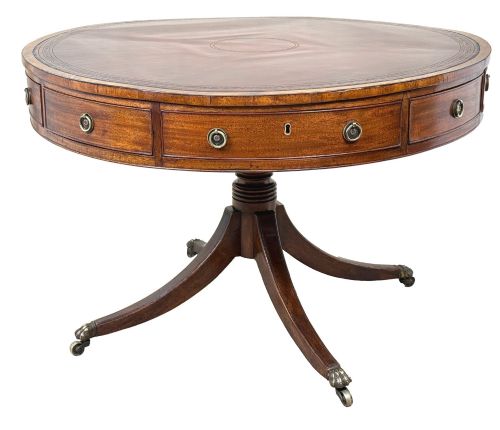
The furniture forms include pedestal desks, partners desks, drum tables and library armchairs.
Standards of Craftsmanship
Quality rests in the selection of timbers and the precision of the joinery, distinguishing heavy, solid construction from lighter secondary framing. Superior pieces exhibit carefully matched timber veneers, hand-carved details and heavy brass hardware rather than stamped metal.
The leather inset and its blind or gilt tooling indicate the grade of the piece, with thicker hand-dyed hides showing superior wear compared to thin modern replacements. Drawer construction employing hand-cut dovetails rather than machine joints marks the division between standard workshop output and fine cabinetmaking.
Trollope & sons·François Linke·Edwards & Roberts·Charles Andrea Nosotti·CH. Jeanselme & Co·Whytock & Reid·Gillows
The Brown Leather Library Desk Glossary
- Partners desk
- A large double-sided pedestal desk designed for two people to work opposite one another, featuring drawers on both sides.
- Pedestal desk
- A freestanding desk comprising a top surface resting upon two separate pedestals containing drawers.
- Blind tooling
- A decorative impression pressed into leather using heated metal tools without the application of gold leaf.
- Gilt tooling
- The process of impressing gold leaf into leather or wood using hot brass tools to create metallic patterns.
- Drum table
- A circular library table with a deep top containing drawers, supported on a central pillar and splayed legs.
Brown Leather Library Desk: Frequently Asked Questions
What is a partners desk?
A partners desk is a large freestanding writing table built with drawers and cupboards on both sides so two individuals can sit opposite each other.
These pieces were traditionally utilised in large libraries, banks and administrative offices where sharing a workspace was necessary.
How do I care for leather desk tops?
Leather writing surfaces require gentle cleaning with a damp cloth and occasional application of appropriate leather wax or balsam to prevent cracking.
Avoiding direct sunlight and excessive heat preserves the suppleness of the hide and prevents the gold tooling from fading.
How do I distinguish Georgian from Victorian desks?
Georgian desks typically display restrained classical proportions, finer timbers and understated bracket feet or straight legs.
Victorian pieces often appear heavier, utilising Pollard oak, elaborate carving, Gothic Revival motifs or bolder pedestal configurations.
Were these desks used only in libraries?
These desks served in private studies, drawing rooms, administrative offices and commercial counting houses alongside traditional libraries.
Their substantial construction and storage capacity made them suitable for any room dedicated to correspondence and document storage.