


Brown Ladderback Chairs
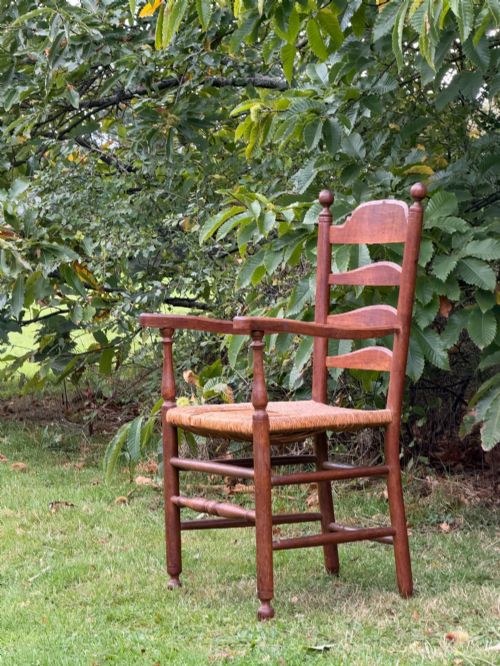
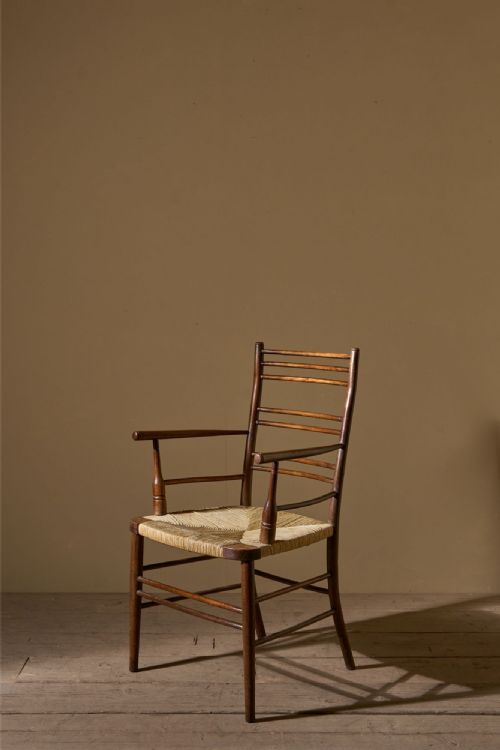
Brown ladderback chairs are traditional country seating defined by horizontal slats and rush or woven seats, chosen for honest utility and enduring domestic warmth.
Brown Ladderback Chairs
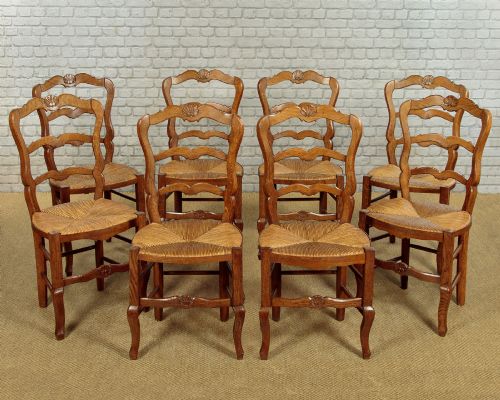
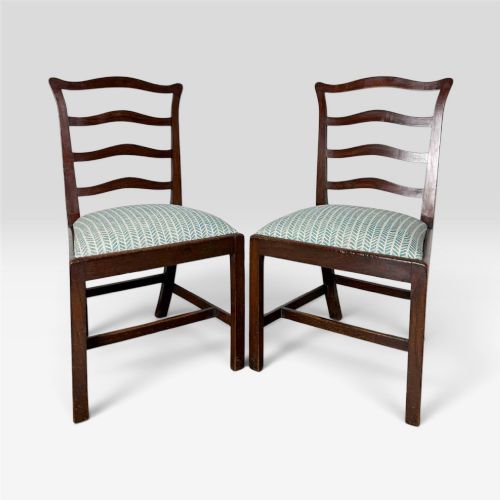
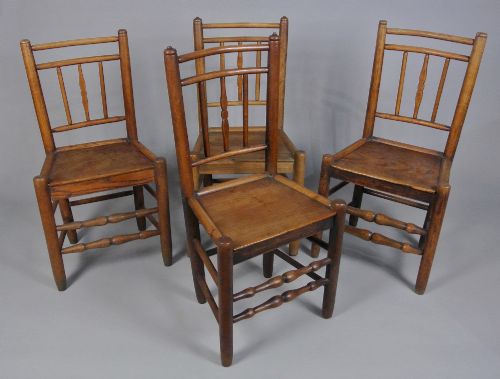
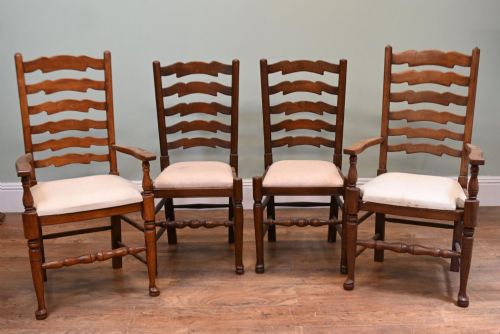
When browsing brown ladderback chairs, buyers encounter sturdy country seating originating across the eighteenth, nineteenth, and early twentieth centuries. These pieces appear as single side chairs, carvers, rocking chairs, and large dining sets intended for everyday domestic use.
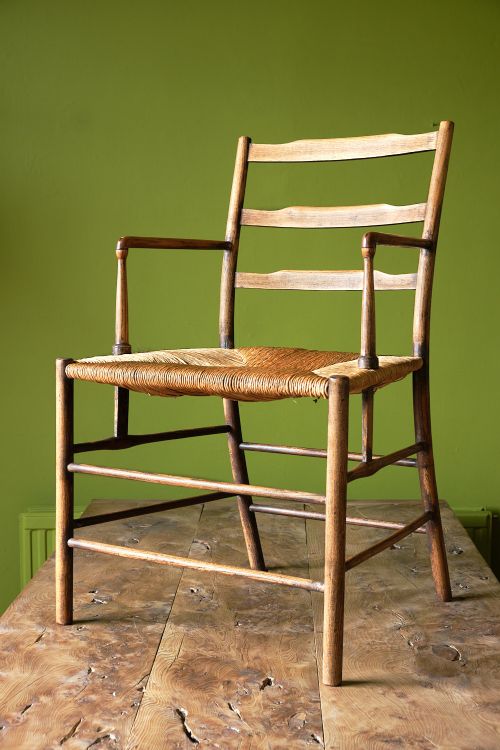
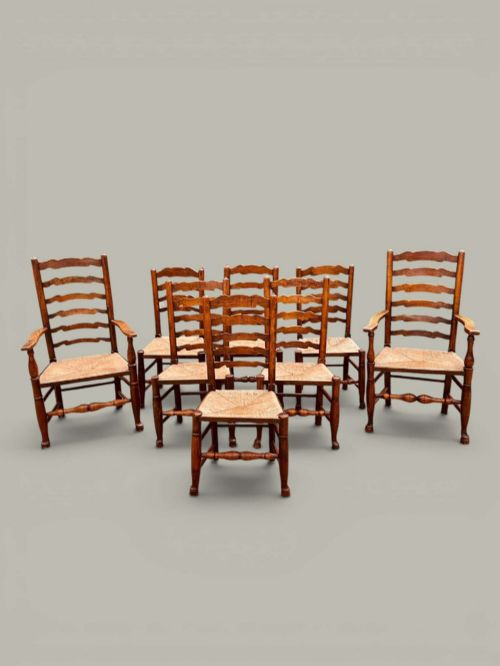
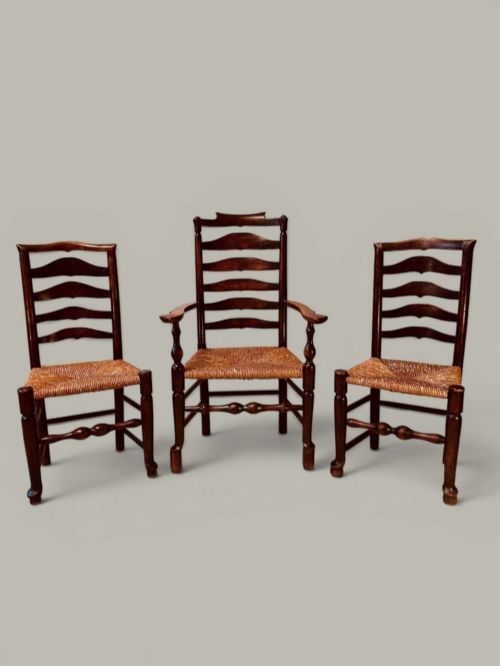
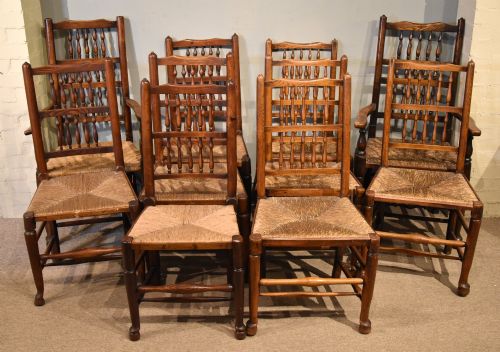
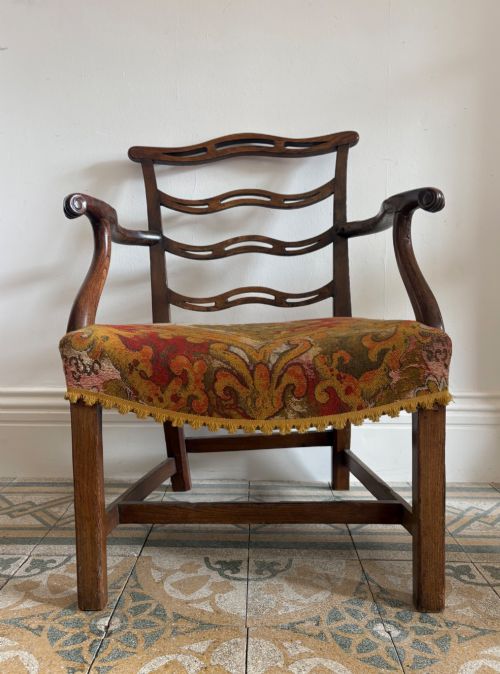
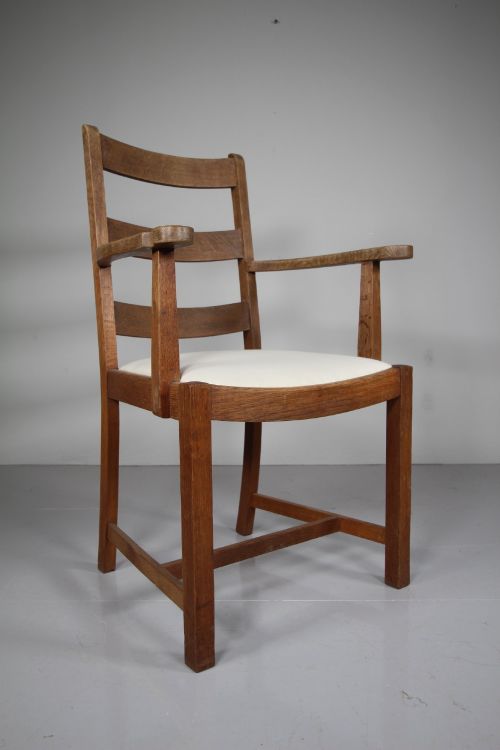
The selection ranges from regional English vernacular forms in ash and oak to French provincial and Arts and Crafts interpretations. Regional variations such as Cheshire, Lancashire, and Dales chairs frequently turn up alongside Georgian mahogany examples.
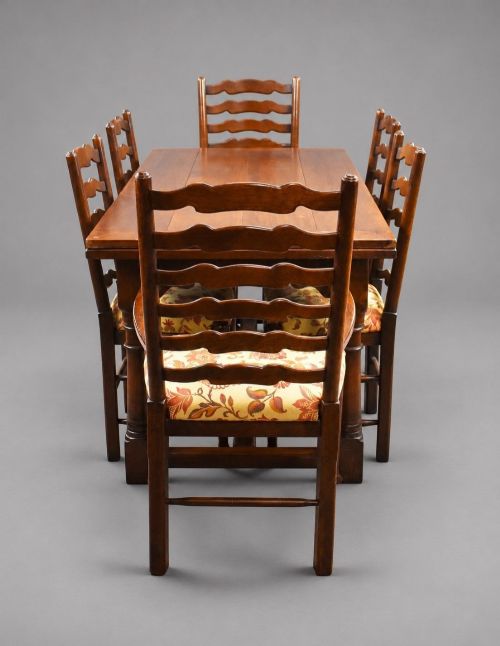
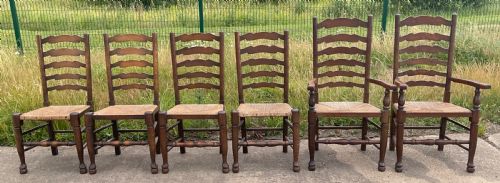
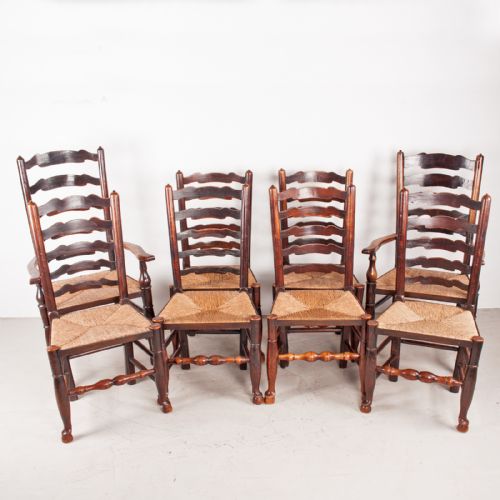
Dining chairs and open armchairs dominate the available options, often found in matched sets or smaller pairs. Buyers also locate specialist forms including high chairs, child seats, and settees built within the same ladderback tradition.
Materials and construction
Makers utilised native timbers including oak, elm, ash, and beech for the rigid frames, turning spindles and shaping horizontal back slats by hand. Mahogany also appears in formal eighteenth and nineteenth-century interpretations.
Seats commonly utilise natural rush or plaited straw, known in Irish pieces as súgán, woven tightly around the seat rails to provide resilient support. Fabric and tapestry inserts occur on select formal dining chairs and armchairs.
Brown Ladderback Chairs Retail Price Guide 2026
Typical asking prices for brown ladderback chairs among the pieces listed under this phrase on Sellingantiques today, from the lower quarter to the upper quarter. They describe what is for sale here now, not the wider market.
The selection spans Georgian, Victorian, Edwardian, Arts and Crafts, and twentieth-century periods.
Judging quality in ladderback seating
Quality rests upon the integrity of the timber frame, the tightness of the joinery, and the condition of the woven rush. Original surface patination on woods like oak and ash elevates a piece above later refinished examples.
The slenderness and graduation of the turned rungs and horizontal ladder slats demonstrate the maker's skill. Matched sets displaying uniform timber grain and consistent wear across all chairs command greater appreciation than assembled groups.
Heals Letchworth
The Brown Ladderback Chairs Glossary
- Ladderback
- A chair style featuring a backrest composed of horizontal curved slats resembling the rungs of a ladder. These slats support the spine while sitting.
- Rush seat
- A seating surface woven from dried marsh rushes or similar natural cordage wound tightly around the chair rails. This technique creates a durable, flexible platform.
- Carver
- An armchair designed to match a set of smaller dining side chairs, usually placed at the head of a table. These often feature open arms supported by the front legs.
- Súgán
- An Irish term for twisted straw or hay rope used locally to create plaited seating surfaces on traditional chairs. This material offers a rustic texture.
- Spindle back
- A chair variation utilising numerous thin vertical turned wooden rods in the backrest instead of horizontal slats. These elements distribute back support evenly.
Brown Ladderback Chairs: Frequently Asked Questions
How do I care for a rush seat?
Keep rush seats clean by gently brushing away dust and avoiding excess moisture during cleaning.
Maintain room humidity to prevent the natural fibres from becoming brittle over time.
Were ladderbacks used for dining?
Country households utilised ladderback chairs primarily around the farmhouse kitchen or dining table.
Larger matching sets provide functional seating for family meals while retaining traditional character.
How to date an oak ladderback?
Examine the timber colour, tool marks, and construction joints to determine the period of origin.
Earlier examples display hand-turned components and pegged joints distinct from later mass-produced items.
What is a Lancashire chair?
A Lancashire chair is a regional vernacular furniture type typically built from ash or elm.
These traditional seats often incorporate multiple ladder slats and rush bottoms suited to regional domestic use.