





Brown Ladderback Armchairs
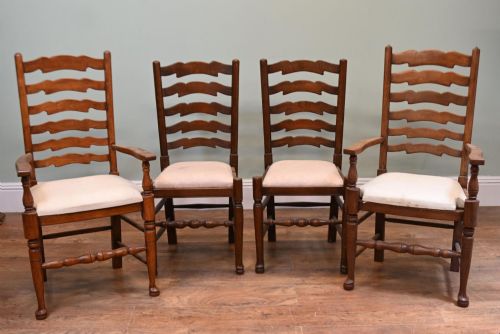
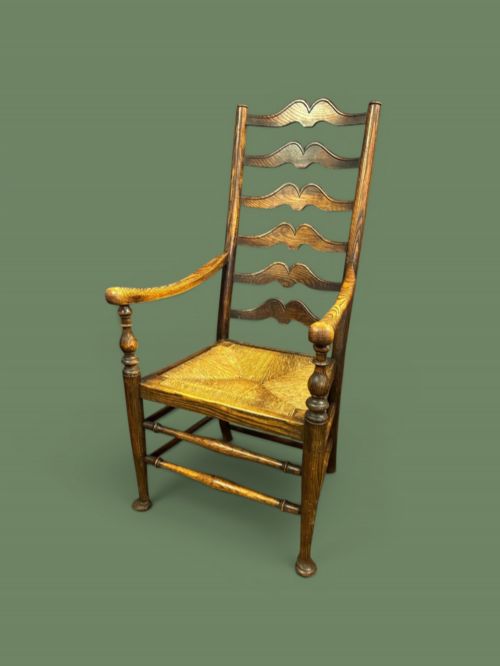
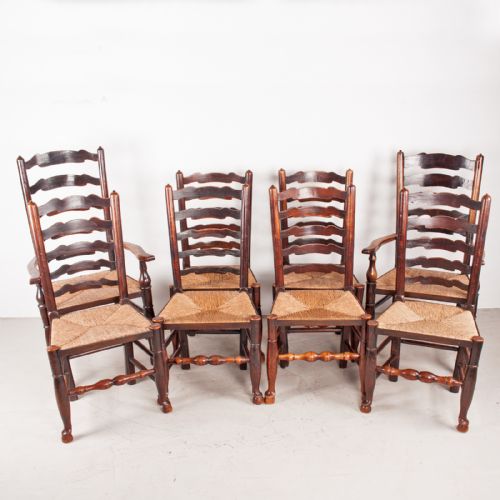
These brown ladderback armchairs combine sturdy vernacular timbers with horizontal rung backs, offering solid upright comfort for everyday seating.
Brown Ladderback Armchairs
When you search for brown ladderback armchairs, you encounter robust seating built from traditional timbers with characteristic horizontal slats between the rear uprights. These pieces span centuries of regional woodworking, predominantly emerging from English and French country traditions.
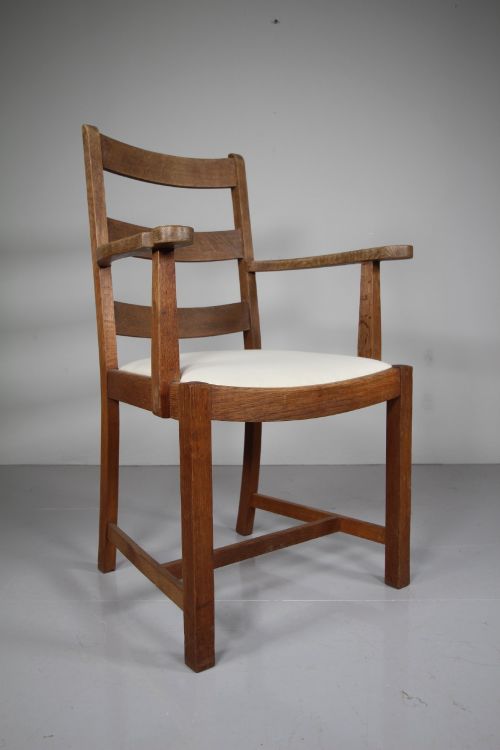
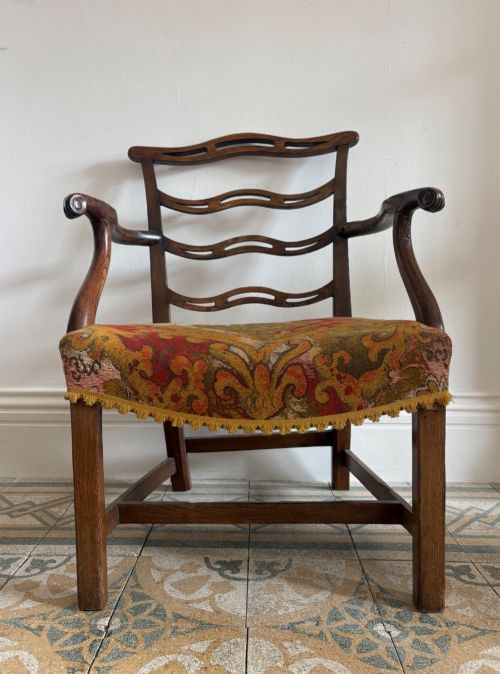
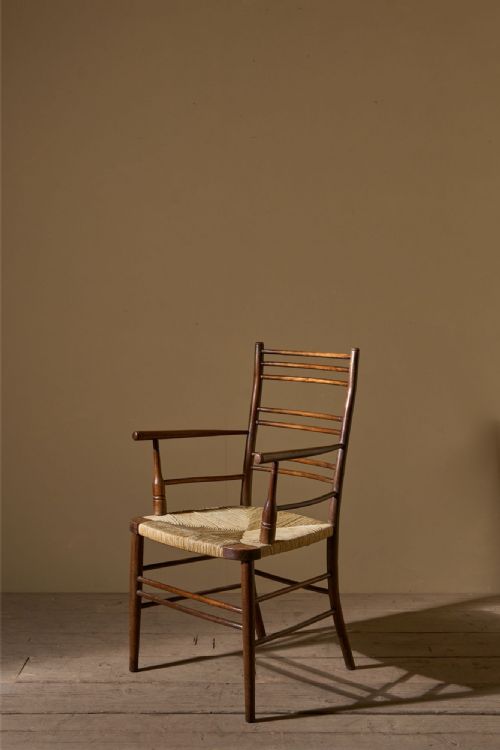
The selections here range from eighteenth-century country examples in elm and ash to later Arts and Crafts interpretations in oak. You frequently meet versions fitted with woven rush pads alongside occasional variations featuring upholstered or fabric surfaces.
Forms extend beyond single carvers into dining sets, rocking chairs, and high chairs. The overarching aesthetic prioritises honest construction and visible grain over surface ornament.
Materials and construction methods
Local timbers dictate the physical character of these seats, with oak, elm, ash, and beech providing rigid frames capable of enduring daily use. Craftsmen selected these woods for their tensile strength and resilience, turning spindles and shaping arms from green or seasoned logs.
Woven rush forms the traditional seat base in many examples, threaded tightly across the frame to create a resilient platform. Joinery relies on pegged mortise and tenon joints, ensuring stability without heavy metal hardware.
Brown Ladderback Armchairs Retail Price Guide 2026
Typical asking prices for brown ladderback armchairs among the pieces listed under this phrase on Sellingantiques today, from the lower quarter to the upper quarter. They describe what is for sale here now, not the wider market.
Listings feature timbers including oak, elm, ash, and beech, alongside rush and fabric seating across multiple centuries.
Assessing craftsmanship and proportion
Quality rests in the subtlety of the turned rungs and the tapering of the rear posts. Superior examples exhibit balanced proportions and well-executed joinery that remains tight through centuries of movement.
The integrity of the woven rush or timber seat platform marks another clear distinction. Original rush work or skilled re-weaving preserves the intended tension and comfort of the piece.
Dicon Nance St.Ives Studio
The Brown Ladderback Armchairs Glossary
- Ladderback
- A chair style defined by horizontal slats or rungs set between the vertical back posts. These members are often shaped or graduated in width.
- Rush
- Dried marsh grass woven into tight cords to form traditional flexible seats. This material provides a durable and comfortable surface.
- Carver
- A term for an armchair, typically designed to match a set of smaller dining chairs. These pieces often feature scrolling armrests.
- Vernacular
- Furniture made by local regional artisans following traditional domestic patterns rather than high-style metropolitan designs. These objects prioritise practical utility.
Brown Ladderback Armchairs: Frequently Asked Questions
What defines a ladderback armchair?
These seats feature a distinctive backrest composed of horizontal wooden slats set between two vertical uprights. The rungs are often curved to fit the spine.
Such chairs typically include supportive arms and robust wooden framing suitable for daily use.
How do I care for rush seats?
Rush requires dry conditions and occasional treatment with a damp cloth to prevent the natural fibres from becoming brittle. Avoid excessive moisture.
Keeping the woven surface clean preserves the tension and prevents premature snapping of the dried marsh grass.
Are these chairs suitable for dining?
Armchairs work well at the heads of a dining table or as individual desk chairs. Their upright stance supports active sitting.
Many examples survive as pairs or larger sets intended specifically for domestic dining rooms.
How are different periods identified?
Early pieces often display hand-turned components and heavy local hardwoods like ash and elm. Tool marks and construction methods reveal the period.
Later Victorian and Arts and Crafts examples show more standardised turning while retaining traditional regional forms.