
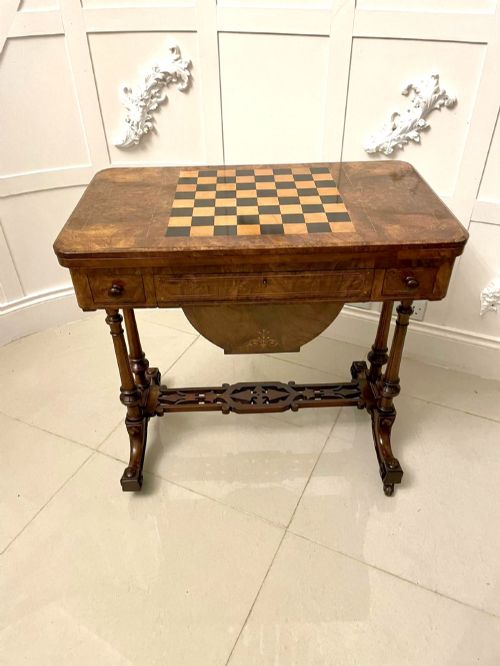
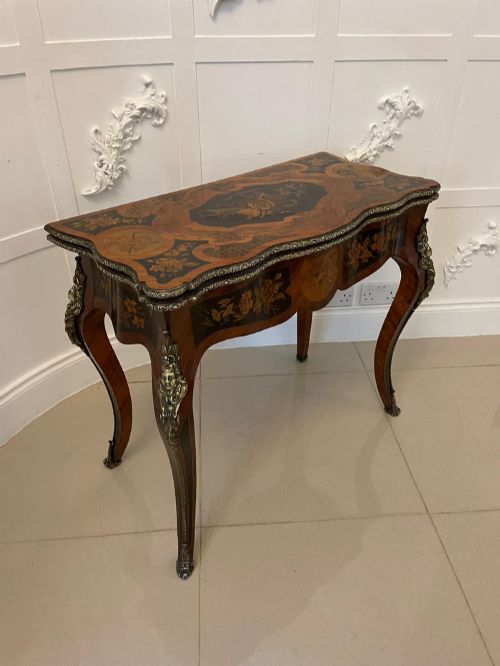


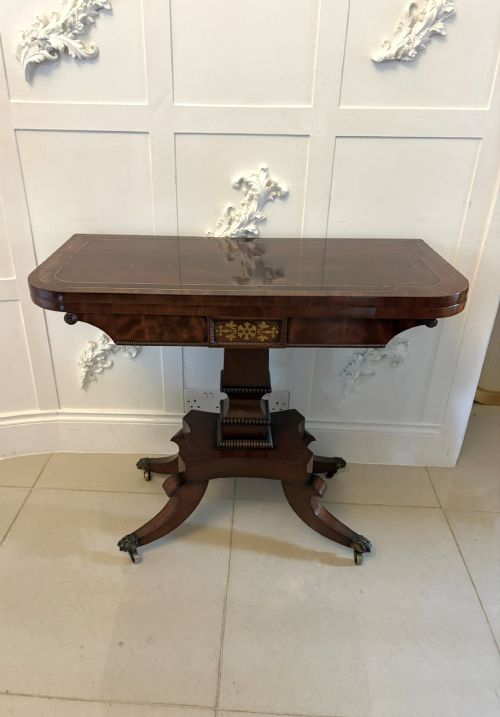
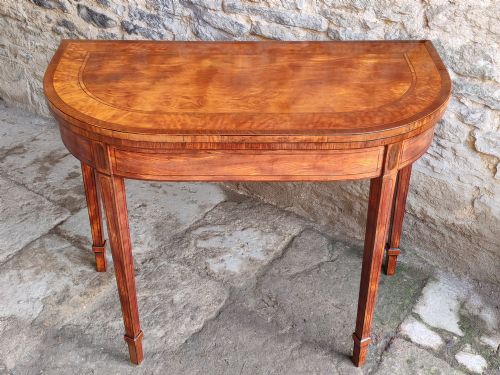


Brown Inlay Games Table
A brown inlay games table brings timber grain and marquetry together for pastimes, spanning the Georgian, Regency, and Victorian periods.
Brown Inlay Games Table
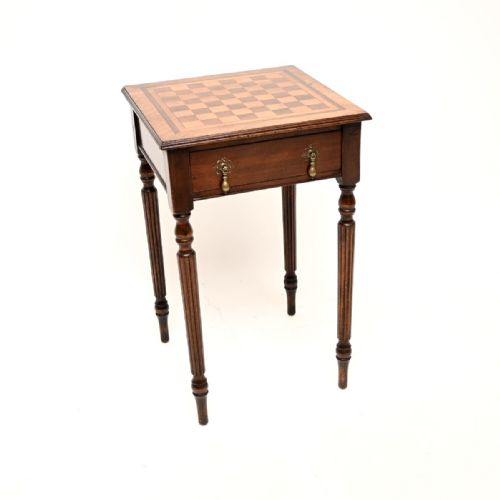
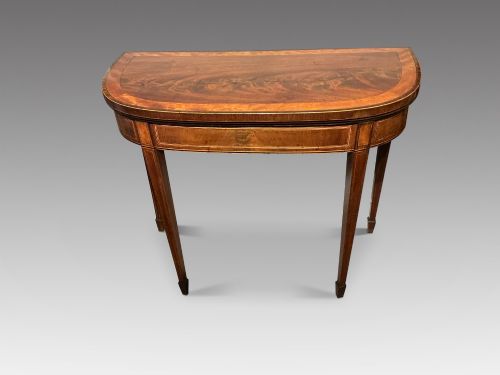
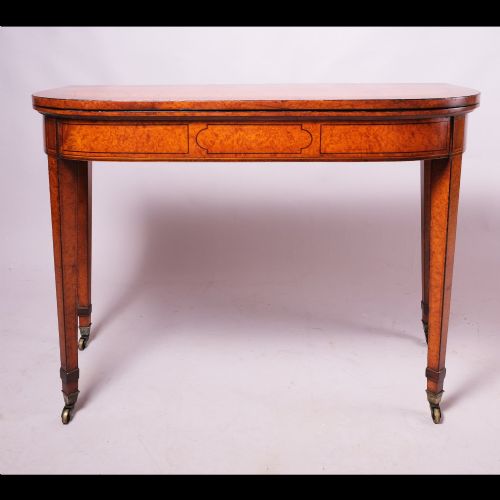
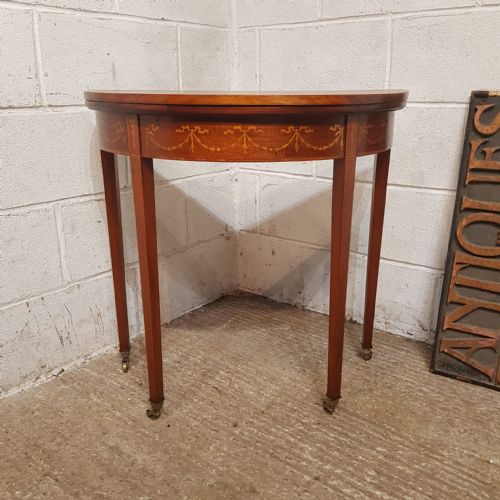
A brown inlay games table is a piece of furniture designed for leisure, featuring timber surfaces ornamented with contrasting wood details. These tables appear across multiple eras, ranging from Georgian and Regency workshops to Victorian parlours.
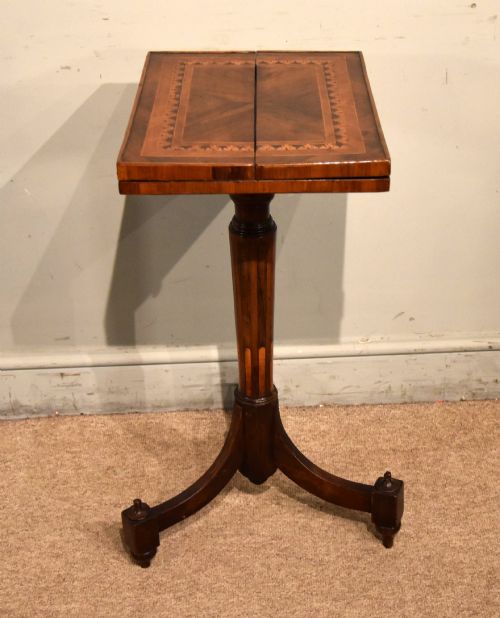
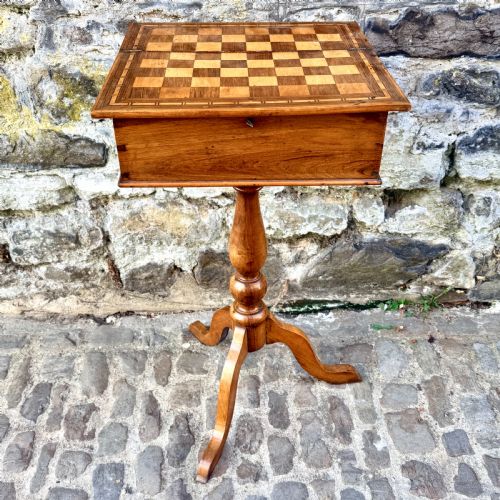
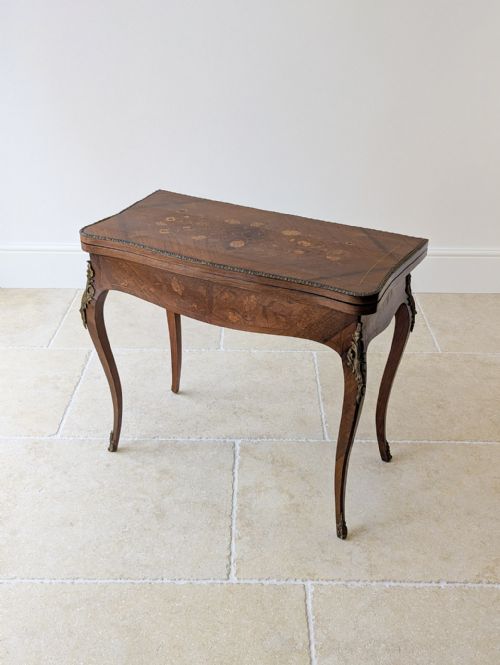
The versions most commonly met on this page include fold-over card tables, demi-lune consoles, and multi-functional tables with chess or backgammon boards incorporated into the top. Forms span from simple rectangular mahogany leaves to serpentine satinwood tops and French Louis XV style pieces.
Origins vary widely, encompassing English cabinet makers, Scottish pieces, Irish mahogany examples, and continental French workshops. Many incorporate swivel mechanisms or fitted interiors for cards and counters.
How they were made
Makers utilised solid timbers and delicate veneers such as mahogany, walnut, burr walnut, rosewood, kingwood, and satinwood over secondary construction woods. Surfaces received geometric or floral marquetry using contrasting elements like boxwood, ebony, and brass inlay.
Construction techniques focused on stability combined with transformation, using hinges, pivoting tabletops, and fold-over leaves to conceal playing surfaces when not in use.
Some tables double as sewing stations, proving that nineteenth-century pastimes included both card games and darning socks.
What varies in quality
Quality rests in the precision of the timber selection, such as highly figured mahogany or burr walnut, alongside the crispness of the brass and wood inlay. The integration of the folding mechanism and the alignment of the grain when open reveal the skill of the original workshop.
The refinement of the carving, the choice of secondary woods, and the presence of decorative mounts such as ormolu separate standard utilitarian furniture from exceptional cabinet work.
Bruce & Burns of Edinburgh·Maple & Co.
The Brown Inlay Games Table Glossary
- Demi-lune
- Half-moon shape. These tables sit flat against a wall and often unfold into a full circle for play.
- Marquetry
- Inlaid patterns of wood veneer. Artisans arrange different coloured timbers to create floral or geometric pictures on the tabletop.
- Fold-over
- A hinged tabletop design. One half turns or folds out to reveal a baize-lined or inlaid playing surface.
- Ormolu
- Gilt bronze mounts applied to furniture. This technique appears frequently on French revival pieces.
- Specimen wood
- Various distinct timber types collected for their colour and grain. These appear within tabletop borders and geometric panels.
Brown Inlay Games Table: Frequently Asked Questions
What is a brown inlay games table used for?
These pieces served households for card games, chess, and backgammon. Their dual-purpose tops allowed them to function as console or side tables during daily life.
When guests arrived, the leaves unfolded to reveal integrated playing surfaces and storage wells for counters.
How do I tell a Georgian table from a Victorian one?
Georgian examples often rely on restrained mahogany construction with subtle stringing and straight lines. Victorian pieces frequently introduce burr walnut, heavier carving, and elaborate marquetry.
Stylistic revivals during the Victorian era also borrowed heavily from French Louis styles.
Are these tables sturdy enough for daily use?
Solid timber frames and traditional joinery make these pieces resilient for regular placement in a room. Folding leaves rely on secure hinges that support light usage.
Care should be taken with pivoting mechanisms and veneered surfaces when moving the furniture.
What timbers appear most often on these tables?
Mahogany forms the foundation of many Georgian and Regency examples. Walnut and burr walnut dominate the later Victorian listings.
Satinwood, rosewood, and kingwood appear alongside boxwood and ebony for decorative inlay and border work.