
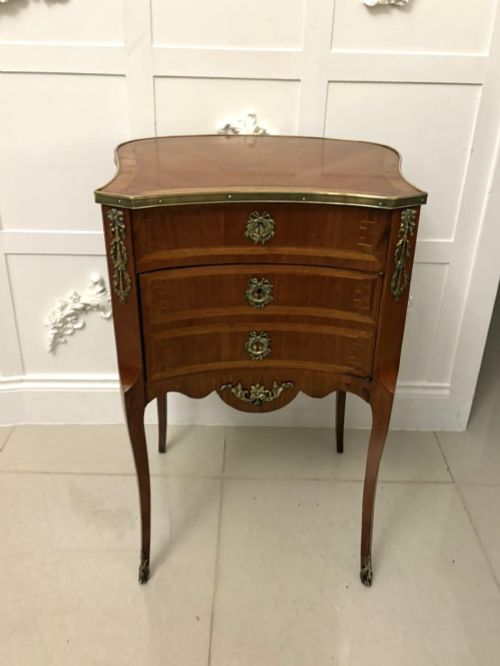


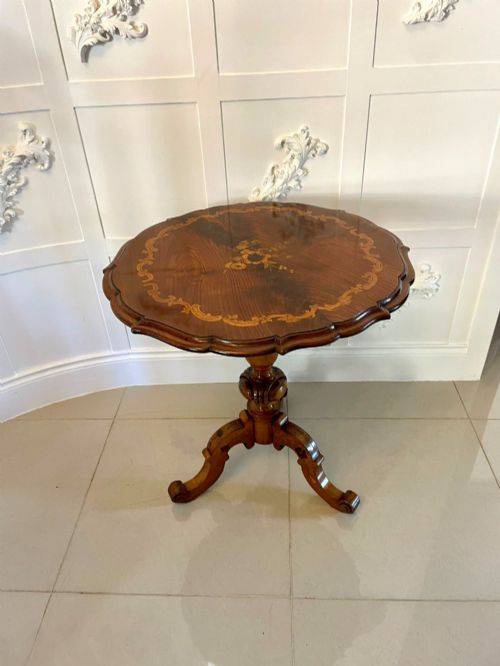
Brown Inlaid Accent Table
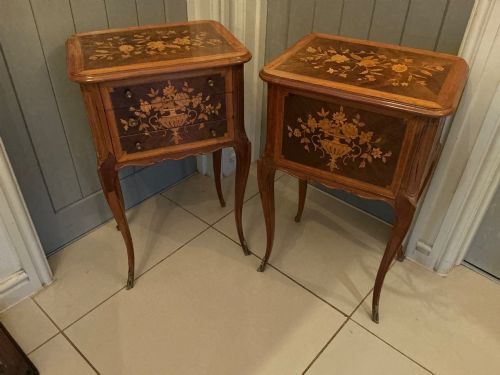
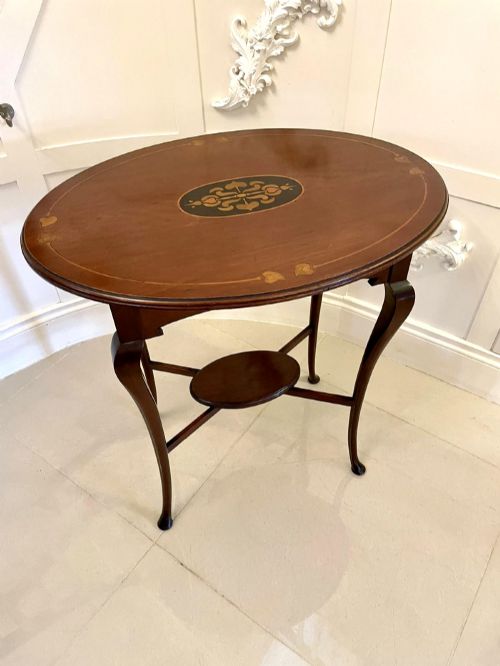
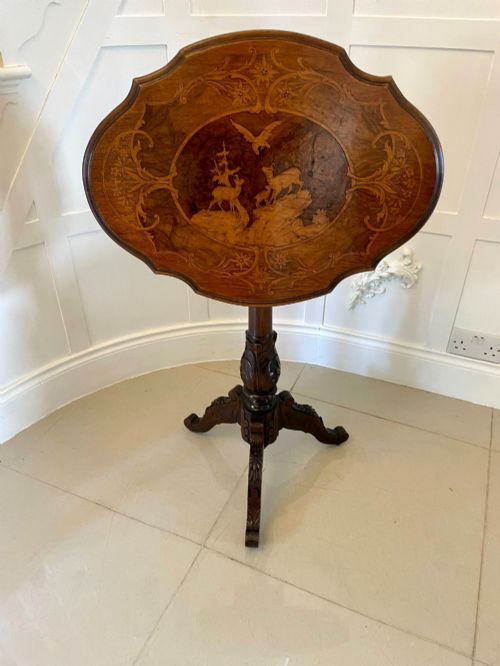
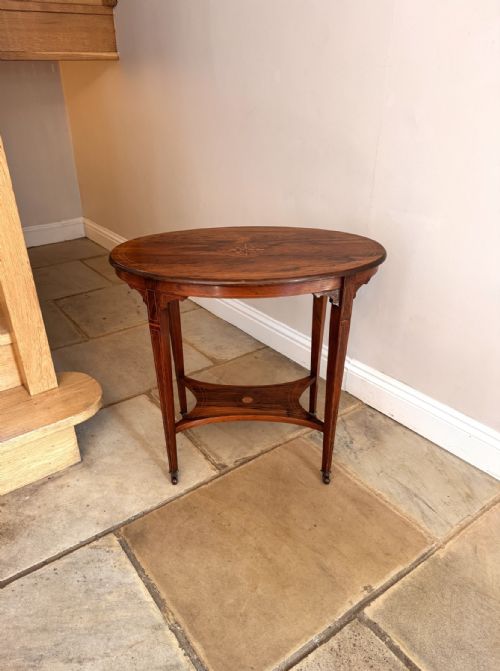
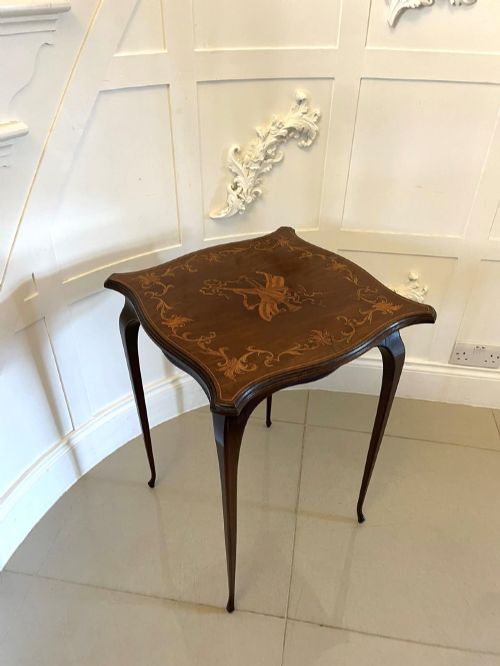
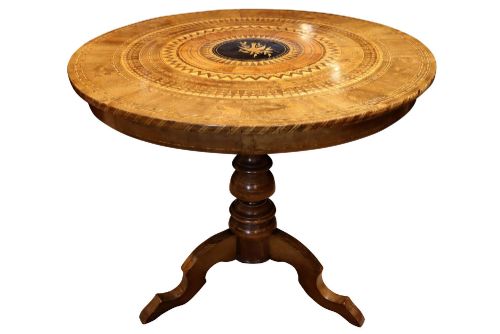
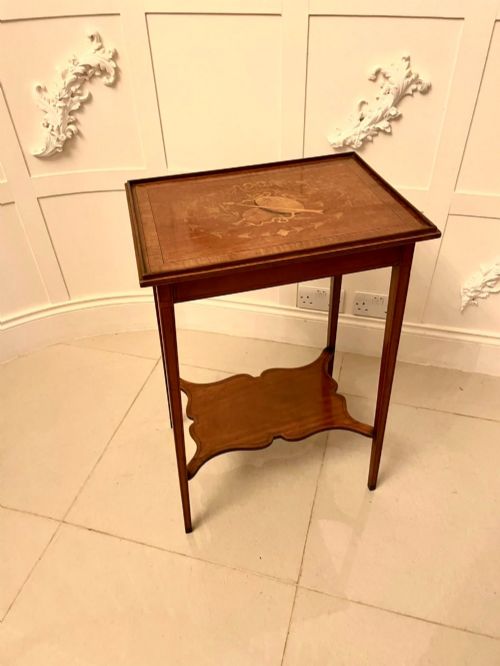
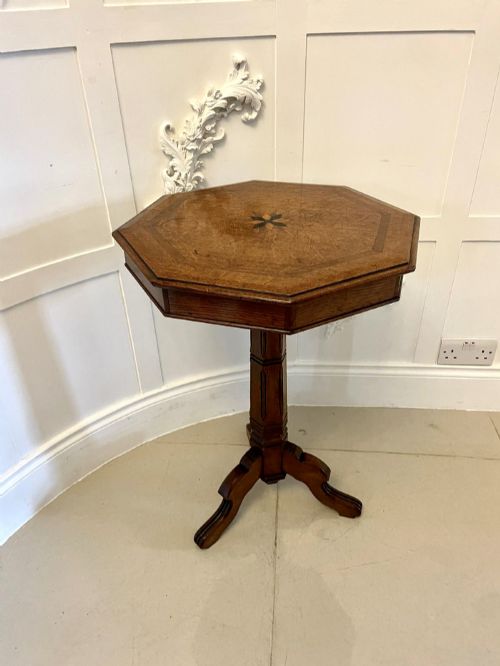
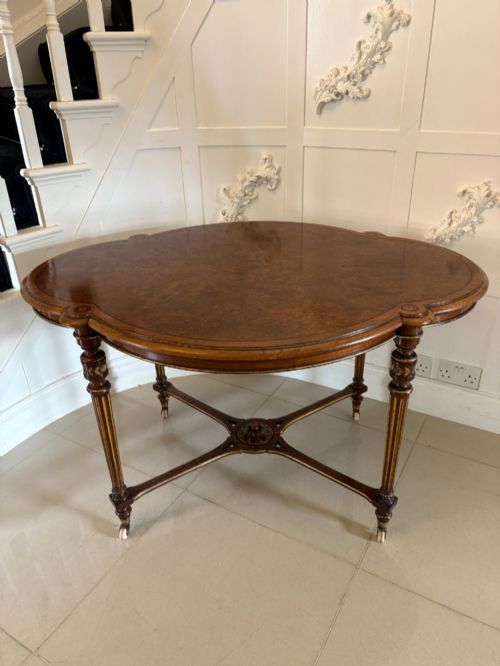
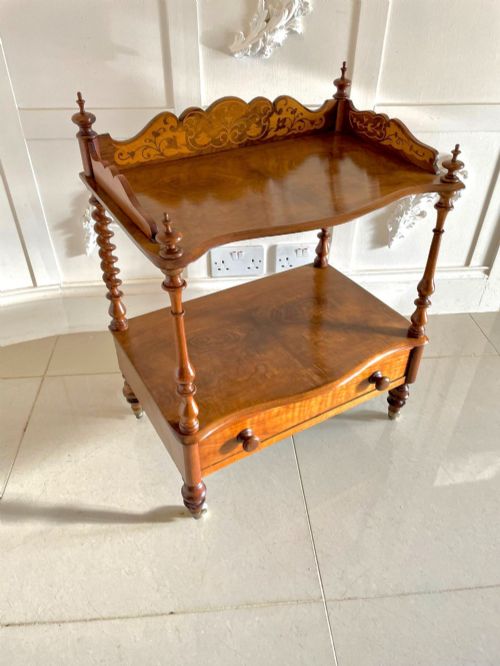
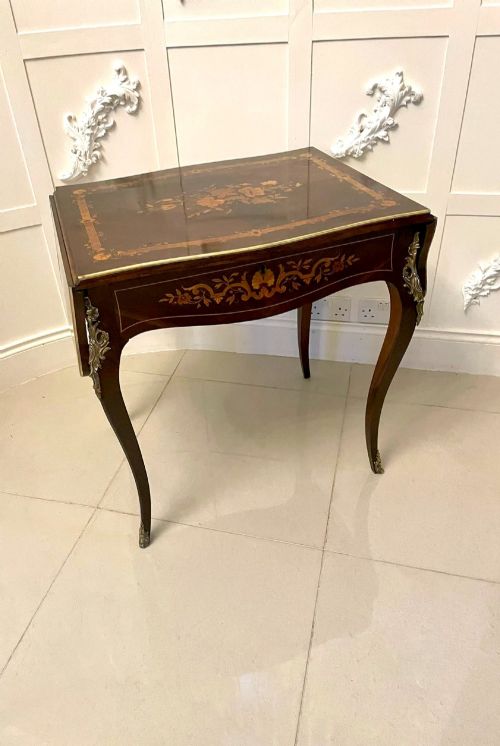
These brown inlaid accent table pieces combine rich timbers and intricate marquetry for domestic utility, offering practical surfaces for lamps or papers.
Brown Inlaid Accent Table
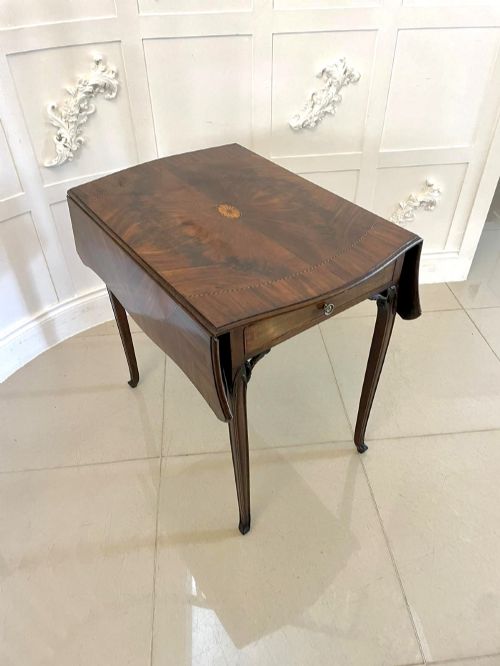
A brown inlaid accent table brings decorative woodwork and functional surface area to a room, appearing in forms such as lamp tables, occasional tables, and Pembroke tables. These pieces span the eighteenth, nineteenth, and early twentieth centuries, reflecting changing domestic habits across Georgian, Victorian, and Edwardian eras.
The version most commonly met on this page is the mahogany or burr walnut lamp table, often oval or rectangular, featuring contrasting stringing and floral marquetry. Makers constructed these items for drawing rooms and parlours, where smaller movable surfaces suited card games, tea, or displaying ornamental objects.
How they were made
Cabinetmakers utilised dense foundational timbers like mahogany, walnut, and kingwood, building carcases that could support elaborate surface decoration. They applied finely sliced veneers over these solid woods, creating stable panels less prone to warping than solid boards.
Contrasting woods such as satinwood, boxwood, and brass formed intricate marquetry and linear stringing. Artisans cut these lighter materials to fit precisely into recesses channelled into the darker ground veneer before polishing the entire surface to a smooth finish.
Forms range from nest of tables and Pembroke tables to occasional side tables and card tables with intricate boxwood inlay.
What varies in quality
The refinement of the marquetry and the choice of timber establish the tier of a piece, with figured burr walnut and exhibition-grade satinwood commanding higher regard than plain native woods. Fine examples display meticulous precision in the cutting of floral motifs and geometric stringing, leaving minimal filler between the inlaid elements and the surrounding veneer.
Structural integrity and the quality of secondary timbers used in interior framing also divide standard production from exceptional work. Pieces retaining original patination, balanced proportions, and careful hand-cut dovetails in any small drawers demonstrate superior workshop origin.
Liberty & Co.·William Birch
The Brown Inlaid Accent Table Glossary
- Marquetry
- Decorative patterns formed by fitting contrasting veneers into a prepared wood ground to create pictorial or geometric designs. This technique transforms a plain tabletop into a detailed canvas of varied timbers.
- Stringing
- Thin, narrow strips of contrasting wood inlaid into channels cut into the surface of furniture to create linear borders. It provides delicate outlines for tabletops and drawer fronts.
- Pembroke table
- A small rectangular table with hinged drop flaps on opposing sides, often fitted with a single drawer. Introduced in the eighteenth century, it serves as a versatile space-saving furniture form.
- Satinwood
- A lustrous, hard timber of yellowish-orange colour imported from the West Indies and Ceylon, frequently employed for veneers and inlay. Its reflective grain catches the light effectively on Edwardian surfaces.
- Burr walnut
- Wood taken from a growth on the walnut tree, prized for its swirling, highly figured grain patterns. Cabinetmakers sliced it into thin veneers to cover prominent tabletops.
Brown Inlaid Accent Table: Frequently Asked Questions
What is a brown inlaid accent table used for?
These tables provide compact surface space for lighting, books, and decorative objects within living rooms and studies. Their modest scale allows them to fit easily beside seating arrangements.
Historically, specific variants accommodated card games, sewing materials, or tea service, adapting to the social routines of Victorian and Edwardian households.
How should I care for my table?
Protect the polished wooden surfaces by keeping the table away from direct sunlight and sudden temperature changes, which can dry out old veneers. Use coasters and mats to prevent moisture rings and heat marks.
Apply a traditional beeswax polish occasionally to nourish the timber and maintain the natural lustre of the historical finish without building up heavy residue.
What is the difference between a lamp table and a centre table?
A lamp table is typically smaller and designed to stand against a wall or beside an armchair to hold a light source. Its primary function is supportive and space-saving.
A centre table is usually larger and finished on all sides so it can stand independently in the middle of a room as a decorative focal point.