

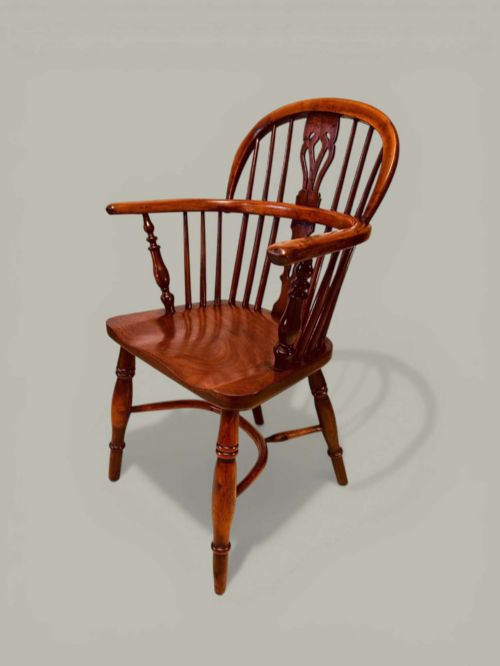
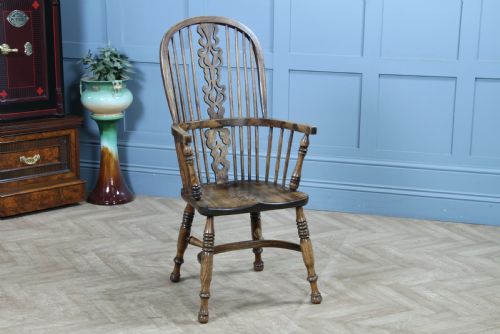
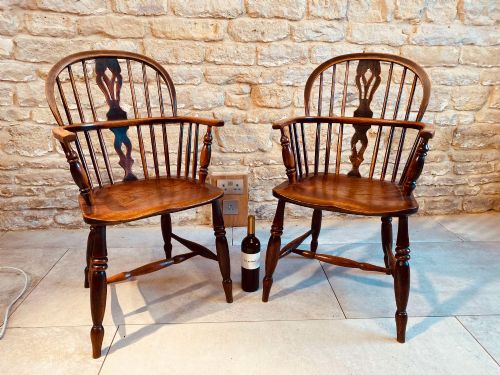
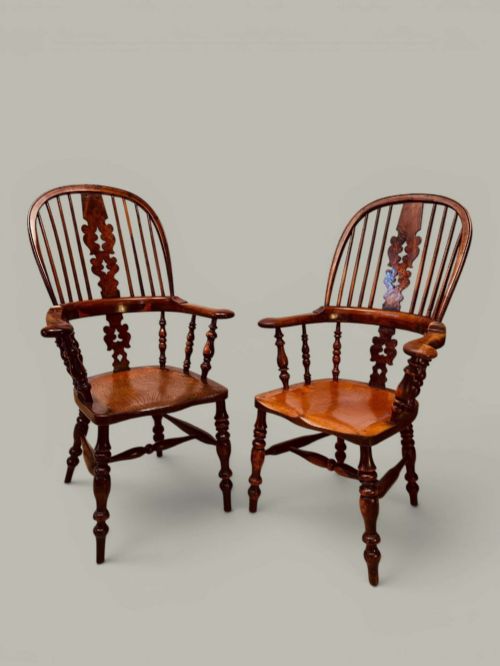
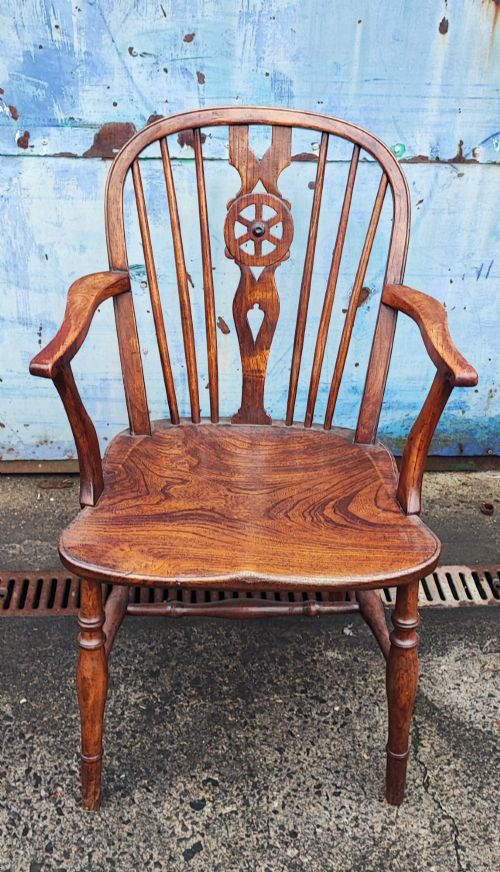
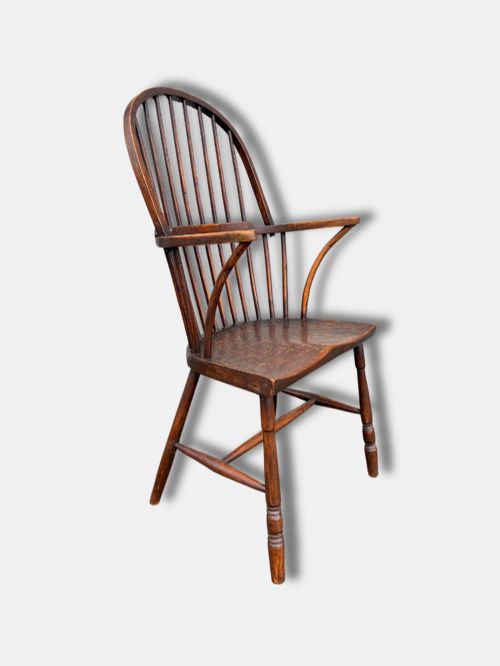
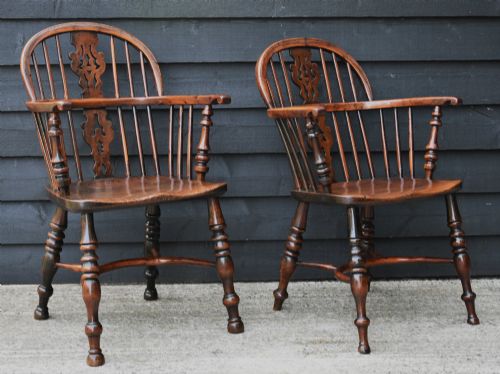
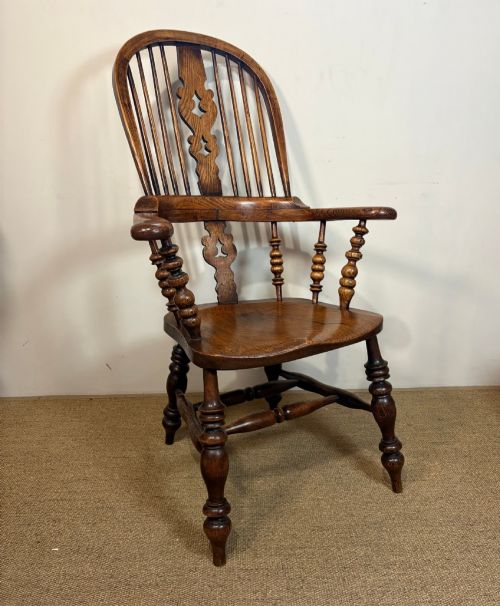
Brown Hoop Back Chair
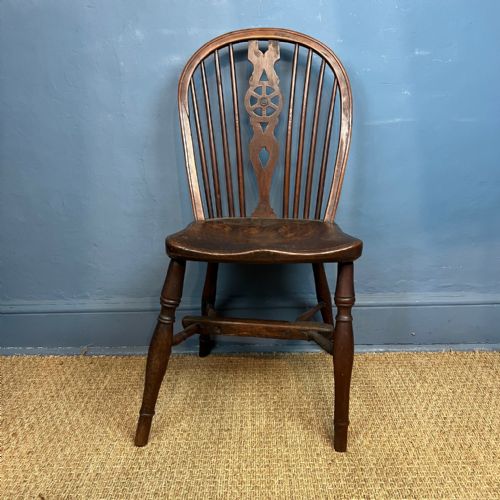
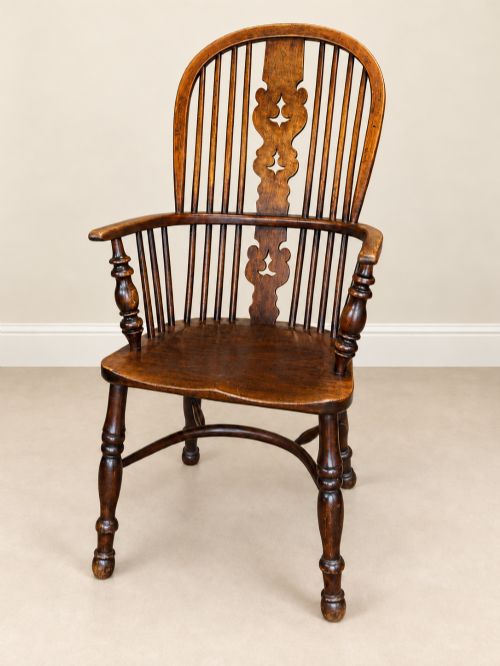
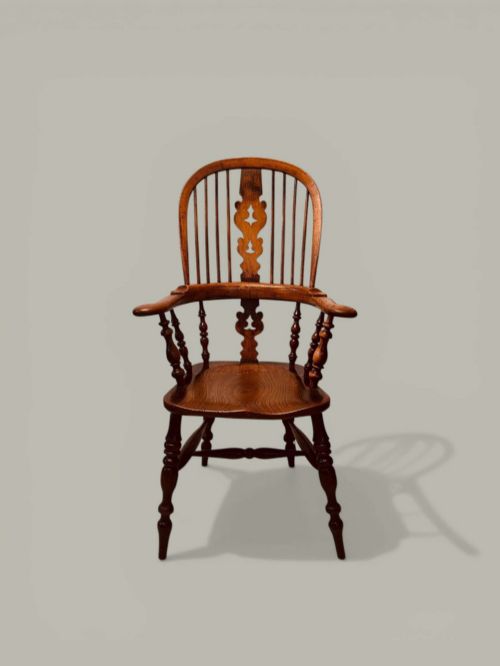
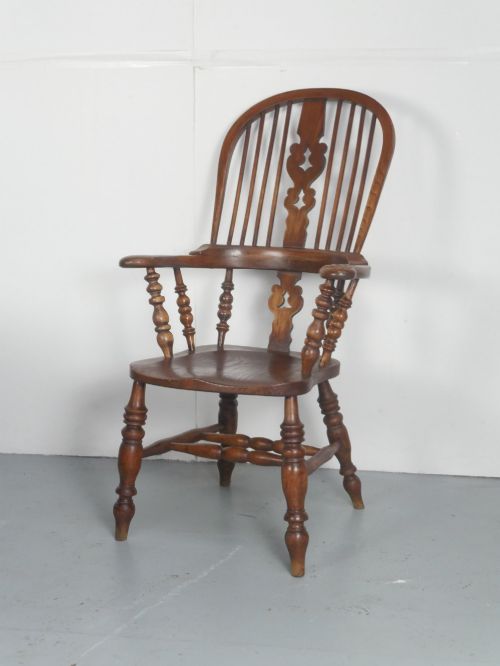
A brown hoop back chair brings organic warmth and sturdy joinery into a room, offering enduring seating shaped by traditional English rural craftsmanship.
Brown Hoop Back Chair
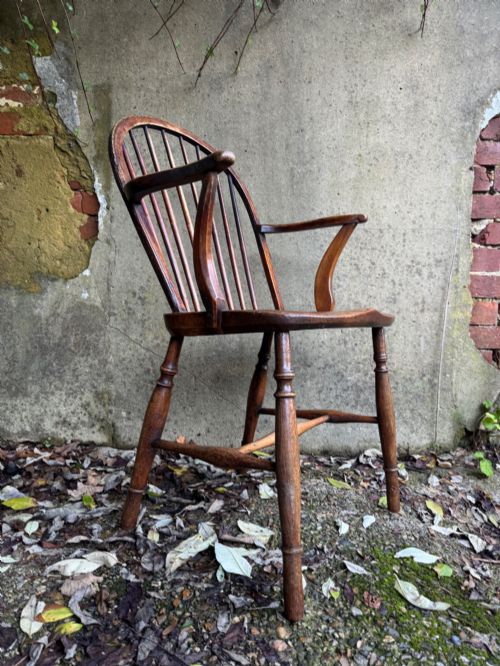
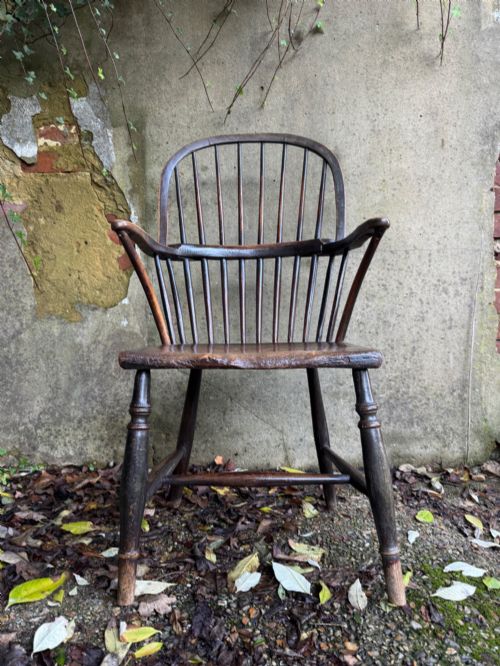
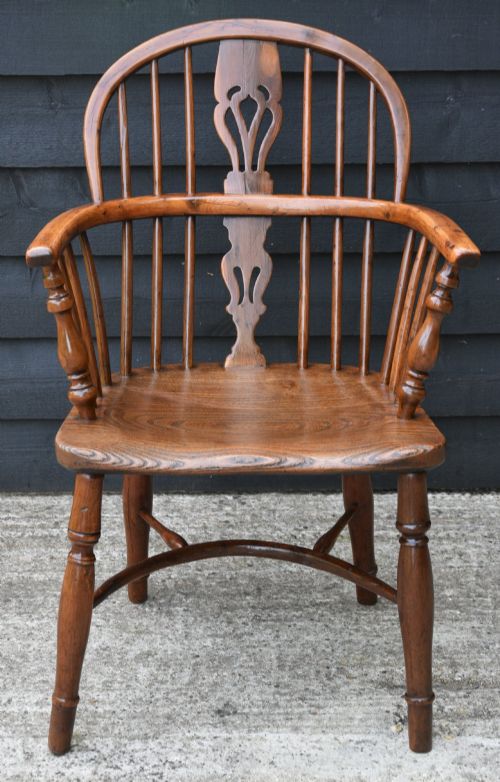
A brown hoop back chair is fundamentally a Windsor form, constructed with a steam-bent continuous rail that forms the back and arm support. These pieces emerge from English country and vernacular traditions spanning the eighteenth, nineteenth, and early twentieth centuries.
Buyers most frequently encounter armchairs and dining chairs configured with distinct wood combinations, often featuring solid plank seats paired with slender spindles. The lineage includes regional iterations originating from the Thames Valley, Lincolnshire, Scotland, and Wales.
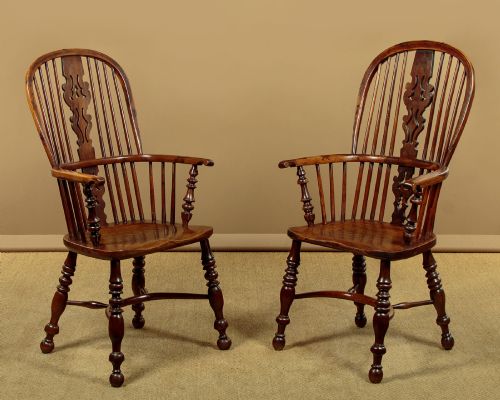
The visual character relies on exposed timber grains, ranging from deep yew and fruitwood to elm and ash. Many examples survive as matched sets or single carvers suited for domestic use around a table or desk.
Materials and Construction Techniques
Makers utilised a combination of timbers selected for specific structural properties, most notably elm for the carved seats, ash for the flexible spindles and bendings, and yew for its rich tone and durability. Beech and oak appear alongside fruitwood in regional frames.
The defining hoop back relies on green woodworking techniques, where timber is steam-bent while damp to form the characteristic continuous curve above the seat. Legs and stretchers are turned on a lathe and secured via wedged tenon joints passing through the solid wood seat.
Brown Hoop Back Chair Retail Price Guide 2026
Typical asking prices for brown hoop back chair among the pieces listed under this phrase on Sellingantiques today, from the lower quarter to the upper quarter. They describe what is for sale here now, not the wider market.
Listings demonstrate regional diversity through Welsh, Scottish, Lincolnshire, and Thames Valley variants.
Distinctions in Quality
Quality rests upon the selection of timber and the harmony of the proportions, particularly the graceful sweep of the bentwood hoop and the comfort of the saddle-shaped seat. Chairs exhibiting dense yew grain with deep natural patination sit at the upper end of the scale.
The structural integrity depends on the precision of the wedged joints and the retention of matching turned components within sets. Individual maker stamps or distinct regional bracing, such as crinoline stretchers, elevate the historical interest of an example.
J Spencer
The Brown Hoop Back Chair Glossary
- Hoop back
- A Windsor chair design where the backrest and arm rail comprise a single continuous steam-bent piece of timber. This construction provides inherent strength and resilience.
- Crinoline stretcher
- An arched or bowed underframe stretcher connecting the legs of a Windsor chair. It adds rigidity and often indicates an earlier 18th or early 19th century date.
- Saddle seat
- A wooden seat sculpted with hollows and contours for comfort. Elm was frequently chosen for this component due to its interlocking grain which resists splitting.
- Stick back
- A chair design utilising vertical plain spindles inserted into the seat and top rail. This variation provides a lighter visual profile than pierced splat alternatives.
- Vernacular furniture
- Domestic objects made by local craftsmen following regional traditions rather than metropolitan pattern books. These pieces prioritize utility and local materials.
Brown Hoop Back Chair: Frequently Asked Questions
What is a hoop back chair?
A hoop back chair is a type of Windsor seating where the upper rail is steam-bent into a continuous loop. This technique creates a resilient frame supported by vertical spindles.
These chairs date primarily from the eighteenth and nineteenth centuries, originating in English rural workshops as robust seating for domestic and commercial environments.
How do I date an antique Windsor chair?
Dating involves examining the timber species, the turning style of the legs, and the construction methods used for the seat and undercarriage. Earlier pieces often display yew wood and distinct crinoline stretchers.
Changes in tool marks and the evolution of regional designs from Wales, Scotland, and English counties further help narrow the period of manufacture.
Are these chairs comfortable for daily use?
The saddle-shaped wooden seats are ergonomically carved to distribute weight effectively without upholstery. Their sturdy ash and elm frames provide reliable support for sitting.
Many people use them as desk chairs or dining seats where their compact footprint and durable construction suit active living spaces.
What woods were used to build them?
Maker workshops combined multiple timber types within a single chair to leverage their individual strengths. Elm provided stable, crack-resistant seats.
Ash supplied flexible strength for bent hoops and spindles, while yew and fruitwood offered decorative grain patterns and warm brown tones.