

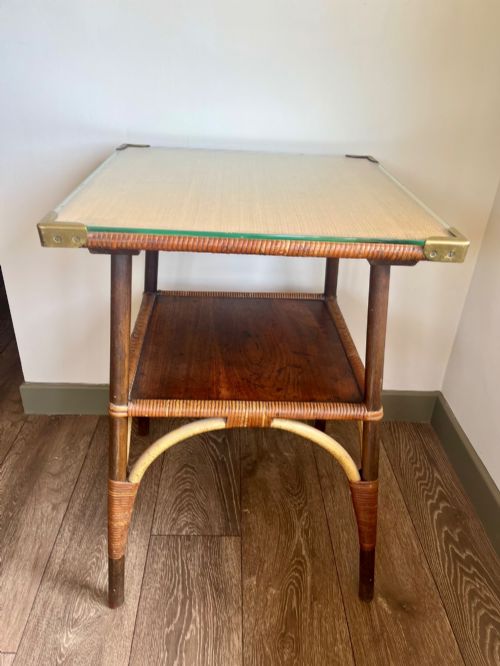


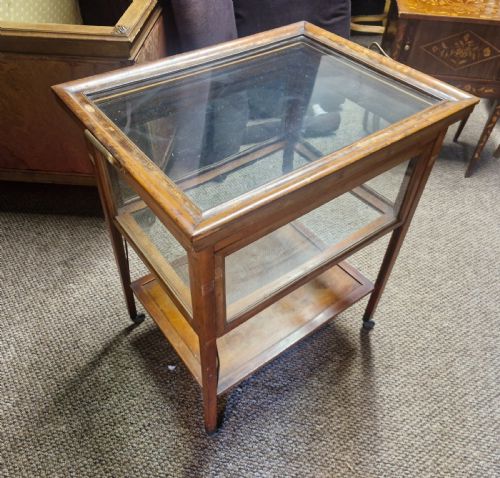


Brown Glass Side Table
These brown glass side table examples unite amber tones and mirrored surfaces across periods from the nineteenth century to the Art Deco era.
Brown Glass Side Table
A brown glass side table serves domestic spaces through various forms including bijouterie tables, display cabinets, and tea trolleys. Buyers exploring this category encounter surfaces and display panels rendered in dark or amber-tinted glass.
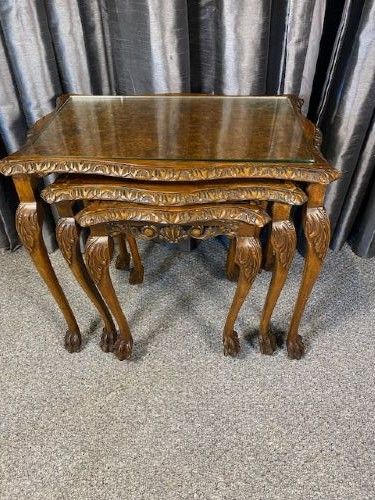
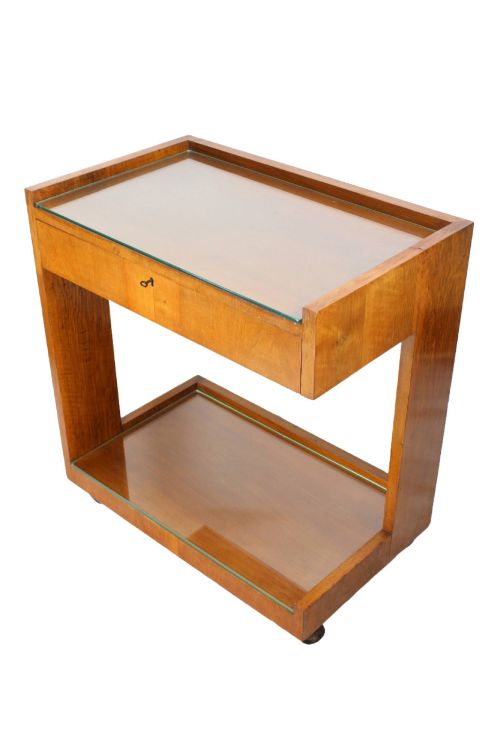
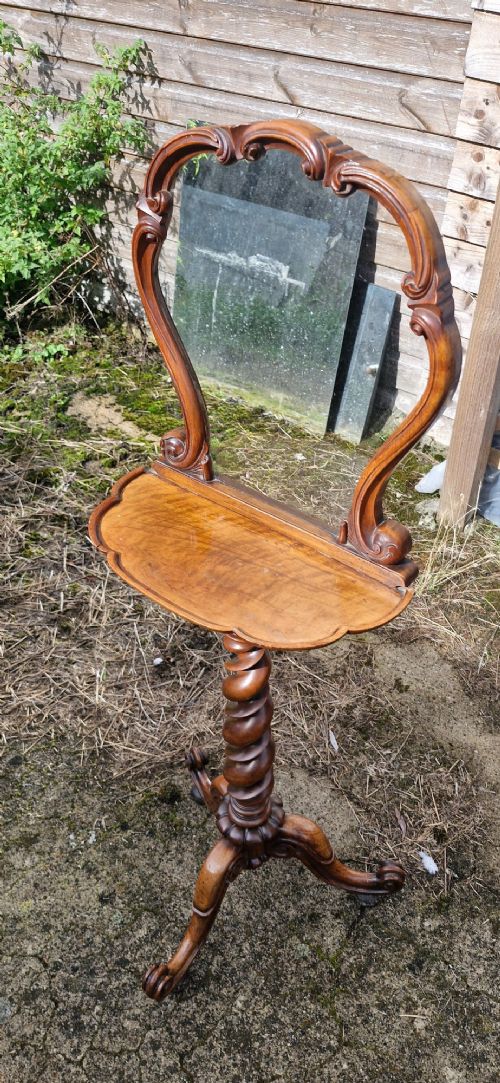
The selection ranges from Victorian pedestal lamp tables to Edwardian inlaid mahogany vitrines and Art Deco tiered coffee tables. Many pieces integrate timber frames with glazed compartments intended for objects or serving.
How they were made
Construction relies on timber framing paired with glass panels, mirrors, and occasional metallic mounts in brass or gilt-bronze. Woods such as mahogany, walnut, satinwood, and rosewood form the structural supports and inlaid surfaces.
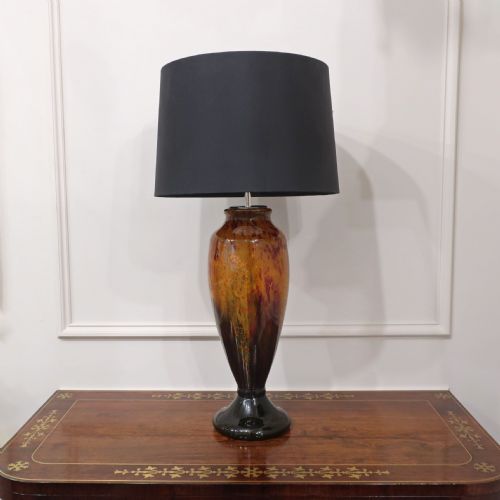
Glazing techniques include fitted display trays, vitrine lids, and mottled glass shades produced during the early twentieth century. Marquetry and brass inlay adorn many of the Edwardian and nineteenth century examples.
Brown Glass Side Table Retail Price Guide 2026
Typical asking prices for brown glass side table among the pieces listed under this phrase on Sellingantiques today, from the lower quarter to the upper quarter. They describe what is for sale here now, not the wider market.
Listings feature periods spanning from the nineteenth century through the Edwardian era, 1920, 1930, and 1940, utilising materials like glass, mahogany, walnut, and velvet.
What varies in quality
Distinction lies in the precision of cabinetmaking, particularly the execution of timber inlays, carved details, and structural joinery. Finer pieces demonstrate careful selection of veneers and harmonious proportions across tiers and display cases.
The integration of metal mounts, such as ormolu or brass, and the clarity of the glass panels differentiate standard production from superior workshop output.
Charles Schneider·Harry and Lou Epstein·Dryad Leicester
The Brown Glass Side Table Glossary
- Bijouterie table
- A glass-topped display table designed to exhibit small ornaments, jewellery, or curiosities. These pieces often feature hinged lids and velvet-lined interiors.
- Vitrine
- A glass-sided cabinet or display case used for showing collectibles. It protects objects from dust while allowing visibility from multiple angles.
- Etagere
- A piece of furniture consisting of a set of open shelves for displaying small objects. They appear in multi-tiered formats across various wood types.
- Marquetry
- Decorative inlay work using strips of wood, shell, or ivory fitted into a wood veneer. This technique creates complex patterns on table tops and cabinet surfaces.
- Quartetto nest
- A set of four small tables designed to slide underneath one another. They save floor space when not in use.
Brown Glass Side Table: Frequently Asked Questions
What is a brown glass side table used for?
These pieces function as display surfaces, serving trolleys, and occasional tables within living spaces. Many incorporate glazed compartments designed to hold collections or decorative objects.
Their varied configurations allow them to act as central display points or compact functional surfaces beside seating.
How do I date a brown glass side table?
Dating relies on stylistic markers associated with periods like the Edwardian era, Victorian period, and Art Deco movement. Timber choices and decorative techniques such as marquetry offer further chronological clues.
Construction methods and hardware provide additional evidence for placing a piece within a specific decade or century.
What materials are common in these tables?
Primary materials include hardwoods such as mahogany, walnut, rosewood, and satinwood, combined with glass and mirror elements. Metal mounts in brass, bronze, and ormolu frequently accent the timber structures.
Interiors often feature fabric linings like velvet to cushion displayed items.
Are these tables suitable for modern rooms?
Their compact footprints and functional forms allow them to integrate easily into contemporary interiors. The combination of timber and glass suits various design schemes without overwhelming a room.
Tiered trolley designs and nest configurations offer practical solutions for smaller spaces.