


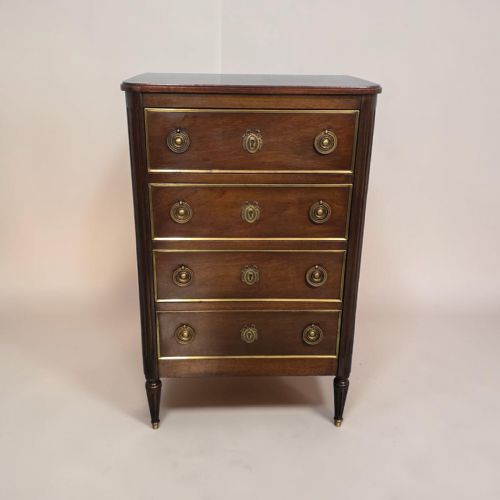


Brown French Chiffonier
These brown french chiffonier pieces bring rich mahogany, walnut, and marble into a room with understated nineteenth-century elegance.
Brown French Chiffonier
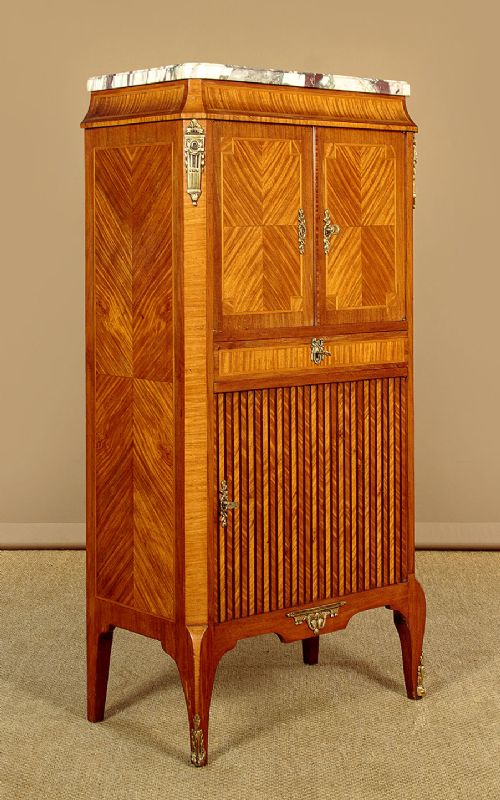
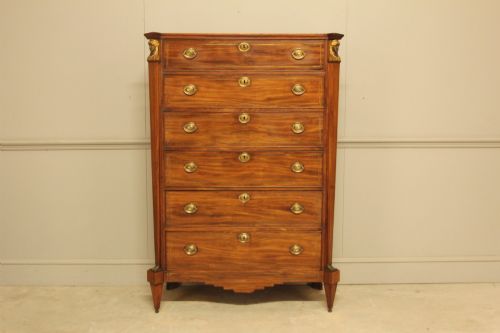
A brown french chiffonier sits within a varied group of nineteenth-century French and Victorian side cabinets, sideboards, and tall drawer chests. These items serve as functional storage pieces that combine display surfaces with enclosed cupboards or banks of drawers.
The selection on this page relies heavily on nineteenth-century examples, including pieces dated to eighteen-sixty and eighteen-eighty alongside later twentieth-century interpretations. Walnut and mahogany form the structural core of these items, frequently paired with marble tops and decorative mounts.
Buyers encounter forms ranging from sideboards and chiffoniers to wellington chests, semainiers, and secretaire desks. Styles span from French Empire and Louis XVI to Victorian and Rococo Revival, reflecting diverse continental and British interpretations of classic cabinetry.
How they were made
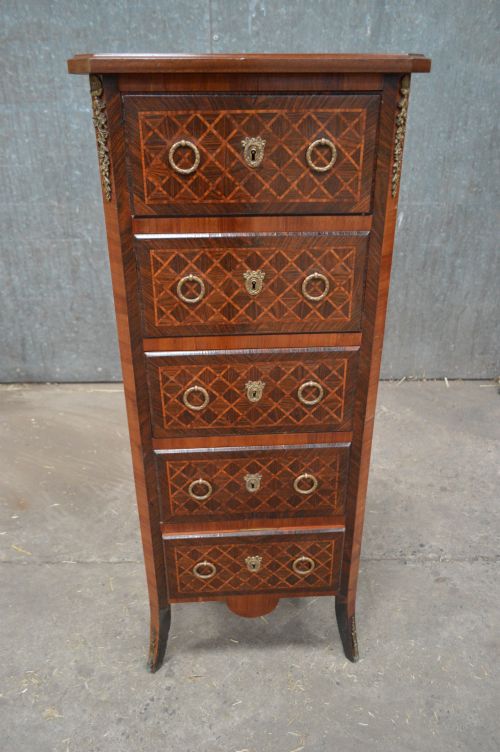
Cabinetmakers utilised dense timbers such as mahogany and walnut as the primary carcasses, often embellished with intricate parquetry and marquetry in kingwood and rosewood. These wooden foundations provide both the rich brown tones and the structural stability required for heavy marble tops.
Metalwork played a defining role in the construction, incorporating cast brass and ormolu mounts to highlight corners, keyholes, and drawer fronts. Glass panels and fitted marble slabs completed the upper surfaces and display compartments, requiring precise masonry and joinery skills.
Brown French Chiffonier Retail Price Guide 2026
Typical asking prices for brown french chiffonier among the pieces listed under this phrase on Sellingantiques today, from the lower quarter to the upper quarter. They describe what is for sale here now, not the wider market.
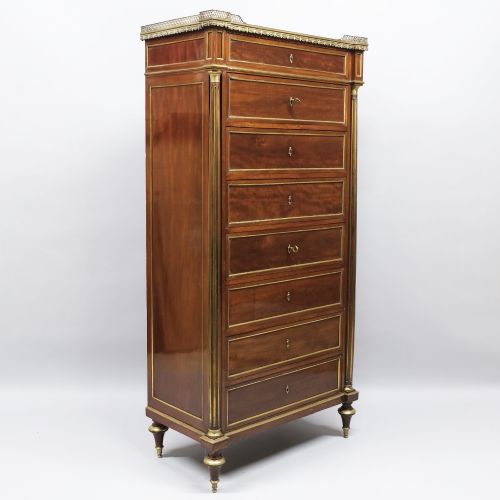
Semainiers were named for having seven drawers, offering an orderly spot for every single day of the week.
What varies in quality
The refinement of the timber veneers and the crispness of the parquetry set superior examples apart from simpler utilitarian pieces. Artisans who invested time in matching grain patterns and executing precise inlay work achieved a visual depth that elevates the entire cabinet.
The weight and finish of the bronze ormolu mounts and brass hardware indicate the original workshop's standing. Finer pieces display sharp chiselling on metal elements and perfectly fitted marble tops that sit flush against the wooden carcase.
Gillows
The Brown French Chiffonier Glossary
- Chiffonier
- A low sideboard or cabinet featuring a combination of drawers and shelved cupboards below. This form became popular during the nineteenth century for dining and drawing rooms.
- Semainier
- A tall, narrow chest of drawers traditionally designed with seven drawers, one for each day of the week. French makers frequently utilised this form for bedroom storage.
- Ormolu
- Gilt bronze mounted onto furniture as decorative ornamentation. The technique involves applying a gold amalgam to bronze before firing.
- Parquetry
- Geometric wood inlay work creating patterned surfaces on cabinet doors and drawer fronts. Craftsmen used contrasting timbers like walnut and mahogany to achieve this effect.
- Wellington chest
- A tall, slender drawer chest secured by a hinged locking side pilaster. This British and continental form maximises storage in compact floor spaces.
Brown French Chiffonier: Frequently Asked Questions
What is a brown french chiffonier used for?
These cabinets provide versatile storage for dining rooms and living spaces, combining surface display space with concealed cupboards or drawers.
Historically, they held glassware, linens, or silver, while the top surface served to display decorative objects or serve food during gatherings.
How do I identify a nineteenth-century piece?
Examine the construction methods, timber selection, and hardware used within the internal drawer linings and carcase frames. Nineteenth-century examples typically employ solid mahogany or walnut foundations with hand-cut dovetails and traditional brass or ormolu mounts.
Stylistic cues such as French Empire or Rococo Revival details also point toward this active period of continental cabinetmaking.
Are marble tops original to these cabinets?
Many nineteenth-century French sideboards and chests were constructed specifically to carry heavy marble slabs on their upper surfaces. These stone tops provided durable, heat-resistant service for displaying items.
Inspect the seating of the stone against the wooden frame to ensure it integrates naturally with the overall proportions of the piece.
How do I care for inlaid walnut and mahogany?
Keep wooden furniture away from direct sunlight and steady heat sources to prevent the delicate veneers and parquetry from drying out. Regular dusting with a soft, dry cloth maintains the finish without building up unwanted residues.
Applying a traditional beeswax polish occasionally helps nourish the grain and preserve the rich brown tones of the timber.